What Is a Drawstring Pouch? A Complete Guide to Types, Uses & Materials
What Is a Drawstring Pouch?
A drawstring pouch is a small soft bag that closes with a cord pulled through the top edge. Pull the cord, and the opening cinches shut. No zipper, no clasp, no buckle — just one simple string doing all the work.
That simplicity is exactly why the design has stuck around for centuries. It’s cheap to make, easy to open with one hand, and gentle on whatever sits inside it. So brands use drawstring pouches for jewelry, gifts, cosmetics, tech gadgets, and small retail add-ons. Honestly, once you notice them, you start seeing them everywhere — tucked into gift boxes, hanging on retail hooks, or stacked on a jeweler’s counter.
Some pouches are tiny, built to hold a single ring. Others are large enough for a full cosmetics set or a bundle of cables. Still, the basic idea never changes: a soft shell, a channel at the top, and a cord that does the closing.
If you sell anything small and need packaging that feels a little more special than a plastic bag, this guide will walk you through the types, the materials, and the real-world uses. By the end, you’ll know exactly which style fits your product, and roughly what it should cost to produce. Whether you’re sourcing custom drawstring bags for a wedding or packaging fine jewelry, the core buying decisions stay the same.
The Quick Answer: Drawstring Pouch vs Bag, Sachet & Wallet
Here’s the short version, in case you don’t need the full history lesson.
Think of a drawstring pouch as a soft, flexible bag closed by a pull cord instead of a zipper or flap. A standard tote or shopping bag, meanwhile, usually has a fixed opening with no closure at all. So the two solve different problems: one protects small contents, the other just carries things around.
A sachet takes the same idea and shrinks it down. It’s basically a small jewelry pouch, typically under four inches, made for tiny items like rings, sample-size product, or a single earring pair. A jewelry wallet works differently — it folds flat and closes with a snap or ribbon tie rather than a cord, which makes it better for storing several small pieces in one flat case.
So which one should you pick? If your product needs quick access and a soft, huggable fit, a pouch usually wins. But if it needs rigid protection or a flat storage profile, a box, wallet, or hard case is the better call. Simple as that.
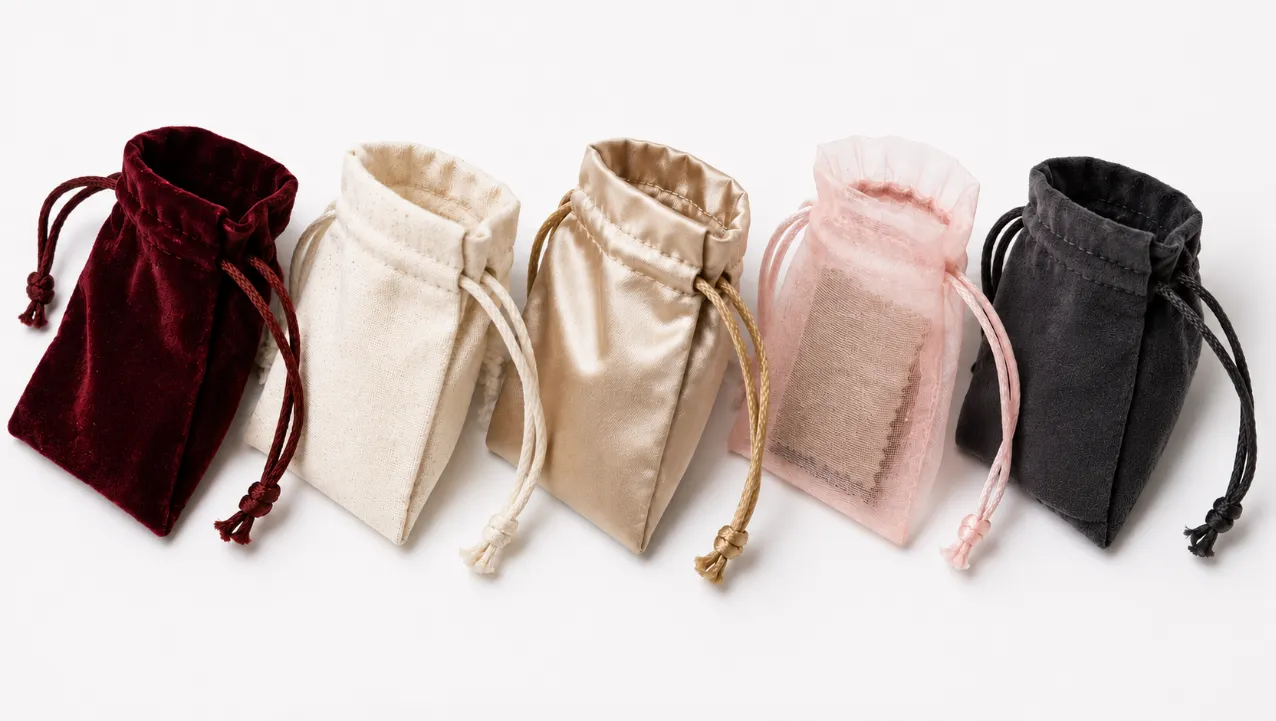
Five common drawstring pouch materials side by side: velvet, cotton, satin, organza, and microfiber.
A Short History — From Coin Purses to Modern Packaging
Drawstring pouches are not a modern invention, not even close. Medieval traders carried coins in small leather pouches tied at the neck with a cord — basically the original wallet. Merchants trusted the design because it was hard to open by accident, yet still easy to check at a glance when counting money in a hurry.
Centuries later, the same basic shape kept showing up in new forms: tobacco pouches, marble bags for kids, and eventually the velvet jewelry pouches you’d find at a fine jeweler’s counter. The material changed with each era. The core logic, though, never really did — cinch it shut, carry it around, open it fast when needed.
Today, factories produce these pouches in cotton, velvet, satin, organza, and microfiber, often printed with a logo and shipped by the thousands to retailers worldwide. Modern manufacturing added speed and customization, but the string-and-fabric idea from centuries ago still works. Nobody has found a cheaper or simpler way to protect a small item, and that’s unlikely to change anytime soon.
The Main Types by Material
Material changes everything about how a pouch looks, feels, and protects. Here’s a rundown of the most common options, along with where each one tends to shine.
Velvet pouches feel plush and look expensive, which makes them the go-to choice for fine jewelry, watches, and gift sets. The soft nap also cushions delicate items surprisingly well, reducing the risk of scratches during shipping. A custom velvet pouch is often the top pick for engagement rings, since the deep nap keeps the ring band from shifting during shipping. For common sizes and colors, check out our velvet bag collection.
Cotton pouches are breathable, washable, and budget-friendly. Because the fabric is sturdy, cotton works well for reusable packaging, party favors, and eco-conscious brands that want a natural, unbleached look. A cotton drawstring bag also works well when you want a plain, unbleached look for eco-conscious branding. Our cotton bag options come in a wide range of weights, from lightweight muslin to heavier canvas.
Satin brings a smooth sheen that photographs beautifully, which is why wedding favor pouches and beauty brands lean on it so often. It drapes nicely too, so the pouch keeps its shape without looking stiff on a table or gift display.
Organza is sheer and lightweight, ideal when you want the product to peek through — think bath bombs, candy, or small keepsakes. It’s less about hiding the item and more about showing it off before the customer even opens the bag.
Microfiber is the quiet workhorse of the group. It resists scratches, sheds less lint than velvet, and holds color well, which makes it popular for tech accessories and premium jewelry alike. Browse the microfiber bag range if durability matters more to you than plush texture.
Leather and faux leather pouches sit at the premium end of the spectrum. They cost more to produce, but the structure, weight, and smell signal quality the instant a customer picks one up.
A navy velvet drawstring pouch used to package rings and a chain bracelet in a boutique setting.
The Main Types by Closure & Construction
Beyond material, construction style matters just as much for how a pouch performs.
Single-drawstring pouches have one cord that pulls the whole opening closed from both sides at once. They’re the simplest and cheapest to produce, which makes them a favorite for bulk orders and everyday retail packaging.
Double-drawstring pouches use two cords, one on each side, so the bag cinches evenly and sits flatter when full. Jewelry brands often prefer this style because it looks tidier on a shelf and closes more securely during shipping.
Gusseted pouches have a folded side panel that lets the bag expand outward, which is useful when you’re packing something with a bit of bulk, like a bracelet with a box clasp. Flat pouches, without a gusset, work best for thin items such as necklaces or gift cards, since there’s no extra fabric bunching at the sides.
Some pouches also add a locking bead on the cord, so the bag stays shut during shipping without needing tape. It’s a small detail, sure, but it saves a surprising number of customer complaints about a bag arriving open in transit.
Cord thickness varies too, and it’s easy to overlook until a customer actually pulls one. A thin cord looks delicate but frays faster over repeated use, while a thicker braided cord feels sturdier and holds knots better. Some suppliers also offer a flat ribbon-style drawstring instead of round cord, which lies flatter against the fabric and gives the pouch a slightly dressier look for gift packaging.
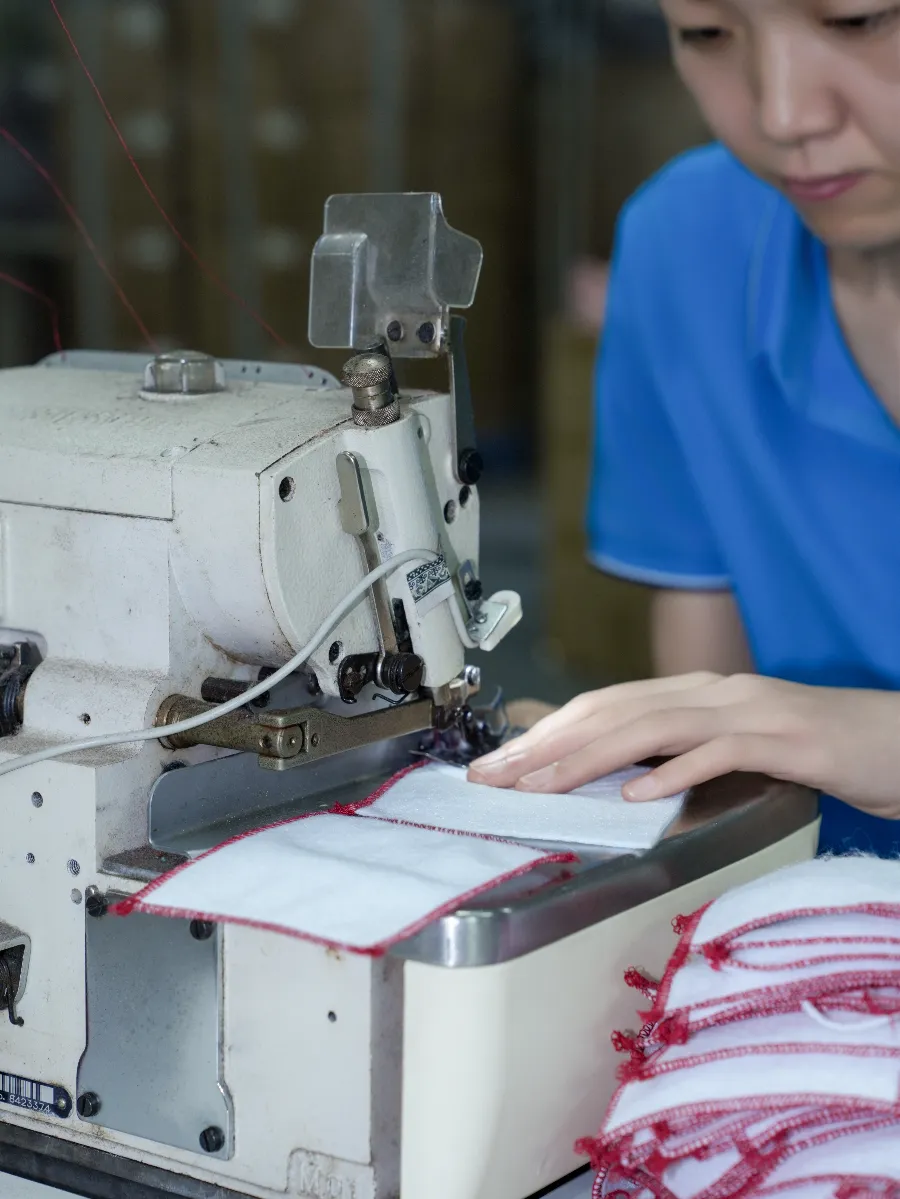
A factory worker sewing the drawstring channel on an industrial sewing machine during pouch production.
What Are Drawstring Pouches Used For?
The uses stretch far beyond jewelry, though that’s still the biggest category by volume.
Jewelry and watches — soft pouches prevent scratches during shipping and storage, especially for pieces without their own hard box. Many jewelers pair a pouch with a rigid box for extra protection during transit. For more on protecting fine pieces long-term, this GIA jewelry care guide is a solid reference.
Gifts and retail add-ons — a branded pouch turns a plain purchase into something that feels considered and intentional. Boutiques often use them as the final touch at checkout, right before the customer walks out the door.
Wedding favors and events — small organza or satin pouches hold candy, seeds, or trinkets for guests to take home. They’re inexpensive per unit, yet they still look polished stacked on a favor table.
Tech accessories — cables, earbuds, and chargers travel better in a soft microfiber pouch than loose in a drawer or backpack pocket. The fabric also protects screens and lenses from light scuffing.
Cosmetics and travel kits — makeup brushes, samples, and small toiletries fit neatly into a drawstring pouch for trips or subscription boxes. If that’s your product line, our makeup bag collection covers most standard sizes.
Subscription boxes and unboxing experiences — brands building a memorable unboxing moment often tuck smaller items inside a printed pouch rather than loose in the box. It adds a tactile step to the experience, and customers notice the extra care even if they can’t say exactly why.
Trade show swag and corporate gifts — pouches printed with a company logo make an easy, low-cost giveaway that still feels a step above a plain tote bag. Attendees actually keep them, which is more than you can say for most conference freebies.
Once you start looking, small drawstring pouches show up in almost every retail category imaginable. That’s really the whole appeal of the format — one simple design, dozens of different jobs.
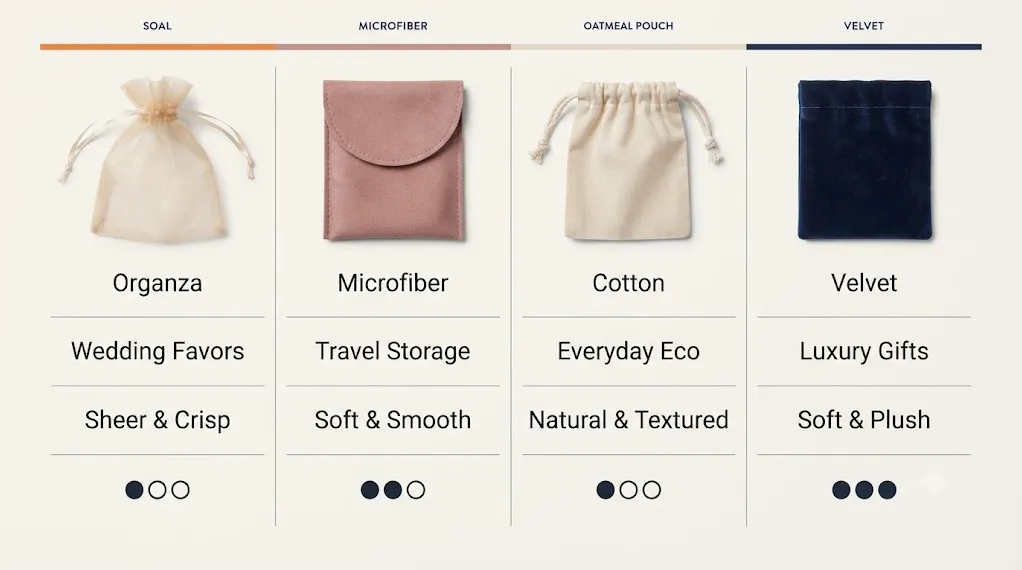
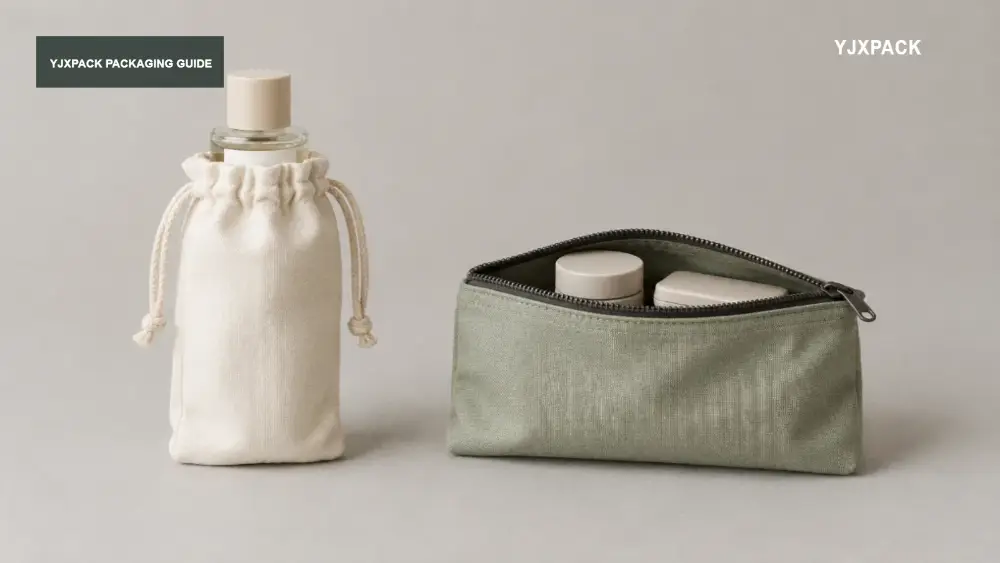
A cotton drawstring pouch and a microfiber zipper pouch placed side by side for a direct comparison.
How Drawstring Pouches Are Made — A Peek Into the Factory Process
The process starts with cutting. Fabric rolls get laid flat across a long table, and a pattern is traced or die-cut into individual panels — usually a front, a back, and sometimes a gusset strip for bulkier styles.
Next comes stitching. Workers sew the side seams first, then fold and stitch a channel along the top edge, and this channel is what the drawstring will eventually run through. Precision matters here, since a crooked channel means a cord that won’t glide smoothly when a customer tries to open it.
Then the cord goes in. A cording needle or automated threader pulls the drawstring through the channel, and the ends get knotted, beaded, or capped depending on the design. Quality factories double-check that both sides pull evenly, so the bag doesn’t bunch to one side when closed.
Finally, pouches move to quality control and packing. Workers check stitching, cord tension, and any printed logo before folding pouches into cartons for shipping overseas. For factories following recognized safety standards, look for certifications like OEKO-TEX, which confirms the fabric was tested for harmful substances before it ever reaches a customer.
Drawstring Pouch vs Zipper Pouch: Which Should You Choose?
Both styles have their place, so here’s a side-by-side comparison to make the decision easier.
| Feature | Drawstring Pouch | Zipper Pouch |
|---|---|---|
| Ease of access | Fast, one-hand open | Slightly slower, two-hand use |
| Security | Moderate — cord can loosen | High — fully sealed |
| Cost to produce | Lower | Higher, due to zipper hardware |
| Best for | Jewelry, gifts, favors | Cosmetics, travel kits, cables |
| Perceived value | Soft, gift-like | Practical, functional |
If your priority is presentation and cost, a drawstring pouch usually wins out. But if you need a fully secure closure for liquids or loose small parts, a zipper pouch is worth the extra cost. Plenty of brands actually use both, picking whichever style fits each specific product line.
How to Choose the Right Drawstring Pouch for Your Brand
Start with the product itself. Heavy or sharp items need a sturdier fabric like cotton canvas or microfiber, while delicate jewelry does better in velvet or satin, where the soft texture prevents scratching against metal or stone.
Next, think about your budget per unit. Velvet and leather cost more per piece, while cotton and basic satin keep costs down for bulk orders. There’s no wrong answer here, since it really depends on your margins and how the pouch fits into your overall packaging strategy.
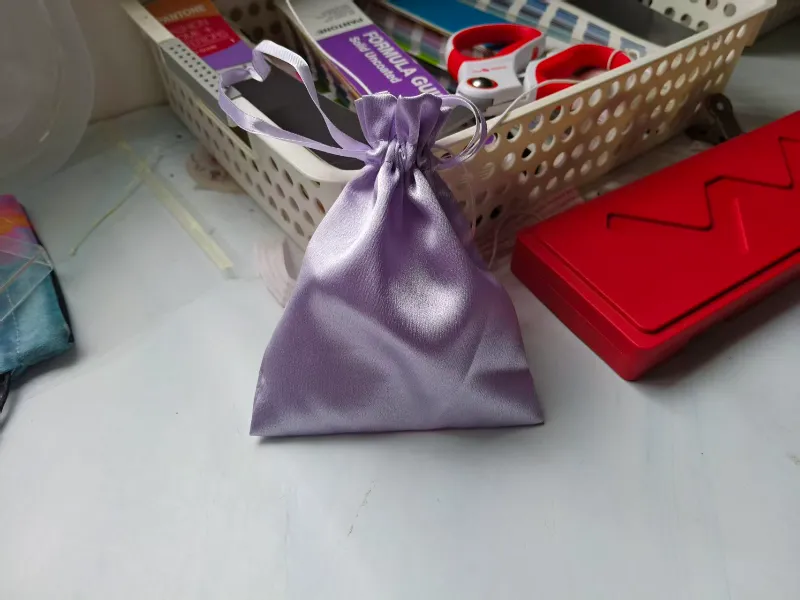
Then consider branding. Can the fabric take a clear, crisp logo print? Velvet holds embroidery beautifully, while cotton and satin are easier and cheaper to screen print at scale. If color-matching matters for your brand, ask your supplier for swatches checked against a Pantone reference before placing a bulk order, so the final batch actually matches your brand guide.
Finally, check the sustainability angle if it matters to your customers. Organic cotton pouches or recycled fabric options are increasingly common, and certifications from bodies like GOTS can back up any eco-friendly claim you want to make on your packaging or website.
Once you’ve nailed down material, size, and branding, the last step is simple: request samples, check the stitching and cord quality in hand, and confirm everything before you commit to a full production run. For a broader look at bag styles beyond pouches, our full jewelry bags catalog is worth a browse. And if you’re ready to talk specifics, yjxpack.com has the full range of custom packaging options in one place.
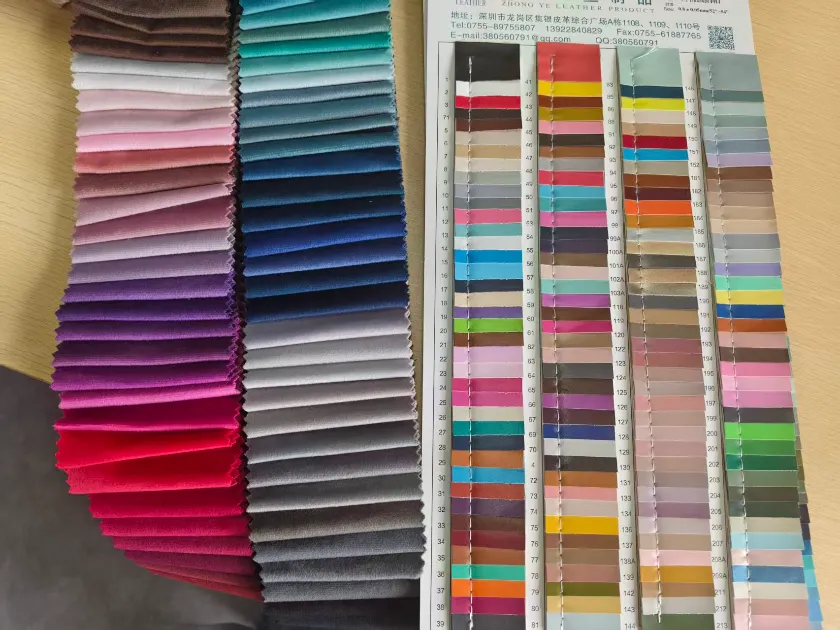
A Pantone fan deck used alongside fabric swatches for color-matching a custom drawstring pouch order.
Common Mistakes to Avoid When Ordering Drawstring Pouches
Even experienced buyers trip up on a few recurring issues, so it’s worth flagging them before you place a bulk order.
Ordering the wrong size. A pouch that’s too tight makes jewelry hard to remove, while one that’s too loose lets items shift around and rattle. Measure your actual product, add a little breathing room, and confirm the finished size with your supplier rather than guessing from a catalog photo.
Skipping a sample run. Photos on a supplier’s website rarely show true color or fabric weight. A small sample order, even just five or ten pieces, catches problems like a thin cord, uneven stitching, or a color that reads differently under store lighting.
Forgetting about cord strength. Cheap cord frays fast and can snap after a handful of uses. This matters more than most buyers expect, since a broken drawstring turns a nice pouch into a return request. Ask about cord material specifically — waxed cotton and braided polyester both hold up better than thin twisted string.
Ignoring minimum order quantities. Custom printing, embroidery, and unusual sizes often carry higher minimums than a factory’s standard catalog items. So it pays to ask about MOQ early, before you fall in love with a design that doesn’t fit your order volume.
Not checking for material safety documentation. If you’re selling into markets with strict import rules, request test reports upfront. It saves a scramble later, and it reassures customers who care about what’s touching their skin or jewelry.
FAQs
What is a drawstring pouch used for?
A drawstring pouch is used to hold and protect small items like jewelry, gifts, cosmetics, or tech accessories. The cord closure keeps items secure while staying easy to open with one hand, which is why so many brands rely on it for everyday packaging.
What fabric is best for a drawstring pouch?
It depends on the product. Velvet suits fine jewelry, cotton works well for everyday or eco-friendly packaging, and microfiber holds up nicely for tech gadgets that need a bit of scratch resistance.
How much does a custom drawstring pouch cost?
Cost varies by fabric, size, and order volume. Cotton and satin pouches are usually the most affordable option, while velvet and leather run higher due to material and finishing costs.
Are drawstring pouches reusable?
Yes, and that’s part of the appeal. Most fabric pouches, especially cotton and velvet, hold up to repeated use, which is why many customers keep them for storage long after the original purchase.
What size drawstring pouch should I order for jewelry?
Small pieces like rings or earrings fit well in 3×4 inch pouches, while necklaces and bracelets usually need 4×6 inches or larger. It’s worth asking your supplier for a full size chart before ordering in bulk.
Share This Story, Choose Your Platform!