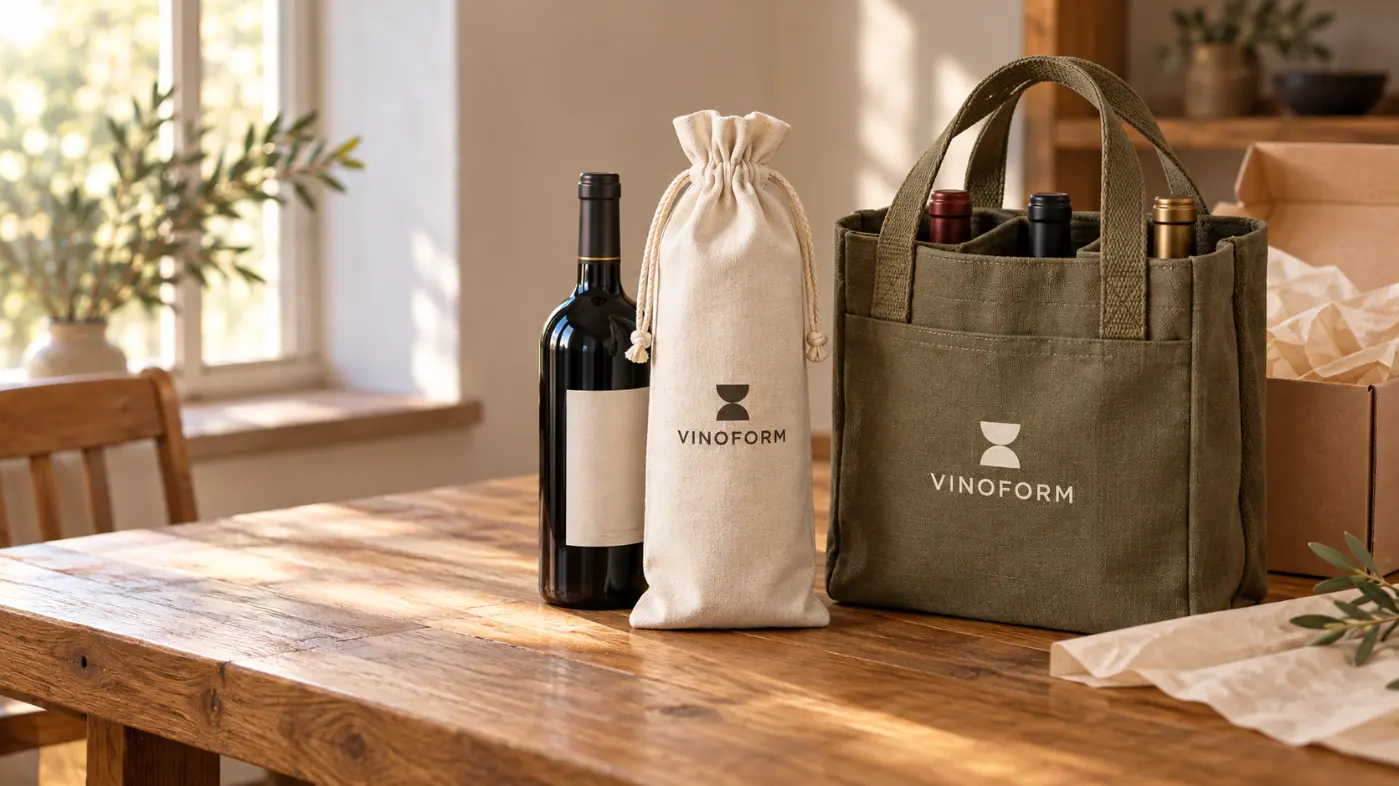
A wine bottle is often handed over before it is opened. The recipient sees the fabric, shape, closure, handle and logo first. For a wine brand or corporate gifting team, that first view is part of the packaging experience.
A custom wine bottle bag also has to work as a physical packaging item. The bag needs to suit the intended bottle, leave a clear area for branding, remain presentable after filling and closing, and fit the wider gift-set direction. A logo that looks well placed on a flat fabric panel may move into a fold once the bottle is inserted. A handle that looks attractive in a product image may cover the front mark when the bag is carried.
This guide explains how to specify custom wine bags with logo from a buyer’s point of view. It covers fabric, bottle fit, closure, handle position, logo area, branding methods, sample review and RFQ preparation. The goal is not to prescribe one universal construction. It is to help buyers provide the right information so a supplier can confirm the suitable bag structure and branding process for the project.
Quick Summary
A useful custom wine bottle bag specification should connect the bottle, the bag and the brand presentation.
| Decision | Why it matters | What the buyer should confirm |
|---|---|---|
| Bottle profile | The bottle determines the bag’s height, width and opening requirements | Bottle height, widest body area, neck shape and any outer packaging |
| Fabric | Surface texture and weight affect the hand feel, appearance and branding area | Proposed material, color, lining and whether the surface is smooth, woven, brushed or gathered |
| Closure | The closure changes how the bottle enters, exits and sits inside the bag | Drawstring, flap, snap, zipper or another requested construction |
| Handle position | A handle or cord can affect how the bag faces the recipient | Carrying direction, attachment points and whether the handle crosses the logo area |
| Logo area | The front panel may shrink or crease after filling | Logo size, orientation, safe area, seams, folds and artwork format |
| Logo method | Different surfaces may require different branding approaches | Process recommendation, artwork limits, color count and pre-production test |
| Sample review | A flat sample does not show every issue that appears when the bag is filled | Representative bottle, closure test, logo visibility and final approval points |
The primary keyword for this article is wine bottle bags with logo. Related searches such as custom wine bags, custom bottle bags and gift bags with logo describe closely related buyer needs, but the purchase decision is still the same: how to turn a brand direction into a practical custom fabric bag.
What Does a Custom Wine Bottle Bag Need to Do?
A custom wine bottle bag usually has more than one job. It may present a single bottle at a corporate event, accompany a seasonal gift, support a retail presentation or form part of a larger branded set. Each use can change the preferred material, construction and logo position.
The first job is visual presentation. The bag should make the bottle look intentional rather than simply covered. The fabric color, texture and closure should support the brand’s intended mood. A soft neutral fabric may suit a restrained premium direction, while a stronger color may be appropriate for a seasonal campaign or event kit. The correct decision depends on the supplied brand direction and the intended recipient.
The second job is physical fit. The bag needs to be planned around the actual bottle profile instead of a generic bottle photograph. Bottle shapes can vary in body width, shoulder slope, neck height and closure style. If an outer carton, tissue wrap or card is also included, those items may affect the required internal space.
The third job is brand visibility. The logo should be visible when the bag is displayed and when it is carried. That requires more than choosing a front-facing location on a flat drawing. The front panel, seams, gathered opening, handle, folds and fabric texture all influence what the recipient sees.
The fourth job is coordination. A wine bottle bag may be used with a gift box, bottle label, greeting card, tissue, ribbon or other presentation elements. The bag does not need to copy every part of the set, but it should have a clear relationship with the wider visual system.
Before requesting a quotation, buyers should write down the intended job of the bag.
- Is it for one bottle or more than one item?
- Will the bottle be presented alone or inside a gift set?
- Will the bag be carried by a cord, handle or another feature?
- Should the bag be reusable, decorative, compact or mainly presentation-focused?
- Does the brand need a large front mark, a small emblem or a more discreet treatment?
- Will the bag be used for one campaign or across several gifting occasions?
These questions help a supplier understand the project beyond the phrase “wine bottle bag with logo.” They also reduce the chance that a standard pouch structure will be treated as a complete specification.
How Should Buyers Specify Fabric, Bottle Fit, and Closure?
Fabric, size and closure should be considered together. Choosing a fabric first and trying to force the remaining details around it can create problems with the opening, logo area or overall shape.
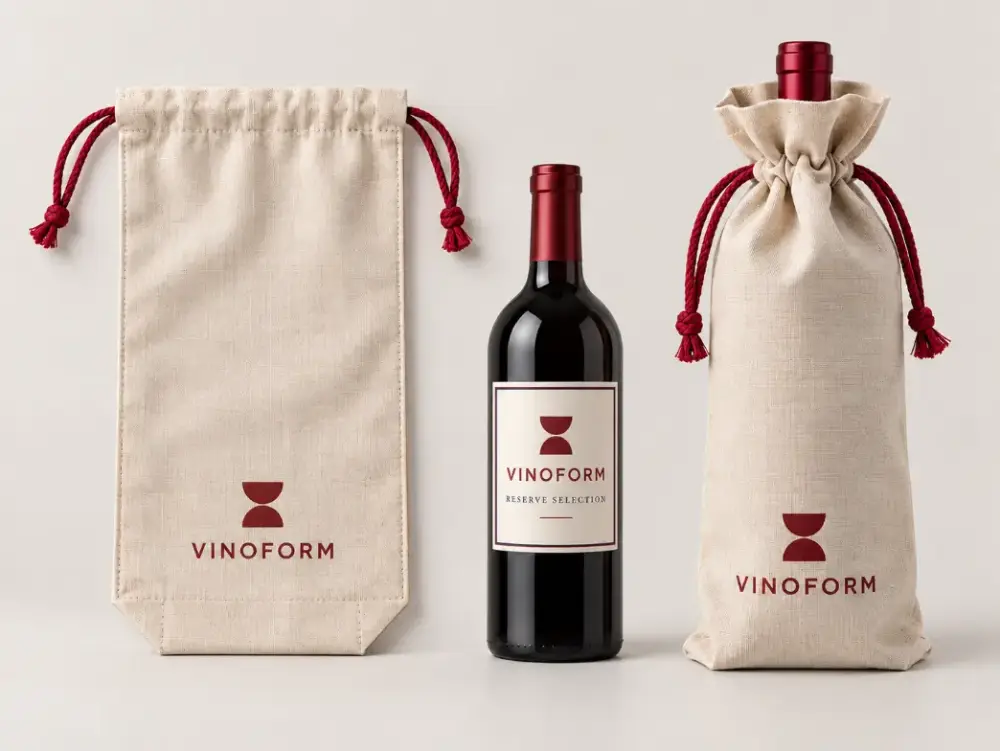
Possible fabric directions for custom packaging bags may include cotton, velvet, satin, microfiber, organza, linen, jute or polyester. These are not interchangeable recommendations. Each fabric has its own surface, drape, opacity, texture and response to folding or gathering. The suitable choice depends on the product presentation, brand direction, logo artwork and order requirements. Any specific process or material capability should be confirmed with YJXPACK.
Bottle fit begins with accurate product information. A buyer should provide the bottle’s overall height, widest body measurement, neck or shoulder profile and any cap or closure that changes the outer shape. If the bottle will enter the bag together with a card, sleeve, box or tissue, those items should be included in the specification.
It is also useful to explain how the bag should sit around the bottle. Some projects may call for a closer presentation around the bottle body. Others may need more room around the opening so the bag can be gathered or carried without hiding the front area. The supplier should not be expected to infer this from a single product photograph.
Closure selection affects both use and appearance.
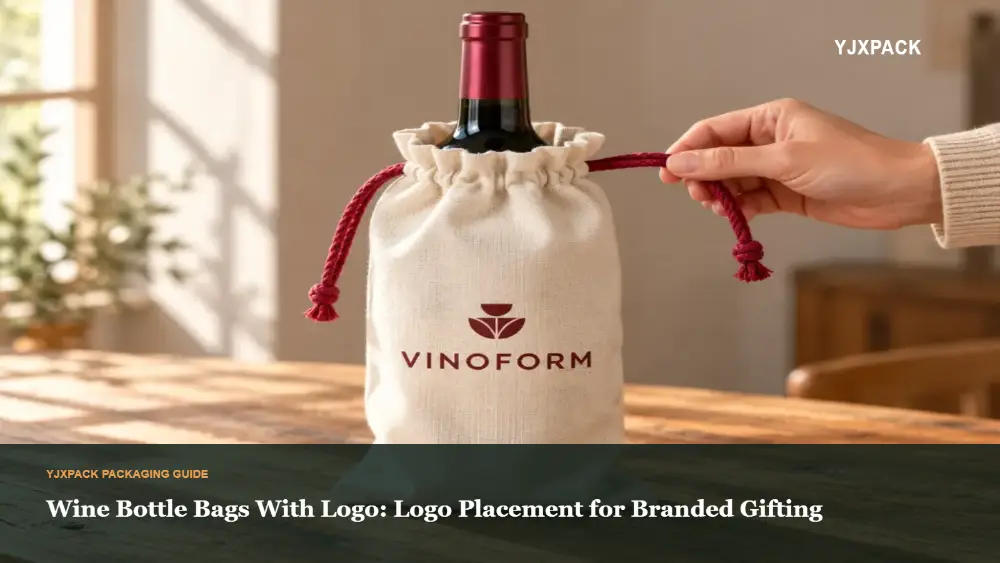
- A drawstring can create a gathered opening and may suit a soft presentation, but the gathering changes the visible front surface.
- A flap can create a more defined front panel and may offer a different logo area.
- A snap or other fastening can change how the bag opens and closes.
- A zipper may be considered for a structured presentation, subject to the requested bag form and material.
- A cord or handle can be part of the closure or a separate carrying feature.
The buyer should describe the required behavior rather than assume one construction is automatically suitable.
| Specification area | Information to provide | Why it matters |
|---|---|---|
| Bottle | Height, widest body, neck and cap profile | Establishes the basic bag proportions |
| Contents | Bottle only, or bottle with card, sleeve, tissue or box | Changes the internal space and opening requirements |
| Fabric | Material direction, color, surface and lining preference | Affects hand feel, drape, logo area and visual weight |
| Opening | Required opening size and closure direction | Determines how the bottle enters and how the bag gathers or folds |
| Carrying feature | Cord, handle, ribbon or another request | Changes the visual front and load-bearing construction |
| Bottom | Flat base, rounded base or another shape | Affects how the filled bag sits or is presented |
| Branding | Logo artwork, colors and preferred position | Allows the supplier to review process and placement suitability |
The final size should be confirmed against the actual bottle and selected construction. Avoid treating a universal wine bottle dimension as a guaranteed standard for every project.
How Should the Bottle, Handle, and Front Panel Be Oriented?
Orientation is one of the easiest details to overlook because a bag can look correct when it is empty and flat. Once the bottle is inserted, the fabric may gather, the opening may rotate and the handle may pull the front panel to one side.
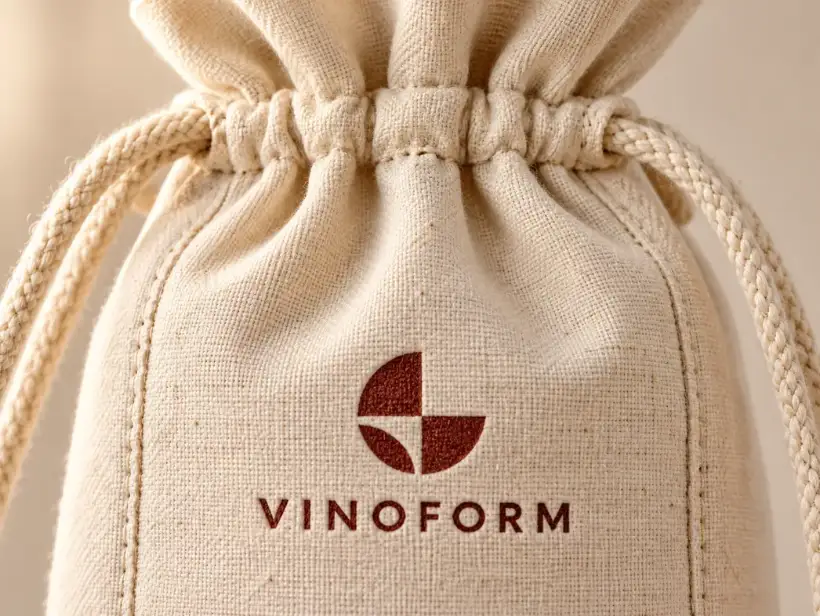
Start by deciding how the recipient should see the bag. The front logo panel should face the intended viewing direction when the bag is standing or being carried. If the bag uses a drawstring, check where the cord exits and how the gathered opening changes the centre line. If it uses a handle, check whether the attachment points pull the front fabric upward, inward or toward one side.
The logo should not be planned in isolation from the seams. A front mark that sits close to a side seam may look uneven once the bag is filled. A mark placed under the gathered opening may become partially hidden. A mark near the base may be affected by the way the bag rests on a table or shelf.
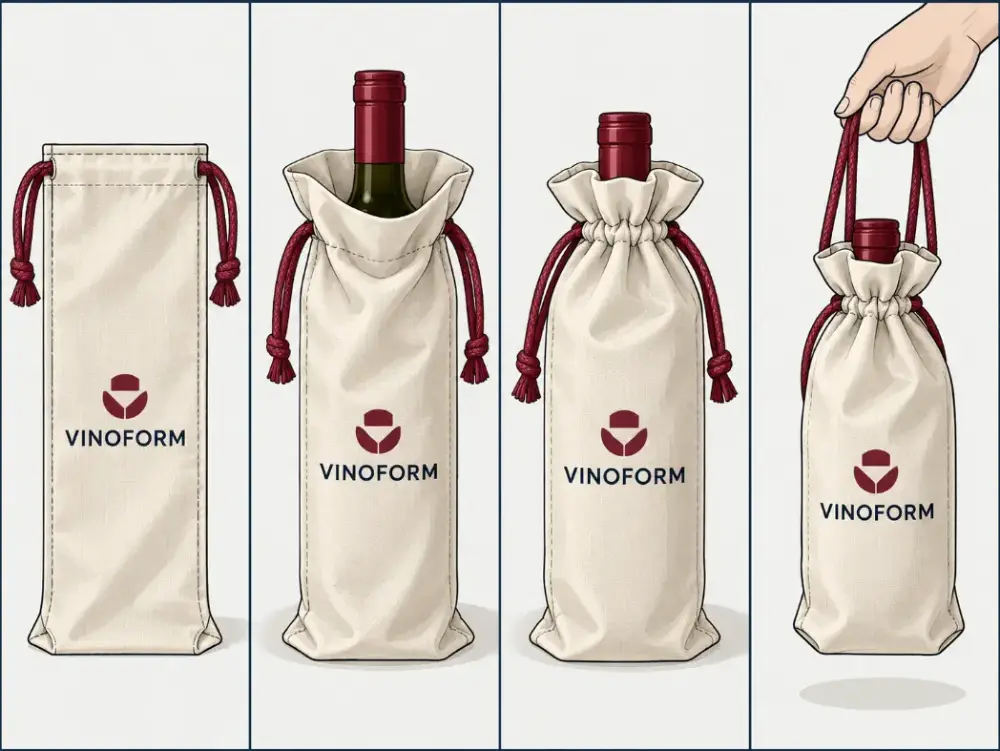
A practical orientation review should consider at least four states:
- The bag laid flat before filling.
- The bag filled with a representative bottle.
- The bag closed and carried by its intended handle or cord.
- The bag placed in the final gift-set arrangement.
Photographs of these states can be useful during sample review. They show whether the logo remains visible and whether the bag faces the correct direction when handled.
The front panel does not always need to be a completely flat rectangle. A soft bag may use a natural front area created by the seams, fold direction or construction. The important point is that the supplier and buyer agree on the intended branding area before the sample is approved.
A buyer should also clarify whether the same orientation is required for every bag in a set. If two bags are displayed together, inconsistent handle direction or logo rotation can make the group look unplanned. The issue may be small on one unit but obvious when several units are arranged together.
How Much Front-Panel Area Is Available for a Logo?
The available logo area depends on the bag’s construction, not only on the overall size. A gathered drawstring bag may have a larger body but a smaller stable area near the opening. A structured front panel may provide a clearer branding surface. A soft pouch with a pocket or flap may shift the logo into a separate panel.
Several locations may be considered:
| Possible logo area | Potential benefit | Points to confirm |
|---|---|---|
| Centre front panel | Easy to understand and visible in a direct view | Check folds, seams and how the filled bag faces the viewer |
| Lower front area | Can remain visible below the gathered opening | Confirm that the bag does not collapse or rest directly on the artwork |
| Flap or cover | Creates a defined branding surface | Confirm how the flap closes and whether the logo remains centred |
| Side area | May suit a discreet mark or secondary identity | Confirm visibility when the bag is carried |
| Separate label or patch | Can create a distinct branding element | Confirm attachment method, size and material contrast |
| Handle or cord detail | May support a small emblem or tag | Confirm whether the element rotates, folds or interferes with carrying |
The artwork should be reviewed against the actual fabric and construction. A logo that looks balanced on a digital rectangle may look crowded on a gathered surface. Fine details may be harder to read on a textured fabric. A long wordmark may need more horizontal space than a compact emblem.
The buyer should supply the preferred logo orientation and the intended visual hierarchy. For example, the main brand mark may need to face the recipient, while a small secondary label can remain on the side or inside. If the bag is part of a gift set, the buyer should clarify whether the bag carries the main brand identity or acts as a quieter supporting element.
It is also helpful to provide a placement reference rather than only a logo file. The reference can show:
- Preferred front and back views.
- Approximate logo position.
- Whether the mark should be centred or offset.
- Whether the mark should follow a horizontal or vertical orientation.
- Whether the handle, seam or closure must remain clear.
- Whether a separate label, tag or patch is being considered.
These details do not replace supplier confirmation. They make the discussion more precise and allow the supplier to identify possible conflicts before sampling.
Which Logo Methods May Suit the Selected Fabric?
There is no single logo method that suits every wine bottle bag. The selected process should be reviewed alongside the fabric, surface texture, artwork detail, color direction, placement and expected handling.
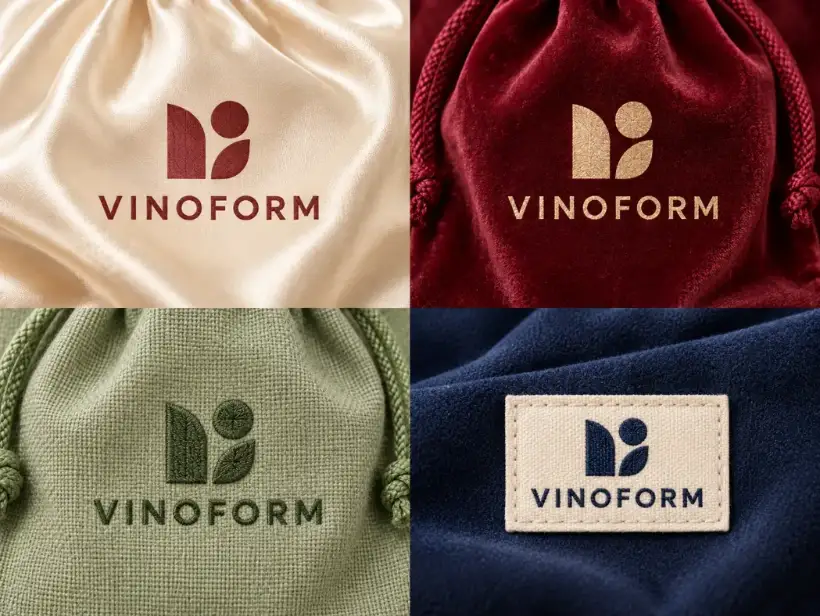
Possible methods that may be discussed include silk screen, foil stamping, embroidery, woven labels, metal labels, heat transfer, heat-transfer film, silicone print, debossing or embossing. These are options for review, not automatic recommendations. The final suitability should be confirmed with YJXPACK after the material and artwork are known.
| Logo method | When buyers may consider it | What should be confirmed |
|---|---|---|
| Silk screen | A printed mark is required on a suitable fabric area | Surface texture, color count, edge definition and test result |
| Foil stamping | A reflective or formal visual direction is requested | Fabric response, foil color, heat and pressure suitability |
| Embroidery | A tactile stitched mark fits the brand direction | Artwork detail, stitch scale, thread colors and placement |
| Woven label | A separate label or badge is part of the packaging concept | Label size, edge treatment, attachment and position |
| Metal label | A small hardware-style brand element is requested | Weight, attachment, surface finish and placement |
| Heat transfer or film | A transfer-based mark is being considered | Fabric compatibility, artwork detail and test result |
| Silicone print | A raised or rubber-like effect is requested | Surface, thickness, edge detail and handling requirements |
| Debossing or embossing | A pressed relief effect suits the selected structure | Material response, depth, artwork scale and sample result |
The important distinction is between a logo method and a logo position. A suitable method can still produce a poor result if the artwork sits across a fold, close to a seam or inside a heavily gathered area. The reverse is also true: a well-chosen placement may still need a different process if the fabric is too textured or flexible for the requested finish.
A supplier should review the artwork before the buyer treats the method as final. The review may include the size of small text, the number of colors, thin lines, negative space, registration and the relationship between the mark and the fabric color.
For a new project, a sample or process test is valuable because it turns a visual assumption into something that can be inspected. Do not approve a logo method based only on a digital mock-up when the final surface is soft, textured, gathered or curved.
How Should the Bag Work With a Wine Gift Set?
A wine bottle bag often sits within a broader presentation rather than appearing alone. The surrounding elements may include a bottle label, gift box, tissue, card, ribbon, seal or additional accessories. The bag should have its own clear purpose while still supporting the set.
Start by deciding which element carries the strongest brand identity. If the bottle label already contains the main visual mark, the bag may use a smaller emblem or a restrained placement. If the bottle is private-label or the gift is being presented under a corporate identity, the bag may carry more of the visible branding responsibility.
Color coordination should be reviewed across the actual materials. A fabric color can look different from a printed paper proof or a digital screen. The buyer should describe the intended color relationship and request confirmation of the final material and logo treatment. Specific color matching requirements should be reviewed with the supplier rather than assumed from an image.
The gift set also affects size and handling. A bag intended for a single bottle may not work for a bottle plus card, box or accessory. A set with two bottles may require a different base, opening and carrying structure. These changes should be specified as part of the project instead of being added after the first sample.
| Gift-set question | Why it matters |
|---|---|
| Is the bag for one bottle or several items? | Determines internal space and structure |
| Will the bottle remain visible above the opening? | Changes the relationship between the bottle, closure and logo |
| Is a card, sleeve or accessory included? | May change the required bag capacity |
| Which item carries the primary brand mark? | Helps avoid competing logos |
| Should several bags look identical or form a color group? | Affects the material and color plan |
| Will the set be photographed or displayed upright? | Influences front orientation and handle position |
A useful sample review should show the bag both alone and inside the intended set. This can reveal whether the logo disappears behind a box, whether the handle clashes with a ribbon and whether the overall group looks balanced.
What Should Buyers Check on Samples and RFQs?
A sample review should confirm the physical relationship between the bottle, bag and brand artwork. It should not focus only on whether the logo exists.
Begin with a representative bottle. If the final bottle is not available, provide the closest confirmed bottle profile and clearly mark any differences. Place the bottle into the sample, close the bag and carry it in the intended direction. Review the front, back and side views.
Check the following points:
- Does the bottle enter the opening without forcing the fabric?
- Does the bag face the intended direction when carried?
- Does the closure gather, fold or rotate the front panel?
- Does the handle cross the logo or pull it off centre?
- Does the logo remain readable when the bag is filled?
- Does the artwork sit across a seam, fold or heavily gathered area?
- Does the material color support the requested logo treatment?
- Does the bottom shape suit the way the filled bag is displayed?
- Does the bag still fit the wider gift set?
- Are any labels, tags, ribbons or accessories attached as intended?
The RFQ should give the supplier enough information to review the project without guessing. A clear request may include:
| RFQ field | What to provide |
|---|---|
| Product use | Corporate gift, retail presentation, event kit or another confirmed use |
| Bottle information | Height, widest body, neck, cap and any outer packaging |
| Quantity | Planned order quantity or quantity range |
| Bag material | Preferred material or material direction |
| Bag size | Confirmed dimensions or bottle-based requirements |
| Closure | Drawstring, flap, snap, zipper or another requested construction |
| Handle | Cord, handle, ribbon or other carrying detail |
| Logo artwork | Vector file, artwork colors and any placement reference |
| Logo position | Front, flap, side, label, patch or another area |
| Logo process | Preferred method, if known, or request supplier review |
| Gift-set details | Bottle box, card, tissue, ribbon or additional contents |
| Sample request | Required sample views and approval points |
| Packaging details | Individual packing or set-presentation requirements |
| Confirmation items | Any material, process, color or construction point still to be verified |
The more precise the request, the easier it is to separate confirmed requirements from suggestions. Buyers should avoid asking a supplier to confirm only “a nice wine bag with logo.” That phrase leaves the most important decisions open.
If the material, logo process or wine bottle bag construction has not been confirmed for the project, mark it as `[VERIFY WITH YJXPACK]`. A quote request can then ask the supplier to review the specification and propose suitable options instead of treating an untested process as guaranteed.
When the bottle profile, bag structure, artwork and branding direction are ready, use Get a Quote to begin the supplier review. The request should include the information above so the next discussion can focus on suitability, sampling and final confirmation.
Frequently Asked Questions
What information is needed to quote wine bottle bags with logo?
Provide the bottle dimensions, intended fabric, bag size or fit requirements, closure, handle, logo artwork, preferred position, logo process if known, quantity and gift-set details. If any item is not confirmed, label it clearly for supplier review.
Can the logo be placed on the front panel of a gathered wine bottle bag?
It may be possible, but the gathered opening can change the visible area and create folds. The logo position should be reviewed on a filled and closed sample, especially when the mark sits near the opening or handle.
Which logo method is best for a custom wine bag?
There is no universal answer. Silk screen, foil, embroidery, woven labels, transfers, silicone and other methods may be considered depending on the fabric, artwork and placement. The final process should be confirmed with a sample or supplier review.
Should buyers approve a sample before ordering custom bottle bags?
A sample review is useful when the bottle profile, closure, handle position or logo placement is important. The buyer should inspect the filled bag, carried view, front panel, seams, folds, color and gift-set presentation before final approval.
Can a wine bottle bag be coordinated with other gift bags with logo?
Yes, the bag can be planned as part of a wider presentation system, but each item may require its own material, size and branding review. Confirm which product carries the primary brand mark and how the pieces will be displayed together.
Share This Story, Choose Your Platform!