Silk Screen vs Heat Transfer vs Embroidery: Which Printing Method Is Best?
Silk Screen vs Heat Transfer vs Embroidery: The Quick Answer
If you’re comparing silk screen vs heat transfer vs embroidery for custom bags or pouches, here’s the short version before we get into the details. Custom bag printing decisions like this usually come down to order size and how the artwork is built.
Between the three, silk screen printing is the best all-around choice for bulk orders with simple, bold designs. It’s durable, cost-effective at scale, and holds up well on fabric. Heat transfer works best for detailed, full-color artwork or small orders, since there’s no setup cost per color. Embroidery is the most premium option, adding texture and a tactile feel that printing simply can’t match, though it costs more and can’t reproduce fine detail.
So which one wins? It really depends on your order size, your artwork, and how “premium” you want the final product to feel. Keep reading, and we’ll walk through exactly where each method shines.
Most brands only discover the wrong fit after production, once a batch of cracked prints or fuzzy embroidered text shows up at the door. That’s an expensive way to learn the difference. A little upfront research on how each method actually performs saves both money and a frustrating reorder down the line.
Silk Screen vs Heat Transfer vs Embroidery: How Each Printing Method Actually Works
Understanding the actual process makes the pros and cons much easier to follow.
Silk screen printing pushes ink through a fine mesh screen, using a stencil to block out everything except the design area. Each color needs its own screen, so a five-color design means five separate passes through the press. The ink sits on top of the fabric and cures under heat, creating a slightly raised, textured finish.
Heat transfer works differently. A design gets printed onto special transfer paper or vinyl first, then a heat press applies pressure and temperature to bond it onto the fabric. Because the full design transfers in one step, heat transfer handles complex, multi-color, photo-realistic artwork without the extra setup that silk screen needs.
Embroidery skips ink entirely. A digitized design guides a computerized machine that stitches thread directly into the fabric, building up the logo one stitch at a time. There’s no curing step, since the thread itself is the finished design. This also means embroidery can’t do gradients or photo-style detail — it works in solid blocks of color, defined by stitch density and thread choice.
One detail buyers often miss: each method requires different file prep before production even starts. Silk screen needs the artwork separated into individual color layers, one per screen. Heat transfer needs a high-resolution print-ready file, since any pixelation shows up directly on the final product. Embroidery needs the logo “digitized” into a stitch file that tells the machine exactly where to lay each thread, which is a specialized step most brands can’t skip or do themselves.
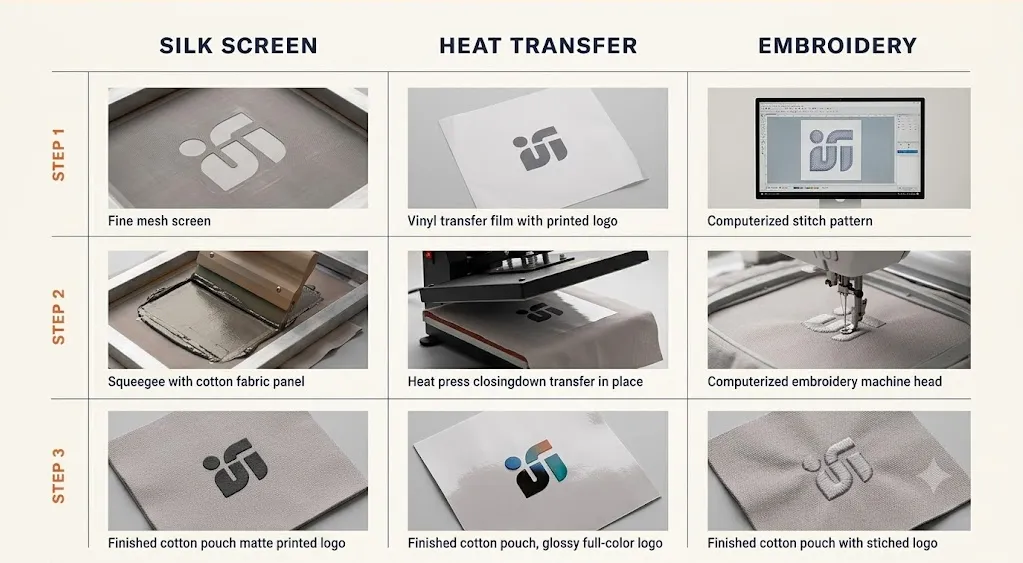
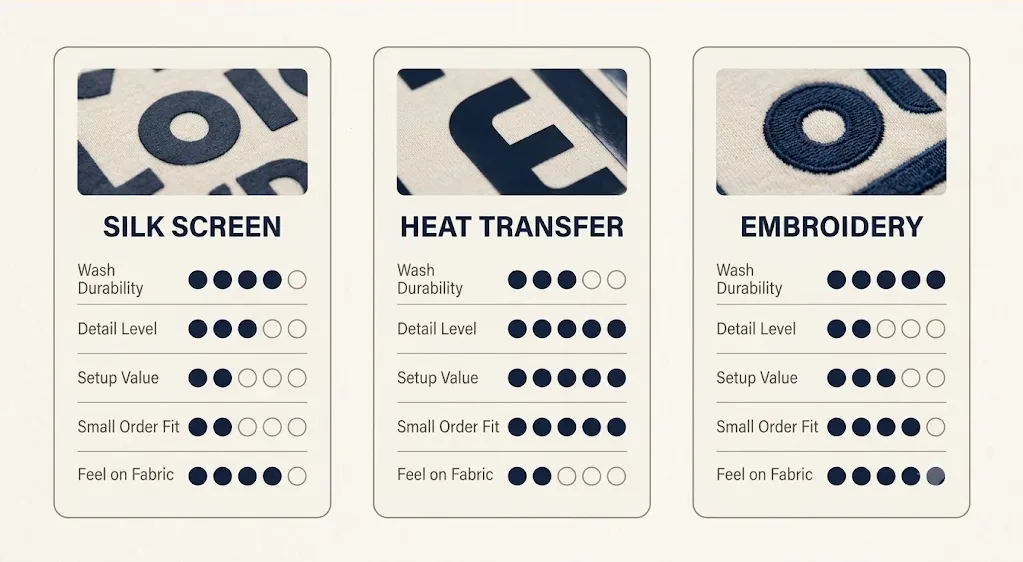
A closeup look at how silk screen ink, heat transfer film, and embroidery thread each sit on fabric.
Silk Screen Printing: Pros & Cons
Silk screen has been the industry standard for decades, and it still earns that reputation. Screen printing durability is usually the deciding factor for brands that plan to reorder the same design repeatedly.
Pros: Once the screens are set up, printing runs fast and cheap per unit, which makes silk screen the clear winner for large orders. The ink also bonds well with cotton and canvas, resisting fading through repeated washes far better than most people expect.
Cons: Setup cost is the catch. Every color in the design needs its own screen, so a five-color logo costs more upfront than a one-color design, regardless of order size. Small orders under a few hundred units often don’t justify the setup cost at all.
Overall, silk screen makes the most sense once your order volume climbs past a few hundred pieces with a simple design. It’s also worth noting that silk screen handles solid, saturated colors better than any other method, which matters if your brand relies on one or two very specific brand colors that need to look identical across every unit.
Heat Transfer Printing: Pros & Cons
Heat transfer trades some durability for flexibility, and that tradeoff works well for a lot of brands.
Pros: There’s no per-color setup cost, so full-color, photo-style artwork costs the same to print as a single color. This makes heat transfer ideal for small batches, samples, or designs with gradients and fine detail that silk screen simply can’t reproduce cleanly.
Cons: The finish sits on top of the fabric as a thin film, and that film can crack or peel after repeated washing, especially with cheaper vinyl. Heat transfer also feels less breathable than ink that’s soaked into the fabric, since the design covers the surface completely rather than bonding into the weave.
Heat transfer is the practical pick when the design is complex or the order is too small to justify screen setup costs. It also shines for short-run promotions or seasonal designs, since there’s no leftover screen investment sitting unused once the campaign ends.
The same logo produced with three different decoration methods for a side-by-side comparison.
Embroidery: Pros & Cons
Embroidery brings texture and perceived value that no printing method can fully replicate. When it comes to embroidery vs printing generally, thread almost always wins on tactile feel, even if it loses on fine detail.
Pros: Stitched logos feel premium the instant someone touches the bag. The thread holds up to years of use without fading, cracking, or peeling, since there’s no ink or film to degrade in the first place. For brands leaning into a higher price point, embroidery signals quality before a customer even reads the tag.
Cons: Cost per unit runs higher than both printing methods, especially for detailed designs with lots of stitches. Fine detail and small text also get lost, since thread simply can’t render the crisp edges that ink can. Plus, embroidery adds a bit of stiffness and weight to lightweight fabrics like organza or thin cotton, which can affect drape.
Embroidery earns its higher price tag on structured bags and premium packaging, but it’s usually overkill for a simple giveaway pouch. Stitch count also affects both cost and turnaround time, so a dense, highly detailed logo takes noticeably longer to produce than a simple wordmark, which is worth factoring into your production timeline.
Color Matching and Brand Consistency
Getting the exact brand color right matters more than most buyers expect, especially for repeat orders spread across multiple production runs.
Silk screen ink can be custom-mixed to match a specific Pantone reference fairly precisely, which is a big reason large brands lean on it for consistent, repeatable branding. Heat transfer relies on standard CMYK printing, so it reproduces most colors well but can struggle with very exact spot-color matches, similar to how a home printer handles color slightly differently than a professional print shop. Embroidery thread comes in fixed color options from a manufacturer’s thread chart, so matching an exact brand color sometimes means picking the closest available shade rather than a perfect match.
If color consistency across a large order — or across multiple orders placed months apart — matters to your brand, it’s worth asking your supplier for a physical color reference before production starts. A printed swatch or thread card tells you far more than a digital mockup ever will.
Durability & Wash Test Compared
Numbers make this easier than adjectives, so here’s a direct comparison across the three methods.
| Feature | Silk Screen | Heat Transfer | Embroidery |
|---|---|---|---|
| Wash durability | High | Moderate | Very high |
| Detail level | Moderate | High | Low |
| Setup cost | High per color | Low | Moderate |
| Best order size | Bulk (300+) | Small to mid | Any size |
| Feel on fabric | Slightly raised | Flat film | Textured, raised |
If long-term durability matters most, embroidery and silk screen both outlast heat transfer by a wide margin. Heat transfer still wins on flexibility, though, especially when the design changes often or the order is too small for screen setup.
Testing how each printing method holds up after repeated washing.
Cost Comparison at Different Order Volumes
Price per unit shifts dramatically depending on how many pieces you’re ordering, so volume matters more here than with almost any other packaging decision.
At small volumes, under 100 pieces, heat transfer usually wins on cost, since there’s no setup fee eating into a small batch. Embroidery sits close behind, since digitizing a logo is a one-time cost that gets spread thin over a small run. Silk screen often loses badly here, since screen setup can cost more than the printing itself.
At mid volumes, around 300 to 1,000 pieces, silk screen starts to catch up and often takes the lead for simple one or two-color designs. Heat transfer stays competitive for detailed artwork. Embroidery cost stays fairly flat per unit, since machine time scales predictably with stitch count rather than dropping much at higher volumes.
At bulk volumes, above 1,000 pieces, silk screen usually becomes the cheapest option by a clear margin, assuming the design doesn’t use too many colors. This is exactly why so many large retail and promotional orders default to silk screen — the math simply favors it once setup cost gets divided across enough units.
It’s also worth budgeting for reorders, not just the first run. If you expect to reorder the same design every few months, the screens from a silk screen job can often be reused, which drops the cost of every future batch. Heat transfer files and embroidery digitizing files are reusable too, but neither offers quite the same per-unit savings on repeat orders that a paid-off silk screen setup does.
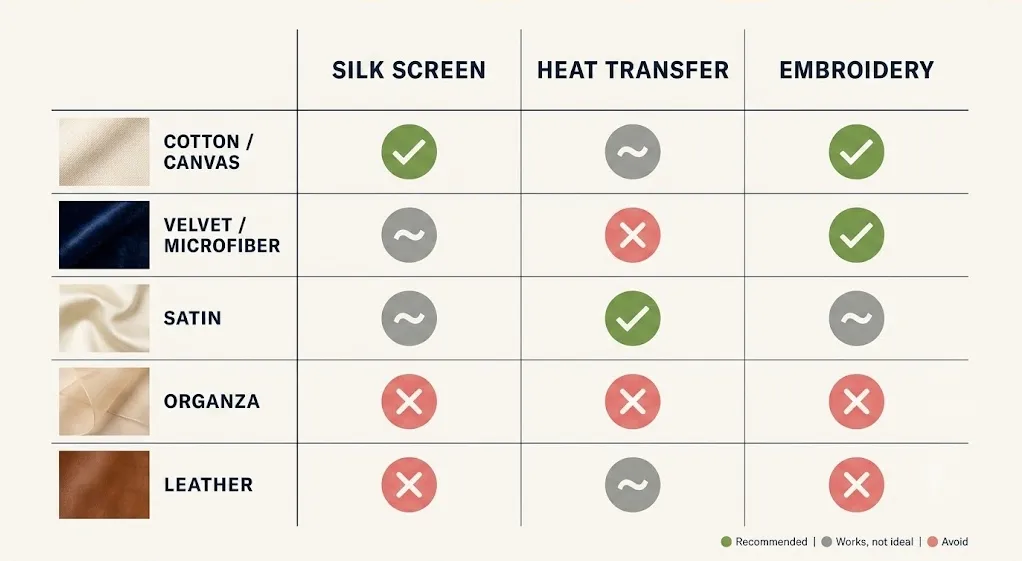
Which Method Looks Best on Which Fabric
Fabric choice changes how each method performs, so it’s worth matching the two together before you commit.
Cotton and canvas take silk screen ink beautifully, since the tighter weave gives ink a smooth, even surface to bond with. Our cotton bag collection works well with all three methods, but silk screen tends to look cleanest.
Velvet and microfiber generally favor embroidery, since ink and vinyl transfer can sit awkwardly on a napped or textured surface. The stitched thread, on the other hand, integrates naturally into the pile.
Satin and other smooth synthetics often work best with heat transfer, since the flat, glossy surface doesn’t hold screen ink as evenly as woven cotton does.
Sheer fabrics like organza generally avoid all three heavier methods, since ink and thread both disrupt the see-through effect that makes organza appealing in the first place. If you’re working with sheer materials, ribbon accents or a printed hang tag usually work better than direct decoration.
Leather and faux leather take neither silk screen nor embroidery particularly well, since ink can crack on a flexible surface and stitching can perforate the material. Debossing or a heat-applied foil stamp tends to work better here, though that’s a separate decoration method worth asking your supplier about directly.
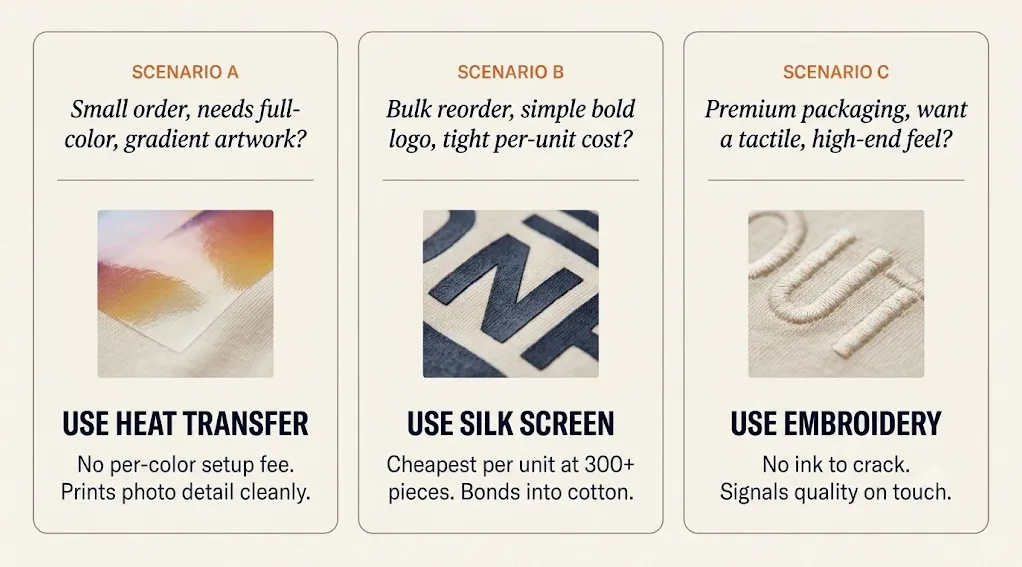
Weighing setup costs against order volume before choosing a decoration method.
How to Choose Between Silk Screen vs Heat Transfer for Your Brand
Start with your order size, since volume drives cost more than any other factor. Small test batches almost always favor heat transfer, while bulk reorders tend to favor silk screen once the design is finalized.
Next, look at your artwork itself. Simple one or two-color logos print cleanly and affordably with silk screen. Detailed, photo-style, or gradient-heavy designs need heat transfer to reproduce accurately, since screen printing can’t blend colors the way a printed transfer can.
Then think about how the bag will actually be used. A pouch that gets washed, thrown in a bag, or handled daily needs the durability that silk screen or embroidery offers. A one-time gift or event favor can get away with the lower cost of heat transfer, since longevity matters less.
Finally, factor in brand positioning. If your packaging is meant to feel premium, embroidery usually justifies its higher cost through the tactile impression it leaves. For safety-conscious buyers, it’s also worth asking your supplier whether inks and dyes meet OEKO-TEX standards, especially for products that will sit close to skin or jewelry.
Once you’ve settled on a method, request a physical sample before committing to a full run. Photos rarely capture texture, stitch density, or how ink actually feels against fabric. For a broader look at bag options across materials and finishes, our jewelry bags catalog is worth a browse. When you’re ready to talk specifics, yjxpack.com can help you match a printing method to your exact order.
Common Mistakes Buyers Make With Custom Printing
A handful of mistakes come up again and again when brands are ordering custom decoration, so it’s worth flagging them early.
Choosing the method before finalizing the design. Locking in silk screen, then discovering the logo has a gradient, means starting the sourcing process over. Settle on final artwork first, then match it to the printing method that can actually reproduce it.
Underestimating setup costs on small orders. A one-color silk screen job can look cheap per unit, but the screen setup fee sometimes costs more than the entire order if the batch is small enough. Always ask for total cost, not just the per-piece rate.
Ignoring fabric compatibility. Not every method works well on every material, and a supplier who doesn’t flag that mismatch upfront can leave you with a batch of cracked or peeling logos. It pays to ask directly rather than assume.
Skipping a wash test. If the bag will be reused or washed, request a sample that’s gone through a few wash cycles before approving a full production run. Durability issues rarely show up in a brand-new sample.
Assuming one method fits every product in the line. A brand selling both cotton totes and velvet jewelry pouches often needs two different decoration methods, not one. Forcing silk screen onto velvet, or embroidery onto sheer organza, usually produces a worse result than simply matching each product to its own best method.
FAQs
Which is more durable, silk screen or heat transfer?
Silk screen is generally more durable than heat transfer, since the ink bonds into the fabric rather than sitting on top as a film. Heat transfer can crack or peel faster with repeated washing, especially on cheaper vinyl.
Is embroidery more expensive than printing?
Yes, embroidery usually costs more per unit than silk screen or heat transfer, especially for detailed designs with a high stitch count. The higher cost often pays off in perceived quality and long-term durability, though.
What’s the minimum order for silk screen printing?
Minimums vary by supplier, but silk screen usually makes financial sense starting around 100 to 300 pieces, since screen setup costs get divided across the run. Smaller orders often cost less with heat transfer instead.
Can heat transfer designs fade over time?
Yes, heat transfer designs can fade or crack after repeated washing, particularly with lower-quality vinyl or transfer paper. Choosing a higher-grade transfer material and following proper care instructions helps the design last longer.
Does embroidery work on all fabrics?
Embroidery works best on sturdier fabrics like cotton, canvas, and velvet, where the fabric can support the weight and structure of stitching. It’s less suited to sheer or very lightweight fabrics, since the stitching can distort the material.
Share This Story, Choose Your Platform!