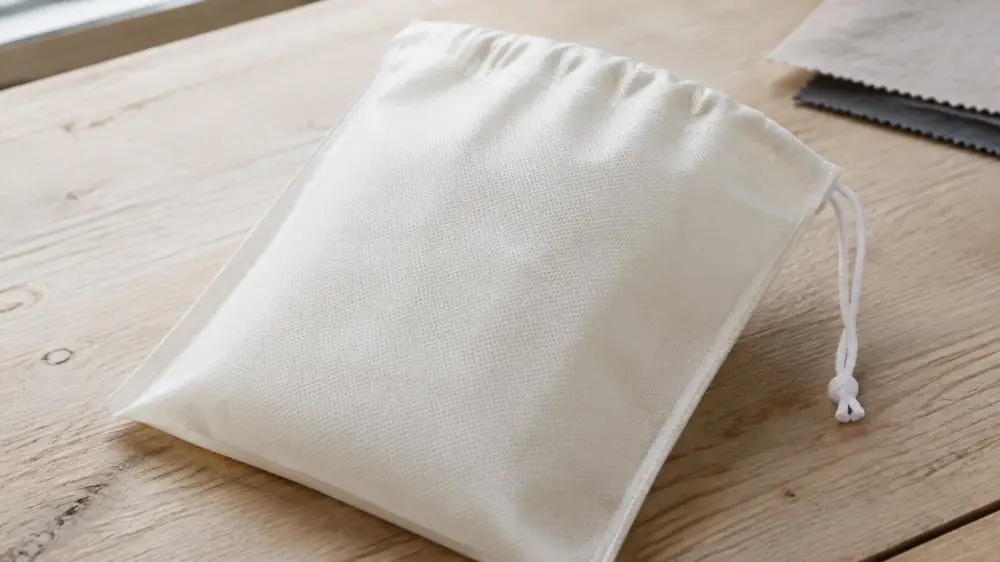
Promotional packaging moves fast — a pouch reaches a customer and becomes part of the presentation of the product inside. Non-woven drawstring bags can suit gift sets, event giveaways, retail accessories, and e-commerce inserts, but the term covers many possible materials, constructions, and finishing choices. A vague request for quote can lead to revisions, inconsistent assumptions, or samples that do not match the intended use.
Quick Summary
- Define the intended use, contents, handling conditions, and market requirements before requesting quotations.
- Ask the supplier to confirm the fabric composition, material weight, lamination, seam construction, cord details, and finishing options for the proposed bag.
- Confirm whether a requested logo method suits the selected material and artwork through an approved physical sample.
- Record dimensions, color references, logo placement, approval criteria, and inspection requirements in a written specification.
- Agree on the sampling, production approval, and quality-control process with the supplier before placing an order.
This guide helps B2B buyers define the points that need confirmation before production. The final specification should reflect the intended contents, use conditions, artwork, approval process, and any applicable market requirements.
Start with the Intended Use and Packaging Requirements
Every specification decision starts with one question: what does the bag need to do? A bag used for an event giveaway may have different requirements from one used for gift packaging, retail presentation, or repeated handling by an end user.
Think through the full journey the bag will take. Will a kitting team fill it, or will it ship empty? Will it travel inside another package, appear at retail, or support repeated use? These answers may affect the material, seams, cords, finish, and inspection plan.
Buyers sourcing custom fabric pouch packaging should describe the use case in writing before requesting quotes. Even a short brief can help suppliers quote against the same requirements and identify details that still need confirmation. For the next specification steps, buyers can review the guidance on [non-woven material and construction](#specify-the-non-woven-material-and-construction), [dimensions and closure](#confirm-dimensions-closure-and-finishing-details), and [sampling and quality control](#plan-sampling-approvals-and-quality-control).
Document these points before approaching a supplier:
- Primary contents, including their weight, size, and fragility
- End-use context, such as retail, events, e-commerce, or gift packaging
- Expected handling, storage, and reuse conditions
- Destination market and any product, labeling, packaging, or claim requirements
Specify the Non-Woven Material and Construction
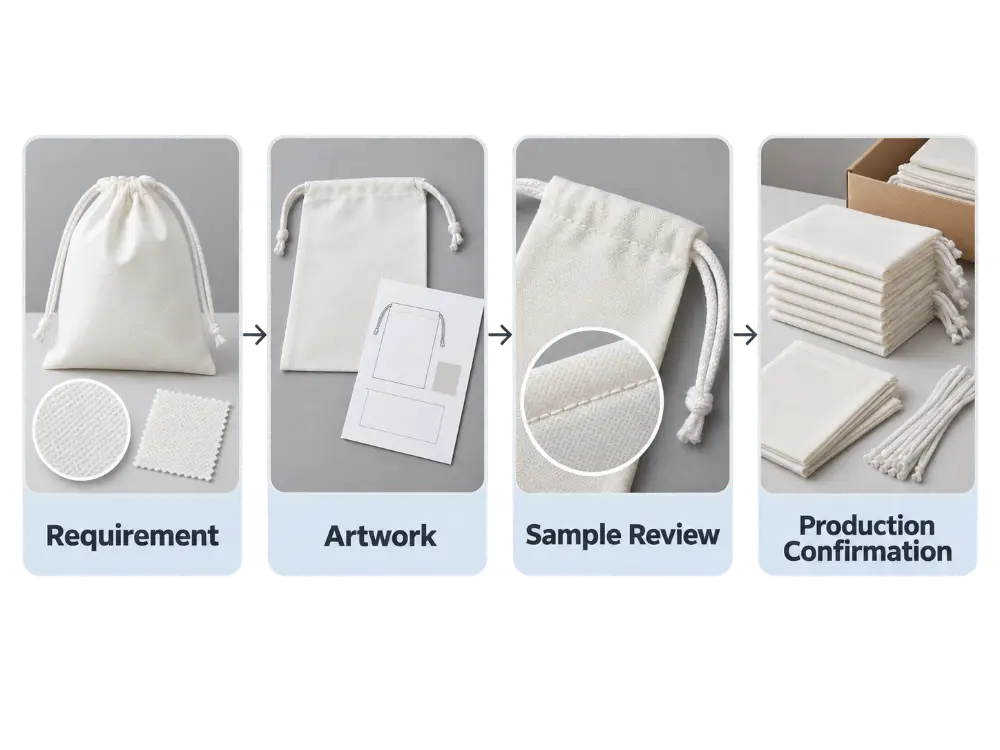
Ask the supplier to identify the proposed fabric composition and construction rather than relying on the general term “non-woven.” Available options may differ by supplier, project, surface finish, color, and intended use. If recycled-content, material-source, or environmental claims matter to the project, request supporting documentation and confirm what the documentation covers.
| Material or Construction Item | What the Buyer Should Confirm | Why It Matters |
|---|---|---|
| Base fabric | Fiber or polymer composition, supplier description, and finish | Helps define the product accurately |
| Material weight | The supplier’s proposed weight and how the supplier will check it | Supports consistent comparison between quotations and samples |
| Lamination or coating | Whether a film, coating, or other surface treatment forms part of the bag | May affect appearance, print options, and end-of-life considerations |
| Recycled-content claim | Supporting documents, claim wording, scope, and validity | Helps buyers assess whether a claim suits the intended market |
| Seam construction | Stitch type, thread, reinforcement, and finished appearance | Defines a visible construction detail that buyers should check on samples |
Seam construction needs clear written approval. Instead of assuming that one stitch style will suit every project, ask the supplier to show the proposed seam on a sample and agree on the inspection points. The relevant checks may include seam appearance, stitch consistency, reinforcement details, and performance under conditions agreed by both parties.
The cord channel — the folded top section through which the drawstring runs — also needs definition. Confirm its construction, appearance, cord route, and any reinforcement around the cord exits. Include these details in the sample review and approved specification.
Buyers considering material or environmental claims should avoid broad terms unless they can support them. Ask suppliers what the claim means for the specific bag, what documents are available, and whether the claim language needs legal or market review. For general recycling information in the United States, buyers can consult the U.S. Environmental Protection Agency recycling resources . Recycling access and recycled-content documentation can vary by material, product construction, and destination market.
For U.S. environmental marketing claims, buyers can also review the Federal Trade Commission Green Guides and obtain appropriate legal or compliance advice for the intended claim. These sources do not replace project-specific document review.
Confirm Dimensions, Closure and Finishing Details
Dimensions should describe the finished bag in a consistent way. Buyers and suppliers should agree on the measurement points, whether the cord channel forms part of the stated height, and the tolerance that applies to the finished product. Do not assume a standard tolerance; confirm it for the specific construction and inspection method.
Closure details are frequently unclear. The cord itself may vary in material, shape, color, finish, and route through the bag. Ask the supplier which options are available for the selected construction.
For each closure option, confirm the following:
- Cord material, construction, color, and finish
- Cord thickness or size reference, if relevant to the project
- End treatment, such as a knot, sealed end, or another agreed finish
- Cord exit position and channel configuration
- Any reinforcement required at cord exit points
Finishing options to confirm in writing include:
- Gusset requirement and base construction
- Lining requirement, if any
- Reinforcement patches or added structural details
- Retail-display features, if required
- Packaging format, packing method, and carton requirements
A dimensioned drawing or approved reference sample can reduce ambiguity. If the order includes several variants, identify which measurements and construction details apply to each variant.
Choose the Logo Method and Artwork Requirements
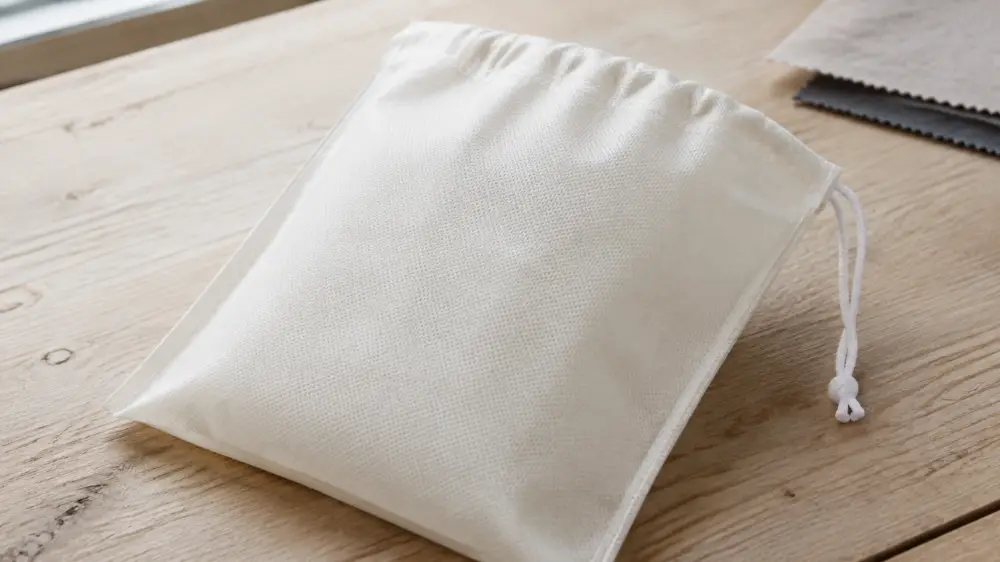
The selected material surface, logo artwork, color requirements, and intended use can affect which decoration methods a supplier may offer. Do not treat a listed method as automatically suitable for every non-woven fabric. Ask the supplier to confirm availability and evaluate the proposed result on a physical sample.
| Logo Method | Questions for the Supplier | Sample Checks for the Buyer |
|---|---|---|
| Screen printing | Is the proposed fabric surface suitable for the artwork and colors? | Position, color appearance, edge definition, and adhesion under agreed conditions |
| Heat transfer | Is the surface compatible with the proposed transfer process? | Surface appearance, adhesion, flexibility, and any visible edge effect |
| Embroidery | Can the bag construction support the requested design? | Stitch appearance, backing, distortion, and placement |
| Foil or hot stamping | Is the material finish compatible with the proposed effect? | Coverage, placement, surface consistency, and appearance after agreed handling |
| Other digital methods | Which method is proposed and what files are required? | Color result, detail reproduction, adhesion, and consistency across samples |
Supply artwork in the format requested by the supplier. Vector artwork may help with some decoration methods, but buyers should confirm file requirements rather than assume one format applies to every process.
Record logo placement and size on a dimensioned specification sheet. The sheet should identify the reference points used for measurement, the artwork version, color references where needed, and the allowed placement variation. A digital image alone may not provide enough information for production approval.
Color-critical projects need sample approval. Digital screens, material surfaces, inks, films, threads, and lighting can all affect the perceived result. Agree on the color reference, review method, and acceptance criteria with the supplier before production.
Plan Sampling, Approvals and Quality Control
Sampling gives buyers and suppliers an opportunity to confirm the agreed specification before a larger production run. The process does not need to follow one fixed sequence. Instead, buyers should agree with the supplier on the sample type, number of samples, approval points, timing, and responsibility for sign-off.
A pre-production sample may help buyers review the construction, materials, finish, and logo placement. If the project requires additional production-stage confirmation, define the purpose and conditions of that review in advance.
At sample review, buyers can check:
- Material composition, finish, and hand feel against the agreed reference
- Finished dimensions against the agreed measurement method and tolerance
- Seam appearance, cord channel construction, and cord exit details
- Logo position, color appearance, and finish against the approved artwork
- Gussets, linings, reinforcements, and other requested details
- Any performance checks that both parties have agreed are relevant to the intended use
If the buyer requires quality testing, the parties should agree on the test method, sample quantity, acceptance criteria, and person or organization responsible for the check. Do not assume that a visual sample review proves durability, print performance, or suitability for a particular use condition.
When buyers discuss specifications, samples, or approval records with YJXPACK, they should keep the final approved documents, artwork version, and sample records together so that the production reference remains clear for all parties.
Assess Cost Factors, MOQ and Order Readiness
Unit cost for a custom non-woven drawstring bag depends on the confirmed specification. A quotation may change when the buyer changes the material, size, construction, decoration, packing method, or order quantity.
Key cost factors to clarify before requesting a quote include:
- Material composition, weight, finish, and any special sourcing requirement
- Finished dimensions and the amount of material required
- Seam construction, gussets, linings, reinforcement, and other labor steps
- Logo method, artwork complexity, colors, and setup requirements
- Cord material, finish, color, and closure construction
- Order quantity, packing format, and delivery requirements
Minimum order requirements can vary by supplier, material, decoration method, and construction. Ask YJXPACK to confirm the applicable requirement for the final specification rather than relying on a general MOQ assumption. If the initial specification does not fit the buyer’s commercial needs, discuss which elements can be adjusted and what trade-offs those changes may create.
Production timing also depends on the confirmed specification, material availability, artwork preparation, sample approvals, and shipping arrangement. Confirm the relevant schedule after both parties have defined the project requirements.
Use a Buyer Checklist for RFQs and Applications
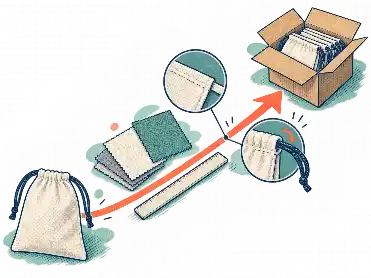
A structured RFQ helps buyers compare supplier responses against the same brief. It also creates a clearer starting point for sample approval and production discussions. Buyers can use this [buyer checklist](#use-a-buyer-checklist-for-rfqs-and-applications) when preparing the information for a supplier.
Material and construction:
- Fabric composition and supplier material description
- Material weight or other agreed material reference
- Surface finish, lamination, coating, or lining requirement
- Seam construction and reinforcement details
- Gusset requirement and bag shape
Dimensions and closure:
- Finished width and height, plus the agreed measurement method
- Cord channel construction
- Cord material, color, size reference, and end finish
- Cord exit configuration
- Dimensional tolerance and inspection method
Logo and branding:
- Requested decoration method or request for supplier recommendation
- Logo placement shown on a dimensioned drawing
- Current artwork files and version control
- Color references and color-approval process
- Required visual acceptance criteria
Sampling and approval:
- Sample type and number of samples requested
- Approval criteria and named sign-off contact
- Required checks before production begins
- Any production-stage sample or inspection requirement
Order and logistics:
- Target order quantity
- Delivery destination and shipping requirements
- Packaging and carton requirements
- Required delivery date or event date
Sharing this checklist before the first quotation discussion can reduce clarification rounds and help the supplier identify missing information early.
Frequently Asked Questions
What material weight should buyers request for a promotional non-woven drawstring bag?
There is no single material weight that suits every promotional bag. The appropriate option depends on the contents, bag construction, intended handling, desired appearance, and budget. Ask the supplier to propose suitable options, then compare physical samples against written acceptance criteria.
Can non-woven drawstring bags carry a full-color logo?
A supplier may offer decoration methods that support multi-color artwork, but suitability depends on the fabric surface, artwork detail, process, and expected use conditions. Ask the supplier to confirm the proposed method and approve a physical sample before production. If print durability matters, agree on a relevant test method and acceptance criteria.
What is the difference between laminated and non-laminated non-woven fabric?
A laminated or coated construction includes an additional surface layer, while a non-laminated construction does not. That difference can affect appearance, texture, decoration options, material composition, and recycling considerations. Ask the supplier to describe the proposed construction and provide samples for comparison.
How can buyers verify a recycled-content claim for a non-woven bag?
Ask the supplier for documentation relevant to the specific material or component and confirm the document scope, validity, custody records, and permitted claim language. If the bag will be sold or marketed with a recycled-content claim, buyers should also review the applicable requirements in the destination market with an appropriate compliance adviser.
Should buyers approve a separate sample for each colorway or size variant?
The answer depends on which variables change between variants. Buyers and suppliers should agree in writing on which construction, color, artwork, size, and finishing details each approved sample covers. When a variant changes a feature that may affect appearance or performance, request a sample or other evidence appropriate to that change before authorizing production.
Share This Story, Choose Your Platform!