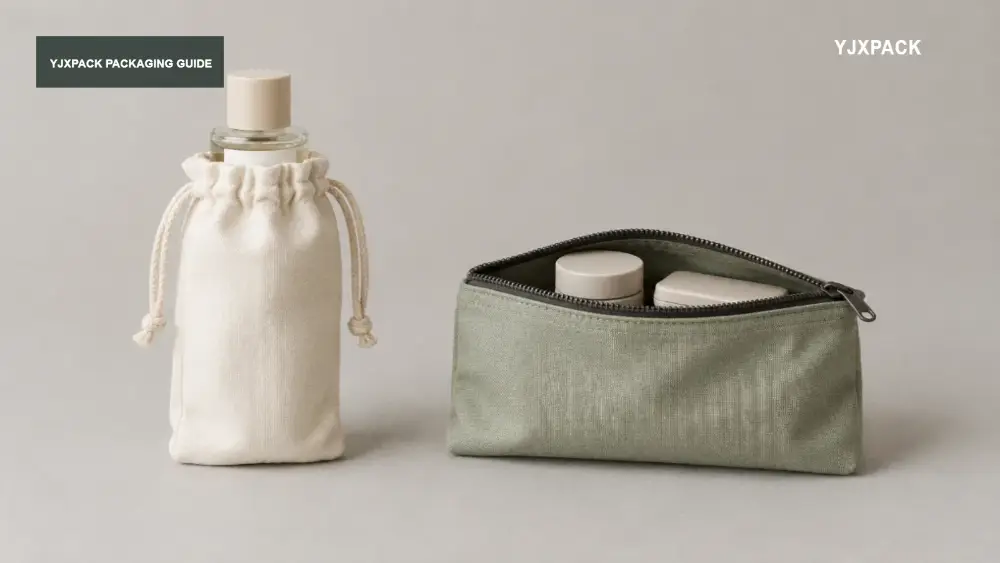
When a footwear brand specifies custom shoe dust bags, the first decision is deceptively simple: one bag per shoe or one bag per pair? That choice drives every downstream specification—material weight, bag dimensions, closure style, logo placement and carton packing. Get it wrong and the format may not suit the shoe, shoebox or handling process, while also adding unnecessary cost per unit.
This guide walks through the practical questions a buyer must answer before sampling or requesting a quote for custom footwear dust bags. It explains the selection logic, while availability, construction options, artwork limits, MOQ, sampling, pricing and documentation must be confirmed against the final brief during quotation.
—
Choosing Single-Shoe or Pair Shoe Dust Bags
The single-versus-pair decision affects almost everything else in the brief.
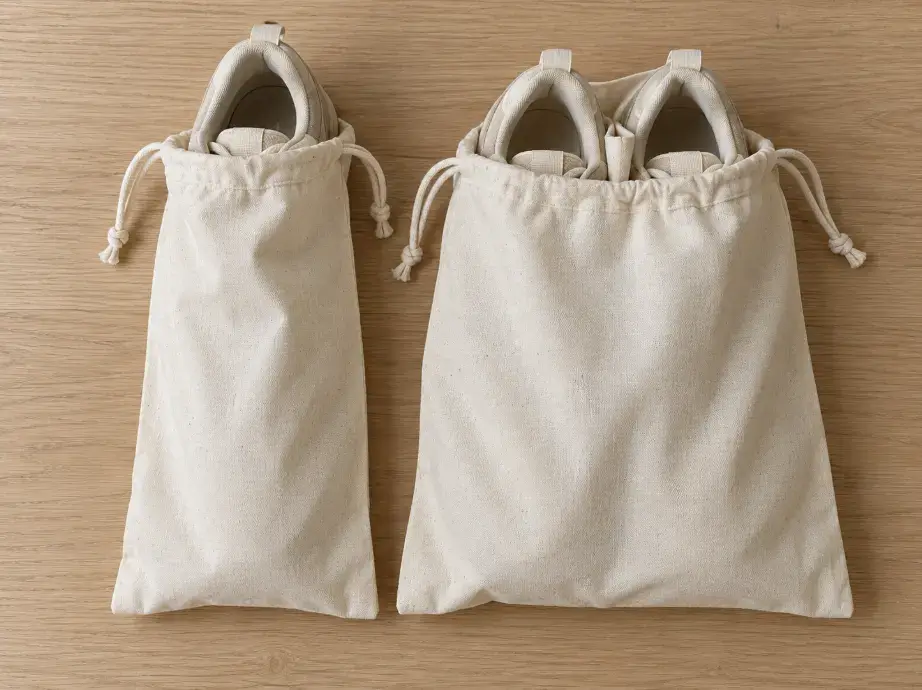
Single shoe dust bags wrap each shoe individually. They are often selected for premium footwear because separate fabric surfaces can, to a degree, reduce shoe-to-shoe contact inside the box. Two bags per pair means double the unit count per order, but each bag is smaller and lighter.
Pair shoe dust bags hold both shoes in one larger bag. They are common in mid-market retail, e-commerce and promotional packaging. They reduce piece count and simplify packing-line labor, but the shoes may contact each other unless the buyer adds an internal divider or tissue layer.
Factors that shift the decision
- Retail tier and unboxing expectation. A brand selling leather dress shoes at a high price point generally uses single-shoe bags. A sneaker brand shipping direct-to-consumer may prefer a single pair bag to keep the unboxing efficient.
- Shoe material. Patent leather, suede and metallic finishes can be more sensitive to scuffing. A single-bag format creates separation between the two shoes.
- Box size. If the shoebox already fits tightly around the shoes, a pair bag must be sized carefully so it does not bunch and wrinkle inside the box. Two smaller single bags often fit more neatly.
- Order economics. Two single bags per pair doubles the logo count, which may affect setup charges for screen printing or hot stamping. Confirm this during quotation.
- Warehouse workflow. If shoes are packed by hand into boxes on a line, the number of bag-handling steps matters. Some brands prefer a single pair bag for faster throughput.
The buyer should decide this point before requesting samples, because changing from single to pair (or the reverse) after sampling resets dimensions, artwork layout and possibly material consumption.
—
What Should the Bag Protect Against During Retail Handling?
A dust bag for footwear is not structural packaging. It sits inside a shoebox. Its job is narrower than a shipping bag or a travel shoe bag, and defining that job precisely keeps the specification realistic.
The typical protection requirements for shoe dust bags include:
- Dust and lint. During warehouse storage, transit and retail shelf life, fine particles settle on exposed surfaces. The bag keeps the shoe surface clean.
- Light surface abrasion. Shoes shift inside the box during handling. With a suitable fabric, construction and fit, the bag can provide a separating layer that may reduce minor friction exposure.
- Moisture-management considerations. A breathable construction may be preferable where storage conditions, outer packaging and shoe materials call for air exchange. Whether it meaningfully reduces condensation risk depends on the fabric, box, transit conditions and storage environment, so it should be assessed on the actual sample and packing system.
- Color-transfer exposure. Dark or heavily dyed shoe components can leave marks on lighter materials. A dust bag creates separation, but dye-transfer risk should be checked against the actual footwear and approved sample rather than assumed away.
What a dust bag does not do
A standard fabric dust bag does not provide waterproofing, crush protection, or mold prevention. If the buyer needs those properties, the brief should specify a different packaging layer—silica gel inserts, rigid inserts, or coated barrier materials—rather than loading all functions onto the dust bag.
Defining the protection scope clearly avoids over-specification (and unnecessary cost) while making quality-control criteria easier to set. A dust bag should be evaluated as one layer in the full footwear packaging system, not as a stand-alone guarantee of protection.
—
Material, Breathability and Abrasion Variables
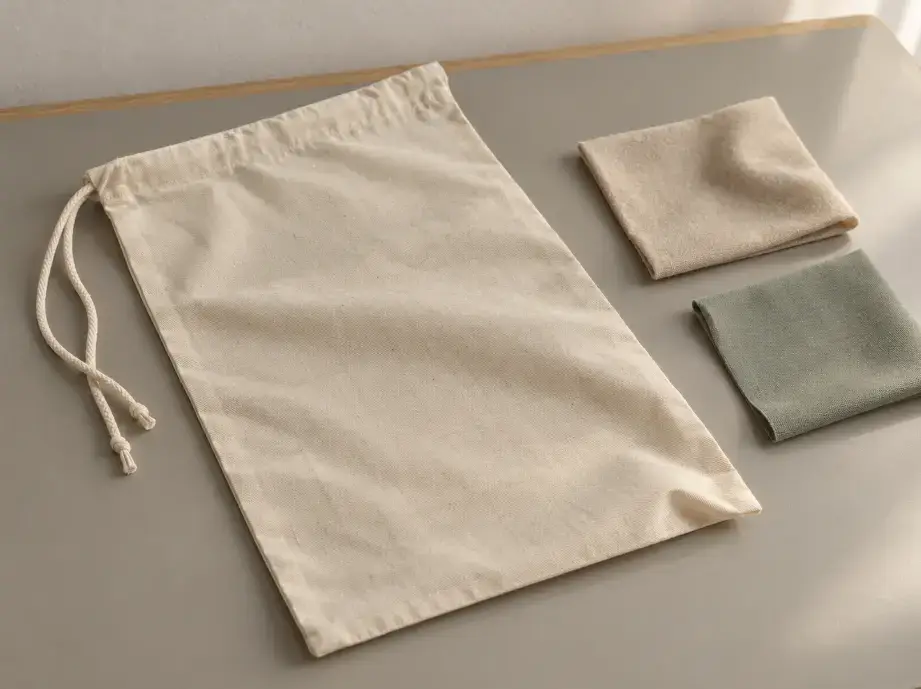
Material selection for custom shoe dust bags depends on the protection brief, the brand positioning and the cost target. The table below is a directional comparison of commonly used fabric families; actual feel, density, performance and pricing vary by construction, finish, color and order details and should be confirmed with swatches and samples.
| Fabric | Typical feel | Breathability | Abrasion protection | Brand positioning fit | Cost range |
|---|---|---|---|---|---|
| Non-woven polypropylene (PP) | Smooth, lightweight | Good | Basic | Budget to mid-market | Lower |
| Cotton (muslin, twill, canvas) | Natural, soft to crisp | Good | Moderate to good (depends on weight) | Mid-market to premium | Moderate |
| Cotton–polyester blend | Smooth, consistent | Good | Moderate | Mid-market | Moderate |
| Flannel or brushed cotton | Soft, slightly napped | Moderate | Good (nap cushions surfaces) | Premium | Moderate to higher |
| Microfiber (polyester/nylon blend) | Very smooth, dense | Lower | Good (non-abrasive surface) | Premium, tech, eyewear crossover | Higher |
| Non-woven with laminate | Smooth, slightly stiff | Reduced (laminate dependent) | Moderate | Promotional, short-term storage | Lower |
Key material questions the buyer should resolve
- Fabric weight (GSM). A heavier fabric gives more abrasion cushion but adds bulk inside the shoebox. For single-shoe bags, a lighter weight fabric may be preferable so two bags fit without crowding. Confirm available GSM options at quotation.
- Surface texture. Napped or brushed fabrics may be worth sampling for patent leather and metallic finishes, while smooth fabrics are commonly considered for athletic and casual shoe packaging. Confirm the selected surface against the actual shoe material.
- Breathability versus dust penetration. Very open-weave fabrics breathe well but allow fine dust through. Very tight weaves block dust but may trap moisture. The buyer should match fabric density to expected storage conditions.
- Color and dyeing. White or natural-colored bags may simplify color-transfer risk management, but they do not remove the need for sample checks. Dyed bags should be assessed for colorfastness—especially when paired with light-colored footwear. Request the relevant test evidence or agreed sample check if this matters.
- Sustainability claims. If the buyer needs organic cotton, GRS-certified recycled polyester, or OEKO-TEX Standard 100 compliance, these must be specified in the initial brief so the supplier can confirm material sourcing. Never assume a fabric carries a certification without documentation. For a deeper look at eco-friendly pouch sourcing, see Best Eco-Friendly Pouches: OEKO-TEX, GRS & Organic Cotton Guide.
—
How Should Buyers Define Size and Construction for Single or Paired Footwear?
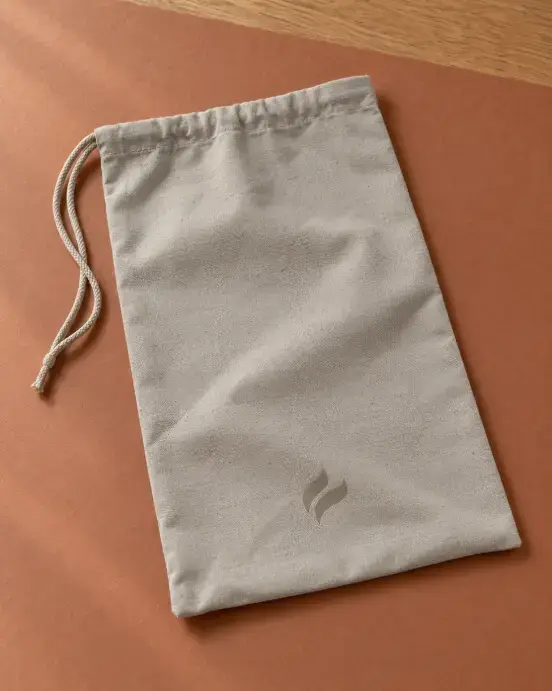
Shoe sizes vary enormously—from a women’s flat to a men’s size 14 hiking boot. The dust bag must accommodate the largest shoe in the range without excessive slack around smaller sizes.
Sizing approach
Most brands do not produce a different dust bag size for every shoe size. Instead, they define one or two bag dimensions that cover their full size range with acceptable fit. Common approaches:
- One universal bag size that fits the largest shoe in the line, with enough width and depth to slide the shoe in easily. Smaller shoes will have more slack, but the bag still protects.
- Two size tiers—for example, one size covering women’s and smaller men’s shoes, and a larger size for men’s large and boots. This adds a second SKU to manage but improves presentation.
- Category-specific sizing—a flat, a sneaker and a boot each get a bag matched to their proportions. This makes sense only for brands with distinct product families that ship in separate packaging.
Construction details to specify
- Seam type. Overlocked (serged) edges resist fraying on non-woven and woven fabrics. French seams hide raw edges for a cleaner interior, which matters if the bag is visible to the end customer during unboxing.
- Orientation. Most shoe bags are landscape (wider than tall) to match the footprint of a shoe lying flat. Portrait-oriented bags work for tall boots. Confirm orientation with the shoe laid flat in the shoebox to check clearance.
- Gusset or flat. A flat bag (no gusset) works for most shoes. Bulky boots or high-tops may need a gusseted bottom or sides to avoid stretching the seams.
- Internal divider. For pair bags, some brands add a center seam or stitched divider so the two shoes occupy separate compartments inside the same bag. This adds sewing steps and must be specified before sampling.
The buyer should measure the actual shoe (not the box) at its widest, tallest and deepest points, add clearance for easy insertion, and provide those dimensions to the supplier. Exact dimensions must be confirmed on the approved sample before production.
—
Which Closure and Branding Method Fits the Package?
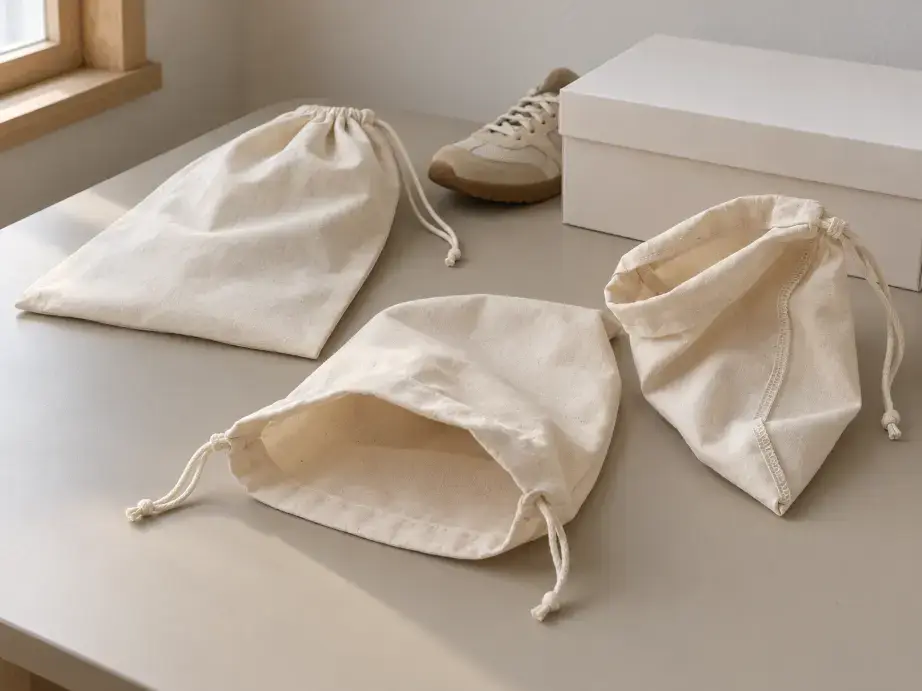
Closure options
The closure keeps the bag shut during storage and transit. For shoe dust bags, the most common options are:
- Single drawstring. One cord channel near the bag opening, pulled from one or both sides. Simple, low-cost, reliable. Works well for both single-shoe and pair bags.
- Double drawstring. Two separate cords, one from each side, for a more controlled closure. Slightly more complex to sew and slightly higher cost.
- Open top (no closure). The simplest construction. The shoe slides in and the bag folds over. Common for single-shoe bags in luxury footwear where the shoe sits in a fitted box and does not need a sealed closure.
- Flap with ribbon or snap. A sewn flap covers the opening. Looks polished but adds material, sewing steps and cost. Less common for shoe dust bags than for handbag dust bags.
For drawstring bags, the cord material matters. Cotton cord matches cotton bags and gives a natural feel. Satin ribbon suits premium branding. Polyester cord is durable and available in many colors. Cord thickness and end finishing (knots, cord stops, aglets) should be specified. For guidance on drawstring pouch construction details, see What Is a Drawstring Pouch? A Complete Guide to Types, Uses & Materials.
Branding and logo methods
Shoe dust bags almost always carry a brand logo. The method depends on the fabric, the logo complexity and the brand positioning.
- Screen printing. Works on cotton, non-woven and most flat-surface fabrics. Cost-effective for simple one- or two-color logos. Good for large print areas.
- Hot stamping (foil). Creates a metallic or matte foil impression. It may suit cotton, non-woven and some microfiber surfaces, subject to a sample on the chosen fabric. It can create a premium visual effect without embroidery.
- Embroidery. A stitched logo creates a tactile surface. It usually adds per-unit cost and production steps, and is often considered for smaller logos on fabrics that can support the stitch density. Confirm the result and reverse-side appearance on a sample.
- Heat transfer. Can reproduce multi-color and photographic artwork. The transfer film and application settings must be compatible with the selected fabric; verify the finished sample for appearance and adhesion.
- DTF (direct-to-film) printing. Can support full-color artwork on a range of fabrics. Confirm appearance, adhesion and any required use-condition checks on the specific fabric during sampling.
- Woven label or sewn tag. A separate label stitched onto the bag. Adds a secondary branding element without printing directly on the fabric.
For a detailed comparison of logo methods and their cost structures, see Screen Printing vs Heat Transfer vs Embroidery: Which Logo Method Is Best for Custom Pouches?.
Logo placement decisions for shoe bags
- Centered on one face. The standard approach for single-shoe bags. The logo faces up when the shoe is placed in the box.
- Centered on the front face of a pair bag. The bag is visible when the box is opened.
- On the flap or near the drawstring. For bags where the top portion folds down, placing the logo here keeps it visible even when the bag is closed.
- Both sides. Some brands print on both faces so the logo shows regardless of how the bag is placed. This adds a second print pass and increases cost.
The buyer should confirm logo dimensions, position and color on the artwork file, and approve placement on a physical sample before production.
—
Cost, MOQ, Sampling and Quality-Control Decisions
What drives cost per unit?
Custom shoe dust bags are simple products, but several specification choices affect the final price:
- Material type and GSM. Non-woven PP is generally the lowest cost. Cotton canvas at higher weights is more expensive. Specialty fabrics like microfiber sit at the upper end.
- Bag dimensions. Larger bags use more fabric per unit. Pair bags consume more material than single-shoe bags, but the total piece count per pair is one instead of two—so the per-pair cost comparison is not always straightforward.
- Closure complexity. An open-top bag has fewer sewing steps than a drawstring bag. Double drawstrings, cord stops and ribbon closures add incremental cost.
- Logo method and coverage. A single-color screen print on one side is the most economical option. Multi-color prints, embroidery and large-area foil stamping cost more per unit.
- Order quantity. Higher volumes may reduce the per-unit effect of setup charges (screens, dies or embroidery digitizing), but the actual quotation should be compared by specification and quantity tier.
- Finishing and packing. Individual poly-bagging, tissue interleaving, or specific carton packing instructions add handling steps.
MOQ and sampling
Minimum order quantities vary by material, construction and logo method. The buyer should request MOQ information for each specification variant, not assume a single number applies across all options.
Sampling is a critical step for shoe dust bags because the bag must physically fit the shoe inside the shoebox. A flat sample that looks correct on a table may behave differently when a shoe is inserted. Request a pre-production sample and test it with the actual shoe and box before approving production.
Key sampling actions:
- Insert the real shoe into the sample bag. Check that the shoe slides in and out without snagging or stretching the fabric.
- Close the drawstring or fold the flap. Confirm the closure holds during normal handling.
- Place the bagged shoe into the shoebox. Verify that the bag does not add too much bulk, prevent the box from closing, or bunch in a way that creates pressure marks on the shoe.
- Inspect logo print quality, color accuracy and adhesion.
- Inspect the seams at likely stress points and agree any required seam-strength or handling test method with the supplier; a simple hand pull is only an initial sample check, not a validated strength test.
Quality-control points for production
Once the sample is approved, production quality control should cover:
- Dimensional tolerance. Confirm the acceptable size variance in the approved specification rather than relying on a generic default.
- Fabric consistency. Color, weight and hand feel should match the approved sample across the full run.
- Logo quality. Position accuracy, print sharpness, foil adhesion, embroidery neatness.
- Seam integrity. No skipped stitches, loose threads or uneven overlocking.
- Drawstring function. Cord slides freely, knots or cord stops are secure, cord length matches specification.
- Cleanliness. No stains, oil marks or dust on finished bags.
- Packing. Bags are counted, folded and packed per the agreed packing instruction.
For a broader quality-control framework for fabric pouches, see A Practical Quality-Control Checklist for Custom Jewelry Pouches—the inspection logic applies equally to shoe dust bags.
—
Sample-Confirmation Checklist and Buyer Questions
Before requesting a quote or sample for custom shoe dust bags, the buyer should prepare the following information. Each item should be defined or explicitly flagged as “to be confirmed with supplier.”
Specification checklist
- Format: Single-shoe bag or pair bag
- Shoe types covered: List all shoe categories (flat, sneaker, boot, heel, etc.) and size range
- Bag dimensions: Width × height (× gusset depth if applicable), with clearance for the largest shoe
- Material: Fabric type, target GSM, color (Pantone reference if available)
- Closure: Open top, single drawstring, double drawstring, flap, or other
- Drawstring details: Cord material, color, thickness, end finishing
- Logo method: Screen print, hot stamp, embroidery, heat transfer, DTF, woven label
- Logo artwork: Vector file, color specification, dimensions, placement on the bag
- Print sides: One side or both sides
- Internal construction: Lining (yes/no), center divider for pair bags (yes/no)
- Finishing: Individual poly-bag, bulk pack, other
- Target quantity per order
- Sustainability or compliance requirements: Certifications, restricted-substance requirements, documentation needed
- Destination market: Country of import (may affect labeling or compliance obligations)
Questions to ask the supplier
- Can you provide fabric swatches in the target material and GSM before committing to a sample?
- What is the MOQ for this specification, and does it change if the logo method changes?
- What is the expected sample lead time and production lead time for this order size?
- Can you produce multiple bag sizes within the same order, and how does that affect pricing?
- What quality-control inspections do you perform during production?
- Can you provide test reports for colorfastness, fabric weight or restricted substances if required?
- How are bags packed for export, and what is the carton size and weight for freight planning?
—
Next Step
If you are defining a custom shoe dust bag specification—whether for a single-shoe premium format or a pair bag for e-commerce—prepare the checklist above with as much detail as possible. Contact YJXPACK with your brief, shoe dimensions, target quantity and any material, branding or documentation requirements to start the sampling conversation.
—
Frequently Asked Questions
Can one dust bag size work for an entire shoe collection?
In many cases, yes. Brands commonly specify a bag sized for the largest shoe in the range and accept that smaller shoes will have extra room. If the size range spans from ballet flats to tall boots, two or three bag sizes may be more practical. The decision depends on how much slack the brand is comfortable with from a presentation standpoint.
Is non-woven fabric good enough for shoe dust bags?
Non-woven polypropylene is widely used for shoe dust bags, especially in mid-market and volume footwear. It can provide a basic separating layer at a relatively simple construction level. For premium finishes such as patent leather or suede, a softer woven or brushed fabric may be worth comparing. The final choice should match the shoe material’s sensitivity, the packing system and the brand’s positioning.
Do shoe dust bags need to be breathable?
Breathability can be relevant when shoes are stored for extended periods in closed packaging, but it is only one part of moisture-risk management. The shoe material, outer box, transit route, warehouse conditions and any desiccant strategy also matter. Compare fabric options and assess the actual packed sample if the project will face humid or long-term storage conditions.
Should the dust bag match the shoebox color?
There is no universal rule. Many brands choose white or natural-colored dust bags for simplicity and easier color-risk management. Others match the bag to the brand’s signature color for a coordinated unboxing experience. For dyed bags, assess colorfastness and any transfer risk against the actual shoe material, especially for light-colored footwear.
—
Share This Story, Choose Your Platform!