Custom laundry bags for hotel and retail programmes are rarely a one-size purchase. Before a buyer requests pricing, it helps to separate the product decision from the decoration decision. Hotel laundry bags used at a guest-room collection point may need a very different opening, capacity, identification method, and replenishment plan from a branded bag sold as part of a retail programme.
This guide is for buyers preparing a custom specification. It does not set a universal load rating, wash cycle, or performance promise. Those points should be defined for the intended use and confirmed against the final material, construction, logo method, and sample.
What to Decide Before Requesting a Quote
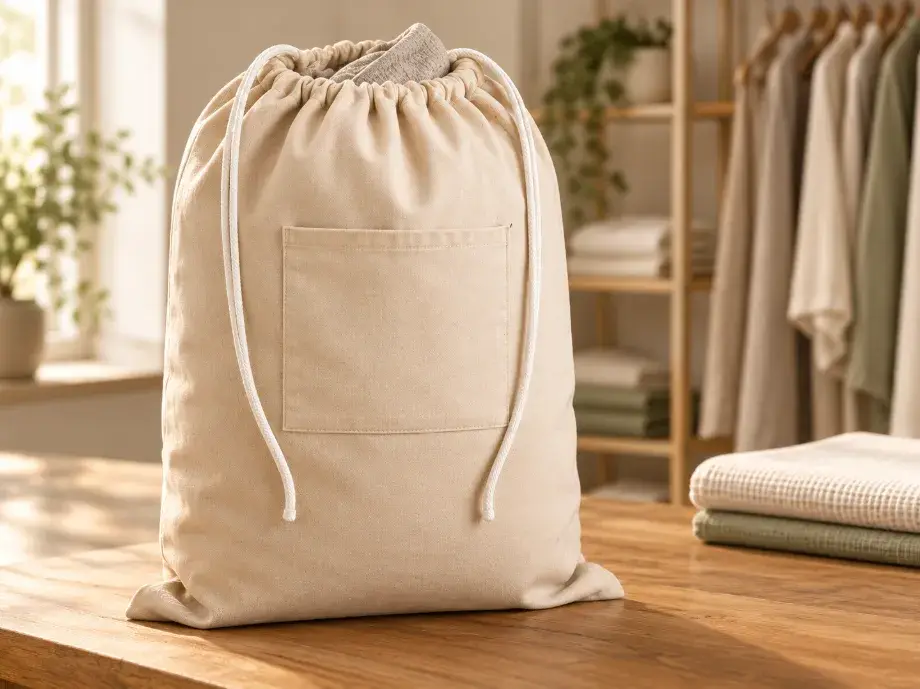
Start with the bag’s role in the programme. "Laundry bag" can describe several different products, and combining their requirements in one vague brief often produces quotes that are difficult to compare.
A hotel may use a simple bag for guests to place used garments in before housekeeping collection. A housekeeping team may instead need a larger bag that is carried, sorted, or placed inside a cart. A retail brand may need a reusable branded bag that accompanies a product or is sold separately. The same project can include more than one of these formats, but each should have its own line in the brief. A custom laundry bag should be specified by its actual user journey, not only by its appearance in a product photo.
Before asking suppliers to recommend a construction, decide:
- Who handles the bag: a guest, a store customer, housekeeping staff, or a laundry partner.
- What normally goes inside: light personal garments, towels, mixed linen, or another defined contents group.
- Whether the bag is collected once, reused by the end user, returned to a laundry process, or replenished at a property.
- How it moves after use: carried by hand, placed in a cart, grouped in a larger collection bag, or packed with a retail product.
- Which point creates the greatest operational risk: unclear ownership, overloaded handling, a difficult closure, an unsuitable logo, or inconsistent reorders.
The goal is not to choose every detail before contacting a supplier. It is to give each supplier the same decision context, so material and construction recommendations can be assessed against the same use case.
Define the Requirements for Custom Laundry Bags
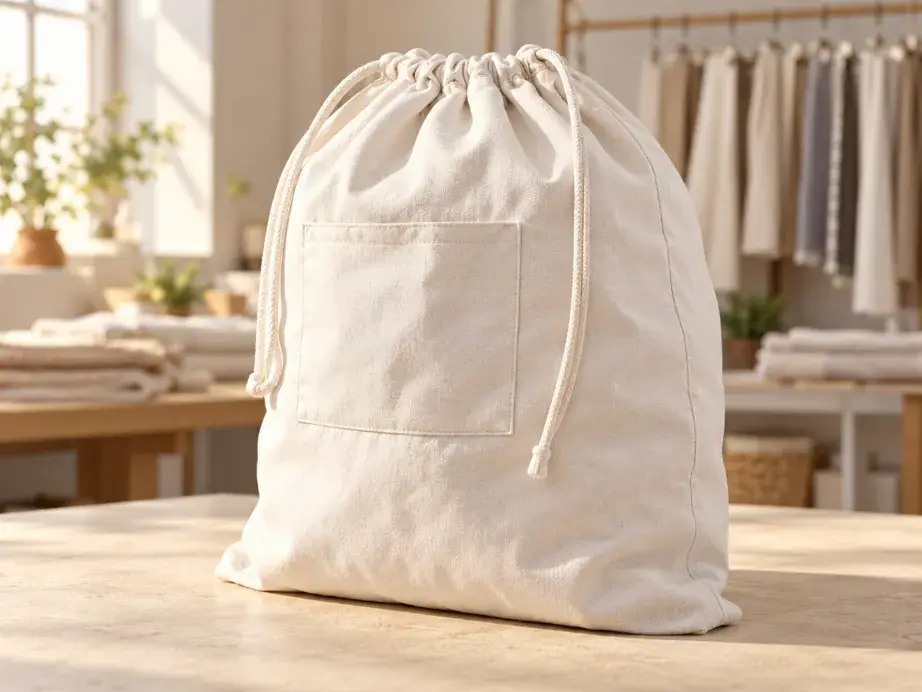
Write the requirement as an operating scenario rather than a short list of adjectives such as "strong," "washable," or "premium." Those words mean different things to different teams.
For example, "guest-room laundry collection bag" tells a supplier less than: "A guest places a small amount of personal clothing in the bag; housekeeping collects it by the top edge; the bag may be reused within the property programme; a visible room or service identifier is required." The second description exposes the decisions that affect the finished bag.
Use the following brief prompts for each bag format:
| Use point | Main sourcing priority | Put this in the brief |
|---|---|---|
| Guest room | Easy guest use and clear collection | Typical contents, where the bag is placed, opening preference, identifier, and whether it is single-use or reusable |
| Housekeeping collection | Handling method and repeat use | Expected filled contents, how the bag is lifted or moved, cart use, closure, and the agreed evaluation conditions |
| Retail or home programme | Presentation and end-user use | Product presentation, desired hand feel, reuse expectation, branding area, care communication, and packaging method |
| Multi-property replenishment | Consistency across orders | Property or programme variations, colour or code system, master artwork, carton labelling needs, and reorder reference |
If the bag will be used in more than one situation, do not assume one construction covers all of them. It may be more practical to define a guest-facing format and an operational collection format separately, even if they share a visual identity.
For retail programmes, also define the moment when the bag is seen. A bag presented inside a travel set, on a shelf, or as an add-on item may need a different fold, front-facing logo area, hanging method, or outer packaging from a bag issued in a hotel room. These presentation decisions affect the quoted size, finishing, and packing route even when the base fabric is similar.
The brief should also state what has not been decided. A supplier can then flag which choices depend on material, drawcord, logo, or finishing details instead of treating an assumption as a fixed requirement.
Material, Construction, and Protection Needs
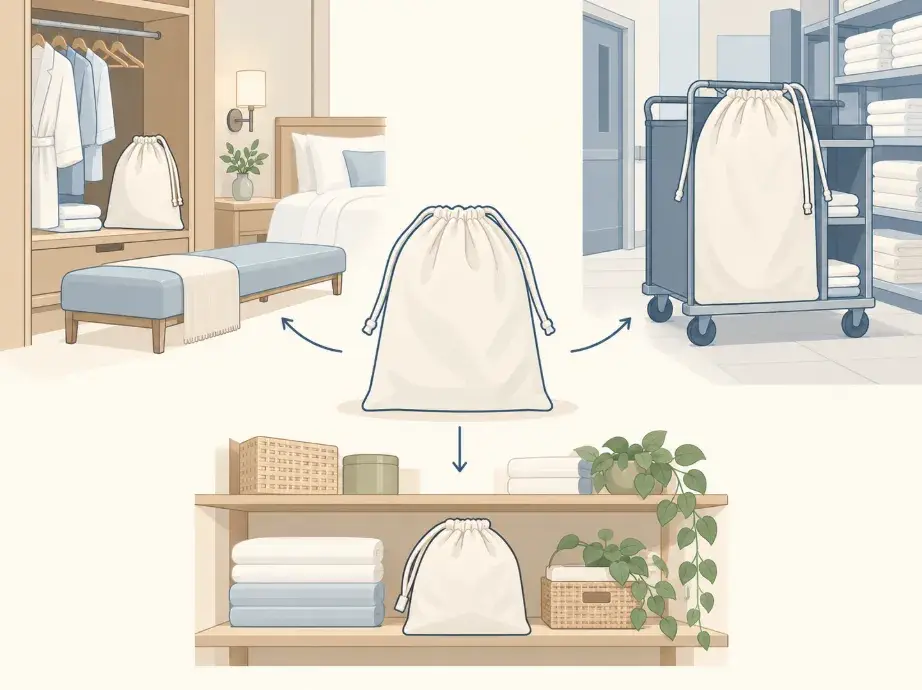
Material selection should follow the use scenario. Cotton, polyester, cotton-blend, non-woven, and other fabric options can create very different hand feel, appearance, weight, and suitability for a specified process. No material should be described as universally suitable for hotel or retail laundry use without confirmation.
Ask the supplier to explain the proposed material in terms that can be checked on a sample:
- The stated fabric type, weight or construction where applicable, and colour.
- Whether a lining, coating, gusset, reinforced seam, binding, or handle is proposed and why.
- The intended method of carrying or lifting the filled bag.
- The agreed laundering or cleaning conditions that the project expects the bag to encounter.
- How the selected logo method, cords, labels, and trims will be assessed under those conditions.
"Protection" also needs to be expressed precisely. A laundry bag may organize garments, separate a customer order, provide a branded handover, or help reduce contact between contents and the surrounding environment to the degree permitted by its final construction. It should not be presented as a hygiene-control, moisture-control, or damage-prevention solution unless a project-specific claim and evidence have been confirmed.
For operational bags, define the expected load through contents and handling, not an invented kilogram figure. For instance, specify whether the bag is expected to contain guest garments, towels, or a mixed linen load; how full it may be filled; and whether a person lifts it by the drawcord, top hem, handle, or a larger outer bag. The supplier can then recommend a seam, hem, and closure approach for sample review.
Where repeated cleaning is expected, ask for a proposed evaluation plan rather than relying on the word "washable." The plan can name the conditions to be agreed by both sides, the parts to inspect after the agreed process, and the visible acceptance criteria for colour, shape, seams, cords, and branding. Actual results remain subject to the final materials and the agreed test or trial conditions.
Size, Closure, and Presentation Choices
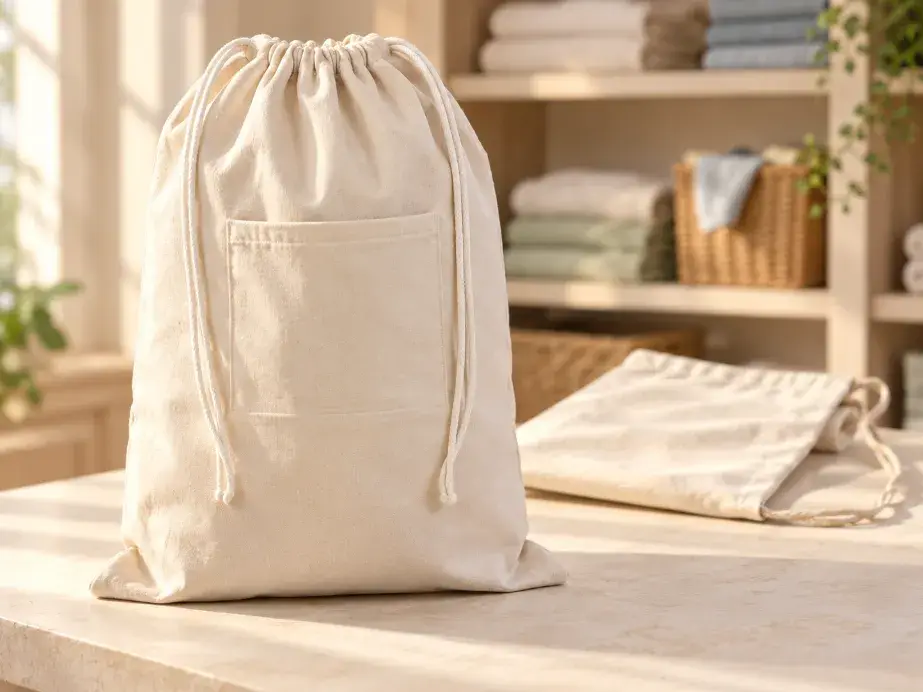
Choose size from the contents and the user journey. An oversized guest-room bag can look untidy or take too much space; an undersized collection bag may encourage overfilling or create an awkward handover. Start with the largest typical item or contents set, then confirm a proposed flat size, gusset if needed, and usable opening on a sample.
The closure affects both appearance and daily handling. Common directions may include an open top, a drawstring, a drawstring with a selected stopper, a flap, a zipper, or a separate handle arrangement. The best choice depends on who opens and closes the bag, whether contents need to remain contained in transit, and whether the closure needs to be comfortable alongside repeated use.
Instead of requesting a generic "strong drawstring," define the questions to resolve:
- Is the cord primarily for closing, carrying, hanging, or all three?
- Does the user need one-hand operation, a wide opening, or a fully closed top?
- Could loose cord ends interfere with a cart, storage area, or retail presentation?
- Should the bag retain a soft guest-facing appearance, or prioritize a more structured operational form?
- Is there a preferred placement for a label, care note, or property identifier?
Presentation choices should be connected to the programme. A retail bag may need a clean front panel for branding and a colour that supports merchandise presentation. A hotel bag may need a quieter appearance that fits a room scheme while still allowing staff to identify its intended service. Avoid treating colour or trim as decoration alone when it can be part of a practical coding system.
Logo and Customization Options
Branding should be planned around the fabric, artwork, placement, viewing distance, and use conditions. Buyers sourcing laundry bags with logo should decide whether the mark is intended for guest recognition, retail presentation, property identification, or an internal programme code. A large logo that looks appropriate on a flat retail bag may not read the same way when a drawstring bag is gathered, folded, or held full. Ask for the artwork format, logo size, placement, and colour references early so the proposed method can be assessed properly.
Depending on the final material and artwork, options may include screen printing, heat-transfer film, embroidery, woven labels, metal labels, foil effects, or other requested treatments. These are options to evaluate, not default performance promises. The final suitability of any logo method should be confirmed against the fabric, artwork, placement, and intended use.
For hotel and replenishment programmes, customization can do more than display a brand. A discrete woven label, printed property code, colour panel, room-service marker, or agreed internal reference may help a team distinguish bag variants. If a barcode, QR code, care label, or compliance message is required, provide the exact content and operating-system requirements; do not assume a decorative print will work as an operational identifier.
Keep guest-facing branding and internal identification separate in the brief. This avoids a situation where the artwork is approved but the required programme code, placement, or data field has not been considered.
What to Include in Your RFQ
An effective RFQ makes quotations comparable. It does not need to contain every production answer, but it should give suppliers enough information to identify missing decisions and quote on a defined direction.
Include the following for each bag version:
- Intended use and user: guest room, housekeeping, retail, home programme, or another named setting.
- Contents and handling: what goes inside, expected fill level, and how the bag is moved.
- Desired dimensions: target flat size, any gusset or depth, and size tolerance expectations if already defined.
- Material direction: preferred fabric if known, colour, lining or coating request, and hand-feel or appearance reference.
- Construction: open top or closure type, cord or trim preferences, handles, labels, seam or reinforcement requests, and any incompatible features to avoid.
- Branding: artwork file, logo method preference if any, location, size, colour references, and whether the bag needs a property or programme identifier.
- Cleaning or reuse conditions: the anticipated process and the project-specific evaluation conditions to be agreed.
- Quantity and programme structure: total order quantity, variants, property allocation, packaging request, and replenishment or reorder expectations.
- Sample request: which version needs a pre-production or approval sample, and what the buyer will review.
If the project has a target market, customer-standard, labelling rule, or procurement policy, attach it to the RFQ. Requirements for care information, materials, labelling, or packaging can vary by market and customer. They should be confirmed against the applicable current rules and the buyer’s own standards rather than inferred from a general hotel or retail use case.
For a YJXPACK enquiry, any statement about project capacity, load suitability, repeated-cleaning suitability, logo durability, or hotel-programme experience remains [VERIFY WITH YJXPACK] until the final specification and sample route are reviewed.
Sample Review, Quality Checks, and Next Step
The sample is where a sourcing brief becomes a working specification. Review it in the same way the bag will be used, not only as a flat product photograph.
Check the visible dimensions and opening against the agreed contents. Fill it to the intended practical level and observe how it is picked up, closed, carried, stored, or placed in the expected location. Inspect seams, hems, cords, cord exits, closures, labels, and logo placement for the conditions defined in the brief. If the bag is expected to enter a cleaning or reuse process, agree the evaluation conditions first, then inspect the sample results against the jointly defined acceptance points.
Record changes in a single approved specification: material and colour reference, dimensions, construction details, logo artwork and location, identifiers, sample observations, packaging, and version number. This document is especially useful when a programme has several properties, colours, or replenishment orders.
Before a bulk order, confirm which sample is the approval reference, which points are visual-only, and which points require a project-specific test or trial. This keeps the final discussion focused on measurable agreement rather than broad terms such as "premium quality" or "heavy duty."
Next step: prepare one brief for each use case, attach the artwork and any programme standards, then ask for a recommendation and sample route against that brief. To discuss a custom laundry-bag project, Contact YJXPACK.
Frequently Asked Questions
What is the difference between a hotel laundry bag and a retail laundry bag?
A hotel laundry bag is usually specified around the guest or housekeeping workflow, collection point, identification, and replenishment process. A retail laundry bag is more likely to be specified around presentation, end-user reuse, branding, and the product it accompanies. Some projects need both, but they should be briefed as separate use cases if their handling or appearance requirements differ.
What should I specify if I do not know the final fabric yet?
State the intended user, contents, handling method, appearance direction, colour, branding requirement, and expected cleaning or reuse conditions. Ask the supplier to propose material options and explain which decisions still need a sample. Do not approve a performance statement until the proposed construction and evaluation conditions are defined.
Can a laundry bag carry towels or heavier linen?
That depends on the specified contents, fill level, dimensions, material, seams, closure, and how the bag is lifted. Describe the expected use instead of applying a general load claim, then request a project-specific recommendation and sample review.
Should a hotel bag use a drawstring closure?
A drawstring may be suitable when the operating flow benefits from a gathered, closable top, but it is not automatically the right choice. Confirm how guests and staff will handle the cord, how wide an opening is needed, and whether the bag is carried by the cord or another part of the construction.
How can we identify laundry bags by property or programme?
Possible directions can include an agreed colour system, woven label, printed identifier, internal code, or customer-supplied barcode or QR requirement. Choose an approach that fits the actual operating process, then confirm its placement and readability on the final sample.
What should buyers confirm when sourcing laundry bags with logo?
Confirm the artwork file, logo size, location, colour reference, intended viewing condition, and whether the mark also needs to function as a property or programme identifier. The appropriate application method must be assessed against the final fabric, construction, artwork, and intended use rather than selected from appearance alone.
What should be checked before approving the sample?
Review fit for the intended contents, opening and closure operation, seams, cords or trims, dimensions, logo placement, colour, labels, and any agreed cleaning or reuse evaluation. The approval criteria should reflect the final brief and any applicable customer or market requirement.
Share This Story, Choose Your Platform!