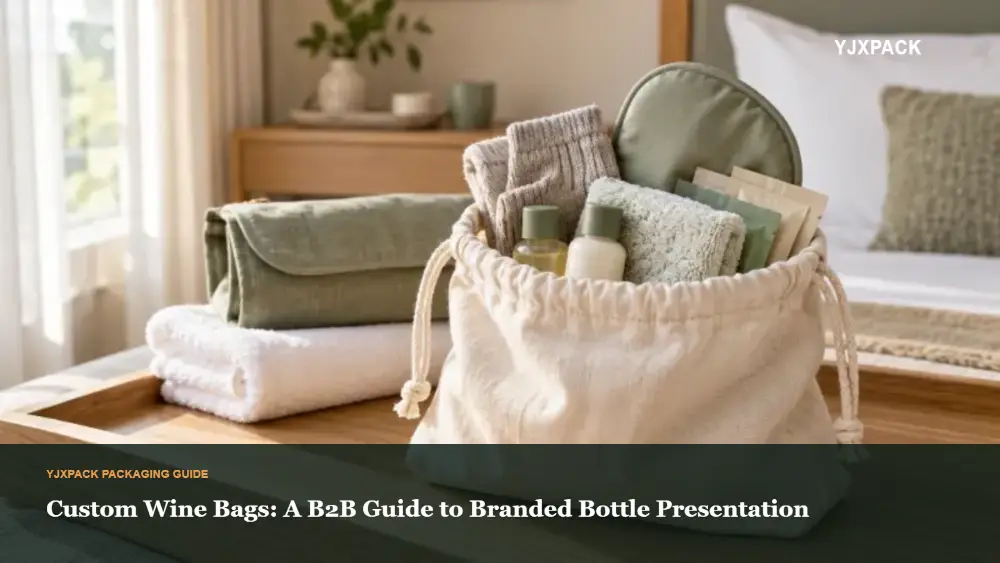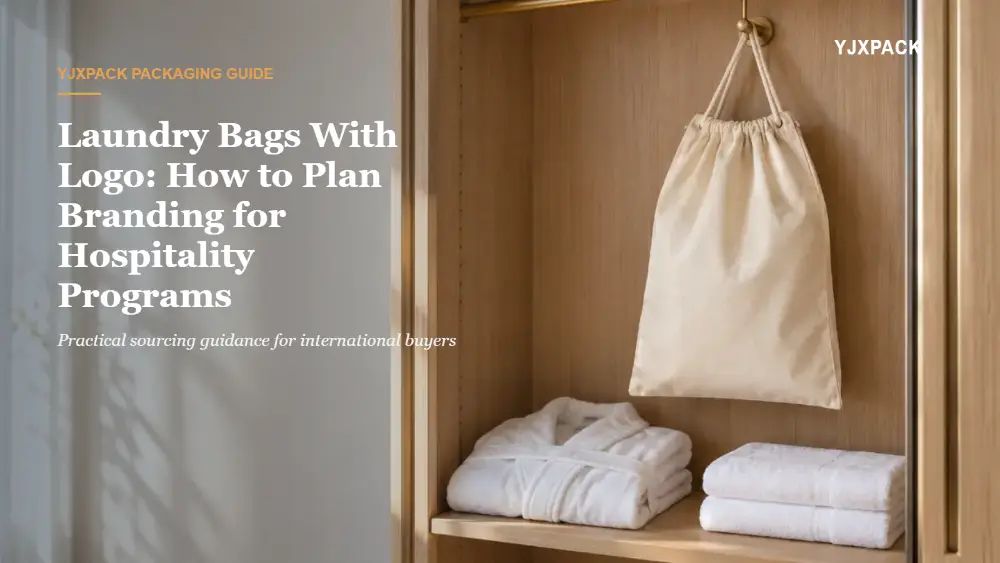
Hotels, resorts, airlines, spas, and premium travel brands often use amenity kits to organize toiletries, sleep accessories, wellness items, or welcome gifts. The bag is not only a container. It also influences how guests perceive the quality, organization, and brand value of the kit.
Custom amenity bags can be produced in different fabrics, shapes, sizes, and closure styles. The right specification depends on the actual contents, guest-use scenario, presentation requirements, and replenishment process. This guide explains what procurement teams should confirm before requesting a quotation for a custom amenity bag or custom toiletry bag.
What Are Custom Amenity Bags for Hospitality Kits?
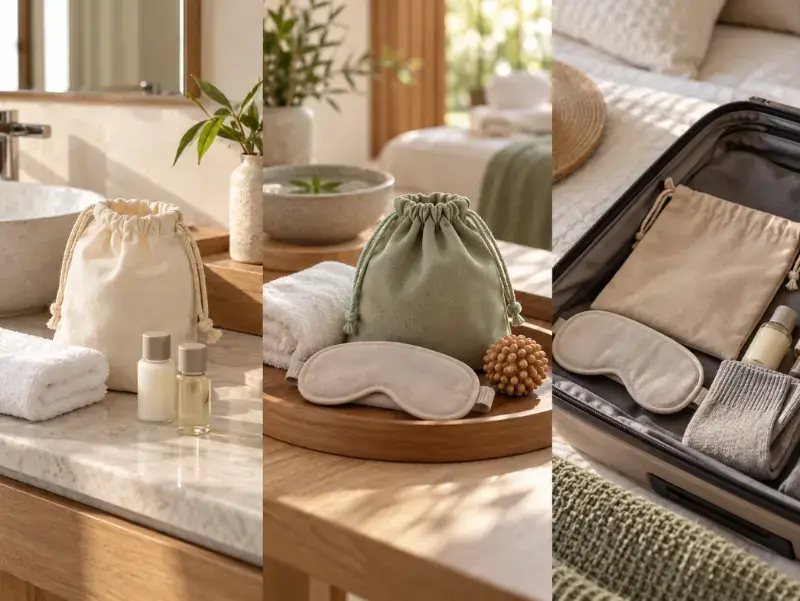
A custom amenity bag is a soft or semi-structured pouch designed to hold a selected group of guest-use items. Depending on the program, it may contain toiletries, travel accessories, sleep products, wellness items, small textiles, or promotional gifts.
Common hospitality applications include:
- Hotel room welcome kits
- Resort and spa amenity sets
- Airline travel kits
- VIP guest gifts
- Corporate hospitality packages
- Retail travel and wellness collections
The bag format should follow the purpose of the kit. A compact pouch may be suitable for a few small toiletry bottles, while a larger drawstring bag may be better for folded textiles or a mixed gift set.
Before choosing a material or decoration method, the buyer should define what the bag needs to hold, how guests will open it, whether it will be reused, and how it will be packed or replenished.
Start With the Kit Contents and Guest-Use Scenario
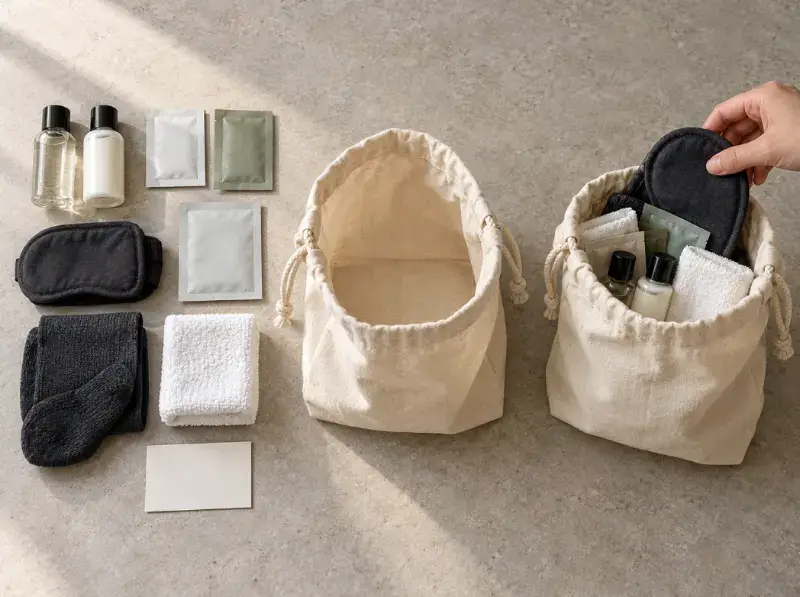
The most reliable way to specify a custom amenity bag is to start with the contents rather than with a preferred bag style.
Prepare a simple content list that includes:
- The number of items
- Approximate dimensions of each item
- Whether the items are rigid, flexible, fragile, or liquid-filled
- Whether the contents need to remain upright
- Whether the guest will remove items individually or empty the entire kit
- Whether the bag will be used once or retained for future use
For example, a kit containing several small bottles and sachets may need a wider opening and a stable base. A kit containing a sleep mask, socks, and a folded towel may need more flexible volume and a softer hand feel.
The presentation context also matters. A bag placed on a hotel vanity may need a neat, premium appearance. A travel kit placed inside a luggage pocket may need a flatter profile. A retail gift set may require a more visible front panel for branding.
A physical dummy set is useful during development. It allows the buyer and supplier to review the actual fit instead of relying only on nominal dimensions.
How to Choose Capacity, Shape, and Opening Size
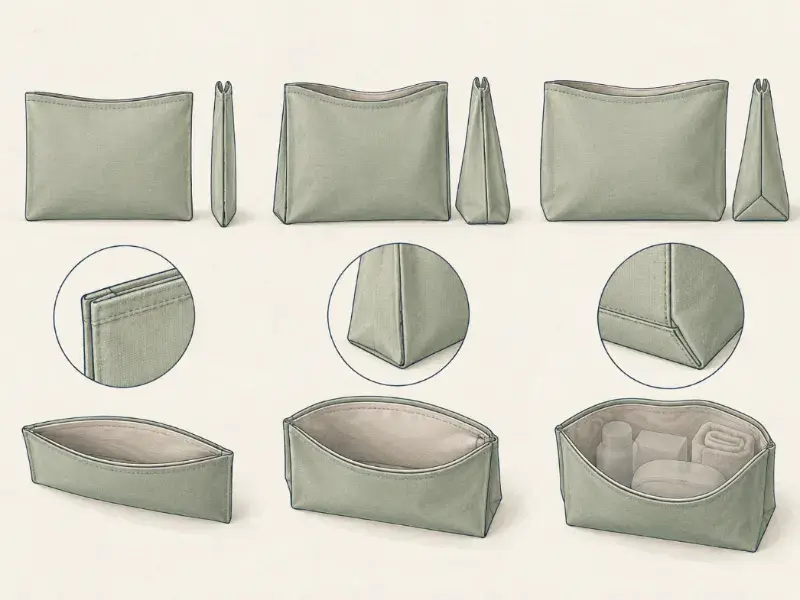
Capacity should be evaluated using the filled bag, not only the flat dimensions. Fabric thickness, seams, lining, gussets, drawstring channels, and closure folds can all reduce usable space.
Important decisions include:
- Flat pouch or gusseted pouch
- Vertical or horizontal orientation
- Soft body or semi-structured construction
- Wide opening or controlled opening
- Fold-over flap or open drawstring top
- Compact travel format or larger hospitality format
A gusset can create additional depth for bottles or bundled products. A flat pouch may be easier to pack and store when the kit is empty. A structured base can improve shelf presentation, but it may also increase material and construction requirements.
The opening should be large enough for the contents to be inserted and removed without excessive force. If the opening is too narrow, the bag may look attractive but become inconvenient during packing or guest use.
Avoid selecting one universal size for every kit. Different contents, markets, and hotel programs may require different size families. A supplier should review the actual product set before confirming the final construction.
Material, Lining, and Hand-Feel Options for Hospitality Kits
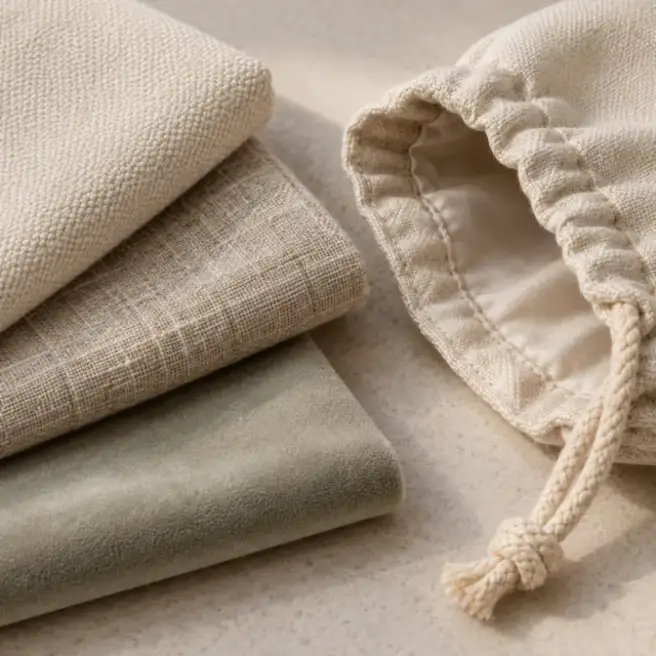
Material selection affects appearance, hand feel, opacity, durability expectations, and the overall positioning of the amenity kit.
Possible fabric directions may include:
- Cotton or canvas for a natural, approachable presentation
- Linen-look fabric for a relaxed premium style
- Microfiber for a smooth and lightweight surface
- Velvet or satin for a softer gift-oriented presentation
- Recycled or blended fabrics where the project requires a specific material direction
The correct choice depends on the intended use and confirmed project requirements. A material that feels suitable for a light welcome kit may not be appropriate for a heavier or frequently reused set.
The buyer should also review:
- Fabric weight and surface texture
- Opacity and color consistency
- Lining requirements
- Seam and edge finishing
- Drawstring channel construction
- Resistance to visible creasing during packing
- Compatibility with the selected decoration method
A lining may create a cleaner interior appearance and support a more structured feel. However, it can also affect thickness, cost, sewing complexity, and available capacity.
Do not assume that a particular fabric is waterproof, stain-resistant, hygienic, or protective unless the supplier provides project-specific evidence or testing. Those requirements should be stated clearly in the specification and confirmed before approval.
Choosing the Right Closure for Custom Amenity Bags
The closure should match the contents, handling process, and visual direction of the kit.
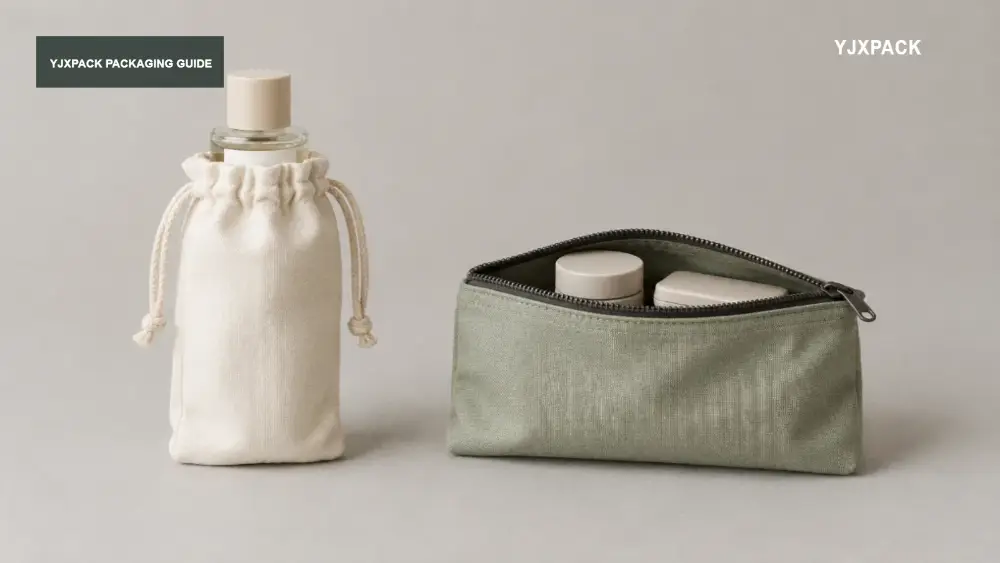
A drawstring closure can provide a soft, flexible appearance and is often suitable for gift-style or reusable fabric bags. It may also allow the bag to be opened quickly during packing or guest use.
A zipper closure can provide a more controlled opening and may help keep smaller items together. It can create a more structured travel-pouch appearance, but zipper color, length, puller design, and sewing accuracy must be reviewed.
A fold-over flap can create a simple editorial look and may provide additional visual space for branding. It is more suitable when the contents do not require a tightly sealed opening.
Other closure considerations include:
- Ease of opening for guests
- Whether the bag must stay closed during transport
- The available front branding area
- The amount of handling during hotel replenishment
- Whether the closure should be quiet, flexible, or structured
- Whether the closure adds bulk when the bag is packed
The closure should be reviewed together with the filled contents. A visually attractive closure is not successful if it makes the kit difficult to assemble or use.
Logo Placement and Brand Presentation
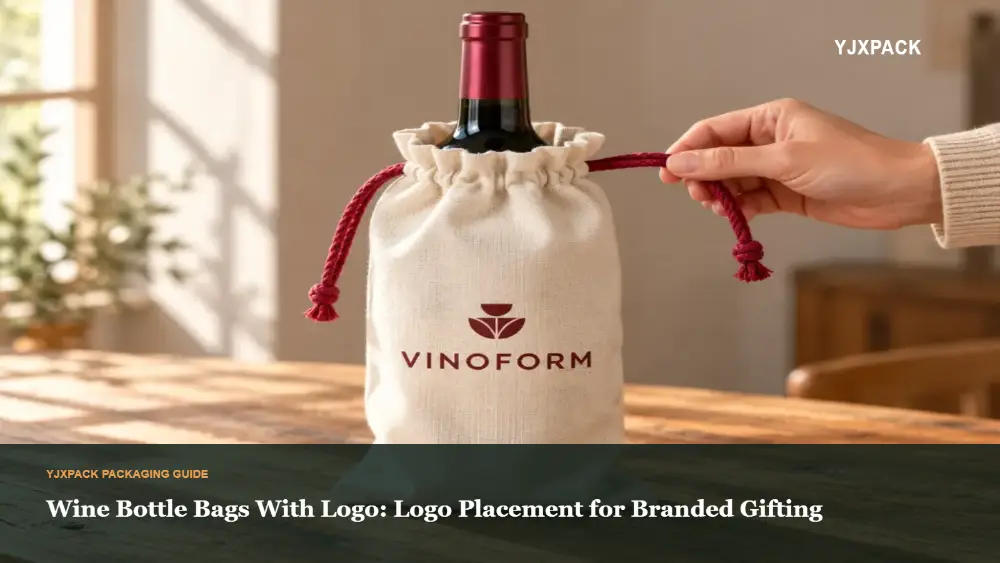
Branding should be planned around the actual usable surface of the bag. The center of the front panel is not always the best position if the fabric gathers, folds, or becomes hidden when the bag is filled.
Before confirming artwork, review:
- The visible front panel
- The effect of gathering near the opening
- The distance from seams and edges
- The logo size at the final viewing distance
- Whether the mark remains visible when the bag is partially filled
- Whether the decoration method suits the selected material
Possible branding directions may include embroidery, print, woven labels, patches, or other methods subject to material and artwork review. The final method should be confirmed through a sample or production proof.
For premium hospitality programs, a small and controlled logo may create a more refined result than oversized branding. The bag can still feel distinctive through fabric color, trim, lining, cord, label placement, or a subtle abstract brand mark.
If the bag will be used across several properties or programs, the buyer should also consider whether the branding needs to be permanent, replaceable, or adaptable for different campaigns.
What to Include in a Custom Amenity Bag RFQ
A useful request for quotation should give the supplier enough information to understand the complete kit, not only the desired bag shape.
Include:
- Intended hospitality or retail application
- Target market and guest-use scenario
- Complete content list
- Approximate dimensions of the filled kit
- Preferred bag shape and opening
- Material direction and color references
- Lining or interior requirements
- Closure preference
- Logo artwork and placement preference
- Packaging or folding requirements
- Delivery destination
- Required sample or approval process
If the final quantity, MOQ, sample timing, production lead time, certification, or pricing has not been confirmed, mark it as pending instead of assuming a standard value.
A strong RFQ can also include reference images, sketches, physical product dimensions, and examples of the preferred hand feel. These details help the supplier identify potential construction risks earlier.
For hotel amenity kit projects, confirm the supplier’s actual capability, available materials, decoration methods, sampling process, and commercial terms directly with YJXPACK before making a purchasing decision.
How to Review Samples Before Bulk Production
A sample should be reviewed as a complete user experience, not only as a visual mockup.
Check the following points:
- Can the intended contents fit without excessive compression?
- Is the opening wide enough for packing and guest use?
- Does the closure work smoothly with the filled bag?
- Does the bag keep a suitable shape when placed on a counter or shelf?
- Are seams, corners, channels, and edges finished consistently?
- Is the logo positioned correctly on the actual filled surface?
- Does the material color and hand feel match the approved direction?
- Can hotel staff replenish the kit efficiently?
- Does the folded or packed bag arrive in an acceptable condition?
- Are any remaining specifications still awaiting confirmation?
The sample review should record both approved details and open questions. A sample that looks correct in an empty state may require adjustment after the full kit is inserted.
Before approving bulk production, make sure the final specification identifies the approved material, color, construction, closure, artwork, dimensions, packing method, and any project-specific requirements.
Frequently Asked Questions About Custom Amenity Bags
What is the difference between a custom amenity bag and a custom toiletry bag?
A custom toiletry bag usually focuses on carrying personal-care products, while a custom amenity bag can be designed for a broader hospitality kit that may include toiletries, textiles, travel accessories, or gifts. The final construction should follow the contents and use case.
Can a soft fabric bag hold bottles and liquid-filled items?
It may be suitable for some bottle-based kits, but the result depends on the contents, bag size, material, lining, base construction, and closure. The actual filled kit should be reviewed before confirming the design.
Can a custom amenity bag include a logo?
Logo application may be possible through several decoration methods, depending on the material, artwork, surface area, and required appearance. Placement and method should be confirmed with a sample or production proof.
What information should be sent when requesting a quotation?
Send the intended use, content list, filled dimensions, preferred material, color, closure, logo artwork, packaging requirements, quantity, and delivery destination. Reference images and physical samples can make the discussion more precise.
Can YJXPACK produce hotel amenity kit bags?
Project capability, material availability, sampling, MOQ, lead time, and commercial terms should be confirmed directly with YJXPACK for the specific hotel amenity bag project.
Final Takeaway
The best custom amenity bag is not selected from appearance alone. It is developed from the kit contents, guest-use scenario, packing process, material direction, closure, and branding requirements.
Start with the actual contents, test the filled format, review the construction details, and confirm supplier capability before approving production. This process helps hospitality buyers create a bag that supports both practical use and a consistent brand experience.
To discuss a custom amenity bag project, prepare the kit contents, preferred material direction, artwork, and target application before requesting a quotation from YJXPACK.
Share This Story, Choose Your Platform!