A custom bottle bag is not only a decorative cover for a bottle. In a gift program, it has to fit the selected bottle, carry the required load, present the brand clearly, and work with the outer gift packaging. The right soft bag format depends on the number of bottles, bottle shape, handling method, material, closure and presentation plan.
This guide helps packaging buyers compare single-bottle and multi-bottle formats before requesting a quotation. It also explains which details should be supplied to a custom packaging manufacturer and which points must be checked on a physical sample.
Quick Summary
Choose a single-bottle soft bag when the gift program needs one clear hero bottle, a compact presentation and a simple handling process. Choose a multi-bottle format when the gift set requires coordinated presentation for several bottles and the buyer can provide confirmed bottle dimensions, total loaded weight and handling requirements.
Before requesting a quote for custom bottle bags, prepare:
- Bottle height, maximum diameter and shoulder shape
- Number of bottles per bag
- Empty and filled weight requirements
- Desired fabric and lining direction
- Closure preference
- Handle or drawcord requirements
- Logo artwork and branding position
- Secondary packaging dimensions
- Sample approval requirements
A soft bottle bag should be evaluated as part of the whole gift program, not as an isolated fabric item. If the bottle count or loaded weight changes, the bag body, base, handle, closure and secondary packaging may also need to change. Multi-bottle load capability and sample results must be confirmed with YJXPACK before they are treated as production facts.
What Should a Custom Bottle Bag Do in a Gift Program?
A custom bottle bag usually has four jobs: hold the bottle, present the brand, support handling and fit the gift-set format. These jobs can conflict if the bag is designed from appearance alone.
A tall, narrow bag may create a clean single-bottle presentation, but it may not work for a wide bottle or a bottle with a large shoulder. A wider bag may fit several bottles, but it can require a stronger base, more controlled internal spacing or a different handle arrangement. A decorative closure may look appropriate for a gift program but can become difficult to operate when the bag is filled.
The buyer should define the intended use before selecting fabric or decoration.
| Decision | Buyer input | Physical or visual check | Risk if missed | Next action |
|---|---|---|---|---|
| Bottle count | One bottle or several bottles per bag | Place the actual bottles into the proposed footprint | Bottles rub, tilt or cannot be inserted | Confirm the bottle arrangement before sampling |
| Loaded weight | Total weight of the filled set | Lift and carry a filled sample | Handle, cord or base may not suit the load | Submit the target loaded weight for review |
| Bottle profile | Height, diameter, shoulder and neck shape | Check the bottle against the bag opening and body | The bag may look loose, short or distorted | Send a physical bottle or complete dimensions |
| Presentation | Bottle visible, partly covered or fully enclosed | Review the front and side view | Logo and bottle presentation may compete | Define the desired exposure before artwork approval |
| Secondary packaging | Box, tissue, insert or sleeve dimensions | Pack the complete gift set together | The bag may not fit inside the outer package | Provide outer-package dimensions for confirmation |
A useful custom bottle bag therefore starts with a packaging brief, not only a fabric preference. The brief should explain what the recipient will see first, how the bag will be carried and whether the bag is intended for one delivery event or later reuse.
YJXPACK can review a made-to-specification fabric pouch brief, but material, construction and load suitability remain subject to the exact bottle and order requirements.
When Does a Single-Bottle Bag Make More Sense?
A single-bottle bag is usually the clearer starting point when the gift program is built around one featured bottle. It gives the front panel enough space for a logo or decorative treatment and makes the bottle-to-bag relationship easier to review.
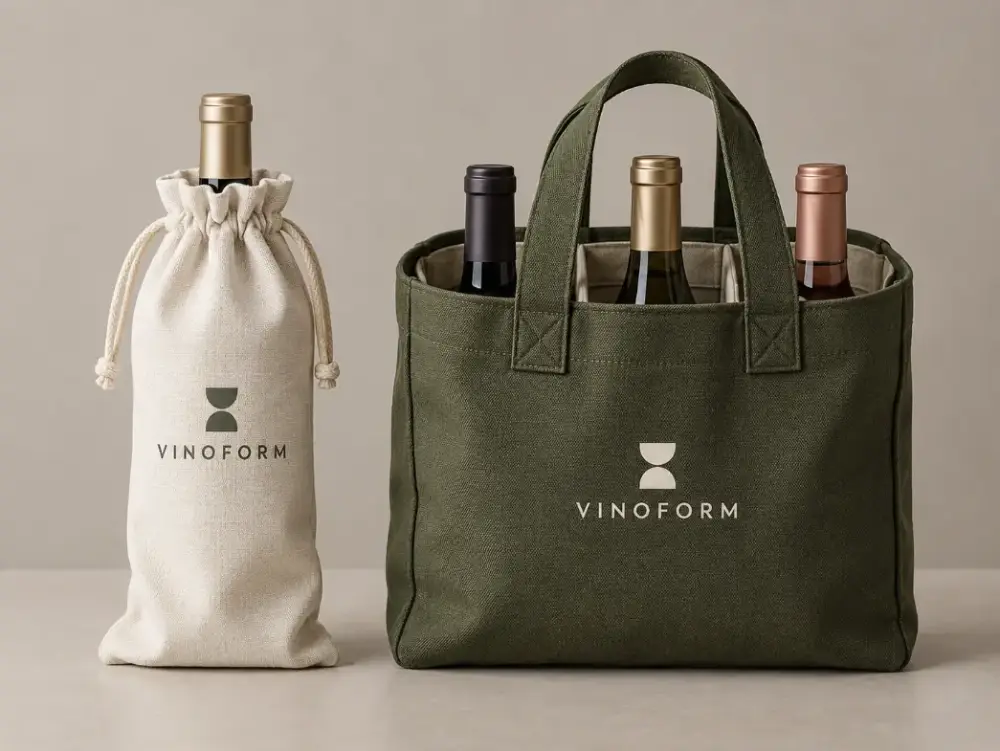
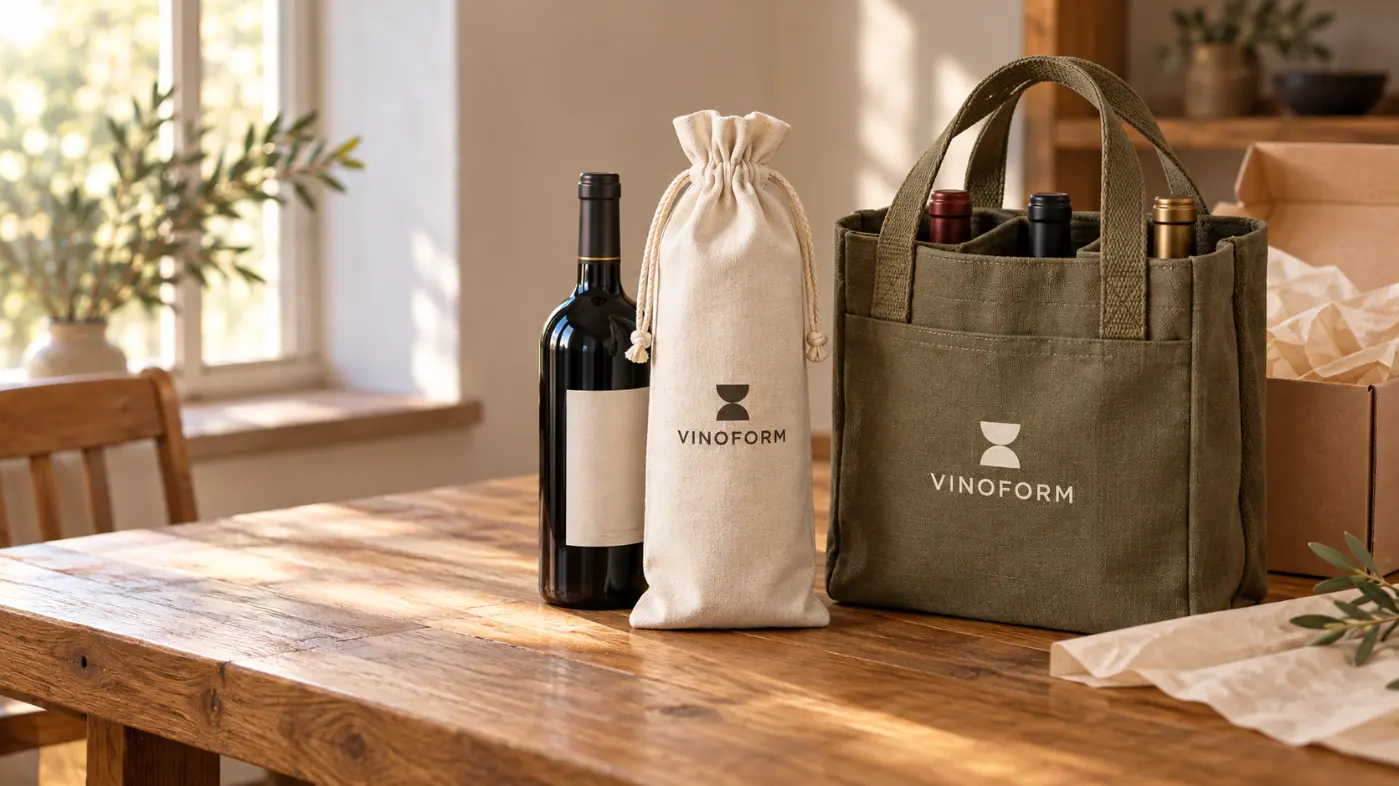
Single-bottle custom wine bags can be built in several soft formats, including drawstring, handled, sleeve-like or structured fabric constructions. The choice should follow the bottle and presentation plan.
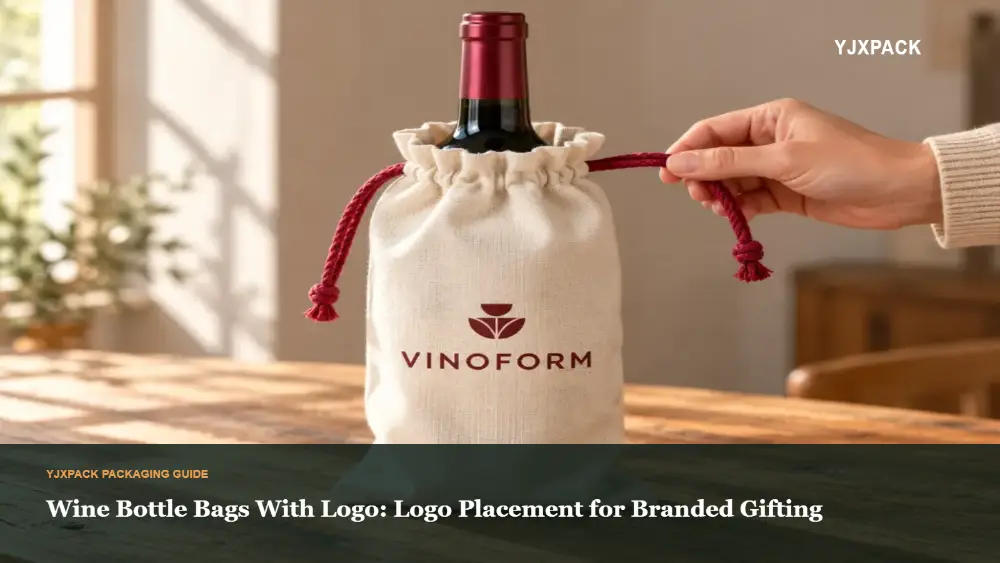
A drawstring format can create a gathered, gift-oriented appearance. It also allows some adjustment around the bottle neck, although the amount of adjustment depends on the opening, cord channel and fabric behavior. A handled format may be more convenient when the recipient carries the bottle separately from the outer gift box. A sleeve-like format can look more controlled when the bottle should remain visible, but it may need a more precise fit.
Use the following selection rule:
- If the bottle is the main visual feature and only one bottle is included, begin with a single-bottle format.
- If the bottle has an unusual shoulder, wide body or long neck, prioritize fit and opening clearance before choosing decoration.
- If the bag will be placed inside a rigid box, check the folded or compressed size, not only the filled size.
- If the recipient will carry the bag by its top edge, evaluate the handle or cord connection with a filled sample.
The buyer should also decide how much of the bottle remains visible. A short bag may show the bottle label and capsule, while a taller bag may create a more concealed gift presentation. Neither approach is universally correct. The decision depends on the brand’s presentation goal and the outer package.
For a single-bottle quotation, provide the bottle dimensions in a consistent format:
Bottle height:
Maximum bottle diameter:
Shoulder diameter:
Neck diameter:
Desired bottle exposure:
Bag finished height:
Bag finished width:
Closure position:
Handle or cord preference:
Do not approve a single-bottle bag from a flat drawing alone. Fabric softness, seam allowance, drawstring gathering and the base shape can change the filled appearance.
When Should Buyers Consider a Multi-Bottle Soft Bag?
A multi-bottle bag can be useful for corporate gift programs, tasting sets, seasonal collections or coordinated brand presentations. It can also create a more complete visual package than several unrelated single-bottle bags.
However, adding bottles changes more than the width of the bag. The buyer must review the total loaded weight, bottle arrangement, internal movement, base construction, opening width, handle position and secondary packaging.
There are several possible arrangements:
- Bottles placed side by side in a wide horizontal bag
- Bottles arranged in a compact row with a shared opening
- Bottles placed in separate internal compartments
- A larger soft carrier used inside a rigid gift box
- Several individual bags grouped inside one outer presentation package
The correct format depends on the required presentation and handling method. A soft bag that looks attractive when empty may sag or twist when several bottles are loaded. A narrow base may create pressure at the bottom corners. A simple top closure may not control the movement of multiple bottles.
Use this rule:
- If the gift set contains different bottle sizes, request a sample using the largest and smallest planned bottle.
- If the bottles must remain separated, specify whether the separation should come from fabric dividers, a removable insert or the outer box.
- If the bag is lifted by one handle, the handle connection and base should be reviewed with the full loaded weight.
- If the bag is only a presentation cover inside a rigid box, the load and handling requirements may differ from a carry bag.
Multi-bottle capacity should never be described as a fixed capability without a confirmed specification. For YJXPACK, the number of bottles, loaded weight and construction should be reviewed for the specific project and marked [VERIFY WITH YJXPACK] until confirmed.
| Criteria | Single-bottle format | Multi-bottle format |
|---|---|---|
| Main purpose | Highlight one bottle | Present a coordinated set |
| Front-panel control | Usually easier to manage | Wider panel may need more planning |
| Fit review | Focuses on one bottle profile | Must account for bottle arrangement |
| Handling | One bottle load | Combined load and possible imbalance |
| Closure | Simple gathered or handled opening | Wider opening and movement control |
| Secondary packaging | Often easier to place in a box | May require a larger box or insert |
| Sampling | One bottle and one filled configuration | Several bottles and full loaded configuration |
| Main risk | Incorrect height or opening | Load, movement and base stability |
How Should Buyers Specify Fabric, Bottle Fit, Closure, and Handles?
Fabric selection should follow the presentation and handling requirements rather than being chosen only by color. Cotton, linen, velvet, satin, jute, microfiber and polyester can create different visual and structural results. The suitability of each material depends on the requested construction, artwork, lining and order details.
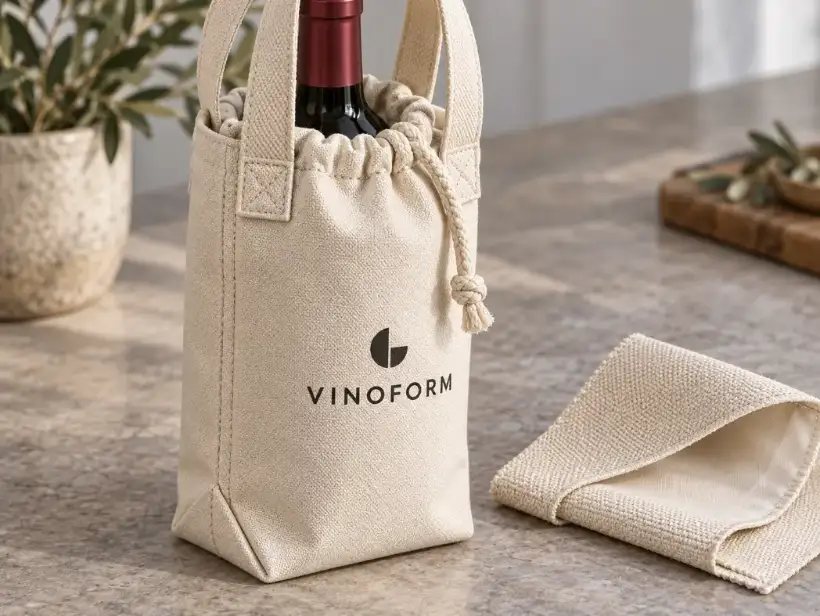
A buyer should specify whether the bag needs:
- A soft natural texture
- A smoother surface for a clean printed logo
- A more structured body
- A gathered decorative opening
- A visible lining
- A reinforced base
- A removable insert
- A fabric handle, cord or webbing handle
For bottle fit, provide both the bottle measurements and the desired bag measurements. Do not assume that a bag with the same nominal width as the bottle will fit correctly. The bag needs space for seams, ease, gathering and the selected closure.
The closure should be reviewed in the filled state. A drawstring channel that looks neat when empty may create heavy gathers when the bag is filled. A flap or folded closure may change the visible front panel. A handle may pull the upper edge inward if the attachment points are too close together.
A sample review should include these checks:
- Insert the bottle without forcing the opening.
- Confirm the bottle reaches the intended depth.
- Check whether the front panel remains visible after gathering.
- Lift the filled bag from the intended handle or cord.
- Inspect the base corners and side seams.
- Check whether the logo remains readable after the fabric folds.
- Pack the filled bag into the planned outer box or carrier.
For a multi-bottle project, repeat the same checks with the complete bottle set. A single empty bag cannot prove multi-bottle suitability.
How Should a Soft Bottle Bag Work With Secondary Packaging?
A soft bottle bag is often used with a rigid box, tissue paper, insert, sleeve, card or other gift-set component. These items should be planned together because they affect the available space and the recipient’s opening experience.
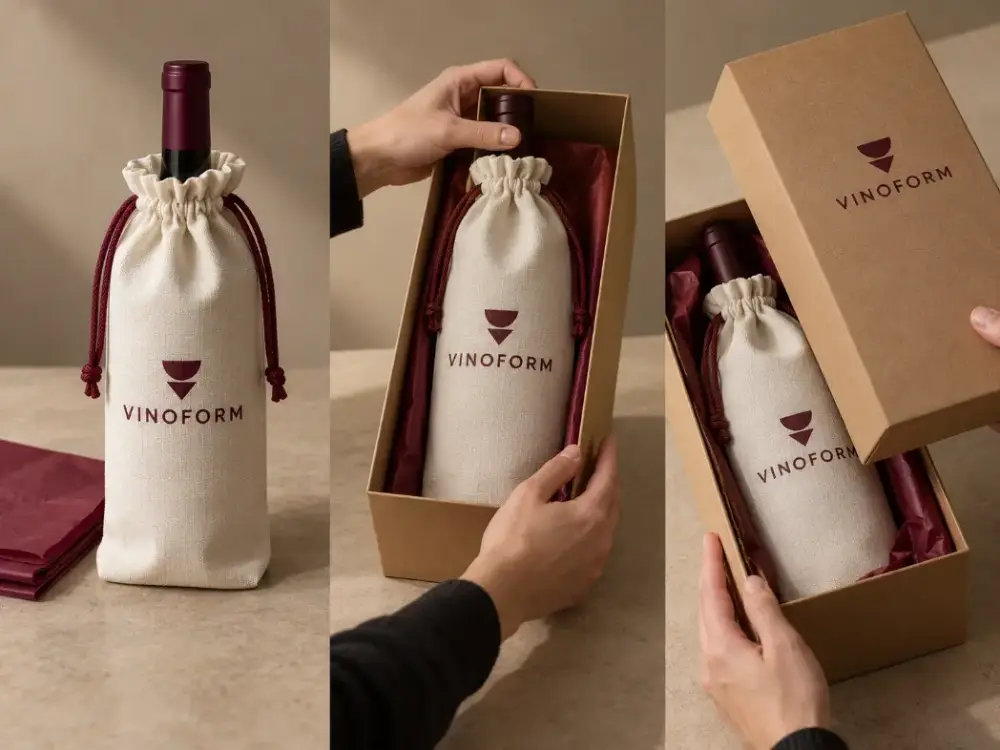
A bag that fits the bottle may not fit comfortably inside the box once the drawstring is gathered. A box that fits the bag may compress the handle or create folds across the logo. Tissue or inserts can improve presentation, but they also occupy space and may change how the bottle sits.
The buyer should create a simple packing sequence:
- Place the bottle or bottles into the soft bag.
- Close or gather the bag.
- Add tissue, divider or insert if required.
- Place the bag into the outer box.
- Close the box without pressing the logo or handle.
- Remove the set and inspect the final presentation.
| Item | Information to provide |
|---|---|
| Outer box | Internal length, width and height |
| Tissue or insert | Thickness, position and whether removable |
| Bag orientation | Upright, horizontal or folded |
| Handle clearance | Space required above the bag |
| Logo exposure | Front panel visible or covered |
| Packing sequence | Which item is inserted first |
| Final presentation | How the recipient opens the set |
A custom gift pouch or bottle bag should not be evaluated only as a standalone fabric product. The complete set needs to be checked because the outer box, tissue and bag can each change the final appearance.
What Should Buyers Check in a Pre-Production Sample?
The pre-production sample should answer practical questions before the order is approved. It should not be treated as a general visual mockup.
The buyer should compare the sample with the approved brief and record any difference in a structured review.
| Sample checkpoint | What to inspect | Approval question |
|---|---|---|
| Bottle fit | Opening, body width, shoulder and base | Can the planned bottle be inserted without forcing? |
| Bottle exposure | Visible neck, label or capsule | Is the intended presentation maintained? |
| Closure | Drawstring, flap, snap or handle action | Can the bag be closed and reopened as planned? |
| Handle or cord | Attachment points, length and hand clearance | Is the filled bag comfortable to handle? |
| Base | Corners, seams and standing behavior | Does the bag remain stable in the intended position? |
| Logo | Scale, contrast, placement and distortion | Does the logo remain clear on the filled bag? |
| Fabric | Texture, color and surface behavior | Does the material match the approved direction? |
| Secondary packaging | Box, tissue and insert fit | Does the complete gift set close and present correctly? |
For a multi-bottle project, the sample should use the planned bottle arrangement and a representative loaded condition. If the exact bottles are not available, the buyer should provide accurate dimensions and weight data, then mark the sample as pending final verification.
A sample review record should include:
Project:
Bottle type:
Bottle count:
Target loaded weight:
Bag material:
Bag dimensions:
Closure:
Handle or cord:
Logo method:
Outer packaging:
Open issues:
Required changes:
Approval status:
The approval status should distinguish between “approved as shown,” “approved with changes” and “pending confirmation.” This prevents a visually attractive sample from being treated as final when important fit or load questions remain open.
What Should Be Included in a Custom Bottle Bag RFQ?
A useful RFQ gives the supplier enough information to price and review the correct construction. “Custom bottle bag” alone is not a complete specification.
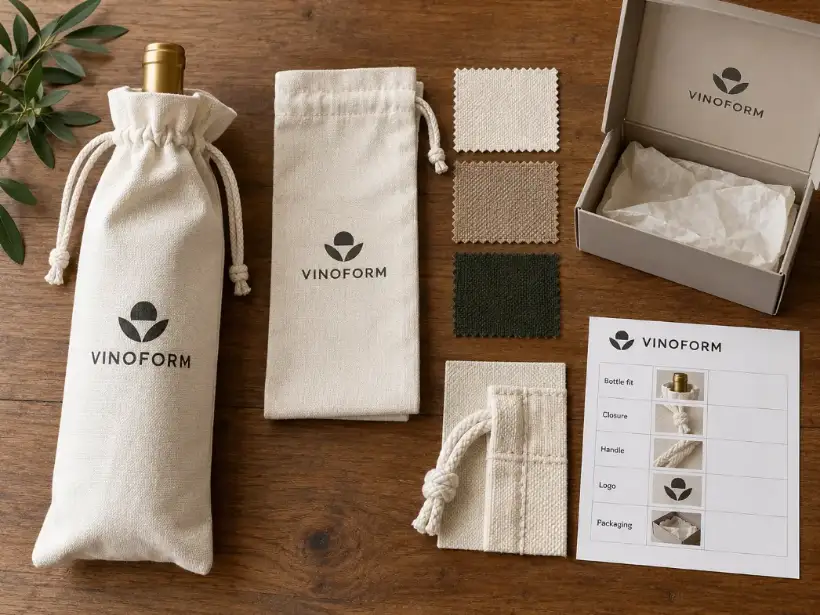
| RFQ field | What to provide |
|---|---|
| Project purpose | Retail gift, corporate gift, tasting set or seasonal program |
| Bottle count | Number of bottles per bag |
| Bottle information | Height, diameter, shoulder, neck and weight |
| Bag format | Single-bottle, multi-bottle, sleeve, drawstring or handled |
| Finished dimensions | Target height, width, depth and opening |
| Material direction | Preferred fabric, color, texture and lining |
| Closure | Drawstring, flap, snap, zipper, handle or other requested format |
| Logo artwork | Vector file, colors, size and placement area |
| Logo method | Preferred method or request for process recommendation |
| Secondary packaging | Box, tissue, insert and packing sequence |
| Sample requirement | Which bottle and configuration should be tested |
| Quantity | Planned order quantity or estimated range |
| Verification points | Any dimensions, load or process details still pending |
The buyer should separate confirmed information from open questions. For example:
Confirmed:
– One bottle per bag
– Ivory woven fabric direction
– Burgundy logo artwork
– Upright presentation inside a rigid box
Buyer to provide:
– Final bottle dimensions
– Final loaded weight
– Outer box internal dimensions
– Target quantity
[VERIFY WITH YJXPACK]:
– Suitable multi-bottle construction
– Handle or cord design for the requested load
– Sample timing and production conditions
A complete RFQ makes it easier to compare supplier responses because each supplier is responding to the same physical requirements. It also reduces the chance that a quotation is based on an assumed bottle size or an incomplete presentation plan.
YJXPACK can review a custom fabric bottle-bag brief and advise on the information needed for a quotation. Specific material, construction, sample and multi-bottle requirements should still be confirmed against the project details.
If you are preparing a new gift program, send the bottle dimensions, bottle count, target bag format, artwork and secondary packaging information with your request. Get a Quote for a project-specific review.
Frequently Asked Questions
Are custom bottle bags suitable for one bottle or several bottles?
Both formats can be planned, but they require different specifications. A single-bottle bag focuses on one bottle’s fit and presentation. A multi-bottle bag requires a bottle arrangement, combined loaded weight, internal spacing and a suitable base or handling structure. Multi-bottle suitability must be confirmed for the specific project.
What measurements should I provide for a custom bottle bag?
Provide bottle height, maximum diameter, shoulder shape, neck diameter, bottle weight and the number of bottles per bag. Also provide the desired bottle exposure, closure position and outer packaging dimensions if the bag will be packed inside a box.
Which fabric is best for custom wine bags?
There is no universal material choice. Cotton, linen, velvet, satin, jute, microfiber and polyester can create different textures, structures and decoration results. The appropriate material depends on the bag format, logo method, closure, presentation and handling requirements.
Should the bottle bag include a handle or a drawstring?
Choose based on how the recipient will carry and open the gift. A drawstring can create a gathered presentation, while a handle may provide a more direct carrying method. The connection points, length and construction should be checked with a filled sample.
What should I request before approving production?
Request a sample that uses the planned bottle or accurate bottle dimensions, then check fit, closure, base, handle or cord, logo position, fabric appearance and secondary packaging. Do not treat an empty sample or an unverified multi-bottle arrangement as final approval.
Share This Story, Choose Your Platform!