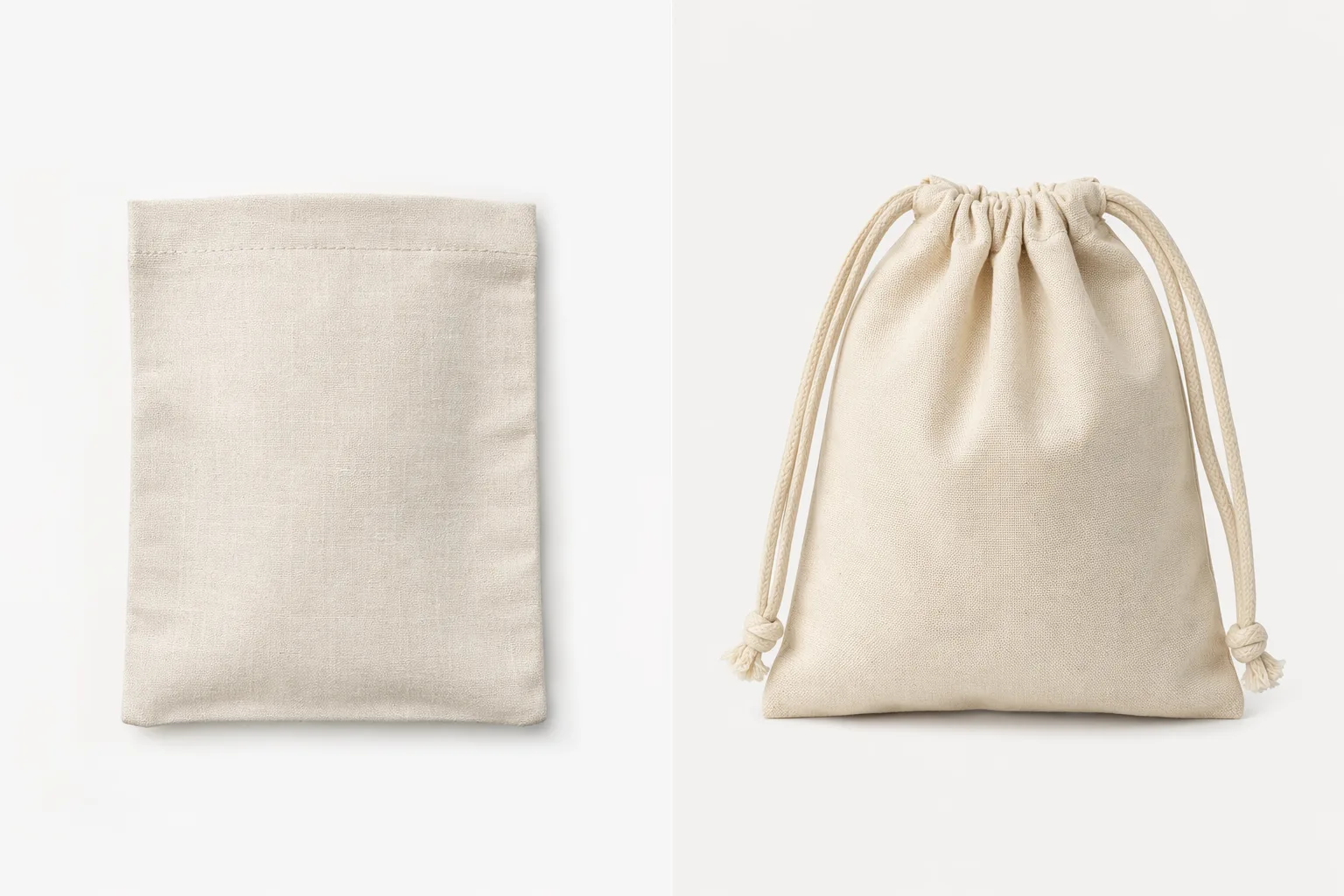
Buyers sourcing custom fabric packaging may encounter the terms *bag sachet* and *drawstring pouch* for products that appear similar in photos. Both formats can hold small items, support branded decoration, and be used for gift, retail, promotional, or product packaging. However, the names alone do not define the product. The meaningful differences usually involve the pouch opening, closure method, fabric construction, intended contents, reusable function, and required level of protection. Defining these points before requesting quotations helps buyers compare custom fabric pouch proposals on the same basis.
Quick Summary
- A bag sachet is a broad description for a small fabric bag or packet-style package. Its closure may be open, sewn shut, tied, folded, or otherwise specified.
- A drawstring pouch is a more specific format with cord running through a sewn channel so the opening can cinch closed and reopen.
- A sachet can include a drawstring, but not every sachet is a drawstring pouch.
- The same fabric category may be considered for both formats, but suitability depends on the item weight, surface, dimensions, required opacity, lining, and intended use.
- A drawstring closure can add components and construction steps, but the final cost comparison depends on the complete specification rather than the format name.
- Buyers should approve dimensions, usable internal space, closure behavior, fabric, decoration placement, and a sample where appropriate before confirming a production order.
Start With Structure, Not the Product Name
The word “sachet” can mean different things in different product categories and markets. It may refer to a small fragrance packet, a decorative fabric holder, a favor bag, or a compact package for lightweight contents. Some buyers use the term for almost any small fabric bag. Others use it only for a packet containing scent material, dried botanicals, soap, or a small gift item.
For purchasing purposes, the physical construction is more useful than the label. A sourcing brief should state:
- Whether the bag is flat, gusseted, shaped, lined, or padded.
- Whether the top remains open, folds over, ties closed, is stitched closed, or uses a drawstring.
- Whether the recipient needs to open the package once, repeatedly, or not at all.
- Whether the contents must be concealed, visible, protected from abrasion, or able to release fragrance.
- Whether the fabric item is direct product packaging, an outer gift bag, a reusable accessory pouch, or a presentation component.
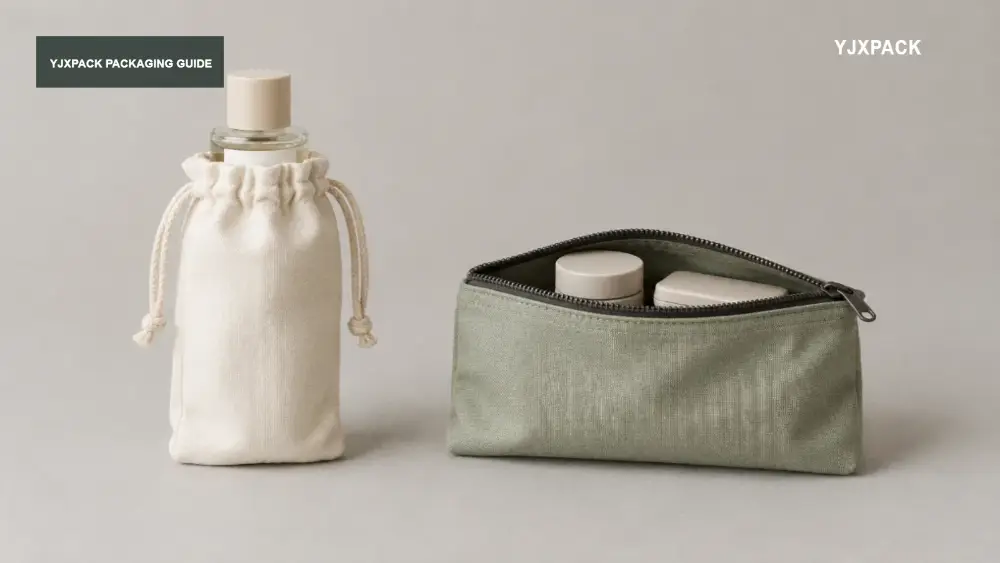
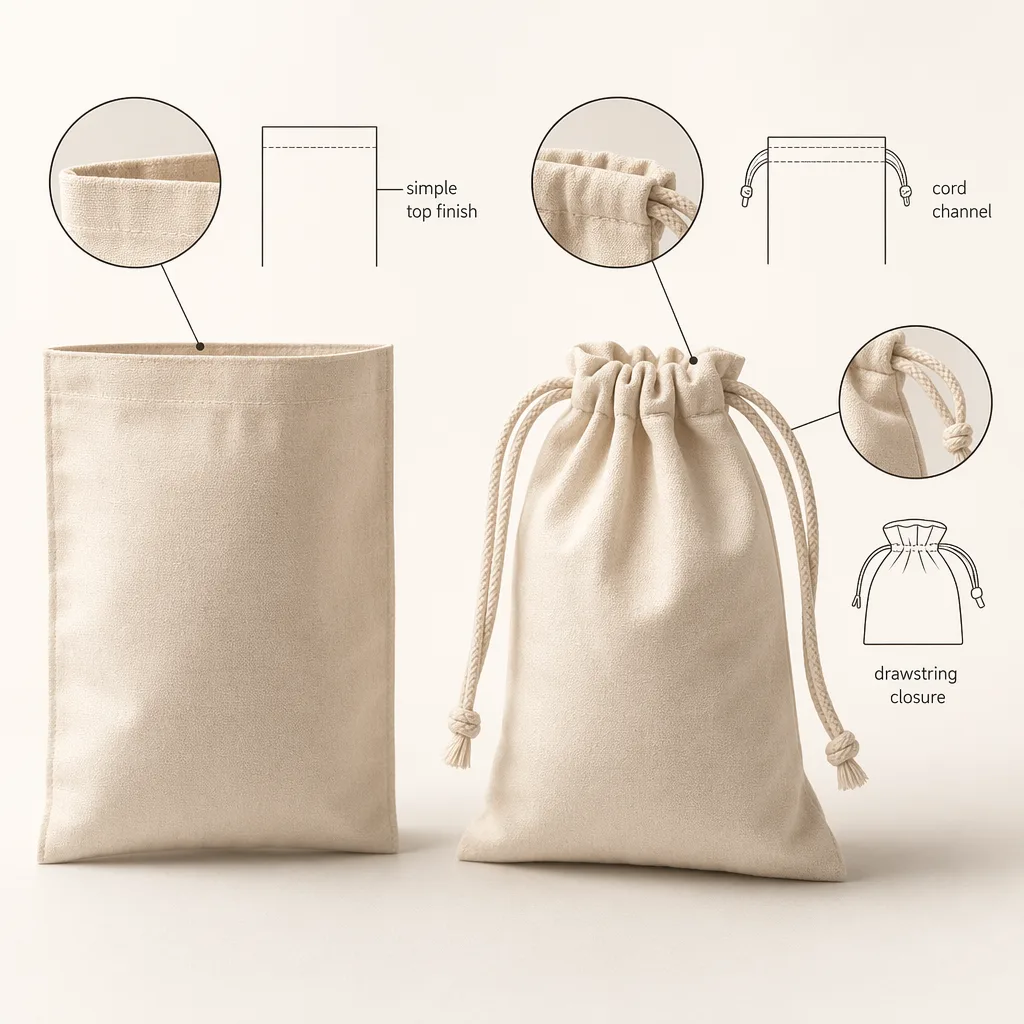
A drawstring pouch is defined primarily by its closure. It has a fabric channel near the top edge, with one or more cords threaded through the channel. Pulling the cords narrows the opening. The final pattern may use a single cord, double cords, knots, cord ends, ribbons, or another specified finish.
Because terminology can vary, buyers should describe the exact construction they need instead of assuming that all sachets are open-top bags or that every small pouch includes a drawstring closure.
What Is a Bag Sachet?
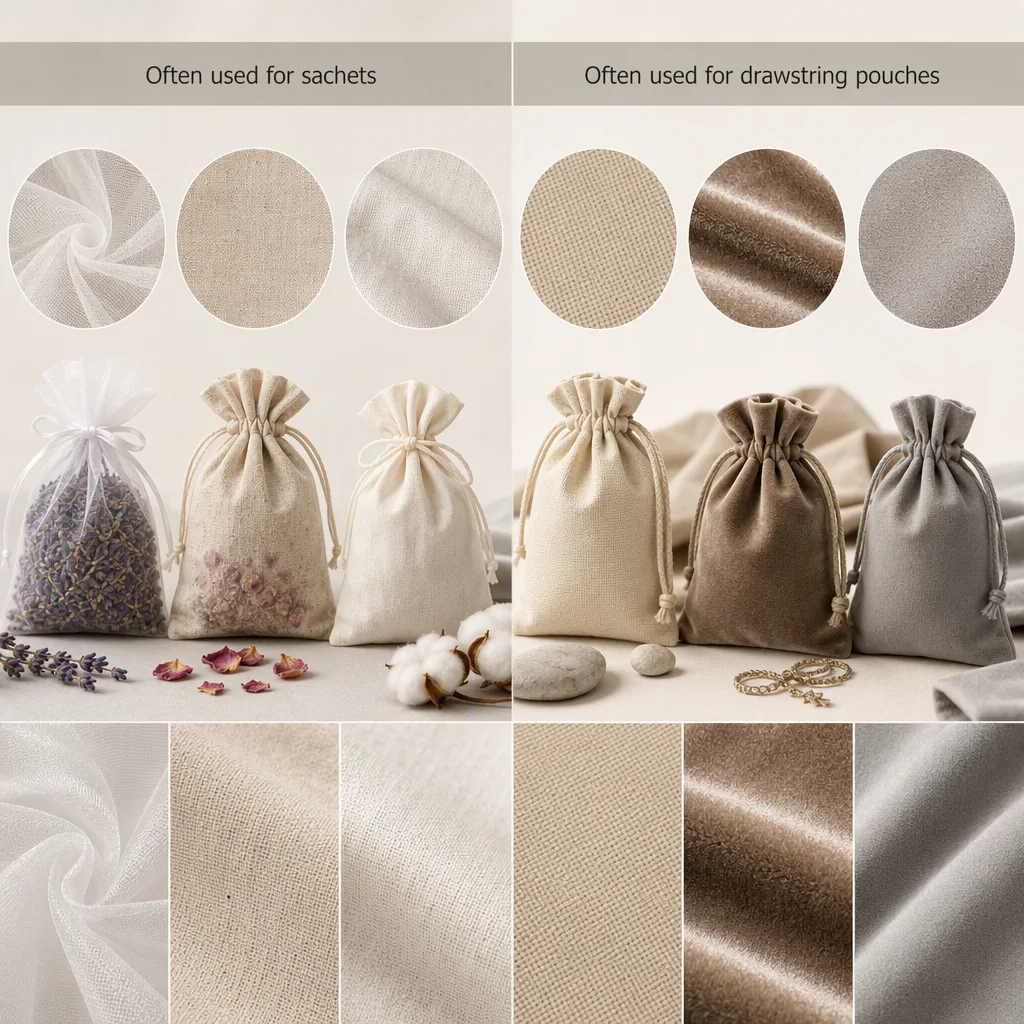
A bag sachet is generally a compact fabric package for lightweight contents, presentation, or gifting. It may be used for fragrance products, sealed soaps, small favors, promotional items, gift-set components, keepsakes, or other compact goods. Its construction can be as simple as two fabric panels sewn together with a finished top edge. Depending on the intended use, it may also have a ribbon tie, flap, fold-over top, stitched closure, hang loop, or another closure detail.
The intended contents should guide the design. For example, a sealed fragrance insert or wrapped soap may sit inside a decorative sachet mainly for visual presentation. A fabric sachet holding loose dried botanicals requires additional attention to particle size, weave density, seam construction, and closure. If fine particles could escape, a buyer may need to consider an inner bag or separately sealed inner pack.
For tea, edible items, cosmetics, or other regulated products, fabric packaging should not automatically be assumed suitable for direct contact. The buyer should identify the applicable product-contact, labeling, hygiene, import, and market requirements before selecting a pouch construction. The outer fabric pouch and the direct-contact package may need to be treated as separate packaging components.
A flat sachet can be practical for thin, soft, or already enclosed items. It may be less convenient for bulky, rigid, sharp-edged, or frequently accessed products. In those cases, a gusseted construction, lining, stronger material, or a reusable closure may be more suitable.
What Is a Drawstring Pouch?
A drawstring pouch is a fabric pouch that closes by pulling cords through a sewn channel at the upper edge. It is often considered for jewelry, watches, eyewear accessories, beauty accessories, gift cards, small electronics accessories, apparel accessories, and retail gift packaging.
Its main functional difference is that it can be opened and closed again. This can make it useful when the pouch is intended to stay with the product after purchase. A recipient may use it for storage, travel, organization, or gift presentation after removing the original item.
However, a drawstring closure should not automatically be treated as tamper-evident, spill-proof, child-resistant, or protective transit packaging. The cord gathers the opening, but the level of closure depends on the channel design, cord type, product dimensions, and pouch material. Fragile, heavy, valuable, or sharp-edged items may require additional protective packaging beyond the pouch itself.
Construction details affect both appearance and function. Buyers should specify whether they need:
- A single-pull or double-pull closure.
- Narrow cord, thicker cord, ribbon, or another tie material.
- A shallow or deep drawstring channel.
- A flat pouch or a pouch with a bottom or side gusset.
- Lining, internal pockets, labels, or reinforced seams.
- Knotting, metal-free cord ends, sewn ends, or another finishing approach.
A pouch can look spacious while open but offer less usable height after the top is cinched. This is particularly relevant for tall boxes, rigid accessories, bottles, or products that must remain upright.
Bag Sachet vs Drawstring Pouch: Buyer Comparison
| Buying consideration | Bag sachet | Drawstring pouch | What to confirm in the specification |
|---|---|---|---|
| Primary structure | Broad small-bag or packet-style format | Pouch with a cord-and-channel closure | Flat, gusseted, lined, shaped, or padded construction |
| Opening and closure | May be open, tied, folded, sewn, or otherwise finished | Opens and closes by pulling cord through a channel | Cord count, cord material, channel style, and closure behavior |
| Typical use | Fragrance presentation, favors, inserts, gifts, or lightweight items | Reusable packaging for jewelry, accessories, and small retail goods | Whether repeated opening is required |
| Fabric priorities | Appearance, porosity, content containment, and texture may matter | Shape retention, abrasion resistance, and handling may matter | Fabric construction, color, lining, and finish |
| Space planning | Overall dimensions may be close to usable space | Cinched top can reduce usable upper space | Product dimensions plus insertion and closure clearance |
| Main cost drivers | Fabric, size, seams, decoration, and closure details | Fabric, cord, channel sewing, size, decoration, and finishing | A quote based on matching materials and requirements |
This comparison is a planning guide rather than a universal rule. A detailed sachet with lining, special closure details, and complex decoration can involve more work than a basic drawstring bag. Likewise, a simple lightweight drawstring pouch may have a different construction level from a structured gift bag. The completed specification determines what is being compared.
Materials and Construction Considerations
Small pouch packaging may be developed with cotton, muslin, linen-look materials, organza, satin, velvet, microfiber, canvas-style materials, or other fabrics depending on the project. A material name alone does not define its weight, weave, thickness, surface texture, opacity, durability, or suitability for the intended contents.
Buyers should request clear information about the proposed fabric construction, color reference, lining, finishing, and any relevant material documentation needed for their own program. A fabric that looks similar in a product image may perform differently when printed, folded, gathered, or used with a drawstring closure.
Lighter materials can create a soft or sheer appearance. This may suit decorative gift presentation or certain fragrance sachet concepts. Open-weave or sheer fabrics may be unsuitable for fine loose contents, dusty products, sharp edges, or products that could transfer color or residue. Heavier materials can provide more structure for some items, but they may add bulk, affect folding, change decoration appearance, or make the top opening harder to cinch tightly.
For a drawstring pouch, the channel area deserves close review during sampling. The cord should move as intended, the channel should maintain its construction during ordinary opening and closing, and the gathered top should fit the packed product. If a logo is placed near the upper edge, enough distance should be allowed between the artwork, seam, channel, and gathered area so the mark remains visible when the pouch is closed.
For a sachet, buyers should also consider whether the top needs a finished edge, fold-over closure, ribbon, loop, stitched seal, or another feature. If fragrance release is part of the intended use, specify whether the fragrance component is separately sealed or placed directly inside the fabric package.
How to Choose Size and Shape
Do not choose a pouch size from a product photo alone. Measure the packed item, including its box, protective wrap, chain, cable, clasp, label, insert, or other component that will go inside. Then allow room for the item to enter and leave the pouch without excessive force.
For a flat sachet, check width, height, and the filled thickness of the item. For a drawstring pouch, account for the upper section occupied by the channel and the gathered fabric. A rigid item may need a wider pattern or gusset instead of simply additional height. A necklace may need enough space for the chain to sit with reduced tangling. A boxed gift may need clearance around corners and at the top closure.
A practical custom pouch brief can include:
1. Product dimensions, approximate packed shape, and product weight.
2. Whether the product is soft, rigid, delicate, sharp-edged, dusty, or fragrance-bearing.
3. Preferred pouch width, height, depth, and gusset requirement.
4. Required closure type and expected opening frequency.
5. Fabric preference, color reference, opacity requirement, and lining need.
6. Logo artwork, decoration size, placement, and preferred method if known.
7. Individual packing, labeling, inspection, or shipping requirements relevant to the order.
When preparing an inquiry for YJXPACK, buyers can ask for both the overall pouch dimensions and the estimated usable internal space to be stated in the proposal. This helps identify whether the channel, gusset, seam allowance, or closure affects product fit.
Logo Decoration and Artwork Planning
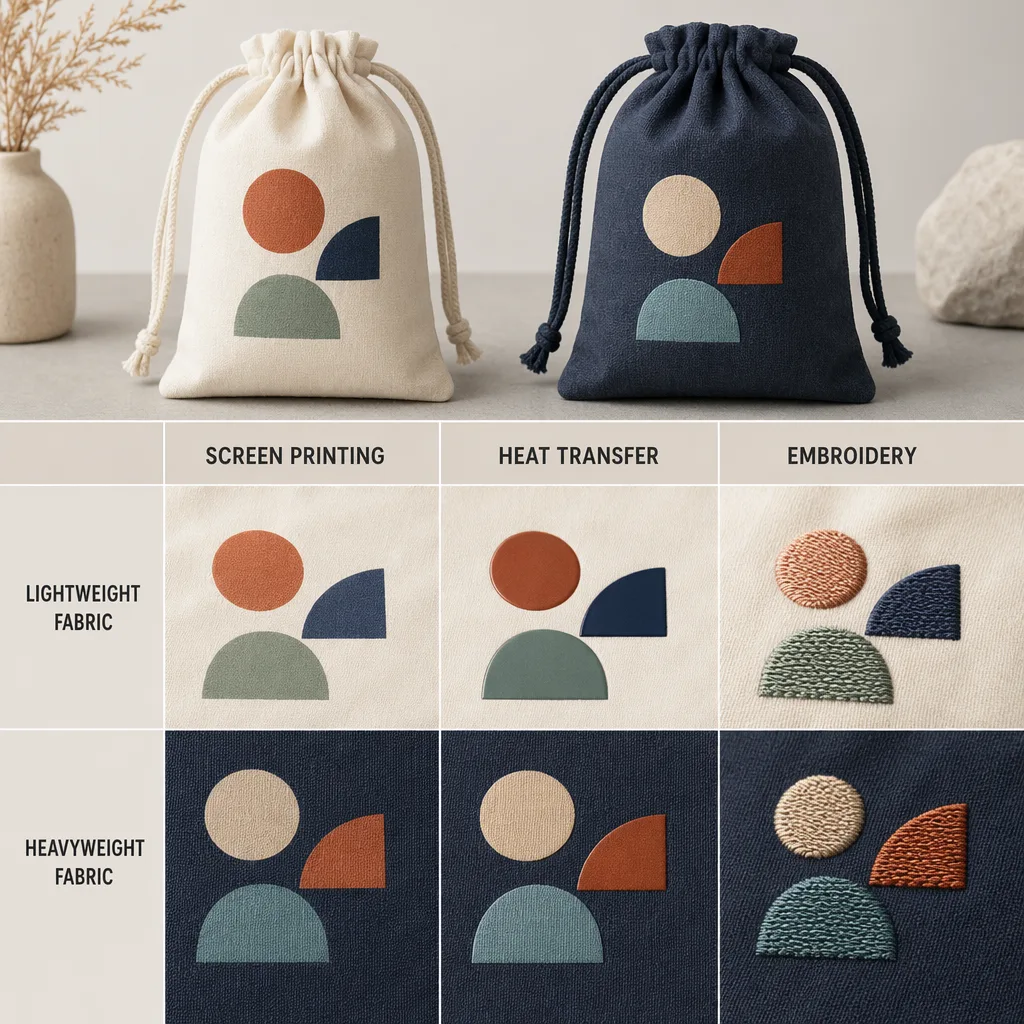
Decoration methods such as screen printing, heat transfer, embroidery, foil-style effects, and other techniques may be evaluated according to artwork, fabric, color, pouch pattern, and project requirements. No single method is automatically suitable for every custom logo pouch.
Simple one-color artwork may be easier to position on a flat panel than detailed artwork placed near a gathered drawstring top. Fine lines, small lettering, and closely spaced details should be checked at the intended decoration size. Textured surfaces, pile fabrics, open weaves, and seams can affect edge clarity and visual consistency.
Embroidery can add texture and dimension, but it may change the drape of lightweight material. It may also be less suitable for very small lettering or highly detailed artwork. Similarly, a decoration method that looks effective on one fabric may produce a different result on another fabric or color.
Request a layout for artwork placement review and consider a physical sample where the fabric texture, logo position, and drawstring interaction are important. In a YJXPACK quotation or sample discussion, the buyer should confirm the distance between the logo and seams, gussets, channels, folds, and closure areas.
Comparing Quotes Without Missing Key Details
A low headline price is not enough for a meaningful comparison. Two suppliers may quote the same stated pouch size while proposing different fabric weights, lining, cord types, decoration methods, packing methods, or construction details. These differences can affect the final appearance and function of the packaging.
Compare at least the following points:
- Fabric type, color, construction, and proposed finish.
- Finished pouch dimensions and whether dimensional tolerances are identified.
- Flat, gusseted, lined, shaped, or reinforced pattern details.
- Cord, ribbon, label, inner bag, lining, or other accessories.
- Logo method, number of colors, artwork location, and artwork limitations.
- Sample type, revision process, and approval reference.
- Individual packing, carton packing, labeling, and shipping terms.
- Required documentation, inspection expectations, and buyer-specific compliance needs.
If recycled content, organic content, textile certification, or other environmental attributes are important to the project, request documentation that applies to the specific material and order. Do not assume that a fabric name or general marketing description proves a particular claim.
Choosing the Right Format for Your Use Case
Choose a bag sachet when the packaging is primarily decorative, lightweight, scent-oriented, or intended for one-time presentation. It can also work for compact gifts and inserts when an elaborate reusable closure is not necessary.
Choose a drawstring pouch when reopening is part of the customer experience, when the contents need to remain together after purchase, or when a cinching closure supports the desired presentation. For fragile goods, remember that the pouch may be only one layer in the total packaging system. Shipping cartons, protective inserts, wrapping, and transit handling should be considered separately.
The most useful decision comes from the actual product and customer journey, not from which format appears more attractive in isolation. Before requesting a sample from YJXPACK, provide the product dimensions, closure expectations, artwork, material preferences, and packing requirements in writing. Final approval should be based on review of the proposed specification and sample rather than on a product name or reference image alone.
Frequently Asked Questions
Is a bag sachet the same as a drawstring pouch?
Not always. A bag sachet is a broad term for a small bag or packet-style format, while a drawstring pouch specifically uses a cord-and-channel closure. Some sachets may include a drawstring, so the physical construction should be stated clearly.
Which option is suitable for jewelry packaging?
A drawstring pouch may be considered when the recipient is expected to store, open, and close the pouch repeatedly. The right choice still depends on jewelry dimensions, surface protection needs, fabric texture, branding, and any outer shipping packaging.
Can a sachet hold loose tea or dried botanicals?
It may be possible, but suitability depends on particle size, fabric weave, seam construction, closure, inner packaging, and requirements for the product and sales market. Confirm these points before choosing fabric packaging for direct contents.
Why can a drawstring pouch cost differently from a flat sachet?
A drawstring pouch may involve additional material and construction for the channel and cord. Final pricing can also depend on fabric, dimensions, lining, decoration, packing, and other order requirements. Quotes should be compared using matching specifications.
What should I approve before placing a production order?
Approve finished dimensions, usable internal space, fabric, color, closure, logo artwork and placement, construction details, packing method, and a sample where appropriate. Keep the approved specification in writing so all parties reference the same requirements.
Share This Story, Choose Your Platform!