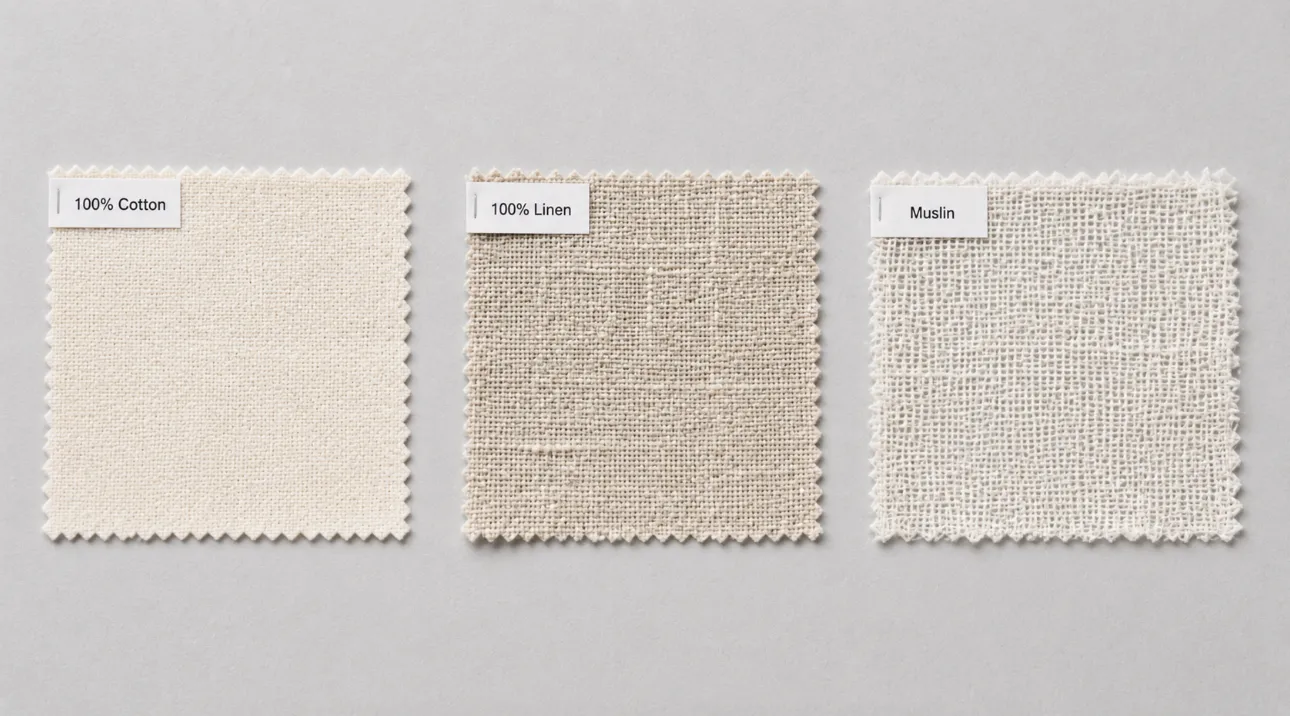
Choosing the right fabric can make or break your brand’s packaging. In fact, the cotton vs linen pouch decision alone trips up many buyers — and muslin adds a third option that’s often overlooked. All three look similar at first glance. However, they behave very differently in production, in print quality, and in how customers feel about them.
In short: this guide compares cotton, linen, and muslin pouches across eight dimensions — texture, weight, durability, print quality, cost, sustainability, and more. Whether you’re sourcing for a jewelry brand, a coffee company, or a wedding favor line, you’ll know exactly which fabric to pick by the end.
1. Cotton vs Linen Pouch vs Muslin: Quick Comparison
Here’s the full picture at a glance. Each column covers one of eight factors that B2B buyers ask about most.
| Factor | Cotton | Linen | Muslin |
|---|---|---|---|
| Texture | Smooth, consistent | Slightly rough, visible slubs | Soft, open weave |
| Weight | Medium (8–12 oz) | Medium-heavy | Light (3–5 oz) |
| Feel | Familiar, soft | Natural, earthy | Airy, delicate |
| Durability | High | Very high | Moderate |
| Print quality | Excellent | Good (texture shows) | Fair (ink spreads slightly) |
| Cost | Low | Mid–High | Lowest |
| Sustainability | Good (GOTS/GRS available) | Very good (natural flax) | Good (lightweight = less material) |
| Best use case | Everyday retail, jewelry, gifts | Premium gifts, eco brands | Sachets, wedding favors, tea |
2. What Is Cotton Fabric?
Cotton is the most widely used natural fiber in the world. It comes from the seed pods of the cotton plant, then goes through spinning and weaving and goes through a spinning and weaving process to become fabric. In fact, cotton accounts for about 25% of all fabric used globally. For pouches specifically, cotton is available in a wide range of weights — from lightweight 8 oz to heavy-duty 12 oz canvas.
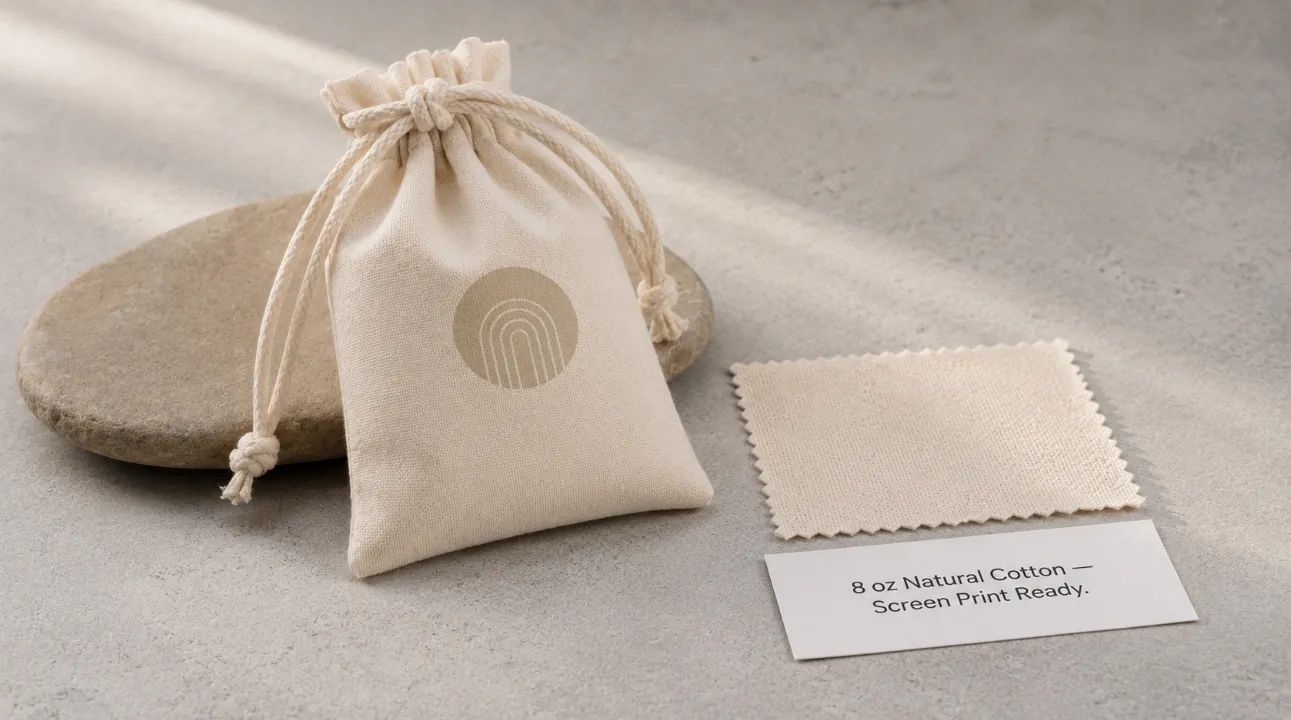
Generally, the tighter the weave, the smoother the surface and the better it takes printing. Most custom cotton drawstring pouches use 8–10 oz weight. Generally, that weight balances softness with enough structure to hold its shape on a shelf or inside a box.
Key advantages of cotton:
First, cotton accepts logo printing extremely well. Screen printing, embroidery, and heat transfer all produce clean, accurate results on cotton’s smooth, tight surface. Second, cotton is widely available and cost-effective, especially at bulk volumes. Third, certified organic cotton under GOTS or GRS is easy to source, giving brands a verified eco claim without a major price jump.
Limitations: Cotton wrinkles easily and may shrink slightly if washed without pre-treatment. It also lacks the rustic, earthy character of linen, so, it’s not the obvious pick for brands with a strongly artisanal identity.
3. What Is Linen Fabric?
Linen comes from the flax plant, not cotton. As a result, the fibers are longer and coarser, which gives linen its signature textured look and feel. That slightly uneven surface — with natural variations called slubs — is what makes linen instantly recognizable and desirable for premium packaging.
Linen drawstring pouches feel heavier and more substantial than cotton at the same size. They also get softer with use rather than rougher. That quality adds to their longevity. Linen is naturally moisture-wicking and breathable, making it a strong choice for sachets, dried herbs, and anything that needs airflow.
Key advantages of linen:
First, linen carries a strong visual premium. The natural slubs and matte texture signal handmade quality without any branding at all. Second, linen is genuinely eco-friendly — flax requires far less water and fewer pesticides than cotton to grow. Third, linen is very durable and improves in texture over time.
Limitations: Linen costs more than cotton. It also wrinkles heavily and can crease permanently if stored under pressure. Printing on linen is possible but the textured surface means logos have softer edges compared to cotton.
4. What Is Muslin? How It Differs From Cotton
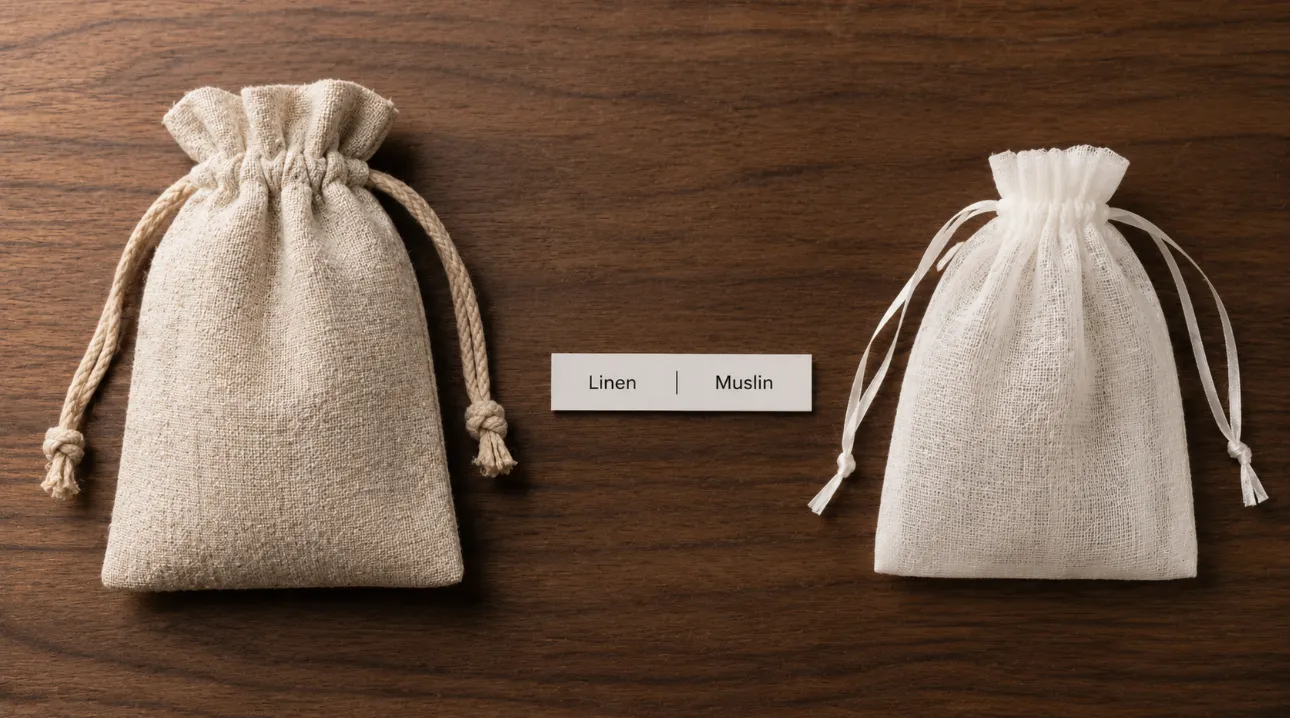
Muslin is a type of cotton — but, notably, a very specific one. It’s woven in a plain, open weave at very low thread counts, which makes it lighter, airier, and more translucent than standard cotton. Think of it as cotton’s lighter, softer cousin.
The key difference is weight and density. Specifically, standard cotton pouches use tight, heavy weaves for structure. Muslin uses a loose, open weave that lets air and slight light pass through. That quality makes it popular for sachets, tea bags, herb pouches, and wedding favors where a soft, natural look matters more than durability.
This also makes it the best muslin bag material for products that benefit from breathability — dried lavender sachets, loose-leaf tea, bath salts, and similar items.
Key advantages of muslin:
First, muslin is the most affordable of the three options, since it uses less raw material per unit. Second, it has a soft, handmade aesthetic that works well for artisanal and small-batch brands. Third, muslin is lightweight, which keeps shipping costs low for international orders.
Limitations: Muslin is the least durable of the three. The open weave means it’s more prone to snagging and tearing under heavy use. Logo printing is fair at best — ink spreads slightly on the loose weave, so very fine detail doesn’t reproduce cleanly.
5. Cotton vs Linen Pouch: Side-by-Side Comparison
When brands compare the cotton vs linen pouch decision, it usually comes down to two things: print quality and brand personality.
Print quality: First, cotton wins here. The tight, flat surface of cotton gives screen printing, embroidery, and heat transfer clean, sharp results. Linen’s slubby texture creates a softer edge on printed logos — which looks intentional and organic for some brands, but inconsistent for others. If your logo has fine lines or small text, cotton is the safer choice.
Brand personality: Second, linen wins for brands that want to communicate natural, handmade, or premium values. The texture does that work without any extra branding. Cotton is more neutral and versatile — it fits almost any brand without sending a specific aesthetic signal.
Cost: Third, cotton is consistently cheaper at the same weight and size. Linen typically costs 20-40% more per unit, depending on quality and order volume.
Sustainability: Finally, both are natural fibers. However, linen has the edge — flax requires significantly less water than cotton to grow. If you want to make a genuine eco claim, linen is the stronger story. Cotton certified under GOTS closes that gap considerably, but certified linen is still the most eco-friendly option per kilogram of fiber produced.
When to pick cotton: High-volume retail, jewelry brands, corporate gifts, any application where print quality matters most.
When to pick linen: Premium gift sets, eco-conscious brand positioning, artisanal food and wellness brands, any context where the fabric texture itself is part of the brand story.
6. Linen vs Muslin: Which Feels More Premium?
Linen feels more premium than muslin in almost every context. That said, premium isn’t always the right call. The weight, the texture, and the visual density of linen communicate quality in a way that muslin’s loose, airy weave doesn’t match.
Muslin has its own kind of charm — it’s soft, light, and suggests handmade simplicity. For wedding favors, herb sachets, and gifts that are meant to feel personal and unpolished, muslin often lands better than linen.
Where linen wins: Corporate gift sets, luxury skincare packaging, any brand that positions itself as elevated and natural. Linen’s weight and texture feel substantial in hand.
Where muslin wins: Products that should feel soft and intimate. Tea sachets, wedding favor bags, and dried botanical pouches all benefit from muslin’s lightness and breathability. The natural eco friendly pouch fabric story also works well for small-batch, artisanal brands.
On cost: Muslin is cheaper. For brands that need large volumes of packaging for low-cost products — like event giveaways or seasonal promotions — muslin keeps unit costs low while still delivering a natural fabric packaging feel.
7. Cotton vs Muslin: When to Choose Which
Cotton and muslin come from the same plant. However, they serve very different purposes in packaging.
Generally, choose cotton when your pouch needs to hold its shape and take a logo cleanly. Cotton is the better fabric for anything that gets handled repeatedly — jewelry pouches, cosmetic bags, retail packaging that customers reuse. It’s also easier to produce at scale with consistent quality batch after batch.
Choose muslin when the packaging is meant to be simple and disposable, or when the contents need to breathe. Dried herbs, loose-leaf tea, bath salts, and sachets all benefit from muslin’s open weave. Muslin also works well for wedding favors where a soft, slightly raw look is part of the aesthetic.
One practical note: If you want the best fabric for jewelry pouches specifically, cotton wins over muslin almost every time. Muslin’s loose weave can snag on earring hooks or ring prongs, and the light weight makes the pouch feel insubstantial for anything above entry-level price points.
8. Which Fabric Fits Your Brand?
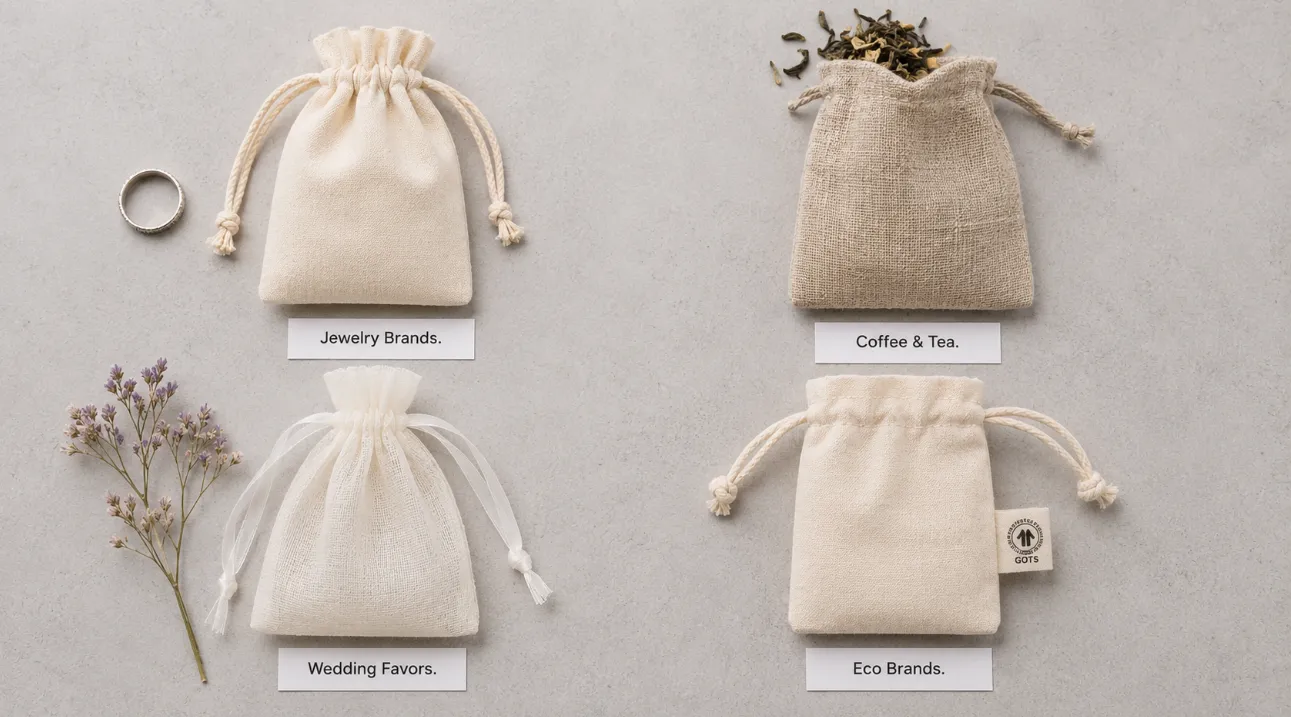
Here’s a quick guide by brand type. Use this to narrow down your choice before getting into specifications with a factory. In most cases, the right answer becomes obvious once you match fabric to function.
Jewelry brands: Generally, cotton or velvet. Cotton gives you clean print quality, good structure, and a range of weights. Velvet adds premium feel for higher price points. Muslin and linen are less common for jewelry because of snagging and print limitations.
Coffee brands and tea companies: Instead, try muslin or linen. Both are breathable, which matters for products that need air circulation. Muslin is cheaper and lighter for single-use sachets. Linen is better for reusable branded bags meant to sit on a shelf.
Wedding favors: For events, muslin or organza works best. Both are soft, lightweight, and translucent enough to create a delicate, romantic feel. Muslin is more affordable for large event quantities.
Luxury cosmetics: Linen or velvet. The natural texture of linen signals premium quality without being flashy. Velvet is appropriate for gift-with-purchase packaging or holiday collections.
Eco brands: Finally, organic cotton or linen. Both carry strong sustainability credentials. If you want the most verifiable eco claim, certified organic cotton under GOTS and linen certified under OEKO-TEX both give you documentation you can share with retail buyers.
9. How to Order Custom Cotton, Linen or Muslin Pouches
Ordering custom fabric pouches is straightforward once you know what to specify. Here’s what to prepare.
Material and weight: First, specify the fabric type and weight in grams per square meter (GSM) or ounces. Cotton typically runs 200-280 GSM for pouches. Linen sits at 180-250 GSM. Muslin is lighter at 100-150 GSM.
Size and construction: Second, give exact dimensions in inches or centimeters — width, height, and gusset if needed. Note whether you want a drawstring, zipper, or flap closure.
Logo and printing method: Third, share your logo file and specify your preferred method — screen printing, embroidery, heat transfer, or foil stamping. If you’re unsure which works best on your chosen fabric, ask for a print test sample before bulk production.
MOQ and timeline: Finally, at YJXpack, the minimum order quantity is 100 pieces for most cotton and muslin pouches. Linen may require a slightly higher minimum depending on the specification. Standard lead time is 5-7 days for bulk orders after sample approval, with samples ready in 1-3 days.
Certifications: If you need OEKO-TEX, GOTS, or GRS certification for your market, confirm this upfront. We hold all three and can supply documentation for retail buyer requirements.
10. Cotton vs Linen Pouch FAQs
Q1: Which fabric is more eco-friendly, cotton or linen?
Linen has the edge overall. Flax requires less water and fewer pesticides than cotton to grow. However, organic cotton certified under GOTS comes close in environmental impact. If your market demands certified documentation, both options are available with verified credentials.
Q2: Can you print logos equally well on cotton, linen, and muslin?
No — cotton gives the best print results. Its tight, smooth surface produces sharp edges for screen printing, embroidery, and heat transfer. Linen prints well but the texture creates softer logo edges. Muslin is the hardest to print on clearly, especially for fine detail or small text.
Q3: Which fabric is cheapest for bulk custom pouches?
Muslin is typically the cheapest, followed by cotton, then linen. At 500+ pieces, muslin can run 20-30% below comparable cotton, and linen can run 30-50% above it. However, print quality and durability differences often make cotton the better value for most brands.
Q4: Which fabric is best for jewelry packaging?
Cotton is the most practical choice for most jewelry brands. It holds shape, takes logos cleanly, and comes in weights that feel substantial without being heavy. Velvet is the premium option for fine jewelry. Muslin is generally not recommended for jewelry due to snagging risk.
Q5: What is the MOQ for custom cotton, linen, or muslin pouches?
Most factories start at 100–300 pieces for standard designs. At YJXpack, MOQ is 100 pieces for cotton and muslin pouches with a logo. Linen may require 200 pieces minimum depending on the specification and dye lot requirements.
Q6: Are these fabrics OEKO-TEX certified?
Yes. We supply OEKO-TEX Standard 100 certified fabric across cotton, linen, and muslin options. GOTS and GRS certification is also available for organic and recycled variants. Certification documents are provided on request and included with your order file.
Get a Quote — Custom Cotton, Linen or Muslin Pouches
YJXpack — Yijiaxin (Shenzhen) Packaging Co., Ltd.
Ready to source premium fabric pouches for your brand? We’ve been manufacturing custom fabric pouches for 20+ years across cotton, linen, muslin, velvet, and more — with an 8,000 sqm factory producing 500,000+ units per month.
Not sure which fabric is right for you? Send us your brief and we’ll recommend the best option for your price point, logo, and market — with a free sample ready in 1-3 days.
Email: info@yjxpack.com
WhatsApp / WeChat: +86 18617112946
Website: www.yjxpack.com
Free sample shipped to your door · Quote within 3 minutes · MOQ 100 pieces · OEKO-TEX / BSCI / Sedex certified
Share This Story, Choose Your Platform!