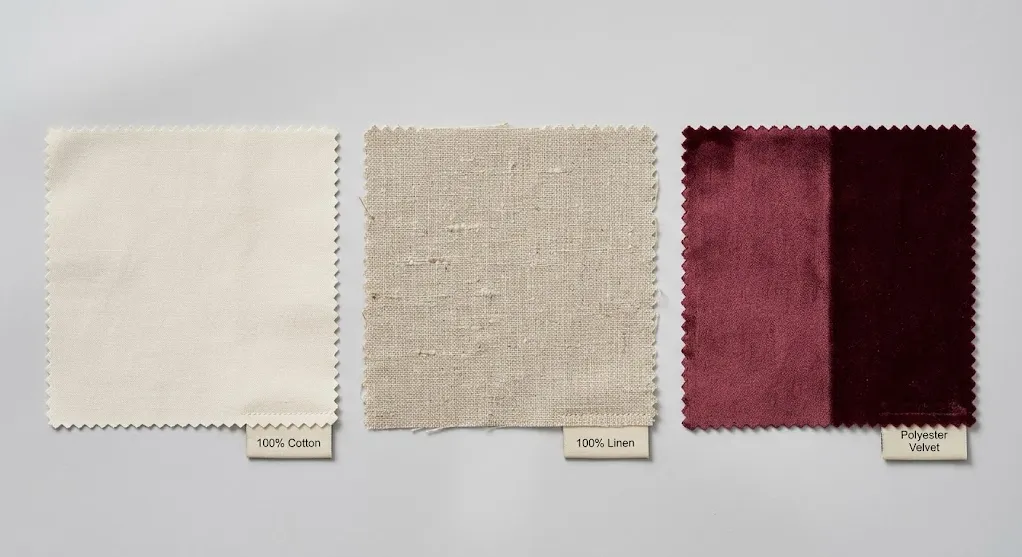
Picking a pouch material feels simple until you compare swatches side by side. Cotton feels crisp and casual. Linen feels rustic and breathable. Velvet feels heavy and luxurious. Each one sends a different signal to your customer before they even open the box.
This guide breaks down cotton vs linen vs velvet pouches across feel, cost, and durability. We will also cover which material fits jewelry, cosmetics, or retail gifting best. Plus, we’ll flag the mistakes brands make most often when choosing between them. By the end, you will know exactly which fabric matches your brand and your budget.
1. The Quick Answer — Cotton vs Linen vs Velvet
If you only have ten seconds, here is the short version. Cotton works best for everyday packaging on a tight budget. Linen, in contrast, suits brands that want a natural, earthy look. Velvet, meanwhile, wins for premium jewelry and gifting where unboxing matters most.
| Material | Feel | Best For | Cost Tier |
|---|---|---|---|
| Cotton | Soft, smooth, casual | Everyday retail, totes | Low |
| Linen | Textured, breathable, rustic | Sachets, gift sets | Mid |
| Velvet | Plush, heavy, luxurious | Jewelry, premium gifts | High |
Of course, a quick table only tells part of the story. Each material carries its own background and its own manufacturing quirks. So let’s look at what makes each one unique before comparing them head to head.
2. What Is a Cotton Pouch?
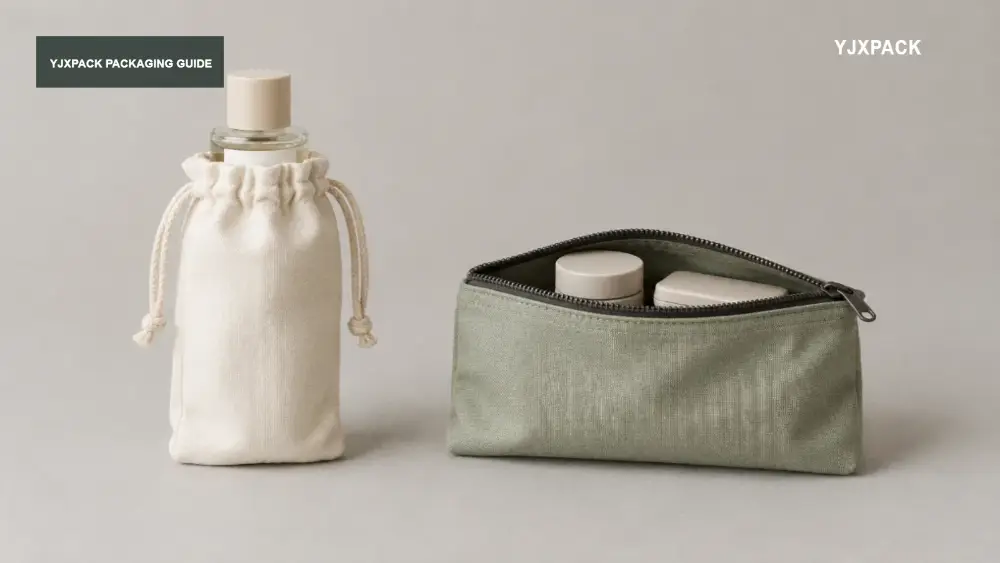
A cotton pouch is a fabric bag woven from natural cotton fibers. It usually comes as a drawstring bag, though flap and zipper styles exist too. Brands love cotton because it feels familiar and washes well.
Cotton fibers breathe naturally, which means items stored inside stay dry. The fabric also takes printing well. Specifically, screen printing, embroidery, and heat transfer all show up crisp on cotton surfaces, since the weave is flat and even.
Most factories offer cotton in a range of weights. For instance, lightweight cotton (100-150 GSM) suits small jewelry pouches, while heavier canvas-style cotton (240-300 GSM) holds structure for totes and gift sets. A cotton drawstring bag in the right weight balances softness with strength.
Cost stays low overall because cotton farming and weaving are widely available across many regions. As a result, cotton remains the default choice for brands shipping high volumes on a budget. Naturally, that affordability comes with a tradeoff: cotton lacks the visual drama that pricier fabrics offer.
3. What Is a Linen Pouch?
Linen comes from the flax plant, not cotton. The fibers are longer and stiffer, which gives linen its signature texture. Generally, you can spot linen by its slightly uneven, woven look and matte finish.
A linen pouch feels cooler to the touch than cotton. It also wrinkles more easily, which some brands actually want. Indeed, that relaxed, slightly rumpled look reads as natural and handmade rather than mass-produced.
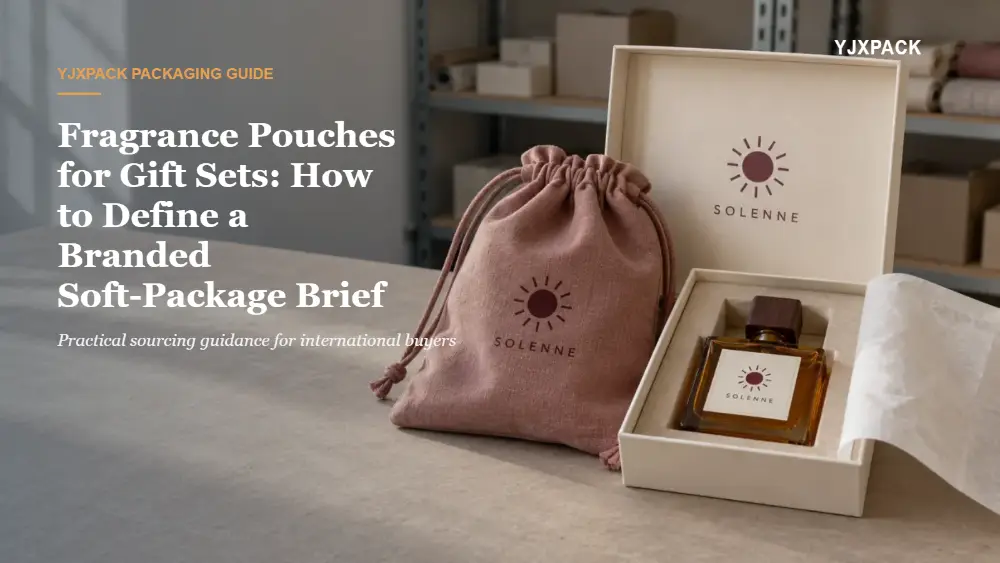
Linen breathes even better than cotton, since its fibers sit more loosely in the weave. This makes it a popular pick for sachet bags, dried herbs, or anything that benefits from airflow. Many brands use a linen pouch for fragrance sachets or rustic-themed gift sets, where scent needs room to circulate.
The tradeoff is price. Flax is harder to farm and process than cotton, so linen costs more per yard. Still, brands pay that premium because linen delivers an organic, earthy aesthetic that synthetic fabrics simply cannot match. In short, you’re paying for character, not just material.
4. What Is a Velvet Pouch?
Velvet is a woven fabric with a short, dense pile that gives it a soft, plush surface. Unlike cotton or linen, velvet has a directional nap. Light hits it differently depending on the angle, which creates that signature depth and shine.
A velvet pouch instantly signals luxury. Jewelry brands rely on velvet because it cushions delicate items and elevates the unboxing moment. The fabric also drapes beautifully, which photographs well for product listings and social media posts.
Velvet comes in several base materials, including polyester velvet and cotton velvet. Polyester velvet resists wrinkles and holds color vibrantly, which explains why it dominates commercial packaging. A velvet pouch in the right weight feels substantial without becoming bulky or heavy in transit.
Production costs run higher because of the pile-weaving process, which requires specialized looms and slower output. Still, many brands find the perceived value boost worth the extra spend, especially for higher-priced products where packaging quality influences the buying decision.
5. Cotton vs Linen vs Velvet: Feel and Texture
Texture is often the deciding factor once budget allows for more than one option. Cotton feels smooth and predictable. Run your hand across it, and you get a consistent, soft surface every time, with no surprises.
Linen feels rougher and more organic by comparison. You can feel individual fiber irregularities, which many people associate with natural, eco-conscious products. It is not as soft as cotton, but it carries more personality and visual interest.
Velvet feels entirely different from both. The pile creates a plush, almost furry sensation under your fingers. Stroke it one way, and it looks lighter; stroke it the other way, and it looks darker. That visual shift is part of velvet’s lasting appeal.
Texture also affects how logos look once printed or stitched. For example, embroidery pops beautifully on velvet because the pile adds dimension and shadow. Screen printing, on the other hand, looks cleanest on cotton’s flat surface. Linen sits in between, taking print well but with a slightly textured, softer finish.
6. Durability and Daily Wear Compared
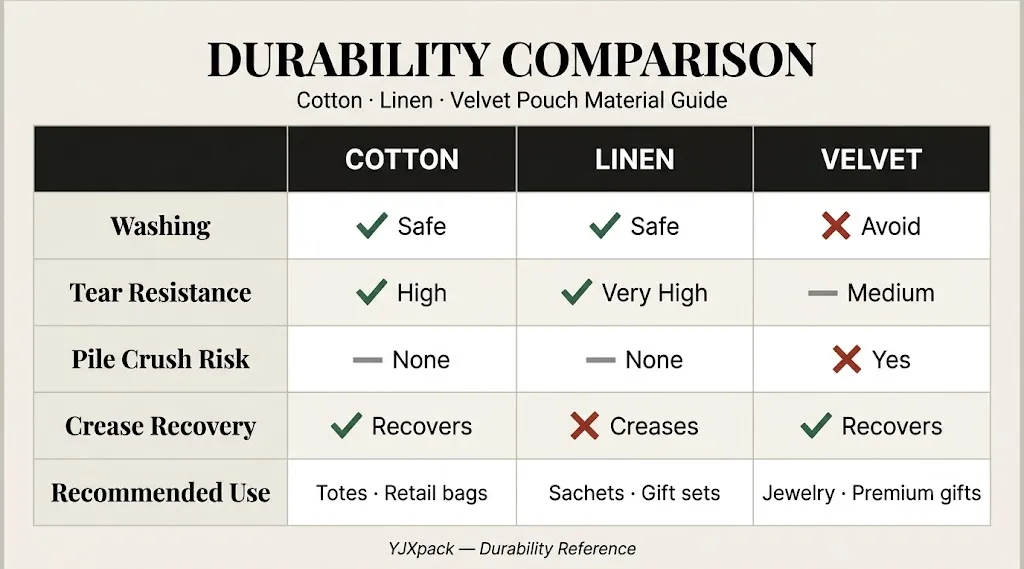
Durability matters most when your packaging doubles as a reusable item. Cotton holds up well to repeated folding and light washing. It resists tearing and keeps its shape after months of regular use.
Linen is actually quite strong, sometimes stronger than cotton by weight. However, its fibers are less elastic, so linen can crease permanently if folded the same way too often. That said, most customers do not mind a few creases on a rustic-style pouch, since it fits the aesthetic.
Velvet faces a different challenge entirely: pile crushing. Stack heavy boxes on velvet pouches for too long, and the pile can flatten in that spot. Good velvet bounces back with a light brushing, though cheap velvet may not recover fully once crushed.
All three materials resist daily wear reasonably well, so the real question becomes which type of wear matters most for your product. Jewelry pouches rarely get washed, so velvet’s crushing risk stays minor in practice. Tote bags get washed often, however, so cotton’s washability becomes the higher priority there.
7. Cost Per Unit: Which Material Fits Your Budget
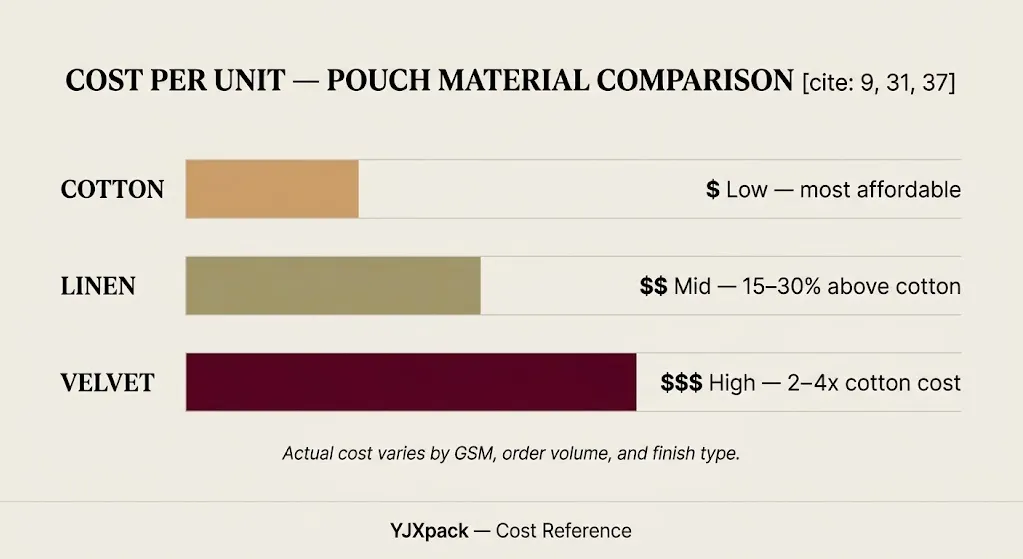
Budget often settles the cotton vs linen vs velvet debate fast. Cotton remains the most affordable option across nearly every weight and style available. Bulk orders bring the per-unit cost down even further, sometimes significantly.
Linen sits in the middle of the price range. Expect to pay somewhat more than cotton, mainly because flax processing is more labor-intensive from harvest to finished yarn. The exact gap depends on weave density and weight, but linen typically runs 15-30% above comparable cotton.
Velvet, by contrast, sits at the top of the price range. The pile-weaving process, plus the lining many velvet pouches require, adds noticeable cost. Polyester velvet costs less than natural fiber velvet, though, which helps brands manage budget without losing the plush look entirely.
Here’s a useful way to think about it: match your jewelry pouch material cost to your product’s retail price. A $15 item rarely needs a $2 velvet pouch, since the packaging cost ratio gets out of balance. A $200 item, however, often justifies that spend without question.
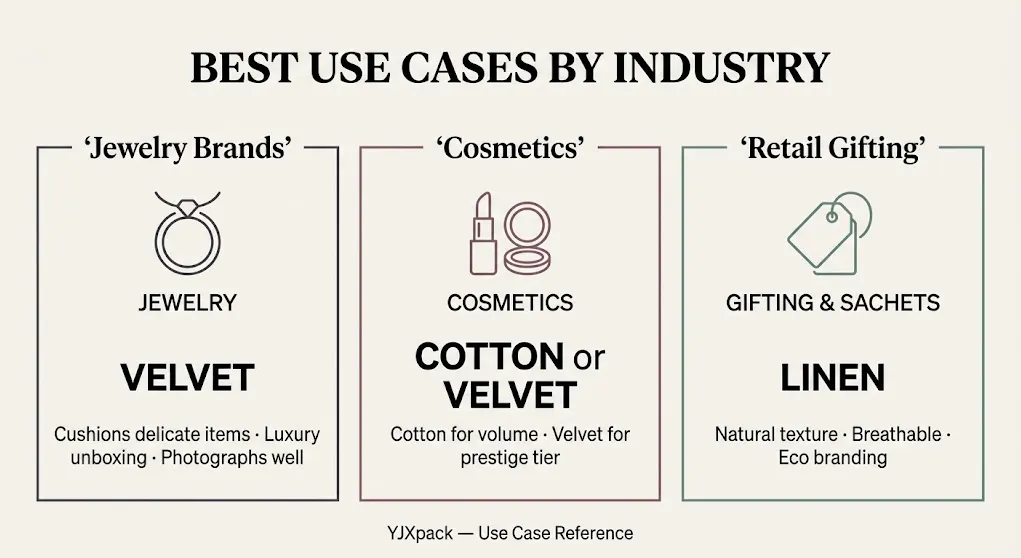
8. Best Use Cases by Industry
Different industries lean toward different materials based on what their customers expect to see and feel. Here is how the choice usually breaks down across common sectors.
Jewelry Brands
Jewelry brands almost always reach for velvet first. The plush surface protects metal and gemstones from scratches during shipping and storage. It also photographs beautifully for e-commerce listings, which matters since customers cannot touch the product before buying online.
Cosmetics Companies
Cosmetics companies often split between cotton and velvet depending on price point and brand tier. Drugstore-tier brands lean cotton for cost control across large order volumes. Prestige skincare and makeup lines, however, often choose velvet to match their premium positioning on the shelf.
Retail Gifting and Sachets
Retail teams building gift sets or fragrance sachets frequently choose linen instead. Its natural texture pairs well with eco-friendly branding messages. Linen also breathes, which makes it the practical pick for scented sachets or dried botanicals that need airflow.
9. Common Mistakes When Choosing Pouch Material
Brands make a few predictable mistakes when picking between these three fabrics. Avoiding them early saves money and protects your brand image down the line.
Choosing Velvet for Low-Cost Items
Pairing a premium velvet pouch with a $10 product confuses customers about what they’re actually buying. The packaging should match the perceived value of what’s inside, not exceed it dramatically or signal a price point you can’t deliver.
Ignoring Climate and Shipping Conditions
Linen wrinkles in humid storage, and velvet can mat down during long, compressed shipping routes. Therefore, always test your chosen material under your actual storage and shipping conditions before committing to bulk production.
Skipping Fabric Weight Specs
“Cotton” alone tells a factory very little about what you actually want. Instead, specify GSM weight, weave type, and finish clearly. A 120 GSM cotton pouch behaves nothing like a 280 GSM canvas-weight version, even though both are technically cotton.
Forgetting About Logo Application
Some printing methods do not transfer well across all three fabrics equally. Before finalizing the order, confirm your logo method, whether embroidery, screen print, or heat transfer, actually works on your chosen material.
10. Conclusion — Cotton vs Linen vs Velvet, Final Verdict
There is no universal winner in the cotton vs linen vs velvet comparison. Each material solves a different problem for a different kind of product. Cotton handles volume and budget well. Linen brings natural texture and breathability to the table. Velvet, meanwhile, delivers luxury and visual impact above the other two.
Start by matching the material to your product’s price point and your brand’s personality. Then confirm the supplier can hit your weight, finish, and logo requirements consistently across every batch. Getting those details right matters more, in the end, than picking a single “best” fabric.
11. FAQs
Q1: Is cotton or linen better for jewelry pouches?
Velvet usually beats both for jewelry, but between cotton and linen, cotton wins for jewelry specifically. Cotton offers a smoother, more protective surface, while linen’s looser texture can sometimes catch on fine chains or delicate clasps.
Q2: Does linen shrink like cotton does?
Yes, linen can shrink slightly when washed, similar to cotton. Pre-washed linen fabric reduces this risk for finished pouches considerably. Always confirm with your factory whether the fabric was pre-shrunk before bulk production begins.
Q3: Most cotton pouches use which printing method?
Most cotton pouches use screen printing for solid logos and simple designs. Heat transfer works well for multi-color or detailed artwork instead. Embroidery is also common for a more premium cotton finish overall.
Q4: About how much more does velvet cost than cotton?
Velvet typically costs two to four times more than comparable cotton, depending on the velvet type and lining used. Polyester velvet narrows that gap somewhat compared to natural fiber velvet options.
Q5: Velvet pile crushes easily, so is it worth using for shipping?
Yes, in most cases it still is. Quality velvet recovers from light crushing with a quick brush afterward. As a result, the luxury appeal usually outweighs the minor shipping risk for premium products.
Q6: No clear winner, but which material is most sustainable?
Generally, organic cotton and linen rank as more sustainable than synthetic velvet, since both come from natural plant fibers. Look for OEKO-TEX certified fabric to confirm chemical safety standards, regardless of which material you choose.
Q7: Can I mix materials, like a linen pouch with a velvet lining?
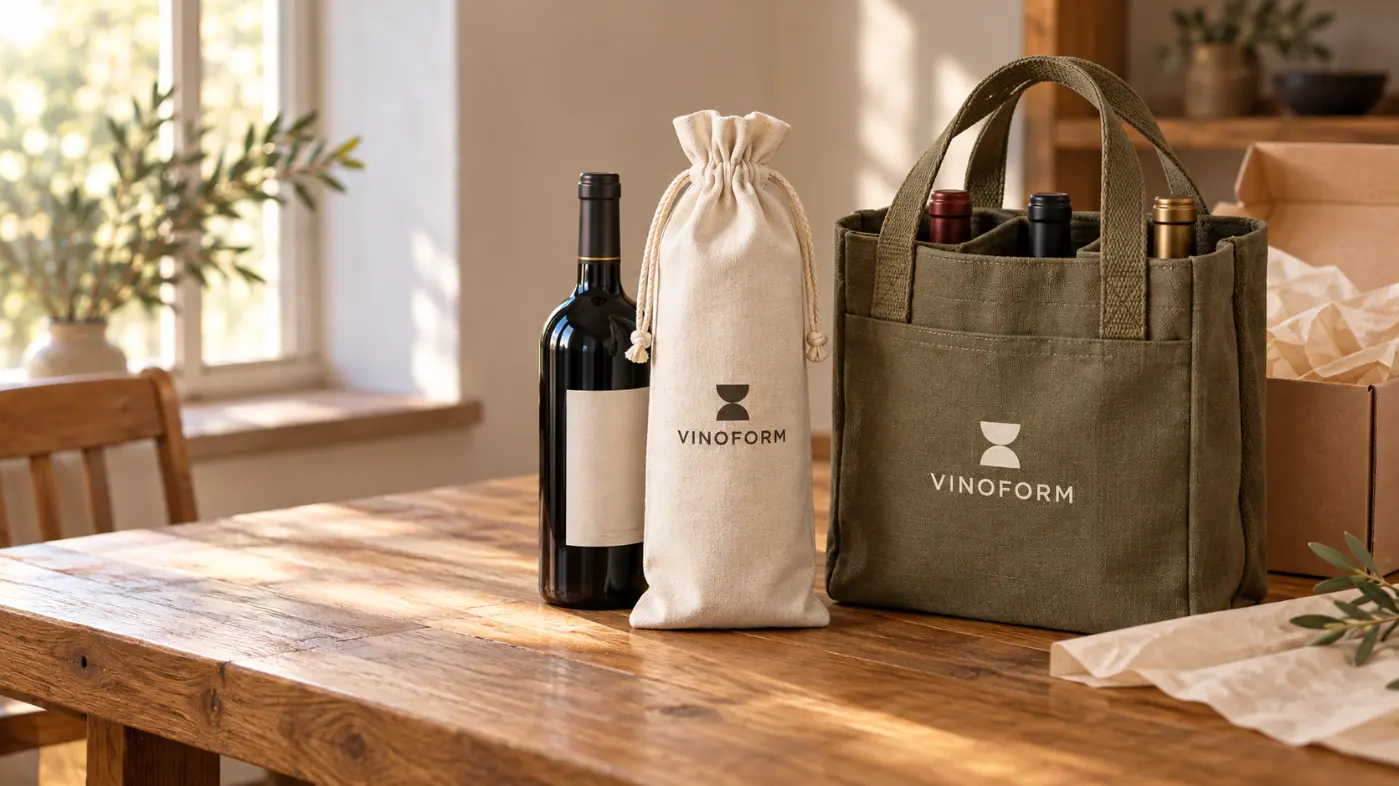
Yes, hybrid designs are actually quite common in gifting lines. A linen exterior with a velvet or satin lining combines the rustic look with a soft interior. This works well for gift sets that want texture outside and protection inside.
Get a Quote — Custom Cotton, Linen, or Velvet Pouches
YJXpack — Yijiaxin (Shenzhen) Packaging Co., Ltd.
For 20+ years, we’ve made custom fabric pouches in cotton, linen-blend, and velvet for brands worldwide. Whatever material fits your product and budget, our team can match the weight, finish, and logo method you need.
Want to see and feel the real thing? Request a free sample pouch in your chosen material — touch the fabric, check the stitching, and confirm the color before you commit to bulk production.
Email: info@yjxpack.com
WhatsApp / WeChat: +86 18617112946
Website: www.yjxpack.com
Free sample shipped to your door · Quote within 3 minutes · 3D mockup in 30 minutes · MOQ 100 pieces · GOTS / GRS / OEKO-TEX / BSCI / ISO 9001 certified
Share This Story, Choose Your Platform!