Your jewelry packaging is part of your product. In fact, a customer who receives a ring in a limp plastic bag feels very different from one who pulls a velvet pouch from a gift box. The packaging sets the tone before they even see what’s inside.
In short: this guide covers every major type of jewelry packaging pouch — organza, microfiber, cotton, and velvet — and shows you how to pick the right one for your brand. At YJXpack, we produce all four across thousands of brand orders each year, so the comparisons here come from real production data, not guesswork. By the end, you’ll know exactly what to order, how to brand it, and what to avoid.
1. Why Jewelry Packaging Matters More Than Most Brands Think
Most brands treat jewelry packaging as an afterthought. They pick whatever’s cheapest and move on. That’s a mistake, and the data backs it up.
Studies on unboxing behavior consistently show that premium packaging increases the perceived value of the product inside. Customers are also more likely to share their purchase on social media when the presentation feels special. For jewelry brands specifically, that moment of opening a pouch is often the first emotional peak of the experience.
Packaging also does practical work. A good jewelry pouch protects pieces from scratches, keeps chains untangled, and reduces returns due to damage. So the cost of quality packaging often pays for itself in customer satisfaction and lower return rates.
Finally, branded jewelry packaging travels. A customer reuses a velvet pouch for storage, takes it on trips, or gifts it to someone else. Every time that happens, your logo goes with it. Indeed, that kind of passive brand exposure is hard to buy any other way.
2. The Quick Answer — Jewelry Packaging Types at a Glance
If you’re short on time, here’s the fast version. Each material fits a different brand position and price point.
| Material | Best For | Feel | Cost Tier | Reuse Rate |
|---|---|---|---|---|
| Organza | Events, promotions, gifts | Light, sheer | Low | Low-Mid |
| Microfiber | Everyday fine jewelry | Soft, protective | Mid | High |
| Cotton/Canvas | Casual and sustainable brands | Natural, matte | Low-Mid | High |
| Velvet | Premium and luxury brands | Plush, rich | High | Very High |
Of course, the right choice depends on your specific situation. Good jewelry pouch packaging is about matching material to brand, not just picking the cheapest option. So let’s look at each material in detail before you decide.

3. Organza Bags: Light, Sheer, and Budget-Friendly
Organza is a sheer, lightweight fabric woven from silk or synthetic fibers. It’s the most affordable option in the jewelry packaging category and, notably, one of the most widely used for gifts and promotional events.
The key appeal of an organza jewelry bag is visibility. Because the fabric is transparent or semi-transparent, customers can see the item inside before opening it. That creates a sense of anticipation and makes the gift feel curated rather than hidden.
Organza works best for lower-cost jewelry pieces, event giveaways, or seasonal promotions where volume matters more than premium feel. It’s also popular with brands that do bundles or gift sets, since the sheer fabric lets the colors of multiple pieces show through at once.
However, organza isn’t the best choice for high-end jewelry. The lightweight feel can make premium pieces feel underpackaged. It also offers minimal physical protection against scratches, so it’s better suited for smooth-surface items than for pieces with stones or sharp edges.
Printing on organza is limited. Most brands use simple ribbon drawstrings and minimal or no logo application. For brands that want strong visual identity on their packaging, microfiber or cotton will generally serve them better.
4. Microfiber Pouches: Soft Protection for Everyday Jewelry
Microfiber is a synthetic fabric made from extremely fine fibers, usually polyester or nylon. It’s incredibly soft, which makes it ideal for protecting polished metal and gemstone surfaces from scratches. Many optical and electronics brands use it for exactly this reason.
In jewelry packaging, a microfiber jewelry pouch hits a strong middle ground. It protects better than organza, costs less than velvet, and accepts logo printing very cleanly. Screen printing and heat transfer both work well on microfiber’s smooth surface.
Microfiber also has practical advantages for customers. The same pouch that holds a necklace during shipping can also clean it afterward, since the ultra-fine fibers lift oils and debris from metal surfaces without scratching. That dual function adds real perceived value.
The color range for microfiber is excellent. It takes dye consistently and holds color well over time. So whether you want classic black, dusty rose, or a custom Pantone shade, microfiber delivers reliable results batch after batch.
One limitation is texture. Microfiber feels smooth and functional rather than luxurious. For brands positioned in the premium or fine jewelry space, it can feel slightly underwhelming compared to velvet. It’s an excellent choice for everyday jewelry, fashion jewelry, or mid-range brands — but generally not the first pick for high-end gifting.
5. Cotton and Canvas Pouches: Versatile and Sustainable
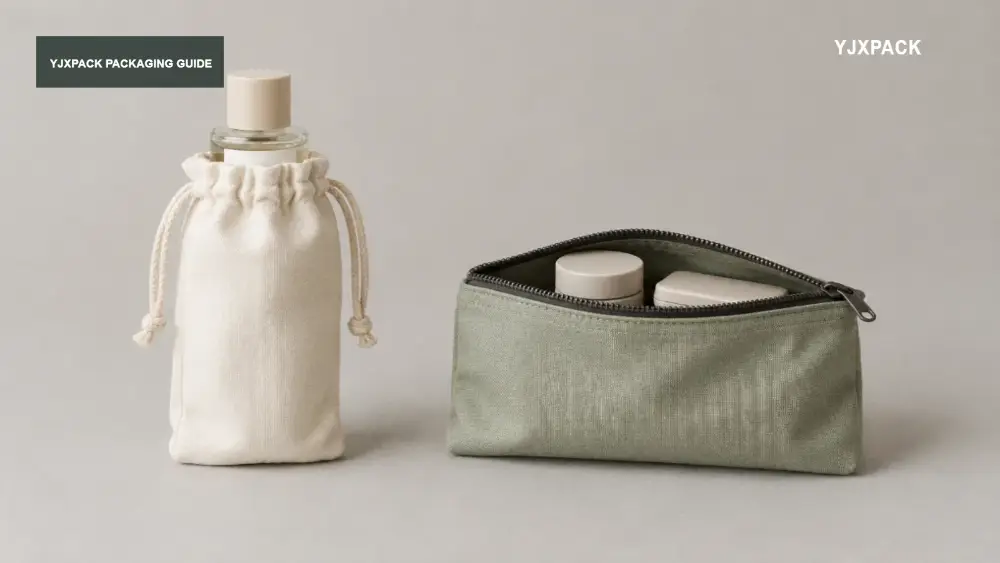
Cotton drawstring pouches have been used in jewelry packaging for decades. They’re natural, breathable, durable, and easy to source with sustainable certifications. For brands with an eco-conscious identity, cotton is often the obvious choice.
A custom branded jewelry bag in cotton offers excellent branding flexibility. Screen printing, embroidery, heat transfer, and foil stamping all work well on cotton’s flat surface. The fabric also takes dye evenly, so colored cotton pouches come out rich and consistent.
Canvas is a heavier-weight cousin of standard cotton. It holds structure better, which means canvas pouches tend to stand upright on a shelf or inside a box rather than collapsing. For brands that want their packaging to look intentional and structured, canvas is a strong option.
Sustainability is a genuine selling point here. Cotton certified under GOTS or GRS gives brands a verified eco claim they can put on their website and share with retail buyers. That claim is increasingly required by major retailers in the US and EU as part of supplier sustainability programs.
The main trade-off with cotton is premium feel. Cotton and canvas lack the visual drama of velvet and the protective softness of microfiber. However, for brands whose identity is built around naturalness, simplicity, or craftsmanship, that matte, understated look is exactly right.

6. Velvet Pouches: The Premium Choice for Jewelry Packaging
Velvet is the gold standard in jewelry packaging. Walk into any high-end jewelry store, and you’ll see velvet pouches, velvet ring boxes, and velvet display pads. The material has centuries of association with luxury, which means customers recognize it as premium without needing to be told.
The pile texture of velvet catches and reflects light differently depending on the angle. As a result, it gives a visual richness that no other fabric can replicate. When you place a diamond ring into a deep navy velvet pouch, the contrast alone makes the piece look more valuable. That’s not an accident — it’s the reason jewelers have used velvet for hundreds of years.
From a protection standpoint, velvet’s pile creates a natural cushion around the jewelry inside. Pieces don’t slide around or knock against each other the way they might in a smoother pouch. That matters for chains, earrings, and rings with prong settings that can catch and scratch.
Embroidery is the most popular logo method for velvet, since the raised stitching complements the fabric’s own texture. Foil stamping in gold or silver is also striking on deep-colored velvet — the metallic logo against the dark pile is a classic high-end look.
The cost is higher than the other options, but for brands in the fine or luxury jewelry space, the investment is easy to justify. At YJXpack velvet pouches, we produce embroidered velvet pouches starting at MOQ 100 pieces — low enough for small brands to access the premium look without a massive commitment.
7. How to Choose the Right Jewelry Packaging for Your Brand
Picking the right material comes down to three things: your price point, your brand style, and the market you’re selling into. Here’s how to think through each one.
By Price Point of Your Jewelry
Match the packaging cost to the product cost. A $15 fashion piece doesn’t need a $2 velvet pouch — the ratio is off and it confuses customers about pricing. A $300 fine jewelry piece, however, benefits enormously from velvet or premium microfiber packaging because it reinforces the value of what’s inside.
Here’s a rough guide: for pieces under $30, organza or cotton works well. For pieces between $30-150, microfiber or cotton is a strong fit. For pieces over $150, velvet is worth the investment.
By Brand Style
Think about what your brand’s visual identity says to customers. Natural and organic brands tend toward cotton or linen. Minimalist modern brands often choose microfiber in neutral tones. Romantic or vintage brands usually go to velvet in jewel tones. Playful or fashion-forward brands sometimes use organza in unexpected colors like coral, sage, or lavender.
By Market and Retail Channel
If you’re selling through wholesale or retail buyers, ask what packaging standards they require. Many US and EU retailers now have minimum sustainability requirements that favor cotton or recycled materials. If you’re selling direct-to-consumer online, packaging photography is critical — choose a material that photographs well and creates a strong unboxing moment.

8. Custom Branding Options for Jewelry Pouches
Once you’ve chosen your material, the next step is branding. Your logo and any custom details are what turn a generic pouch into a brand asset.
Embroidery is the most durable and premium option. Thread stitched directly into the fabric won’t peel, fade, or crack. It’s the best choice for velvet and canvas, where the raised texture adds dimension to the logo. Setup involves a one-time digitization fee, typically $30-60, which covers all future orders of the same design.
Screen printing delivers crisp, flat-color logos at a low per-unit cost. It works best on cotton and microfiber, where the smooth surface allows clean ink transfer. Colors can be matched precisely to Pantone references, which matters for brands with strict visual guidelines.
Heat transfer opens up full-color and gradient printing that neither embroidery nor screen printing can achieve. It’s a strong choice for detailed logos or illustrations on cotton or microfiber pouches. However, it sits slightly above the fabric surface and can crack over time with heavy use.
Foil stamping adds metallic gold or silver logo elements directly to the fabric. It’s especially effective on velvet, where the contrast between the metallic logo and the pile creates a jeweler’s-shop aesthetic that customers immediately recognize as premium.
Woven labels are a separate option that can be sewn into the seam or applied to the outside of any pouch material. They add a couture feel and are popular with fashion jewelry brands that want a label rather than a print.
At YJXpack, all five branding methods are available across every material. Samples with your logo applied are ready in 1-3 days, so you can see exactly how it looks in hand before committing to bulk production.

9. Common Mistakes Brands Make With Jewelry Packaging
A few predictable errors show up repeatedly when brands order jewelry packaging for the first time. Avoiding them saves money and protects your brand reputation.
Choosing Material From Photos Alone
Online photos of fabric pouches are almost always edited. The colors look richer, the textures look smoother, and the scale is hard to read. Therefore, always order physical samples before approving a bulk order. A sample costs $15-30 and saves you from thousands of dollars of unusable packaging.
Ignoring the Size-to-Jewelry Ratio
A pouch that’s too large makes the jewelry inside look small and lost. One that’s too tight won’t close properly with a drawstring. Instead, measure your most common pieces with their backing cards or inserts, add 15-20% space, and spec the pouch size from there. Most factories can produce almost any size, so there’s no reason to accept a poor fit.
Applying the Wrong Logo Method to the Wrong Material
Screen printing on velvet produces uneven results because the ink sits on top of an uneven pile. Embroidery on very thin organza can pucker and distort the fabric. Before finalizing your logo method, confirm with your factory that the combination you want actually works — and ask to see a sample if there’s any doubt.
Underestimating Lead Time
Custom jewelry packaging with logos typically takes 7-14 days from sample approval to bulk shipment. Rush orders can be done faster, but they carry a premium. Plan your packaging order at the same time you place your jewelry production order — not after the jewelry arrives and you realize you have nothing to put it in.
According to the GIA’s jewelry care guidelines, proper storage in fabric pouches significantly extends the life of both metal and gemstone pieces. That’s a strong selling point you can share with customers when they ask why you bother with quality packaging.
10. FAQs
Q1: What is the most popular jewelry pouch material for fine jewelry brands?
Velvet is the most popular choice for fine and luxury jewelry brands. The plush texture, light-catching pile, and long association with premium jewelry retail make it the default choice for pieces valued at $150 or more.
Q2: Generally, what MOQ should I expect for custom branded jewelry pouches?
Generally, MOQ starts at 100 pieces for most standard designs with a logo. Fully custom sizes, specialty materials, or complex hardware may require 300-500 pieces. YJXpack starts at 100 pieces across most pouch styles and materials.
Q3: Can I get eco-certified jewelry packaging without sacrificing quality?
Yes. Organic cotton certified under GOTS and recycled materials certified under GRS are both available at quality levels comparable to conventional alternatives. The cost premium is typically 10-30% above standard materials, depending on certification type and order volume.
Q4: How long does it take to get custom jewelry pouches made?
Most orders take 1-3 days for sample production, a short approval window, then 5-7 days for bulk production. Add shipping time on top of that. Plan for 2-3 weeks total from first contact to delivery for a standard first order.
Q5: Is microfiber good for protecting jewelry during shipping?
Yes, microfiber is one of the better protective materials for jewelry in transit. The ultra-fine fibers create a soft buffer around the piece and won’t scratch polished surfaces. For extra protection on fragile or high-value pieces, a microfiber pouch inside a rigid box is the most common combination.
Q6: Can I mix different pouch materials in one order?
Yes, most factories allow style mixing within a single order, though each style typically carries its own minimum quantity. Confirm the per-style minimum with your supplier before placing the order.
Q7: What size jewelry pouches do most brands order?
The most commonly ordered sizes for jewelry are 3×4 inches for rings and earrings, 4×6 inches for bracelets and pendants, and 5×7 inches for necklaces and larger pieces. Most factories support fully custom sizing with no restrictions.
Get a Quote — Custom Jewelry Pouches
YJXpack — Yijiaxin (Shenzhen) Packaging Co., Ltd.
For 20+ years, we’ve produced custom jewelry pouches in organza, microfiber, cotton, and velvet for brands worldwide. Whatever your price point or brand identity, we can match the material, size, and branding method you need.
Want to see it before you commit? Request free samples in your chosen material — touch the fabric, check the logo quality, and confirm the fit before bulk production begins.
Email: info@yjxpack.com
WhatsApp / WeChat: +86 18617112946
Website: www.yjxpack.com
Free sample shipped to your door · Quote within 3 minutes · 3D mockup in 30 minutes · MOQ 100 pieces · OEKO-TEX / GRS / GOTS / BSCI / ISO 9001 certified
Share This Story, Choose Your Platform!