Picture this. You’re a brand owner about to launch a new product line. The pouches are ready, the design is approved, and the deadline is tight. Then your supplier asks one question: “Screen print, heat transfer, or embroidery?”
You pause. Honestly, most people don’t know the real answer. Instead, they pick whichever sounds familiar — and pay for it later. The logo cracks after three washes. Or it peels off during shipping. Maybe the cost suddenly triples at low quantities. Either way, you’re back to square one.
Here’s the truth. Actually, each method has its own strengths. None of them is “the best.” Rather, each one wins under different conditions. So picking the right one is less about taste and more about matching the method to your product, your order size, and your brand.
This guide fixes that confusion. In plain English, you’ll get three things. First, what each method really is, in a few short sentences. Second, side-by-side numbers on cost and durability — no marketing fluff. Third, a clear decision matrix that tells you which method fits your product.
By the end, you’ll choose with confidence — not guesswork. So let’s start at the surface and dig in.
1. The Quick Answer — Which Method Wins For You?
Let’s skip ahead. Here’s the bottom line up front.
Notably, screen printing wins on price at high volume. Meanwhile, heat transfer wins on full-color detail. By contrast, embroidery wins on perceived luxury. That’s the 10-second version.
Of course, the right pick depends on your product, your order size, and your brand. Below is a fast-look table. Skim it now, then keep reading for the why.
| Method | Best For | Weakness | Cost Per Bag (1,000 pcs) |
|---|---|---|---|
| Screen Printing | Bold 1-3 color logos | Limited color blending | $0.15 – $0.40 |
| Heat Transfer | Photo-realistic full color | Less durable on canvas | $0.40 – $1.20 |
| Embroidery | Luxury, premium feel | Cost rises fast, fine detail loss | $0.60 – $2.50 |
So the answer is rarely “always X.” Rather, it’s “X for this product, Y for that one.” Keep that mindset as you read on.
2. What Is Screen Printing?
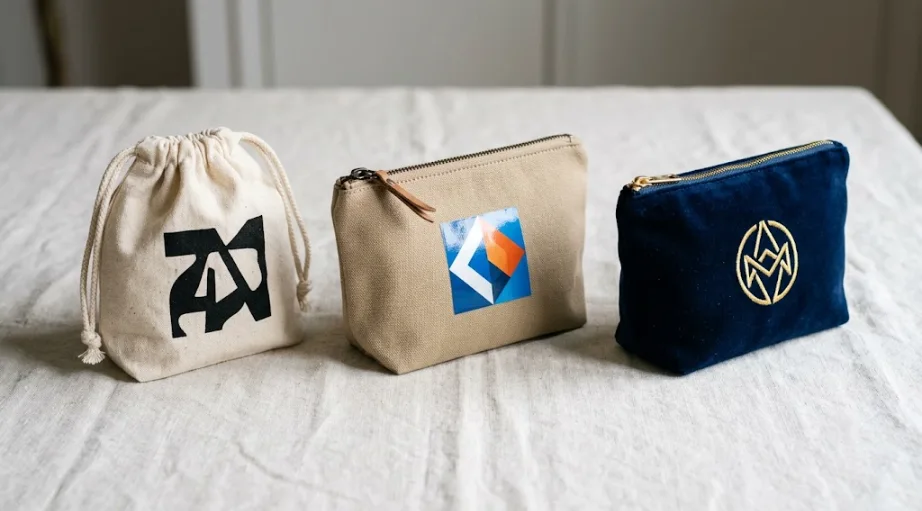
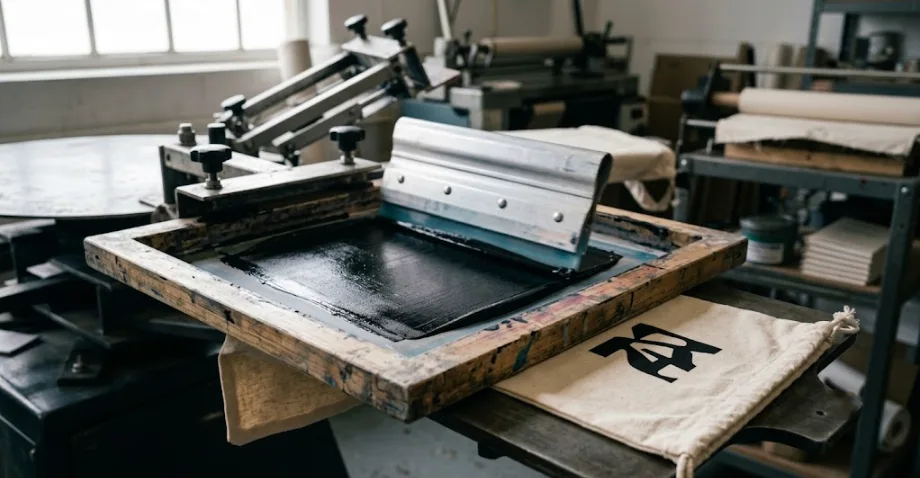
Screen printing is the old-school method. Basically, think of it like a fancy stencil. Ink is pushed through a fine mesh screen onto the fabric, one color at a time. Notably, each color needs its own screen.
For example, a two-color logo means two screens, two passes, and two ink layers. As a result, more colors equal more setup time — and more cost upfront.
But here’s the strength. Once the screens are made, printing each piece is fast and cheap. That’s why screen printing dominates large orders. At 1,000+ pieces, it’s hard to beat on cost.
The look is bold and matte. Naturally, ink sits right on top of the fabric. As a result, edges stay crisp, and colors feel solid. In practice, cotton totes, canvas bags, and drawstring pouches all take screen print well. If you sell a custom cotton tote, this method is usually the default choice.
Still, there are limits. Photo gradients? Not great. Fine 0.5mm details? Often blurry. Tiny text under 6 point? Risky.
Plus, ink chemistry matters more than most buyers realize. Cheap plastisol inks can crack over time. Water-based inks soak in and feel softer. Premium inks like OEKO-TEX certified ones are safer for skin contact. We recommend asking for OEKO-TEX Standard 100 inks when your product ships to Europe — buyers there expect it.
In short, screen printing is the workhorse. Big orders, simple logos, bold look. That’s the sweet spot.
3. What Is Heat Transfer Printing?
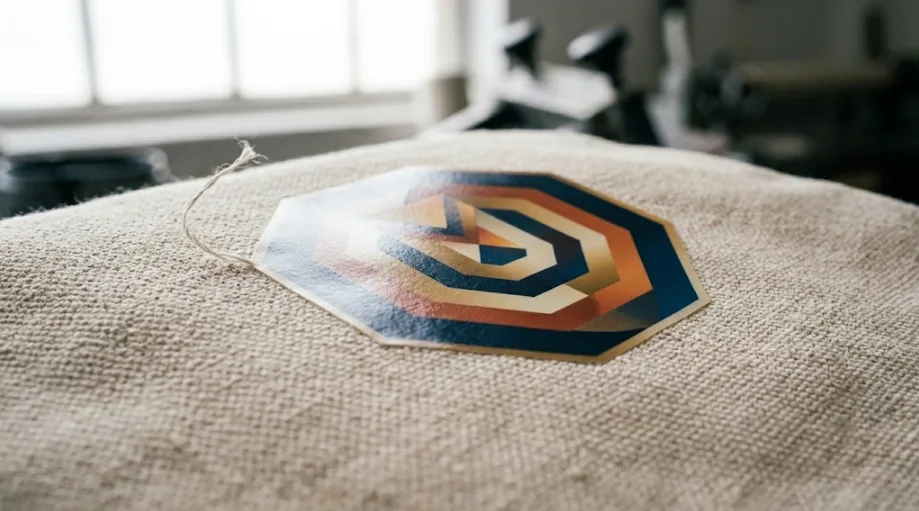
Heat transfer is the newer kid on the block. Basically, the process flips the order. First, your design is printed onto a special transfer film or paper. Then heat and pressure press it onto the fabric. Eventually, the image bonds with the fibers.
Two main types exist today. First, vinyl heat transfer — solid colors cut from sheets. Second, digital heat transfer (also called DTF or sublimation) — full-color photo-realistic prints.
Here’s where it shines. Notably, heat transfer handles complex art beautifully. Photos, gradients, fine detail, tiny text — all work. Plus, there’s no screen setup cost. So small runs become affordable.
For instance, a 100-piece order with a full-color logo would cost a fortune in screen printing. By heat transfer, it’s reasonable.
But the trade-offs are real. Ink doesn’t soak into the fabric the way screen print does. Instead, it sits on top — held there by adhesive. Over time, that can peel, crack, or fade — especially on textured cotton or canvas. Cheap heat transfer fails in 10 washes. Premium DTF can survive 30-50 washes if applied right.
So heat transfer fits short runs, complex art, and pouches that won’t be washed often. Jewelry pouches, sample bags, gift packaging — all good fits. By contrast, gym bags and daily-use totes are riskier.
One more thing. The “hand feel” of heat transfer can be plasticky. Premium suppliers use thinner films and softer adhesives. Cheap ones don’t. So always ask for physical samples before committing to a large order.
4. What Is Embroidery?
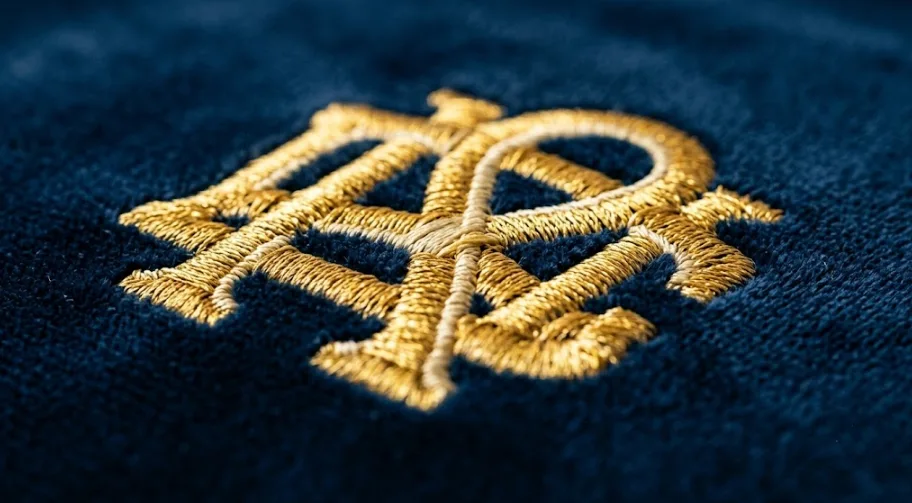
Embroidery is the oldest method of the three. Instead of ink or film, thread is stitched into the fabric by computer-controlled machines. As a result, the logo becomes part of the bag itself.
The result feels premium right away. Naturally, customers associate stitched logos with quality — think Polo, Patagonia, or high-end luggage. So embroidery instantly signals “this is not a cheap promo bag.”
For velvet pouches and dense canvas totes, embroidery looks especially rich. In fact, light catches the thread differently from every angle. That subtle shimmer is something print simply can’t fake.
But embroidery has clear limits. First, fine detail gets lost. Anything thinner than 1mm tends to blur. Tiny serif fonts? Forget it. Logos with photo gradients? Impossible.
Second, color count is capped. Most machines run 6 to 12 thread colors per design. Beyond that, the cost spikes.
Third, the bigger the design, the higher the cost. Each stitch adds machine time. A 2-inch logo might cost $0.50. A 4-inch logo? Often $2.00 or more. Because stitch count grows fast with size.
Still, embroidery has unique strengths. It never peels. It never cracks. Wash it 200 times and the logo looks the same. So for products meant to last for years, embroidery is the safest choice you can make.
In short, embroidery equals premium feel plus extreme durability plus design simplicity. That’s the trade-off you accept for the luxury look.
5. Cost Comparison — Per-Piece Pricing By MOQ
Cost is where decisions get real. So here’s the honest breakdown.
Generally, three things drive the price. First, setup cost — a flat fee paid once. Second, per-piece cost — what you pay for each bag. Third, design complexity — more colors or stitches add to both.
| Order Quantity | Screen Print | Heat Transfer | Embroidery |
|---|---|---|---|
| 100 pcs | $0.80 – $1.50 | $0.50 – $1.20 | $1.50 – $3.00 |
| 500 pcs | $0.30 – $0.60 | $0.45 – $1.00 | $0.90 – $2.20 |
| 1,000 pcs | $0.15 – $0.40 | $0.40 – $0.90 | $0.70 – $1.80 |
| 5,000 pcs | $0.10 – $0.25 | $0.35 – $0.80 | $0.60 – $1.50 |
Notice the pattern. Screen printing drops fast as quantity grows. By contrast, heat transfer and embroidery stay relatively flat. That’s because screen print has a high setup cost — screens, ink mixing, color matching. Once setup is done, each new piece costs almost nothing.
So at 100 pieces, heat transfer often beats screen print. But at 5,000 pieces, screen print becomes the cheapest by a wide margin.
Embroidery is the outlier. It stays expensive even at scale. Why? Each stitch takes time, and time is what machines charge for. A 5,000-piece embroidery order isn’t dramatically cheaper per bag than a 500-piece one.
One quick tip. Always ask your supplier for the setup fee separately. Some hide it in the per-piece quote. Others list it openly. The latter is usually more trustworthy.
Honestly, the cheapest method on paper isn’t always the smartest. If your bag will be touched, photographed, and remembered, paying a bit more for the right method usually pays back in brand value.
6. Durability Test — Which One Lasts Longest?
Durability is where many brands get burned. Often, the cheapest logo at the factory becomes the most expensive in customer complaints.
So here’s what real wear-and-tear looks like across the three methods.
| Stress Test | Screen Print | Heat Transfer | Embroidery |
|---|---|---|---|
| Wash cycles before fading | 30 – 50 | 10 – 30 | 200+ |
| Rub resistance (1–5) | 4 | 3 | 5 |
| UV / sun fade resistance | Good | Fair | Excellent |
| Crack / peel risk | Low (water-based) | Moderate to high | None |
| Cold weather brittleness | Low | Moderate | None |
Screen printing holds up well — if the ink is good. Notably, cheap plastisol inks crack within a year. Premium water-based or PVC-free inks last much longer. So the ink choice matters as much as the method itself.
Heat transfer is the most fragile of the three. After many washes, the edges start to lift. Then a small peel becomes a big one. We wrote about why logos peel and crack on fabric pouches in detail — the photos there will save you future returns.
Embroidery is essentially indestructible. In fact, thread doesn’t fade fast. It doesn’t peel either. Basically, the only failure mode is if the bag itself wears out around it.
So if your product is a gift pouch used once or twice, all three methods are fine. By contrast, if it’s a tote that customers carry daily for years, embroidery or premium screen print are the only safe bets.
Naturally, you can also combine methods. For example, a screen-printed main logo plus an embroidered patch label. That mix gets you both visual punch and long-term durability.
7. Visual & Tactile Difference — How They Look And Feel
Numbers tell half the story. Equally, the other half is how the logo feels in a customer’s hand.
Generally, screen printing feels flat and smooth. The ink sits on top, slightly raised. Notably, colors look saturated and bold. Edges are crisp but not razor-sharp. Touch it, and you can feel a thin ink layer.
Heat transfer feels slick. Generally, the surface is plasticky and shiny — sometimes too shiny. Premium DTF prints can mimic a screen-print feel, but most heat transfers don’t. They look great in photos. Yet in person, the difference is obvious.
Embroidery feels textured. For instance, run your finger over it, and you feel each thread. Clearly, the logo is raised, dimensional, and rich. That tactile quality is why luxury brands love embroidery so much.
There’s also visual depth to consider. Specifically, screen print is two-dimensional. Heat transfer is two-dimensional with a slight gloss. By contrast, embroidery is three-dimensional. So embroidery photographs differently — light and shadow create natural variation across angles.
For unboxing experiences, this matters a lot. These days, customers post unboxing videos on TikTok and Instagram. In fact, an embroidered logo on a velvet pouch hits differently than a flat printed one. It signals investment. It signals care.
Of course, none of this matters if the logo design doesn’t suit the method. A photo-realistic logo will fail on embroidery. A subtle one-color crest will look weak in heat transfer. So always design with the method in mind from day one.
For pouches that close with cords, logo placement also shapes perception. Our drawstring cord guide covers placement details worth a quick read.
8. Best Use Cases — Which Method For Which Product?
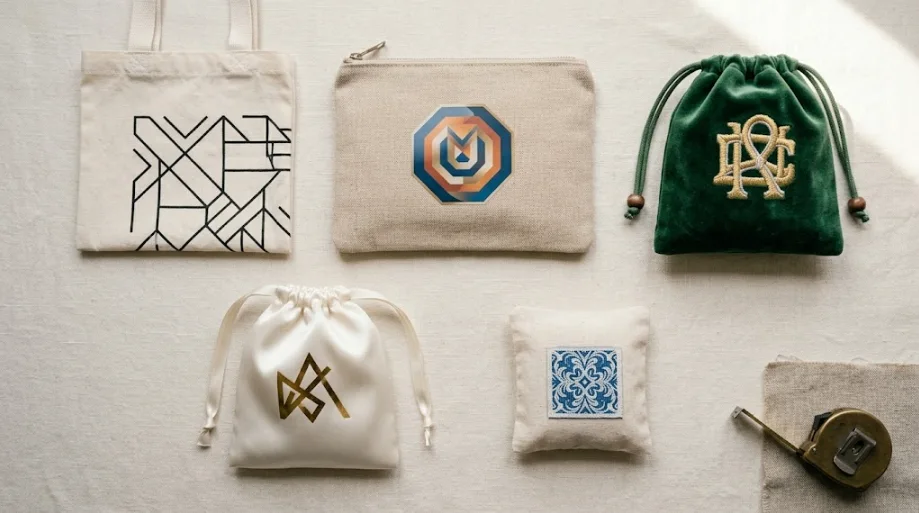
Now let’s match method to product. Specifically, here’s the decision matrix we use with clients every day.
| Product Type | Best Method | Why It Wins |
|---|---|---|
| Jewelry pouches (luxury) | Embroidery or hot stamp | Premium feel, never peels |
| Jewelry pouches (mid-range) | Screen print (1-2 colors) | Cost-effective, clean look |
| Cosmetic pouches | Heat transfer (DTF) | Handles small logos and full color |
| Cotton totes (promo) | Screen print | Cheap at scale, bold look |
| Cotton totes (premium) | Embroidery + screen print | Mix for visual + tactile impact |
| Canvas backpacks | Embroidery | Survives daily abuse |
| Sample / dust bags | Heat transfer | Low MOQ, complex logos OK |
| Drawstring sport bags | Screen print | Fast, cheap, bold |
| Gift packaging pouches | Heat transfer or hot stamp | One-time use, looks rich |
| Welcome / hotel bags | Screen print | Big orders, simple logo |
For custom jewelry pouches, we usually push embroidery on velvet and hot stamping on satin. The hand-feel matters more than the price.
Here’s a quick rule. If the bag is meant to be kept, choose embroidery or premium screen print. If the bag is meant to be opened once (gift, sample, promo), heat transfer is fine. Naturally, if cost is the only driver and the order is large, screen print wins.
One more layer. Material affects the method too. Slick satin doesn’t take screen print well. Heavy canvas eats embroidery thread. Velvet hides fine print detail. So always test your method on the actual fabric before committing to bulk.
9. 5 Common Mistakes Brands Make When Choosing A Logo Method
After hundreds of orders, we see the same mistakes again and again. So here are the top five worth avoiding.
Mistake 1: Picking the cheapest method for a premium product. A $50 luxury pouch with a peeling heat transfer logo damages the brand far more than the savings help. Spend the extra $0.50 per bag for embroidery.
Mistake 2: Sending a photo-realistic logo for embroidery. Embroidery has a 1mm minimum detail. Anything finer gets blurred. So simplify your logo first, then quote.
Mistake 3: Ignoring fabric type. Screen print on slick satin slides off. Heat transfer on rough canvas cracks fast. Always match method to material — that step alone prevents half of all complaints.
Mistake 4: Skipping the physical sample. Photos lie. Lighting hides flaws. So always pay the $15-30 sample fee. It’s the cheapest insurance you’ll buy.
Mistake 5: Treating logo size as free. Bigger logos cost more — especially in embroidery. A 4-inch logo can cost four times a 2-inch logo. Plan your budget around your actual logo dimensions.
Avoid these five, and 90% of “logo regret” disappears overnight.
10. Conclusion — The 3-Step Decision Framework
Let’s bring this home. Picking a logo method isn’t hard once you follow three steps.
First, define your goal. Is the bag promotional, premium, or somewhere in between? Promo equals screen print. Premium equals embroidery. Mid-tier equals either, depending on order size.
Second, check your quantity. Under 300 pieces? Heat transfer often wins on cost. Over 1,000 pieces? Screen print pulls ahead by a lot.
Third, test the fabric. Order one sample with your chosen method. Touch it. Wash it. Show it to a few customers. Then commit to bulk.
Do this, and the choice stops feeling like a gamble. It becomes a clean business decision — backed by hand-feel, real numbers, and brand fit.
11. FAQs
Q1: Which logo method is the cheapest?
At low MOQ (100-300 pcs), heat transfer usually wins on price. However, at higher quantities (1,000+ pcs), screen printing becomes cheaper. Embroidery is the most expensive method across all quantities, but it also delivers the most durable result.
Q2: How many washes can a heat transfer logo survive?
Honestly, it depends on the quality. Cheap heat transfer fails in 10-15 washes. Premium DTF or vinyl can last 30-50 washes when applied correctly. By contrast, screen print survives 30-50 washes easily, and embroidery lasts 200+ wash cycles with no visible wear.
Q3: Can I combine two methods on one bag?
Yes, and many premium brands do exactly this. For example, a screen-printed main logo plus an embroidered side label. Notably, that mix gives you visual punch and tactile richness in one product. It’s also a smart way to balance cost against perceived quality.
Q4: What’s the minimum logo size for embroidery?
Generally, most factories require at least 1mm line thickness for clean stitches. Anything finer tends to blur or pucker the fabric. So if your logo has hairlines or small serif text, simplify it first — or switch to screen print, which handles fine detail much better.
Q5: Is screen printing safe for skin contact?
Yes, if the ink is right. Water-based and OEKO-TEX certified inks are safe. By contrast, cheap plastisol inks may contain phthalates or heavy metals. Always ask your supplier for the ink certification — it’s a fair question, and reputable factories share it openly.
Q6: Why does my heat transfer logo peel after a few months?
Usually it’s a quality issue. Cheap films use weak adhesive. Plus, rough fabric like canvas accelerates lifting at the edges. Switch to a premium DTF supplier, or move to screen print if the fabric is textured. Storage in heat or humidity also speeds up failure.
Q7: How long does setup take for each method?
Screen printing needs 1-3 days for screen prep and color matching. Heat transfer needs almost zero setup — just file output and press. Embroidery needs 1-2 days to digitize the artwork into stitch files. So heat transfer wins on speed, especially for rush orders.
Get a Quote — Custom Pouches With Premium Logo Decoration
YJXpack — Yijiaxin (Shenzhen) Packaging Co., Ltd.
For 20+ years, we’ve made custom fabric pouches — cotton, velvet, microfiber, canvas, satin, and more — with every logo method covered: screen print, heat transfer, embroidery, hot stamping, debossing, woven labels, and silicone print. We hold GOTS, GRS, OEKO-TEX, BSCI, ISO 9001, and SABER certifications, and we serve over 8,000 brands worldwide.
Want to see and feel the real thing? Request a free sample pouch with your chosen logo method — we’ll ship it to your door so you can judge quality, hand-feel, and durability before any commitment.
Email: info@yjxpack.com
WhatsApp / WeChat: +86 18617112946
Website: www.yjxpack.com
Free sample shipped to your door · Quote within 3 minutes · 3D mockup in 30 minutes · MOQ 100 pieces · GOTS / GRS / OEKO-TEX / BSCI / ISO 9001 certified
Share This Story, Choose Your Platform!