A custom toiletry bag sits at the intersection of four competing requirements: it must resist moisture from bottles that leak or sweat, organize a mix of product shapes and sizes, stay easy to wipe or wash after use, and carry a brand logo that survives repeated handling. Getting any one of these wrong creates returns, negative reviews, or a packaging piece that undermines the product it was meant to enhance.
This guide walks through each specification decision in the order a buyer typically encounters them—from material and closure selection through compartment planning, sizing, logo methods, cost trade-offs, and pre-production quality checks.
> Scope note: This guide covers selection logic and specification principles. Material availability, construction options, artwork limits, MOQ, sampling, pricing, and documentation must be confirmed against your final brief during quotation.
—
Define the Travel-Kit Use Case and Risk Priorities
Before choosing any material or closure, clarify what goes inside the bag and where it will be used. A toiletry bag for an airline amenity kit faces different stresses than one bundled with a men’s grooming subscription or a hotel welcome gift. Each use case shifts which risks matter most.
What goes inside
Travel toiletry kits generally contain some combination of these product types:
- Liquids in small bottles — shampoo, conditioner, body wash, mouthwash
- Soft tubes — toothpaste, moisturizer, sunscreen
- Hard items — razor, toothbrush, deodorant stick, compact mirror
- Flat or flexible items — sheet masks, wipes, comb, dental floss
Liquids and tubes create the primary moisture risk. Hard items create puncture and abrasion risk. A bag designed only for flat cosmetic sachets needs less structure than one holding a full-size razor and three bottles.
Where it will be used
Usage context determines how often the bag gets wet, how it will be cleaned, and how long the logo needs to last:
- Single-use airline or hotel amenity: logo durability matters less; cost control matters more; cleaning is irrelevant because the bag may be discarded after one trip.
- Subscription or retail travel kit: the bag is part of the brand experience and will be reused many times; moisture resistance, cleanability, and logo durability all become critical.
- Corporate gift or event giveaway: moderate reuse expected; logo visibility is the priority; contents are usually predetermined and uniform.
Write down the expected product mix and usage scenario before contacting any supplier. This shapes every decision that follows.
—
Choose Materials and Closures for Moisture Control
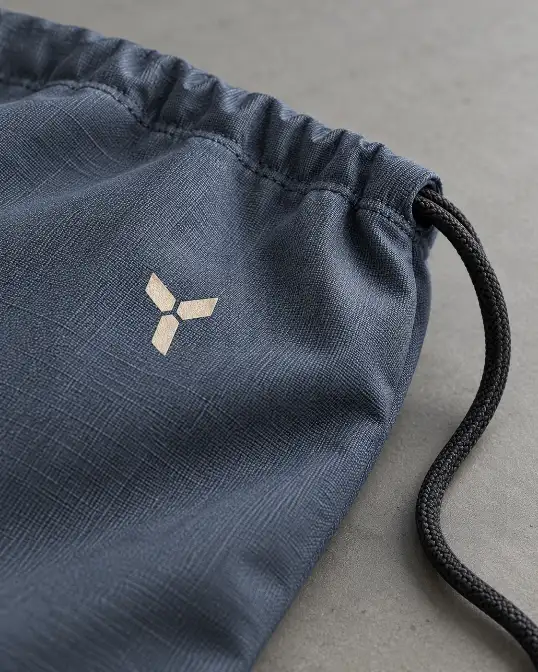
Moisture is the defining challenge for toiletry bags. A bottle cap loosens in a suitcase, a tube gets squeezed by other luggage, or humidity from a hotel bathroom condenses inside the bag. The material and closure must manage these scenarios without letting liquids soak through to the outside or trapping moisture so long that mildew forms.
Material categories and their moisture behavior
| Material | Moisture Resistance | Cleanability | Feel / Brand Positioning | Weight |
|---|---|---|---|---|
| Nylon (ripstop or standard) | High — inherently water-resistant | Wipe clean easily | Technical, sporty | Light |
| Polyester with PU or TPU coating | High — coating creates a barrier | Wipe clean; coating can degrade with harsh cleaners | Versatile; coating thickness affects hand feel | Light to medium |
| Canvas (cotton or poly-cotton) | Low unless coated or lined | Machine-washable if uncoated; harder if coated | Natural, casual | Medium to heavy |
| PU (faux leather) | High | Wipe clean | Premium look | Medium |
| TPU-laminated fabric | Very high — welded seams possible | Wipe clean | Modern, functional | Medium |
| Recycled polyester (RPET) | Moderate to high depending on finish | Similar to virgin polyester | Sustainability-forward | Light |
A few principles to note:
- Water resistance is not the same as waterproof. A nylon bag will repel splashes but will not contain a major spill from a broken bottle unless seams are sealed and the closure is tight. If the contents include liquids, consider whether the bag needs to contain a spill (waterproof interior lining or TPU lamination) or simply resist surface moisture.
- Breathability trades off against moisture protection. Cotton and linen breathe well but absorb water. If the bag will sit in a humid bathroom between uses, a material that traps moisture can develop odor. Some buyers solve this with a water-resistant lining paired with a breathable outer shell.
- Coatings change the branding surface. A PU-coated interior may limit which logo methods work on the inside. A TPU lamination on the outer face affects how ink or foil adheres.
If sustainability positioning matters for your brand, confirm the supplier’s access to certified recycled or organic materials with supporting documentation. YJXPACK’s guide to RPET sourcing covers what to verify before specifying recycled content.
Closure types and leak management
The closure is the weakest point in any toiletry bag’s moisture defense. Common closure options for toiletry bags include:
- Zipper (nylon coil or molded): The most common choice for toiletry bags. A nylon coil zipper lies flatter; a molded zipper feels more robust. Neither is fully waterproof unless a water-resistant zipper (reverse coil or sealed type) is specified. Confirm zipper brand and tooth gauge during sampling.
- Zipper with interior flap: A fabric flap behind the zipper adds a secondary barrier against small leaks reaching the zipper teeth. Adds cost and bulk but reduces the risk of liquid seeping out.
- Magnetic snap or button snap: Less common for toiletry bags because they leave a gap. Only suitable if the contents are dry or individually sealed.
- Drawstring: Works for simple wash bags that hold dry items (a razor, comb, soap bar in a case). Not appropriate for loose liquid bottles.
- Roll-top with buckle: Offers good moisture containment and an outdoor or travel-adventure aesthetic. Adds complexity and cost.
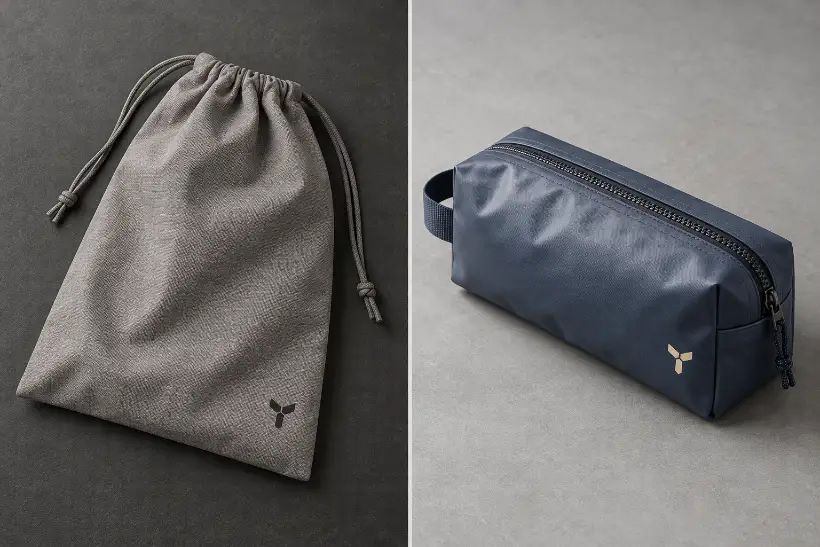
For most branded travel kits containing liquids, a standard nylon coil zipper with a lined interior is the baseline. Upgrade to a water-resistant zipper or add an interior flap only if the product mix and price point justify it.
—
Plan Internal Compartments Around the Product Mix
A toiletry bag without compartments is just a pouch. Internal organization separates a functional travel tool from a shapeless sack. But every divider, pocket, or elastic loop adds material, sewing time, and cost. The goal is to match the compartment plan to the actual contents—nothing more, nothing less.
Common compartment elements
- Main cavity: Holds the largest items. Depth and width should be confirmed against the tallest bottle or widest item in the kit.
- Interior zip pocket: Useful for flat items like sheet masks, wipes, or a mirror. Keeps small items from settling to the bottom.
- Elastic loops or bands: Hold cylindrical items (toothbrush, razor, pen-style perfume atomizer) in place. Specify the loop width and stretch range to match the item diameter.
- Mesh pocket: Allows visibility and airflow. Good for items that need to dry (toothbrush head, soap case). Mesh type (nylon mesh, polyester mesh) affects durability and feel.
- Removable or fold-out section: Some toiletry bags open flat or fold out to hang on a hook. This is a significant structural feature that changes the bag’s construction entirely. Confirm the hanging mechanism (hook, loop, snap) and the weight it must support.
- Bottle-specific pockets with elastic tops: Prevent bottles from tipping. The elastic edge must be tight enough to grip the bottle but loose enough that the user can pull it out easily.
Matching compartments to kit contents
If your travel kit has a fixed product assortment—say, three 30ml bottles, one tube, a razor, and a comb—you can design compartments to fit those items precisely. This creates a tight, intentional unboxing experience but limits the bag’s versatility for the end user.
If the bag will be sold empty or filled with varying contents across SKUs, design compartments that accommodate a range of item sizes. Elastic loops are more flexible than rigid dividers. A single zip pocket and one or two elastic bands often strike the right balance between organization and adaptability.
Tip for your specification brief: Lay out the actual items (or accurate mockups) on a table, photograph the arrangement, and send the image to your supplier alongside dimensional measurements. This prevents miscommunication about pocket placement and sizing far more effectively than a written description alone.
—
Specify Size, Cleaning, and User Handling Requirements
Sizing
Toiletry bag sizing must account for:
- The products inside, with a small margin for the user to reach in and retrieve items
- The outer container or mailer, if the filled bag ships inside a box or poly mailer
- Any airline carry-on liquid bag regulations the end user may need to comply with (though the toiletry bag itself is not the TSA-compliant clear bag, its size affects how easily the user can transfer items)
Specify internal usable dimensions, not just the outer cut size. A bag that measures 25 cm wide on the outside may only have 22 cm of usable width once seams, lining, and zipper tape are accounted for. Confirm this distinction during sampling.
Cleaning and maintenance
How the bag will be cleaned after use is a specification decision, not an afterthought. Different materials demand different care:
- Wipe-clean interiors (PU-coated, TPU-laminated, or nylon): The user can wipe spills with a damp cloth. This is the easiest maintenance path and the most common for travel toiletry bags.
- Machine-washable bags (uncoated cotton, some polyester): Possible but limits construction options. Glued elements, certain logo methods (heat transfer, some foils), and rigid inserts may not survive repeated machine washing. If machine washability is a selling point, every component must be tested for wash durability.
- Spot-clean only: Acceptable for premium materials (PU leather look, certain coated canvases) where full immersion would damage the finish.
State the intended cleaning method in your specification brief. The supplier needs this information to select compatible adhesives, logo methods, and interior finishes.
For more detail on how cleaning requirements interact with logo choices, the guide to cleaning and caring for branded pouches covers the practical intersections.
User handling
Consider how the end user interacts with the bag beyond just opening and closing it:
- Hanging: Does the bag need a hook or loop for hanging on a towel bar or door hook? If yes, specify the hook style, attachment strength, and whether it should fold away when not in use.
- Standing upright: A flat-bottom gusset or structured base allows the bag to stand on a bathroom counter. This requires stiffer material or an internal stiffener panel.
- Folding or rolling for storage: If the bag should pack flat when empty, avoid rigid inserts and thick stiffeners. Soft-sided bags fold more easily but lose their shape when full.
—
Compare Logo Methods Without Sacrificing Durability
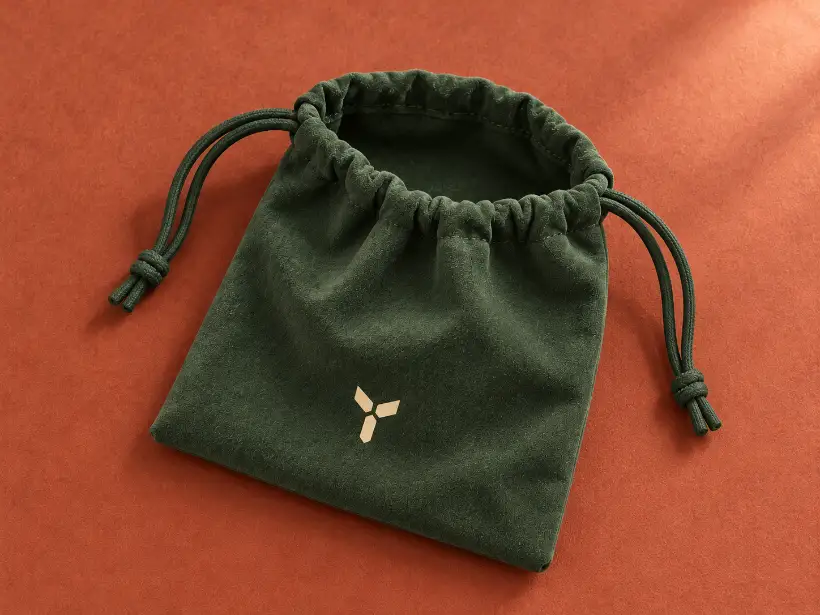
A logo on a toiletry bag faces more abuse than a logo on a jewelry pouch or gift bag. It gets wet, wiped, rubbed against other luggage, and potentially exposed to toiletry chemicals (sunscreen, soap, alcohol-based products). The logo method must survive all of this.
Logo methods ranked by toiletry-bag suitability
| Method | Moisture Resistance | Abrasion Resistance | Detail Level | Typical Surface | Cost Sensitivity |
|---|---|---|---|---|---|
| Screen printing (silicone-based ink) | High | High | Moderate (limited gradients) | Nylon, polyester, canvas | Lower setup; economical at volume |
| Heat transfer | High if applied correctly | Moderate — can crack with heavy flexing | High (full color, gradients possible) | Smooth polyester, nylon | Moderate setup |
| Embroidery | High — thread is inherently water-resistant | Very high | Low (no fine gradients; minimum line width) | Canvas, thicker nylons, polyester | Higher per-unit; setup via digitizing |
| Woven label (sewn on) | High | High | Moderate | Any sewn surface | Moderate; label production + sewing |
| Debossing / embossing | High — no ink to wash off | Very high | Low (simple logos only) | PU, thick canvas | Moderate; die cost |
| Rubber or PVC patch (sewn or heat-applied) | Very high | Very high | Moderate | Almost any outer surface | Moderate to higher |
| DTF (direct-to-film) transfer | Moderate to high | Moderate | Very high (photographic quality) | Smooth fabrics | Lower setup; newer method |
For a detailed comparison of screen printing, heat transfer, and embroidery, see this logo method comparison guide.
Key considerations for toiletry-bag logos
- Ink chemistry matters. Standard water-based screen-printing inks may not hold up on surfaces that get wiped with damp cloths repeatedly. Silicone-based or plastisol inks typically offer better moisture and abrasion resistance. Confirm ink type on the sample.
- Logo placement affects wear. A logo on the front center of a bag that sits on a wet counter will get more moisture exposure than a logo on the upper front panel. A logo on the interior flap faces less abrasion but also less visibility.
- Test the logo on the approved sample under realistic conditions. Rub it with a damp cloth 20 times. Apply a small amount of hand lotion to it and wipe. These simple tests reveal more than any specification sheet.
- Multi-color logos increase cost and complexity. If your brand allows it, a single-color logo in a contrasting shade often looks clean on a toiletry bag and reduces per-unit cost.
If logo durability is critical and the aesthetic allows it, embroidery or a sewn rubber patch are the most resilient options for travel bags that will see heavy use. If full-color reproduction is necessary, heat transfer or DTF with a protective overcoat is the usual path—but confirm wash and wipe durability on the production-representative sample.
—
Control Cost Through Trade-Offs, MOQ, and Sampling
Every feature in a custom toiletry bag adds cost: compartments, coatings, water-resistant zippers, hanging hooks, structured bases, premium logo methods. The buyer’s job is to decide which features deliver enough value to justify their cost, and which can be simplified.
Common cost trade-offs
- Fewer compartments, lower cost. One main cavity with a single zip pocket costs less than a multi-pocket, elastic-loop, mesh-panel design. Ask whether the end user truly needs five pockets or whether two well-placed ones serve the same function.
- Standard zipper vs. water-resistant zipper. A standard nylon coil zipper is significantly cheaper. If the bag’s interior is already lined with a wipe-clean coating, the standard zipper may be sufficient.
- Single-material construction vs. mixed materials. A bag made entirely from one polyester fabric is simpler to cut and sew than one combining nylon, mesh, PU trim, and elastic. Each material change adds handling steps.
- Flat construction vs. structured (gusseted) construction. A flat envelope-style wash bag is the simplest and cheapest format. Adding a bottom gusset, side panels, or a standing base increases sewing time and material use.
- Logo method. Screen printing one color is typically the least expensive logo option per unit at moderate to high volumes. Embroidery, rubber patches, and multi-color heat transfer cost more per unit.
MOQ and sampling
MOQ, sample cost, and sample lead time for custom toiletry bags vary by supplier and by the complexity of the design. These are supplier-confirmation items that should be clarified early in the quotation process.
When requesting samples, provide:
- A complete specification brief (material, dimensions, closure type, compartment layout, logo artwork and placement)
- The actual products that will go inside the bag, or their exact dimensions and weights
- Your intended cleaning method
- Your target price range, if you have one—this helps the supplier suggest practical alternatives if your initial specification exceeds budget
Review the sample with the actual contents inside. Check:
- Do all items fit without forcing?
- Does the zipper close smoothly when the bag is full?
- Does the bag stand, hang, or fold as intended?
- Is the logo visible and correctly positioned when the bag is full (not just when it’s empty and flat)?
For a broader look at how to manage the sampling process, the step-by-step custom packaging sample guide covers the workflow from brief to approval.
—
Build a Pre-Production Quality Checklist and Buying Decision
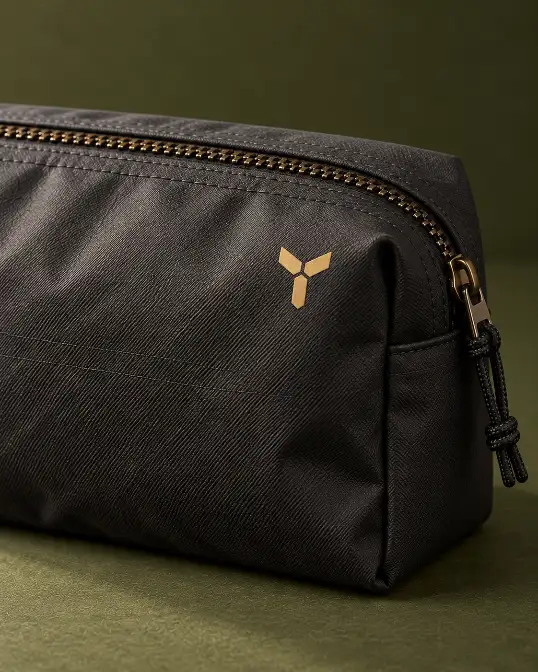
Before approving production, work through a structured checklist that covers the four core risk areas—moisture control, compartments, cleanability, and logo durability—plus general construction quality.
Pre-production checklist
Moisture control:
– Material water resistance confirmed on sample (pour a small amount of water on the outer surface; time how long before it soaks through or beads off)
– Interior lining type confirmed (PU-coated, TPU-laminated, or uncoated)
– Seam sealing method confirmed if waterproof claims are being made
– Zipper type and water resistance confirmed
– Interior drainage or ventilation considered (does water pool inside, or can it escape?)
Compartments and fit:
– All intended products fit inside the sample with the closure fully shut
– Elastic loops grip items securely without being too tight to use
– Interior zip pocket opens and closes smoothly when the main cavity is full
– Hanging hook (if specified) supports the filled bag’s weight without tearing
Cleanability:
– Wipe-clean test performed on interior and exterior surfaces
– If machine washability is claimed, one sample has been machine-washed and inspected for shrinkage, logo damage, and closure function
– Interior lining does not peel or bubble after cleaning
Logo durability:
– Logo visually inspected after 20+ wipe cycles with a damp cloth
– Logo inspected after exposure to common toiletry products (lotion, sunscreen) if relevant
– Logo color matches the approved artwork and Pantone reference (confirm reference with your supplier)
– Logo placement confirmed on the filled bag, not just the flat bag
General construction:
– Stitch density and thread color match the specification
– No loose threads, skipped stitches, or uneven seam allowances
– Zipper pull operates smoothly; pull tab is securely attached
– Raw edges are bound or enclosed (no fraying risk)
– Bag dimensions match the specification within agreed tolerance
The buying decision
By this stage, you should be able to answer four questions clearly:
- Does this bag protect the contents from moisture well enough for the intended use case? Not every toiletry bag needs to be waterproof. It needs to be appropriate for the products inside and the environment it will be used in.
- Does the internal layout match the product mix? Over-engineering compartments adds cost. Under-engineering them creates a messy user experience.
- Can the end user clean this bag in a way that matches their expectations? A premium reusable travel bag should be easy to wipe or wash. A single-use amenity kit bag just needs to survive one trip.
- Will the logo still look good after realistic use? Test it. Don’t assume.
If you can answer yes to all four, you have a specification worth producing.
—
Frequently Asked Questions
What material is best for a custom toiletry bag that will hold liquid bottles?
There is no single best material—it depends on brand positioning and price point. Nylon and polyester with a PU or TPU interior coating offer a strong combination of moisture resistance, light weight, and moderate cost. PU (faux leather) provides a premium look with good wipe-clean properties. Uncoated cotton and canvas are not recommended for liquid-heavy kits unless paired with a waterproof lining. Confirm material options and samples during quotation.
How do I prevent the logo from fading on a bag that gets wiped frequently?
Choose a logo method that resists moisture and abrasion. Embroidery, sewn rubber patches, and debossing are inherently resistant because they don’t rely on surface ink. For printed logos, confirm the ink type (silicone-based or plastisol inks generally outperform water-based inks on wipe-clean surfaces) and test the sample under realistic cleaning conditions before approving production.
Should I add a hanging hook to my custom toiletry bag?
Only if the bag is large enough to benefit from it and the target user is likely to hang it. A small flat wash bag for an airline amenity kit doesn’t need a hook. A full-size travel toiletry bag designed for multi-day trips benefits from a fold-out panel with a hook. The hook adds cost and complexity, so weigh it against the value it provides to the end user.
Can a custom toiletry bag be machine-washable?
Yes, but machine washability limits your material, construction, and logo choices. Glued elements, rigid inserts, and some logo methods (particularly foil stamping and certain heat transfers) may not survive repeated washing. If machine washability is a requirement, state it at the start of the specification process so the supplier can recommend compatible options. Test a production-representative sample through multiple wash cycles before approval.
How do I get started with a custom toiletry bag order?
Prepare a specification brief that includes: the product mix the bag will hold, target dimensions, preferred material and closure type, compartment requirements, logo artwork and preferred method, intended cleaning method, target order quantity, and any sustainability or certification requirements. With this information ready, request a quote from YJXPACK to begin the sampling process.
—
*Ready to specify your custom toiletry bag? Get a Quote with your brief, and the YJXPACK team will confirm material options, construction details, sampling, and pricing against your requirements.*
Share This Story, Choose Your Platform!