
RPET fabric is appearing on packaging quote sheets more often, and buyers in the US, UK and Europe are asking the same questions: is this actually recycled, and will it suit a branded pouch or bag? Custom RPET fabric pouch packaging requires more than selecting a color and sending a logo file. Retailers, traders and e-commerce sellers should verify the material, request samples and confirm the details in writing before placing a production order.
Quick Summary
- Ask for documentation on recycled content and fiber source before assuming any certification applies.
- Match the bag format (drawstring, flat pouch, tote, zippered) to the actual product and shipping method.
- Confirm construction details and logo method against the specific RPET fabric weight and weave.
- Separate verified supplier facts from items that only get confirmed once a physical sample arrives.
- Treat cost, MOQ and lead time as supplier-specific figures to request directly, not industry averages.
What Buyers Should Verify About RPET Material
RPET stands for recycled polyethylene terephthalate, meaning the polyester fiber comes from reclaimed PET, most commonly recycled bottles or industrial polyester waste. That is the material definition. It does not tell you the recycled content percentage, the fiber blend or whether a specific batch carries third-party certification. Those details can vary by supplier and production run, so buyers should ask for them directly rather than assume that a “recycled” label covers everything.
A useful habit is to separate marketing language from documentation. If a supplier states that a bag is made from RPET fabric, ask what percentage is recycled, whether it is blended with virgin polyester and whether documentation or a test report is available for the relevant fabric lot. Global bodies such as Textile Exchange publish standards related to recycled-fiber claims, while the U.S. FTC’s business guidance explains the need for support before a brand uses environmental marketing claims. Reviewing those resources can help buyers identify which statements need evidence before they appear on packaging or in product marketing.
Buyers comparing recycled, organic and biodegradable pouch materials should review the different documentation requirements rather than assume that one material category is preferable in every case. Our guide on recycled vs. organic vs. biodegradable fabric pouches outlines questions to ask for each option. The overview of which sustainability certifications actually matter can also help buyers identify documents to request. Any certification, recycled-content figure or environmental marketing statement for a specific order should be confirmed with the supplier in writing.
For broader purchasing decisions, buyers can also review the complete logo method cost comparison and the guide to what MOQ means and how it is negotiated before requesting quotes. These references provide questions to raise with suppliers; they should not be treated as fixed pricing, MOQ or service commitments from YJXPACK.
Which Bag Formats and Sizes Fit the Packaging Job
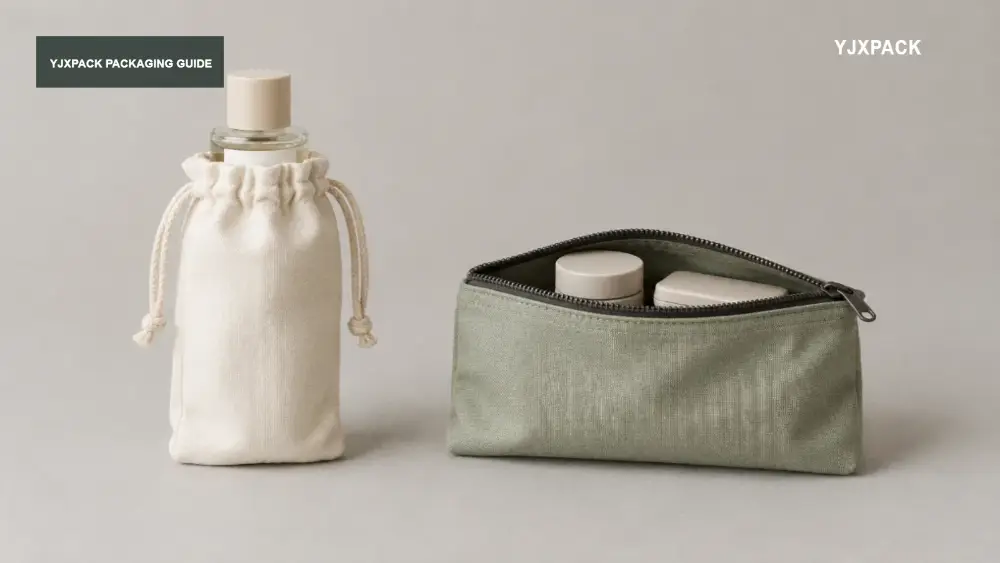
RPET fabric is available in several bag formats, and the right one depends on what will go inside and how the bag will be used afterward. A drawstring pouch may suit small retail items or gift sets. A flat or gusseted pouch may suit flatter products such as accessories or printed materials. A tote-style bag may suit shopping or event use, while a zippered pouch may suit items that need a more secure closure. These are starting points only; the product, handling conditions and shipping method should determine the final format.
| Format | Typical Use Case | Closure Style | Sizing Consideration |
|---|---|---|---|
| Drawstring pouch | Retail add-ons, gift packaging, small accessories | Cord and toggle | Confirm interior clearance for the actual product, not just the folded fabric size |
| Flat/gusseted pouch | Flat goods, printed inserts, samples | Open top or adhesive flap | Depth matters more than width for bulkier items |
| Tote-style bag | Shopping bags, event giveaways | Open top with handles | Handle drop length affects carrying comfort |
| Zippered pouch | Cosmetics, electronics, travel kits | Zipper | Zipper pull placement should clear any printed logo |
Dimensions should be confirmed against the actual product rather than a rounded estimate. If you are unsure how to translate a product’s measurements into a pouch size, the guide on how to measure a drawstring pouch explains the process. If you are comparing a tote with a drawstring format, the discussion of custom tote bag vs. drawstring bag covers relevant tradeoffs.
How Construction and Logo Methods Affect Suitability

RPET fabric is not a single texture. Some RPET fabrics are woven with a smooth, canvas-like hand, while others are nonwoven or have a stiffer finish depending on how the fibers were processed. That difference can affect which logo method is suitable. Screen printing may work well on a smooth woven RPET surface, while heat transfer may work on woven or nonwoven variants depending on the transfer film and fabric. Embroidery may be possible, but the fabric density and weight need to support the stitching without puckering.
A sample is more informative than a spec sheet alone. A logo method that looks acceptable in a rendering can behave differently on the physical fabric after printing or pressing. Buyers should compare the proposed method with the specific fabric, artwork and intended use before approval.
Construction details to confirm beyond the logo include:
- Seam finishing.
- Whether the bag is lined.
- Cord ends, zipper pulls, snaps or other hardware.
- Logo position, size and finish.
None of these details should be assumed from a product photo alone.
What Documentation and Samples Should Buyers Request
Before committing to a production order, separate what a supplier can confirm in writing from what can only be evaluated with a physical sample. Both checks matter, but they answer different questions.
| Item | Verified Before Sampling | Confirmed Only With Physical Sample |
|---|---|---|
| Recycled content statement | Supplier-provided documentation | Not applicable |
| Fabric hand and weight | Spec sheet description | Actual feel and drape |
| Color accuracy | Digital color reference | Physical color under real light |
| Logo placement and finish | Mockup or rendering | Actual print or embroidery result |
| Stitching and seam quality | Not verifiable remotely | Physical inspection |
A written specification, fabric swatch and pre-production sample are useful items to request before a bulk order. Ask whether the sample reflects the fabric and construction intended for production, since details can vary between material lots or production runs. The point at which color, logo and construction are approved should be agreed with the supplier for the specific order, rather than assumed to follow a standard YJXPACK or factory process.
How Cost, MOQ and Order Conditions Shape Decisions
The cost of a custom RPET bag depends on several variables that can change independently, so compare quotes by the same specification rather than comparing one all-in figure with another.
| Cost Factor | What It Affects | Buyer Action |
|---|---|---|
| Fabric weight and finish | Base unit cost | Request pricing at the required weight, not a general RPET average |
| Logo method | Setup cost and per-unit cost | Compare methods at the intended order quantity |
| Order quantity | Per-unit pricing tier | Ask each supplier for its own minimum, since MOQ varies by factory |
| Packing and inspection | Total landed cost | Clarify what is included and what is billed separately |
| Shipping mode | Delivery cost and timing | Compare sea and air options according to the required delivery window |
MOQ, or minimum order quantity, should not be assumed. Each supplier may set its own threshold based on fabric sourcing, production setup and order specifications. Treat any figure found online as a starting point for discussion rather than a fixed rule. Ask the supplier to confirm MOQ, pricing, payment terms and lead time for the exact bag format, material and decoration requirements.
How to Set Quality Control Checks Before Approval
Quality control on a fabric bag order works best as a checklist applied at more than one stage, not a single inspection at the end.
- Review a pre-production sample against the agreed specification for fabric, color and dimensions.
- Check logo placement, size and finish on the physical sample, not just the digital mockup.
- Confirm stitching consistency, seam strength and hardware function on the sample.
- Set an inspection standard with the supplier before mass production starts, including what counts as an acceptable defect.
- Request in-process or pre-shipment photos, or consider a third-party inspection for larger or higher-risk orders.
If a buyer skips the pre-production sample, differences between the approved concept and the bulk order may be harder to identify before shipment. Sampling adds a step, but it gives the buyer an opportunity to review the material, construction and decoration before approving production.
Where Custom RPET Bags and Pouches May Fit

Custom RPET bags and pouches may suit applications where a buyer wants a fabric package made with recycled polyester input. Possible applications include retail carry bags, e-commerce unboxing add-ons, trade show and event giveaways, cosmetic or beauty product pouches and gift packaging. Whether the material is appropriate depends on the required size, closure, appearance, performance and documentation for the buyer’s intended claims.
RPET is not automatically the right choice for every product. Compare it with other materials against the actual use case and the evidence available for any environmental messaging. A supplier may offer a 3D mockup, but this should be confirmed directly, including whether it is available for the specific project and whether any fee applies. Buyers can ask YJXPACK or another factory they are evaluating whether an applicable mockup or rendering service is available before approving a bulk order.
Frequently Asked Questions
What does RPET actually mean for a fabric bag?
RPET means the polyester fiber in the fabric comes from recycled PET material, typically reclaimed bottles or polyester waste. It describes the fiber source, not a fixed percentage or certification, so the exact recycled content should be confirmed with the supplier for each order.
Are RPET bags automatically certified or eligible for environmental claims?
No. RPET fabric uses recycled input material, but that alone does not guarantee a certification such as GRS or support a specific environmental claim. Ask the supplier for relevant documentation and confirm that the proposed wording meets the rules applicable to the target market before using certification or environmental language in marketing.
Can YJXPACK provide RPET bags with a specific recycled content percentage?
Recycled-content figures depend on the fabric batch and supplier documentation, so this should be confirmed directly for the order rather than assumed. Request written confirmation before production if the figure will appear in product or packaging claims.
What is the typical MOQ for custom RPET bags?
MOQ varies by supplier, fabric minimum and order specifications, so there is no single industry figure to rely on. Ask each factory being evaluated for its specific minimum based on the selected bag format, fabric and decoration method.
How do I confirm logo placement and color before mass production?
Request a pre-production sample or ask whether a 3D mockup is available, then compare the result with the agreed specification under suitable lighting. Color and logo finish can differ between a digital rendering and physical fabric, so the approval method should be agreed with the supplier before production starts.
Share This Story, Choose Your Platform!