Walk into any luxury boutique. Pick up a velvet jewelry pouch. Look at the gold logo shimmering on the surface.
Most people assume that’s gold ink. It’s not. That gleam comes from a process called hot stamping — and when you’re hot stamping fabric, the rules are completely different from stamping paper.
Here’s the problem. Almost every online guide about hot stamping talks about paper boxes, business cards, or wedding invitations. Yet the most premium packaging today — luxury jewelry, beauty, fragrance — uses metallic foil on fabric. Velvet, leather, satin, even dense cotton. So the paper-based advice you’ll find online often doesn’t apply.
This article fixes that. We’ll cover hot stamping fabric in plain English, and you’ll learn three things. First, what the process really is and how it works. Second, which fabrics take foil best, plus a full color guide. Third, real cost numbers and a decision test that picks the right method in 60 seconds.
By the end, you’ll know exactly when foil decoration is the right choice for your brand.
1. Hot Stamping Fabric — The 1-Minute Quick Answer
Let’s start with the simple version.
Hot stamping fabric is the process of pressing metallic foil onto fabric using a heated die. The foil bonds permanently to the surface and creates a shiny, premium-looking logo. So the result feels luxurious — and it doesn’t peel like ink or printing might.
Naturally, the right pick depends on your fabric, your foil color, and your brand. But here’s the fast-look table to skim now.
| Aspect | Detail |
|---|---|
| Process | Heat + pressure transfers foil to fabric |
| Best fabrics | Velvet, leather, satin, dense cotton |
| Common colors | Gold, silver, rose gold, holographic |
| Cost per piece (1,000 pcs) | $0.20 – $0.80 |
| Setup time | 3 – 5 days |
| Best for | Luxury jewelry, beauty, fragrance packaging |
| Durability | Permanent — doesn’t fade, peel, or crack |
That’s the fast version. Now let’s break it down properly.
2. What Is Hot Stamping? (Foil Stamping Explained)
Hot stamping — sometimes called foil stamping — is one of the oldest decorative methods in luxury packaging. In fact, the technique goes back centuries to gilded leather book bindings and embossed manuscripts. Today, it’s the gold standard for premium logo decoration.
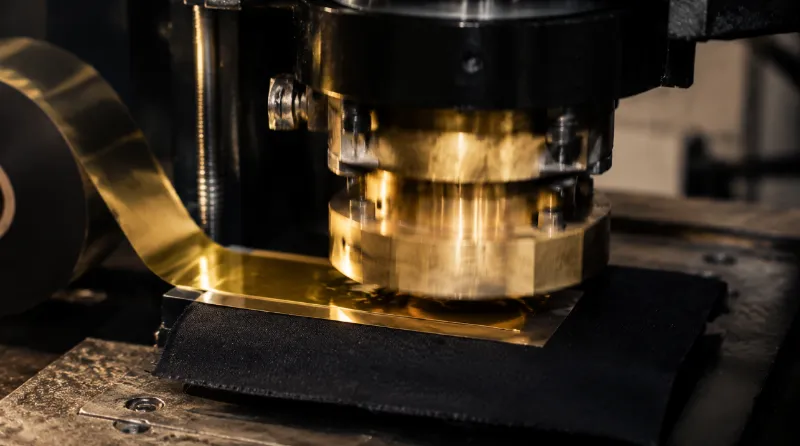
Here’s what makes it different. Instead of ink or thread, hot stamping uses a thin layer of metallic foil. The foil sits on a carrier film, and a heated die presses it onto the surface. As a result, only the area touched by the die transfers — leaving a clean, sharp, shimmering logo.
So a foil stamping pouch isn’t just a printed pouch with metallic ink. The foil layer is real metal — usually aluminum coated with colored lacquer — bonded to the fabric. That’s why it catches light differently from any print. It also explains why a quality gold foil logo costs more than a gold-colored screen print.
Hot stamping is most associated with three industries. First, fine stationery — wedding invitations, business cards, certificates. Second, premium packaging — perfume boxes, wine labels, gift boxes. Third, and increasingly, luxury fabric pouches for jewelry, beauty, and fragrance.
The visual signal is unmistakable. When customers see a hot-stamped logo on a velvet bag, they know — instantly — that the brand spent real money on packaging. So hot stamping doesn’t just decorate. It communicates.
3. The Hot Stamping Process — How It Actually Works
Let’s break down the foil stamping process step by step.
Step 1: Die creation. A metal die is custom-engraved with your logo, usually in brass or magnesium. The die is the most precise part of the process — every line on your logo becomes a raised area on the die.
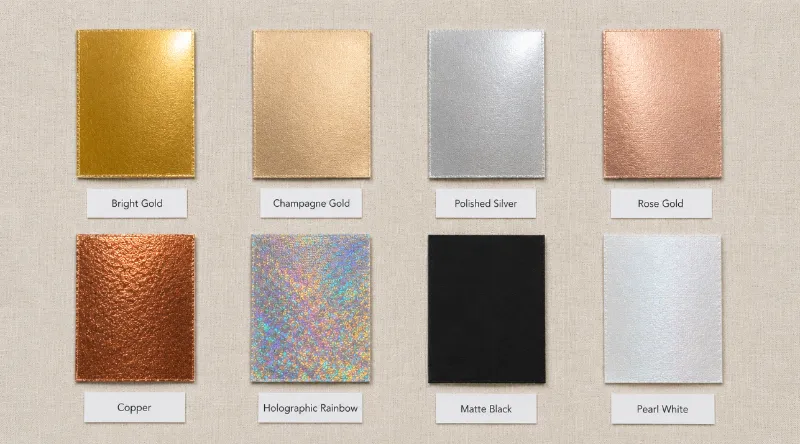
Step 2: Foil selection. You pick the foil color and finish. Standard options include gold, silver, rose gold, copper, holographic, and matte variants. Each foil comes on a long roll, ready to feed into the press.
Step 3: Heating. The die is heated to 100-150°C (212-302°F). The exact temperature depends on the fabric — silk needs less heat than thick leather, for example.
Step 4: Pressing. The fabric goes under the press. The heated die comes down with the foil ribbon between the die and the fabric. Pressure typically runs 80-300 PSI for a few seconds.
Step 5: Foil transfer. The heat melts the adhesive on the foil backing. So only the area touched by the raised die accepts the foil. The carrier film peels away cleanly, leaving the metallic logo permanently bonded to the fabric.
Step 6: Quality check. Every piece is inspected for foil coverage, edge sharpness, and color consistency. Notably, foil stamping on fabric requires tighter QC than paper because fabric weave can cause uneven foil pickup.
So the foil stamping process is precise, repeatable, and surprisingly fast at scale. A single die can produce thousands of clean impressions before it needs replacement.
4. Hot Stamping Fabric Pouches — Beyond Paper Packaging
Here’s where most online guides fall short.
For example, search “hot stamping” and you’ll find dozens of articles. Almost all of them focus on paper boxes, business cards, and rigid packaging. Yet the fastest-growing use of hot stamping today is on fabric — specifically luxury pouches.
The shift makes sense. Customers don’t just unbox products; they remember how packaging felt. So tactile branding on fabric has become a major asset. Brands that invest here see clear returns — we covered the numbers in our piece on jewelry packaging ROI.
But hot stamping fabric isn’t just hot stamping paper on a different surface. The rules change.
First, heat tolerance varies wildly. Velvet pile can scorch above 130°C. Polyester satin can melt. So fabric hot stamping uses lower temperatures and longer dwell times than paper.
Second, fabric weave affects foil pickup. Tight-woven satin transfers foil cleanly. Loose-weave canvas can leave gaps in the foil edges. As a result, fabric choice matters more than people realize.
Third, metallic foil on fabric behaves differently in light. Foil on paper is flat. Foil on velvet pouches shimmers and shifts as the pile catches light from different angles. That’s the visual magic — and it’s why luxury brands keep choosing fabric over paper.
So if you’ve only read paper-focused guides, you’ve missed most of what hot stamping can do today.
5. Hot Stamping Foil Colors & Finishes (Visual Guide)
Foil color shapes brand perception. So picking the right one matters more than people think.
| Foil Color | Brand Vibe | Best Used On |
|---|---|---|
| Bright Gold | Classic luxury, heritage | Velvet, dark satin, leather |
| Champagne Gold | Modern luxury, soft | Cream cotton, blush satin |
| Silver | Tech-forward, clean | Black or navy velvet, charcoal |
| Rose Gold | Romantic, beauty, feminine | Blush, cream, light pink fabric |
| Copper | Artisan, craft, warm | Natural cotton, jute, linen |
| Holographic | Youthful, beauty, trendy | Black or white satin |
| Matte Black | Quiet luxury, fashion-forward | Cream or white fabric |
| Pearl White | Bridal, pure, premium | Dark velvet, navy satin |
Three quick rules to remember.
First, gold and silver are the safe defaults. They work across most fabrics and brand styles. Naturally, that’s why 70% of luxury foil-stamped packaging uses one of these two.
Second, contrast matters. Light foil on dark fabric reads best. Dark foil (matte black, deep bronze) needs light fabric to pop.
Third, sustainability is growing. Eco-foils made without aluminum are now available. For brands aligned with GOTS organic standard requirements, ask suppliers about biodegradable foil options.
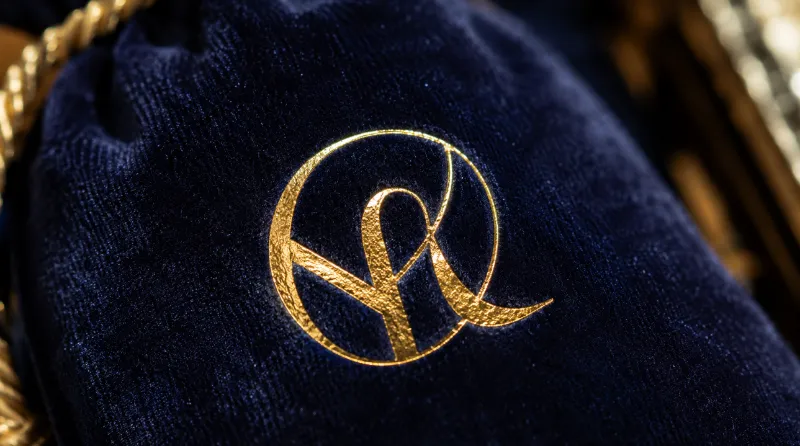
A gold foil logo on midnight velvet is a classic for a reason. However, don’t default to gold without thinking. Match the foil to your brand voice, and you’ll get a lot more impact for the same cost.
6. Best Fabrics For Hot Stamping
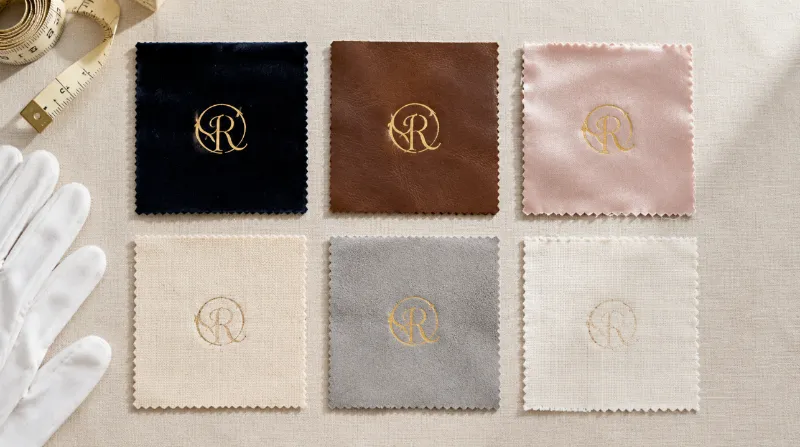
In practice, foil stamping works beautifully on some materials and poorly on others. So material choice is the single biggest decision.
| Fabric | Hot Stamping Result | Notes |
|---|---|---|
| Velvet | ✅ Excellent | Heat compresses pile, locking in foil |
| Leather | ✅ Excellent | Premium, traditional, very durable |
| Satin (polyester) | ✅ Good | Watch heat — can melt above 130°C |
| Dense cotton / canvas | ✅ Good | Best with tight-weave varieties |
| Microfiber / suede | ✅ Good | Soft pile holds foil well |
| Lightweight cotton (muslin) | ⚠️ Fair | Weave too loose for crisp edges |
| Organza / silk chiffon | ❌ Poor | Too sheer, scorches easily |
| Jute / burlap | ❌ Poor | Coarse texture breaks foil edges |
Three patterns stand out.
First, dense and smooth wins. Velvet, leather, satin, and microfiber all share a uniform, fine surface. Naturally, that lets foil bond cleanly with sharp edges.
Second, sheer and loose loses. Organza, light cotton, and jute have too much texture or too little material. So the foil either doesn’t stick or looks jagged.
Third, polyester needs care. Polyester satin works well but melts at lower temperatures than natural fabrics. Skilled operators dial in the heat precisely — amateurs scorch the surface.
For brands sourcing custom pouches, our most-requested foil-stamped fabrics are velvet, leather, and satin — in that order. Each delivers a slightly different luxury feel.
7. Hot Stamping Fabric Cost Comparison by MOQ
Cost matters. So here’s the honest breakdown for foil-stamped pouches across order sizes.
| Order Quantity | Standard Gold/Silver | Premium Foil (Holographic, Pearl) |
|---|---|---|
| 100 pcs | $1.20 – $2.00 | $1.80 – $3.00 |
| 500 pcs | $0.40 – $0.80 | $0.70 – $1.30 |
| 1,000 pcs | $0.20 – $0.50 | $0.35 – $0.80 |
| 5,000 pcs | $0.12 – $0.30 | $0.22 – $0.50 |
Plus there’s setup cost. A standard die runs $80-150. Custom or oversized dies can reach $200-400. So at low MOQ, the die cost dominates the per-piece price.
Three things drive the cost difference.
First, foil type matters. Standard gold and silver foils cost less than holographic, pearl, or matte specialty foils. So picking your foil color has a real budget impact.
Second, logo size matters. Bigger logos consume more foil per impression. A 30mm logo can cost 2-3x more in foil than a 10mm logo.
Third, fabric matters. Foil stamping on velvet or leather costs slightly more than satin because the press cycle is longer. Naturally, harder substrates need more dwell time.
One tip — always ask your supplier for the die fee separately. Reputable factories list setup costs openly. By contrast, hidden setup makes quotes hard to compare.
8. Hot Stamping vs Embossing vs Debossing — Which Wins?
Hot stamping isn’t the only premium decoration option. So let’s compare it side by side with the two most common alternatives.
| Property | Hot Stamping | Embossing | Debossing |
|---|---|---|---|
| Visual effect | Metallic shine | Raised logo | Sunken logo |
| Color options | Many (gold, silver, holo…) | Same as fabric | Same as fabric |
| Brand voice | Luxury, statement | Heritage, bold | Modern, quiet |
| Cost (1,000 pcs) | $0.20 – $0.80 | $0.25 – $0.60 | $0.15 – $0.40 |
| Best for | Jewelry, beauty, fragrance | Heritage luxury, paper | Modern leather, soft fabric |
Three takeaways.
First, hot stamping vs embossing is really a contrast between color and texture. Hot stamping adds color (foil). Embossing adds depth without color. So pick by what you want customers to notice first.
Second, hot stamping is the only method that adds shine. Both embossing and debossing rely on shadow and light from the surrounding fabric. By contrast, hot stamping introduces a new visual element — metallic reflection.
Third, methods combine well. A debossed logo with hot-stamped foil inside the impression is a classic luxury combo. So you don’t have to pick just one.
For more on the embossing side of this decision, see our deep dive on debossing vs embossing on packaging.
9. 5 Common Mistakes Brands Make With Hot Stamping
After hundreds of orders, the same five mistakes keep showing up. So avoid these.
Mistake 1: Using bright gold on every fabric. Bright gold reads cheap on cream or pastel fabrics. Champagne gold or rose gold suits soft palettes much better. So match foil tone to fabric color.
Mistake 2: Picking holographic without thinking. Holographic foil looks amazing in samples but can feel kitsch on the wrong product. It’s perfect for beauty and youthful brands — wrong for fine jewelry or heritage luxury.
Mistake 3: Logos with hairline detail. Hot stamping fabric needs at least 0.5mm line thickness. Anything finer either drops foil or looks blurry. So simplify your logo first, or test a sample before approving the full run.
Mistake 4: Wrong fabric, wrong heat. Polyester satin scorches above 130°C. Velvet flattens permanently if over-pressed. Naturally, this is why factory experience matters — temperature control is everything.
Mistake 5: Skipping the physical sample. Photos can’t show how foil shimmers under different lights. So always pay the $20-40 sample fee. Indeed, it’s the cheapest insurance you’ll buy.
Avoid these five, and your foil-stamped pouches will land right the first time.
10. Conclusion — Hot Stamping Fabric Decision Test
Skip the long analysis. Instead, use this 60-second test.
Ask yourself four quick questions:
1. Is the brand luxury, beauty, or fragrance? → Hot stamping fits.
2. Is the fabric velvet, leather, satin, or dense cotton? → Hot stamping works.
3. Do you want the logo to shine, not just feel? → Hot stamping is the only option.
4. Is the budget over $0.30 per pouch at 1,000 pcs? → Hot stamping is affordable.
If three answers point to yes, hot stamping fabric is your method. If not, consider embossing or debossing instead.
That’s it. Sixty seconds. Real answer.
11. FAQs
Q1: Does hot stamping fabric peel or fade over time?
Not when done correctly. The foil bonds permanently to the fabric surface. So a properly hot-stamped logo can last for years of normal use. However, cheap foils or rushed application can peel — which is why supplier quality matters.
Q2: Can hot stamping be applied to all fabrics?
No. Hot stamping fabric works best on dense, smooth materials — velvet, leather, satin, microfiber, and tight-weave cotton. By contrast, sheer fabrics like organza or rough fabrics like jute don’t take foil cleanly. So always check fabric compatibility first.
Q3: What’s the minimum logo size for hot stamping?
Generally, 5mm is the lower limit for clean foil pickup. Smaller logos can work but require finer dies and tighter QC. So for monograms or small icons, ask your supplier to test a sample first.
Q4: How does hot stamping compare to gold ink screen printing?
Hot stamping uses real metallic foil, while screen-printed gold ink is just pigment with metallic flakes. As a result, hot stamping shines brighter, lasts longer, and looks more premium. By contrast, gold ink is cheaper and works on more fabrics — but doesn’t have the same wow factor.
Q5: Can you combine hot stamping with embossing or debossing?
Yes, and many premium brands do. The most popular combo is debossed-then-foil-stamped — the logo is pressed into the surface, then filled with metallic foil. Naturally, this creates a layered, ultra-luxury effect that single-method decoration can’t match.
Q6: What’s the MOQ for hot stamping fabric pouches?
Most factories accept hot stamping at 100 pieces, including ours. The die fee is fixed, so per-piece cost drops fast at higher quantities. So if you’re testing the market, 100 pcs is fine — but 500 pcs is more cost-efficient.
Q7: Are there eco-friendly foil options?
Yes. Biodegradable and aluminum-free foils have become available in the last few years. They cost about 15-25% more than standard foils but appeal to sustainability-focused brands. So if eco-credentials matter to you, ask your supplier specifically for these options.
Get a Quote — Custom Hot Stamping Fabric Pouches
YJXpack — Yijiaxin (Shenzhen) Packaging Co., Ltd.
For 20+ years, we’ve made custom fabric pouches with every premium decoration option — hot stamping, embroidery, screen print, heat transfer, embossing, debossing, woven labels, and silicone print. We hold GOTS, GRS, OEKO-TEX, BSCI, ISO 9001, and SABER certifications, and we serve over 8,000 brands worldwide.
Want to see and feel the foil yourself? Request a free sample with foil stamping in your chosen color — we’ll ship it to your door so you can judge shine, hand-feel, and durability before any commitment.
Email: info@yjxpack.com
WhatsApp / WeChat: +86 18617112946
Website: www.yjxpack.com
Free hot stamping sample shipped to your door · Quote within 3 minutes · 3D mockup in 30 minutes · MOQ 100 pieces · GOTS / GRS / OEKO-TEX / BSCI / ISO 9001 certified
Share This Story, Choose Your Platform!