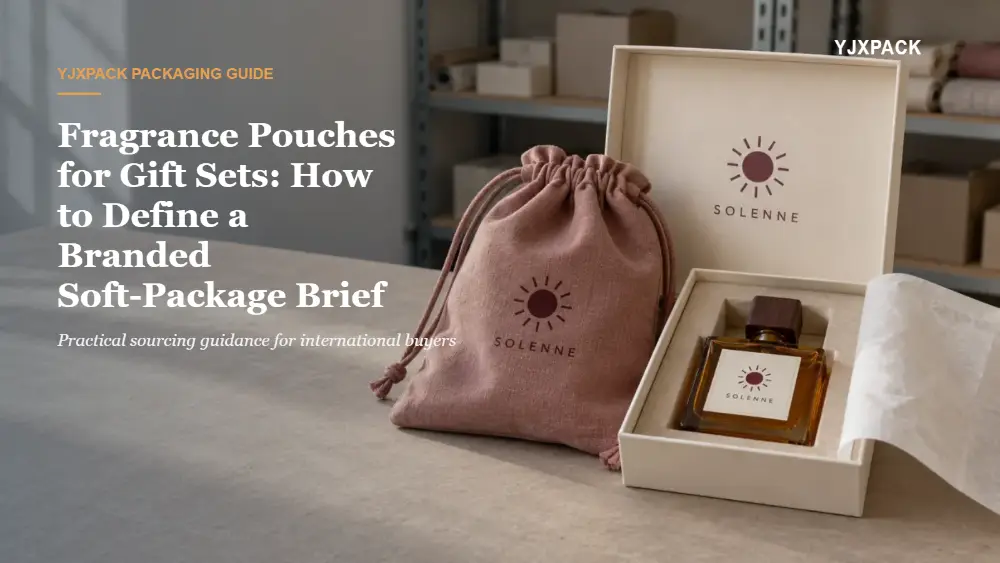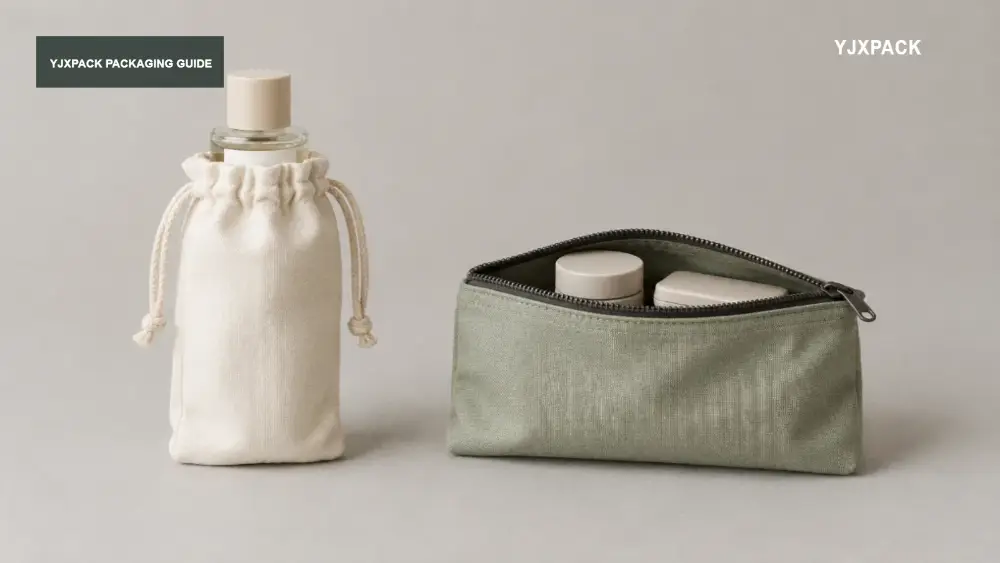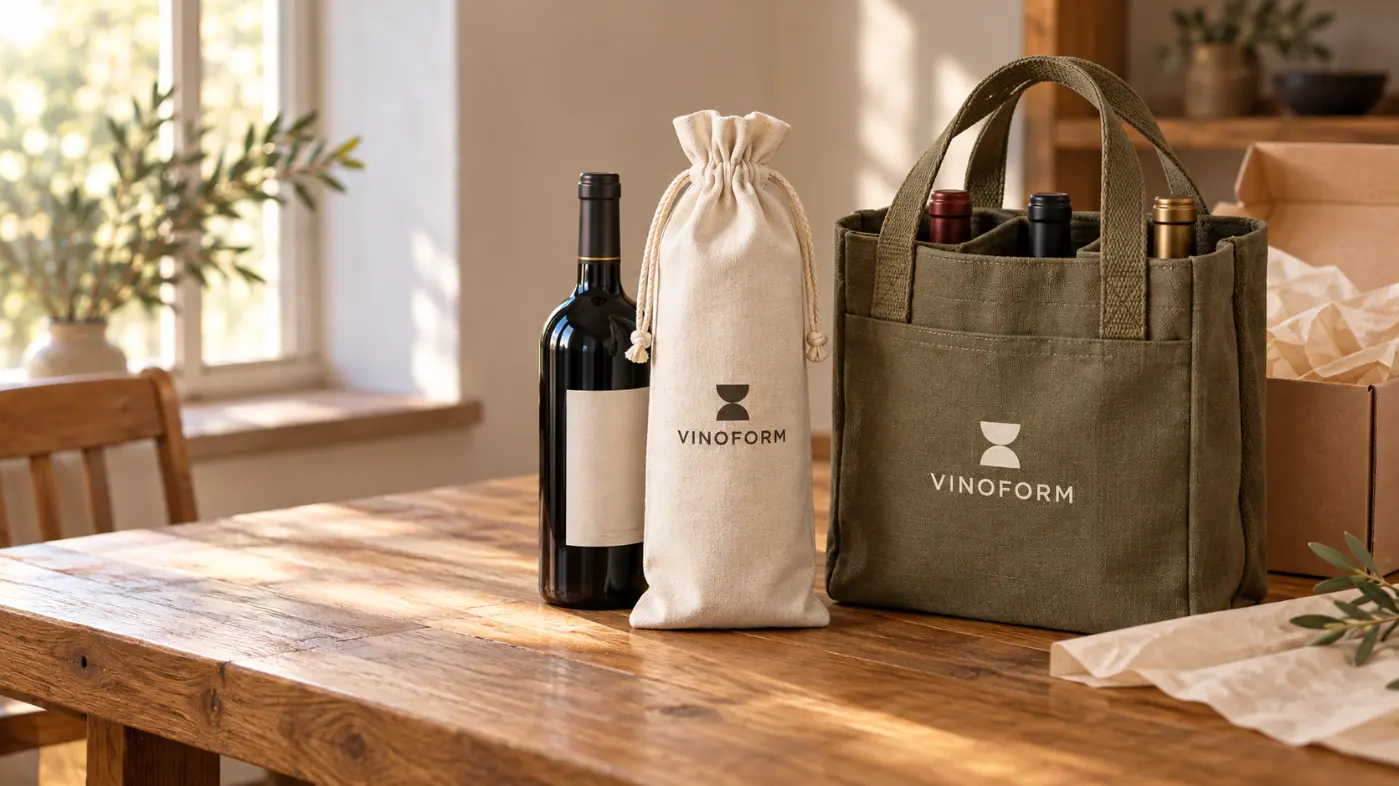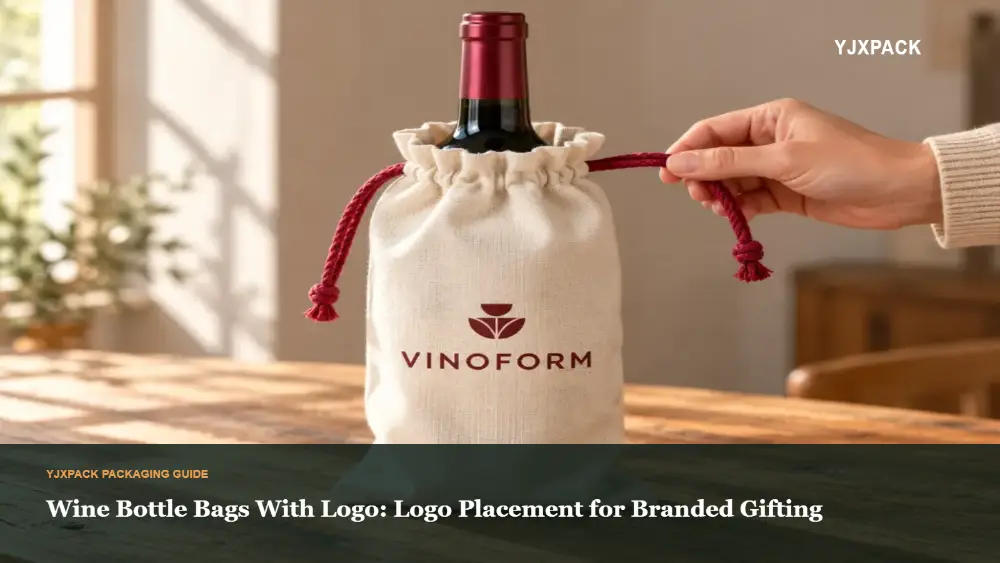
For premium-positioned products, a dust bag can extend the product’s visual identity and unboxing experience. For procurement teams, the central challenge is translating subjective expectations into a specification a supplier can assess, sample and reproduce against an approved reference.
This guide walks through the practical questions a packaging buyer should answer before sampling or requesting a quote. It covers material hand-feel, color control, logo method, closure design, and the approval criteria that can support a premium positioning.
> Scope note: This guide explains selection logic and the decisions buyers should make before approaching a supplier. Availability of specific materials, construction methods, artwork limits, MOQ, sampling, pricing and documentation must be confirmed against the final brief during quotation.
—
What Should You Decide Before Requesting a Quote?
A dust bag quote request that arrives with vague instructions (“something luxurious, white, with our logo”) forces the factory to guess. Each guess introduces a risk: the wrong fabric weight, a logo method that looks flat on the chosen material, or a closure that doesn’t hold the product securely. Before contacting any supplier, resolve these five core decisions:
- Product type and weight — What will the dust bag hold? A structured leather handbag, a pair of heeled shoes, a silk scarf, or a gifting box? Weight and shape inform fit, construction and sizing checks.
- Desired hand-feel — Should the bag feel crisp and substantial, or soft and drapey? This is the single most important differentiator between a standard dust bag and a luxury one.
- Brand color precision — Will you match an agreed color reference, or accept an available stock color? A custom color route may change the sampling and quotation process.
- Logo method and placement — Print, foil stamp, embroidery, woven label, or deboss? Each method has different setup requirements, minimum detail sizes and fabric compatibility.
- Budget boundary — Is the dust bag a cost-of-goods line item with a strict ceiling, or is it treated as part of the brand experience with more flexible spending?
These five decisions shape every downstream specification. If any one remains open when you send an RFQ, it can lead to re-quoting or an unhelpful first sample.
—
Defining the Requirements for Luxury Dust Bags
The word “luxury” is subjective. In a factory brief, it needs to become measurable. A procurement team can translate brand expectations into specifications by focusing on four areas:
Hand-feel and drape
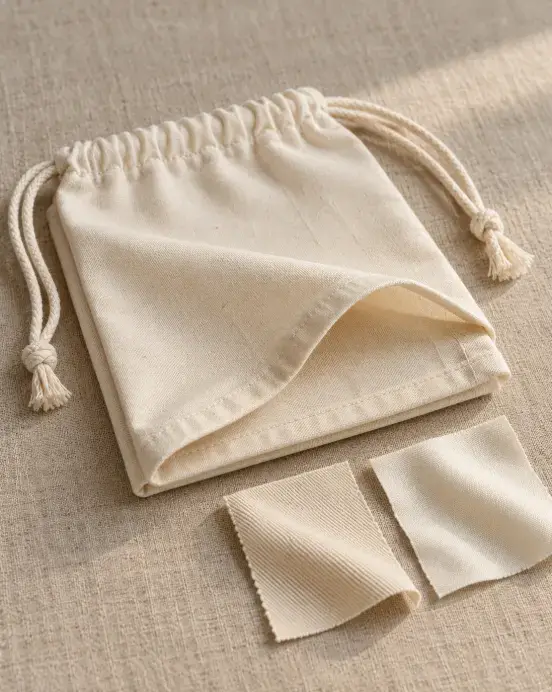
Teams often describe the fabric they want in sensory terms: “silky,” “weighty,” “matte but smooth.” These descriptions are useful starting points, but they need translating into fabric type, weight direction and finish. Confirm the intended result with a swatch or physical reference rather than relying on a fabric name alone.
Ask your brand or design team to supply a physical reference sample—an existing dust bag from another product, a swatch of fabric they like, or even a garment with the right texture. A physical reference eliminates ambiguity faster than any written description.
Visual finish
Matte fabrics photograph differently than semi-lustrous ones. A satin-weave cotton has a subtle sheen; a plain-weave muslin looks completely flat. If your dust bag will appear in product photography or unboxing videos, the surface finish is a visual branding decision, not just a tactile one.
Construction quality signals
Premium briefs often consider details such as:
- French seams or bound seams instead of exposed raw edges
- Agreed stitch appearance and seam consistency
- Matched thread color
- Reinforced drawstring channels
- Clean, even hems with no puckering
These details can affect cost and construction. Decide which ones matter to the product and confirm their feasibility on sample before pricing is finalized.
Packaging consistency
Where consistency across orders is important, state that requirement explicitly in the brief. Agree how fabric color, cutting, construction and approved references will be compared on repeat production; do not assume a specific dye-lot or inspection process is included.
—
How Do Material Choices Affect Protection and Perception?

Material is the foundation of a luxury dust bag brief. The fabric you choose affects cost, hand-feel, logo compatibility, and the level of physical protection it offers.
Common fabric options for premium dust bags
| Fabric direction | Visual and hand direction | Potential decoration route | Buyer check |
|---|---|---|---|
| Cotton twill | Structured, matte surface direction | Screen print, foil, embroidery or debossing may be considered | Confirm weave, opacity, artwork result and final hand feel on sample. |
| Cotton sateen | Smoother surface with a subtle sheen direction | Print, foil or transfer may be considered | Confirm sheen, dye result and decoration appearance on the actual fabric. |
| Cotton with organic-content claims | Similar visual direction to other cottons | Method depends on construction and artwork | Verify the specific claim, certification scope and documentation rather than assuming it. |
| Flannel / brushed cotton | Soft raised-surface direction | Print or embroidery may be considered | Confirm surface contact, artwork definition and care expectations on sample. |
| Linen / linen-blend | Textured, natural visual direction | Print, embroidery or foil may be considered | Confirm slub level, seam appearance and logo result on the selected material. |
| Microfiber | Smooth, suede-like surface direction | Transfer, print or debossing may be considered | Confirm contact behavior and decoration result against the actual product. |
| Satin | Smooth, lustrous, lightweight direction | Transfer or foil may be considered | Confirm drape, closure behavior and logo result on sample. |
| Velvet | Plush pile direction | Embroidery, foil or hot stamping may be considered | Confirm pile direction, logo result and consistent appearance on sample. |
This table is a starting point. Confirm specific fabric availability with your supplier before finalizing.
Protection considerations
A dust bag can reduce direct dust exposure and surface contact during the intended handling flow. Material selection should be matched to the product and its conditions:
- Dust and light — An appropriately opaque, closely constructed fabric can reduce direct dust exposure and limit light reaching the product. Confirm the actual requirement for the intended storage and handling flow.
- Surface contact — A softer surface may be considered for scratch-sensitive finishes, but assess it against the actual product through sampling.
- Moisture — A dust bag is not a moisture-control system. If humidity, storage duration or carton conditions matter, define the required packaging approach with the product owner and supplier.
- Static — If static sensitivity matters for the product, state the requirement and any needed validation rather than assuming a material will solve it.
For a high-value handbag with delicate hardware, define the surface-contact and presentation requirements before selecting a lining or fabric direction. For a lighter retail item, define the same requirements against the actual handling flow and sample rather than assuming a lighter construction is sufficient.
—
Which Size, Closure and Presentation Format Fits Your Product?
Sizing
A dust bag must be large enough to hold the product without stretching or forcing, but not so oversized that the product shifts around inside. Excess fabric looks sloppy when photographed and reduces the sense of considered packaging.
The standard approach:
- Measure the product at its widest, tallest and deepest points.
- Add an appropriate allowance on each side for comfortable insertion and drawstring closure. The exact allowance depends on the product’s rigidity, shape and whether the bag needs to fold over the top.
- If the dust bag must also fit inside a rigid box, measure the box interior and confirm that the bagged product fits without bunching.
Provide your supplier with the actual product dimensions (or a physical sample of the product) rather than just a finished bag size. This avoids situations where the bag technically matches the requested dimensions but doesn’t actually fit the product well.
Closure types
The closure affects both function and appearance:
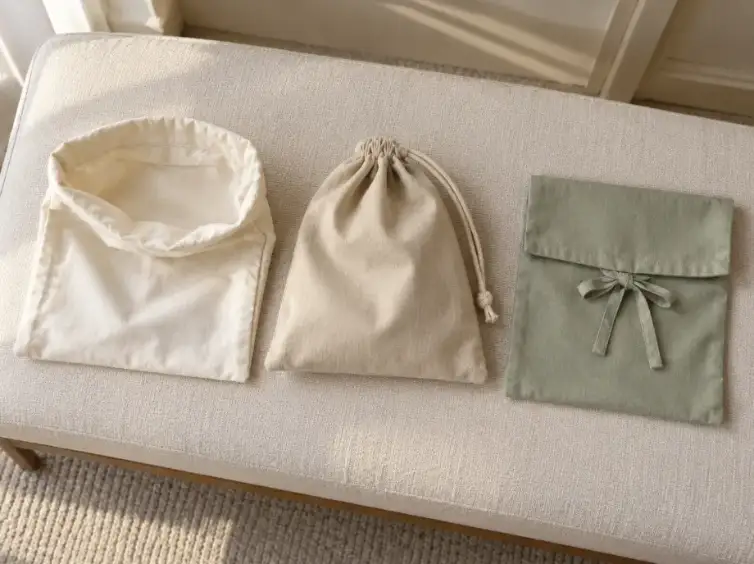
- Single drawstring — A frequently selected dust bag closure: one cord threaded through a channel at the top.
- Double drawstring — Two cords pulling from opposite sides. Creates a more symmetrical gathered top. Looks slightly more refined when cinched.
- Flap with ribbon tie — A fold-over flap secured with a ribbon or cord. Common for flat items like scarves, wallets, and small leather goods.
- Envelope flap — A deeper flap that tucks in or uses a buyer-selected closure detail where available. Confirm construction and handling on sample.
- No closure (open top) — The product sits inside the bag without a closed top. Confirm whether this suits the intended handling and storage flow.
For premium positioning, the drawstring cord itself matters. A twisted cotton cord, a woven flat tape, a satin ribbon, or a leather-tipped cord each create a different impression. Cord ends can be finished with metal aglets (the small tips), knots, or heat-sealed cuts. Each finish changes cost and perceived quality.
Presentation format
How will the dust bag be presented to the end customer?
- Inside a rigid box — The dust bag wraps the product inside the box. The bag must fit the box interior cleanly.
- Standalone (no outer box) — The dust bag is the primary packaging layer. It must look finished enough to stand on its own.
- Retail shelf or counter — Dust bags displayed at retail need to look uniform when stacked or hung.
- E-commerce shipment — Confirm how the bagged product is protected by the outer mailer or carton; the dust bag alone is not a substitute for transit packaging.
Each scenario may influence fabric, finish and the outer-packaging approach. Confirm any additional components or inserts with the supplier rather than assuming they are included.
—
How Should You Approach Logo and Customization for Custom Dust Bags?
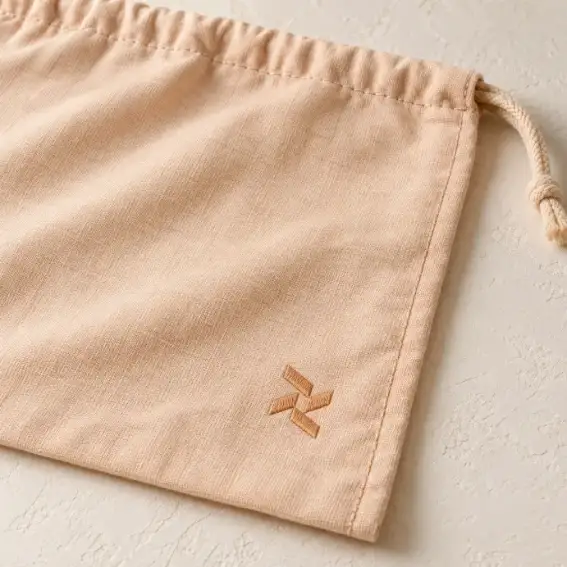
The logo is typically the most visible brand element on a dust bag. Getting it right requires matching the logo method to the fabric, confirming artwork files, and approving the result on an actual production sample—not a screen rendering.
Logo method selection
Each method has strengths and limits:
- Screen printing — Can suit flat artwork on selected cotton surfaces. Confirm line definition, coverage and placement on the proposed fabric.
- Hot foil stamping — Creates a metallic or matte-colored impression. Confirm adhesion, surface uniformity and artwork detail on a strike-off, especially on textured or napped materials.
- Embroidery — Adds a stitched surface treatment. Confirm stitch density, distortion, backing and legibility on a finished bag sample.
- Heat transfer — May reproduce multi-color artwork, depending on the selected transfer and fabric. Confirm hand feel, sheen and adhesion on the proposed production material.
- Debossing — A die creates a recessed or raised impression. Confirm whether the selected fabric and construction hold a legible result and whether it is visible enough for the intended presentation.
- Woven labels — A separate woven textile label stitched onto the bag. Allows fine detail and multiple colors. Adds a small raised element to the surface.
If you are comparing these methods in detail, a more thorough breakdown of logo method cost and setup differences can help you prepare for the quoting stage.
Artwork file preparation
Supply the highest-quality artwork file available; vector formats such as AI or EPS are often preferred. If raster artwork is used, ask the supplier to confirm whether it meets the selected process and final logo-size requirements before sampling.
For logo color, provide an agreed reference and clarify the intended material. The same reference can appear different across cotton, satin and velvet. Approve the color on the actual proposed material rather than relying only on a paper or screen proof. For a more detailed walkthrough, see Pantone color matching for custom pouches.
Customization beyond the logo
Additional branded elements may be considered, subject to construction and sample approval:
- Custom-dyed drawstring cords
- Printed or woven care labels sewn inside
- Branded tissue paper inserts
- Tone-on-tone interior printing
- Embossed or engraved cord aglets
Each element adds a specification line and a cost line. Decide which elements genuinely reinforce your brand story and which add complexity without clear customer impact.
—
What to Include in Your RFQ
A complete RFQ (Request for Quotation) reduces back-and-forth and gives you comparable quotes from different suppliers. For custom dust bags aimed at a premium market, your RFQ should include:
- Product description — What the dust bag will hold (product type, approximate dimensions, weight)
- Bag dimensions — Target finished size, or product dimensions with a note asking the supplier to recommend sizing
- Material preference — Fabric type, target GSM, color (Pantone reference if available), and any finish requirements (brushed, mercerized, etc.)
- Logo and branding — Method preference (or ask for recommendations), logo placement, artwork files, and color references
- Closure — Drawstring type, cord material, cord color, end finish
- Construction — Seam type, stitch requirements, any lining
- Quantity — Target order quantity for initial and repeat orders
- Quality expectations — An agreed sampling plan, defect categories, acceptance criteria and any required inspection method
- Certifications or documentation — If you require specific fabric certifications (OEKO-TEX, GOTS, GRS, etc.), state this upfront. Do not assume they are included.
- Timeline — Target delivery date and shipping method preference
- Sample request — Whether you need a pre-production sample and how many
If you are unsure about certain specifications—for example, the ideal logo method for your chosen fabric—it is better to state your brand objective and ask the supplier for a recommendation than to guess. A good supplier will propose options and explain trade-offs.
—
Sample Review and Quality Checks
Sampling is where the brief becomes real. For luxury dust bags, the sample stage serves two purposes: confirming that the design matches brand expectations, and establishing a reference standard for production quality.
What to evaluate on a sample
Review the sample against these criteria:
- Fabric hand-feel — Does the fabric weight, texture and drape match the brief? Is it consistent with any reference swatch you supplied?
- Color accuracy — Compare fabric and logo color against the agreed reference under an agreed controlled lighting condition and in the intended retail context.
- Logo quality — Check agreed requirements for sharpness, registration, color density and placement. For foil, transfers or embroidery, perform any agreed handling or adhesion check rather than relying on an informal test.
- Seam and stitch quality — Examine seams for straightness, stitch density, thread color match, and trimmed thread ends. Turn the bag inside out.
- Closure function — Pull the drawstring to confirm smooth operation. Check cord tension—does it hold the bag closed, or does it slip open?
- Dimensions — Measure the bag and confirm it fits the actual product.
- Odour or chemical requirements — If these matter for the product or market, state the applicable material, test or documentation requirement in the brief.
- Overall impression — Place the product inside the bag, close it, and set it on a table. Does it look like something your customer would associate with your brand?
Approval process
Once a sample is approved, record the production reference clearly. Make sure you:
- Retain the approved sample or a complete approved reference record.
- Confirm what reference the supplier will use for production.
- Document any accepted deviations and requested changes before production.
If changes are requested, a revised sample may be needed before production begins. Build this step into your timeline.
Production quality checks
For larger orders, consider specifying:
- In-process inspection — If required, define when it occurs, what is checked and how issues are escalated.
- Pre-shipment inspection — If required, define the finished-order inspection scope before shipping.
- Sampling and acceptance plan — Define the sample size, defect categories, acceptance thresholds and any reinspection steps in writing; do not assume a default AQL applies.
These requirements should be stated in the purchase order, not assumed. If you have an existing quality manual or brand standard document, share it with the supplier before production starts.
—
Next Step
If you are preparing a soft packaging brief for handbags, shoes, or premium gifting products, organize your product dimensions, fabric preferences, color references, artwork files and quantity targets before reaching out. Contact YJXPACK with a completed brief to discuss material options, sampling and production planning.
Frequently Asked Questions
What is the difference between a custom dust bag and a stock dust bag?
A stock dust bag is a pre-made product in standard sizes, colors and weights, available from inventory. A custom dust bag is manufactured to your specifications—fabric, color, size, logo, closure and construction are all defined by your brief. For brands that need specific Pantone colors, logo methods or non-standard sizes, custom production is typically necessary. Stock bags may work for generic internal use or early-stage brands testing the market.
Can cotton dust bags provide adequate protection for leather goods?
Cotton can be considered for handbag and shoe dust bags, but it is not automatically the right material or a moisture-control solution. Start with the product surface, storage conditions, packaging flow and desired presentation. For scratch-sensitive finishes, compare proposed fabric directions against the actual product during sampling.
How do I ensure color consistency across multiple orders?
Color consistency across production batches should be addressed in the brief. Ask the supplier how they propose to manage repeat-order color comparison and retain an approved reference where needed. For color-sensitive projects, agree the swatch, sample or other verification step before each production run.
Should the dust bag match the product box exactly?
Not necessarily. Some brands use the same Pantone across all packaging elements (box, dust bag, ribbon, tissue). Others intentionally contrast—for example, a white dust bag inside a black box. The decision depends on your brand’s visual identity guidelines. What matters is that the choice is intentional, documented and reproducible.
What information does a supplier need to recommend a logo method?
At minimum, provide your artwork file (vector format), the fabric type and color you plan to use, the desired logo size and position, and the visual effect you want (metallic, matte, textured, subtle, etc.). If you have a reference image or a competitor’s dust bag that shows the effect you want, share it. The supplier can then recommend which method is compatible with the fabric and achievable at the logo size you need.
—
Share This Story, Choose Your Platform!