
You’ve been scrolling through Alibaba and 1688 for an hour. The material names blur together — velvet, microfiber, satin, suede, PU, organza, cotton. Every factory swears theirs is “the best quality.” Plus, every photo looks roughly the same. So you pick the cheapest option, place your order, and three weeks later your customer texts you: “The pouch feels cheaper than my phone case.” Suddenly, the $400 you saved on packaging just cost you a $200 customer.
In fact, 90% of small brands pick the wrong material — not because they made a bad call, but because they never actually touched the options. Written descriptions are too abstract. Factory photos are too repetitive. So material choice ends up driven by price alone, which is the worst possible filter for something that customers will literally feel before they see your product.
This guide fixes that. First, you’ll get a clear breakdown of the 7 most common jewelry pouch materials — touch, look, durability, and where each fits. Second, you’ll see real 2026 price ranges for every material across multiple MOQ tiers. Third, you’ll learn which logo printing methods work best on each material — so your packaging actually executes the way you imagined. By the end, you’ll know exactly which jewelry pouch materials match your brand DNA and budget.
1. Why Material Choice Decides Everything
Before we dive into specifics, here’s why this decision matters more than most brand owners realize.
First, touch beats sight. When a customer opens your packaging, their fingertips register the material in about 200 milliseconds — faster than their eyes process the logo. So the tactile signal sets the emotional frame before any branding kicks in. A premium fabric communicates “valuable” before the customer reads a single word. Meanwhile, a cheap-feeling material primes them to expect a cheap product, no matter what’s inside.
Second, material defines price perception. The exact same ring inside a structured velvet pouch reads as a $200 piece. Inside a thin organza bag, it reads as a $30 piece. So material is a perceived-value lever — one of the few brand levers that costs cents but moves perception by hundreds of dollars.
Third, material limits your logo options. Velvet can’t hold fine silk-screen detail because the nap absorbs ink. Cotton can’t carry mirror-finish hot stamping because the fiber absorbs the foil. Organza can’t carry embroidery because the weave is too sheer. So picking material first and logo method second is the right order — reversing it leads to disappointment.
Across the industry, velvet dominates roughly 70% of all jewelry pouch volume. Cotton holds about 15%. The remaining 15% splits among microfiber, satin, suede, PU leather, and organza. However, that distribution reflects what factories produce at scale — not what’s best for your brand. So the question isn’t “what’s popular.” It’s “what fits your specific positioning, customer, and product.”
In short, the seven jewelry pouch materials below each carry distinct emotional, visual, and economic signals. Pick deliberately, and packaging works for you. Pick by price alone, and packaging quietly works against you.
2. Material #1 — Velvet (The Industry Standard)
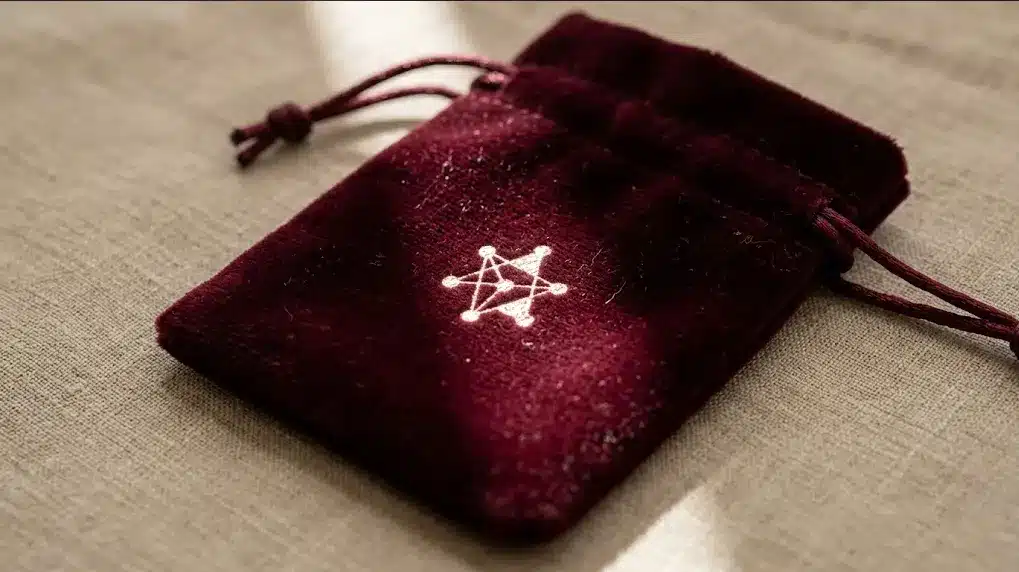
Velvet is the default of fine jewelry packaging — and for good reason. The short, dense pile catches light beautifully, communicates depth, and feels indulgent under fingertips. So when customers think “real jewelry,” their brain reaches for velvet first.
Touch and visual signature. Velvet feels like the fur of a newborn kitten — short, dense, slightly cool to the touch. Visually, it absorbs light rather than reflecting it. So colors look richer and deeper than the same shade in any other fabric.
Technical specs. Modern velvet for jewelry packaging comes in four main variants: Korean velvet (smoothest, most premium), Italian velvet (denser pile, more vintage), pleuche (short-pile budget option), and crystal velvet (slight sheen, modern feel). Most fabrics are 100% polyester, though premium options blend in cotton or rayon. GSM typically runs 280–380, with heavier weights signaling premium quality.
Real 2026 pricing. MOQ 100: $0.85–$1.30 per pouch. MOQ 1,000: $0.55–$0.85. MOQ 5,000: $0.40–$0.55. So velvet sits in the upper-mid tier — premium feel without microfiber pricing.
Best logo methods. Hot stamping (excellent — foil bonds beautifully into the pile). Embroidery (very good — thread sits proudly above the nap). Debossing (good for matte velvet specifically). Silk screen (poor — ink absorbs unevenly into the pile and looks fuzzy). For more on which method fits which material, see our logo printing techniques guide.
Best for these brands. Bridal and engagement ring brands. Traditional fine jewelry. Holiday gift packaging. Mid-to-high-end DTC. Three real combinations we see often:
- Deep burgundy velvet + rose gold hot stamping → traditional engagement ring brands.
- Ink-green velvet + antique bronze hot stamping → modern mid-tier DTC.
- Black velvet + matte silver hot stamping → classic luxury houses.
For brands exploring this category, our velvet jewelry pouch options come in 12 stock colors plus full Pantone color matching on custom orders.
In short, velvet is the safest premium choice. It’s hard to make a velvet pouch look cheap — though picking the wrong color or logo method can definitely make it look dated.
3. Material #2 — Microfiber (The Modern Premium Choice)
If velvet is yesterday’s premium, microfiber is today’s. So over the past three years, we’ve watched dozens of new luxury brands skip velvet entirely in favor of microfiber suede — and the shift is accelerating.
Touch and visual signature. Microfiber feels like a finer, lighter version of real suede — soft but not fuzzy, with a slight grip under fingertips. Visually, it’s deeply matte. So it absorbs light differently than velvet, reading as modern and understated rather than traditional and opulent.
Technical specs. The fabric is made from ultra-fine polyester and nylon fibers (under 0.1 denier), bonded to create a suede-like surface. Thickness typically ranges from 1.0 to 1.4mm. Plus, microfiber takes debossing impressions cleanly — the surface holds a crisp inkless mark.
Real 2026 pricing. MOQ 100: $1.10–$1.65 per pouch. MOQ 1,000: $0.75–$1.10. MOQ 5,000: $0.55–$0.75. So microfiber runs about 30% above velvet — the premium reflects both the material cost and the modern positioning.
Best logo methods. Debossing (excellent — the inkless impression is what microfiber is built for). Hot stamping (very good — foil bonds well). Embroidery (workable, but the matte surface fights the thread shine). Silk screen (workable but not recommended — defeats the matte aesthetic).
Best for these brands. Quiet luxury labels. Modern minimalist DTC. Premium ($150+ jewelry). Wellness and clean-beauty crossover brands. Three real combinations we see in 2026:
- Stone-gray microfiber + tonal debossed logo → Scandinavian minimalist luxury.
- Cream microfiber + matte rose gold debossing → modern premium DTC.
- Deep charcoal microfiber + inkless debossing → quiet-luxury wordmark brands.
For a deeper read on where this material fits in the broader trend cycle, see our 2026 luxury trends analysis.
In short, microfiber is where premium packaging is heading. Brands that adopted it before 2024 look forward-thinking now. Brands that switch in 2026 will look forward-thinking for the next 3–5 years.

4. Material #3 — Satin (The Affordable Luxury Look)
Satin looks expensive in photos but rewards a closer look only sometimes. So this is the material to use carefully — right context, right product, right customer.
Touch and visual signature. Satin feels silky, cool, and smooth — the fingertip equivalent of running your hand across cold water. Visually, it has a strong sheen that catches light dramatically. So in product photography, satin pouches photograph extremely well.
Technical specs. Most jewelry satin is woven polyester, with high-end versions using real silk. Two main weaves: charmeuse (single-faced lustrous finish) and duchess satin (heavier, double-faced). Plus, satin’s weakness is durability — it wrinkles easily and snags on rough surfaces. So it’s better as a single-use ceremonial wrapper than as a customer’s long-term keepsake.
Real 2026 pricing. MOQ 100: $0.55–$0.85 per pouch. MOQ 1,000: $0.35–$0.55. MOQ 5,000: $0.25–$0.35. So satin is one of the more affordable premium-look options — though “premium-look” isn’t the same as “premium-feel.”
Best logo methods. Silk screen (excellent — ink sits cleanly on the smooth surface). Hot stamping (very good — foil bonds well to the polyester). Embroidery (poor — needles can snag the satin fibers and create permanent marks).
Best for these brands. Bridal party gifts. Wedding favor brands. Holiday gift packaging. Hair accessory brands. Anywhere the pouch is used once for a ceremonial gift, not for daily storage. So if your customer is going to keep the pouch for years, pick something else. If the pouch is part of a single gifting moment, satin shines.
In short, satin is photogenic but fragile. Pick it for the unboxing photo, not the lifetime experience.
5. Material #4 — Cotton (The Sustainable Workhorse)
Cotton has quietly become the most versatile material in 2026 jewelry packaging. So once associated with “budget” options, organic cotton in particular has been re-elevated by certification and design.
Touch and visual signature. Cotton feels warm, textured, and natural — distinctly different from any synthetic. Visually, it has visible weave texture and a natural, slightly irregular character. So it communicates honesty, craft, and earthiness rather than polished luxury.
Technical specs. Four main variants: standard cotton (general purpose), canvas (heavier, structured), muslin (lighter, finer weave), and certified organic cotton (GOTS-certified). GSM ranges 120 (lightweight) to 250 (substantial). Plus, cotton accepts a wide range of dyes — or can be left in its beautiful unbleached cream tone.
Real 2026 pricing. Standard cotton at MOQ 100: $0.55–$0.85. MOQ 1,000: $0.35–$0.55. MOQ 5,000: $0.25–$0.35. Organic cotton with GOTS certification adds about 30% on top. So cotton remains one of the most accessible materials at every scale.
Best logo methods. Silk screen (excellent — the surface holds ink beautifully). Embroidery (very good — visible weave makes stitches stand out). Heat transfer (good for multi-color). Hot stamping (workable but foil adhesion is weaker than on velvet or microfiber).
Best for these brands. Sustainable and eco-conscious brands. Bohemian and artisan jewelry. Clean luxury crossover labels. New DTC brands launching with strong sustainability stories. Plus, cotton is the only material that customers reliably reuse — many keep cotton pouches as small accessory bags for years.
The sustainability advantage. Cotton biodegrades naturally. GOTS organic textile standard certification verifies the entire production chain. So for brands building a sustainability story, a certified organic cotton pouch is the strongest material backbone available. For a deeper look at how cotton fits broader eco strategy, see our complete sustainable packaging guide.
In short, a cotton drawstring bag isn’t a downgrade from velvet anymore. Instead, for the right brand, it’s the better choice — both ethically and aesthetically.

6. Material #5 — Suede (The Traditional Premium)
Real suede was once the absolute premium material for jewelry packaging. So watch brands, luxury maisons, and traditional jewelers all used it. Today, however, the category has split.
Touch and visual signature. Real suede has a slightly rough but yielding texture — the “wild” feel of brushed leather. Visually, it’s deeply matte with subtle natural variation. So no two pouches look exactly alike, which adds character but complicates brand consistency.
Technical specs. Real suede comes from the inside of animal hides (typically sheep or goat). Thickness runs 1.0–1.5mm. Plus, real suede is durable and develops a beautiful patina over time. However, it doesn’t take well to cleaning, stains easily, and carries ethical concerns for many modern brands.
Real 2026 pricing. Real suede at MOQ 100: $2.50–$4.00 per pouch. MOQ 1,000: $1.80–$2.80. So real suede is by far the most expensive option. Synthetic microfiber suede (covered in Material #3) achieves a similar look at 30–50% of the price.
Best logo methods. Debossing (excellent — the leather holds an impression beautifully and the result deepens over time). Hot stamping (very good). Embossing (very good). Silk screen (poor — the textured surface fights clean ink edges).
Best for these brands. Traditional luxury jewelry houses with heritage positioning. Men’s jewelry and accessories. Watch and timepiece brands. High-end leather goods that include jewelry pieces. Anywhere “old-world craft” is part of the brand story.
The sustainability shift. Most modern brands have moved from real suede to microfiber suede for both ethical and economic reasons. So microfiber now captures most of the “suede aesthetic” market — leaving real suede to the smallest premium tier. If you’re not specifically anchored in traditional luxury or heritage positioning, microfiber is almost always the better call.
In short, real suede is the most expensive option, the most traditional option, and increasingly the niche option. Microfiber has stolen most of its territory — and rightfully so for most modern brands.
7. Material #6 — PU Leather (The Affordable Premium Look)
PU leather is the “looks like leather, costs like fabric” option. So it captures part of the leather aesthetic at a fraction of the price — which is both its strength and its weakness.
Touch and visual signature. PU feels smooth and leather-like with a slight plastic undertone. Visually, it has a sheen that sits somewhere between real leather and synthetic film. Plus, it can be embossed with various textures: smooth, lychee grain, crocodile, or pebbled.
Technical specs. The material is polyurethane coating bonded to a fabric backing. Thickness varies but typically runs 0.5–1.0mm. However, PU doesn’t breathe like real leather. So over years of use, it can crack, peel, or develop surface degradation — especially in dry climates.
Real 2026 pricing. MOQ 100: $1.20–$1.80 per pouch. MOQ 1,000: $0.85–$1.30. MOQ 5,000: $0.65–$0.90. So PU sits between mid-tier and premium pricing — cheaper than real suede but more expensive than cotton or satin.
Best logo methods. Hot stamping (excellent — the smooth surface and coating bond beautifully to foil). Debossing (very good — coating holds a sharp impression). Silk screen (good — ink sits cleanly on the smooth surface).
Best for these brands. Corporate gift packaging. Men’s jewelry. Watch and accessory bundles. Brands that want a “structured executive” look without leather pricing. Plus, PU works well for jewelry brands targeting a more polished, business-formal customer.
The trend issue. In the current quiet-luxury aesthetic, PU is losing ground. So the slight plastic sheen reads as “trying to look expensive” rather than actually being expensive — the opposite of what quiet luxury communicates. Meanwhile, microfiber gives a more authentic premium feel at similar pricing. So unless your brand specifically needs the structured leather look, PU is increasingly hard to justify.
Sustainability alternatives. Plant-based PU alternatives — Piñatex (pineapple leaf), apple leather, mushroom leather — are emerging at premium prices. So sustainability-focused brands wanting the leather aesthetic now have ethical options that weren’t available three years ago.
In short, PU is the budget premium-look option. It works for specific contexts (corporate, men’s, structured) but loses to microfiber for most modern jewelry brands.
8. Material #7 — Organza (The Lightweight Showcase)
Organza is the lightest, most translucent option — and the most narrow in use case. So it’s brilliant for the right context and disastrous for the wrong one.
Touch and visual signature. Organza feels light and crisp with a slight stiffness — almost like fine tissue paper that doesn’t tear. Visually, it’s semi-transparent with a subtle shimmer. So the jewelry inside is partially visible through the fabric, which can be either a feature or a problem depending on positioning.
Technical specs. The fabric is woven from polyester or nylon at very fine thread counts. Plus, organza is sheer, lightweight, and inexpensive to produce. However, it’s also fragile — it snags easily, tears under pressure, and isn’t built for repeated use.
Real 2026 pricing. MOQ 100: $0.35–$0.55 per pouch. MOQ 1,000: $0.20–$0.35. MOQ 5,000: $0.15–$0.20. So organza is the cheapest material on this list — by a significant margin.
Best logo methods. Silk screen (workable but limited — the fabric is so thin that ink can bleed through). Hot stamping (poor — the fabric is too thin to hold foil cleanly). Embroidery (avoid — the stitching weight tears the weave). In practice, most organza pouches are sold without logos at all.
Best for these brands. Wedding favor packaging. Holiday gift wrapping. Bulk candy or small trinket packaging. Trade show giveaways. Anywhere the pouch is the wrapper, not the keepsake.
Where organza doesn’t work. Mid-tier or premium jewelry brands. Anything where the customer is meant to keep and reuse the packaging. Brands building any kind of premium positioning. So organza sits firmly in the “ceremonial single-use” category — useful but limited.
In short, organza is the right answer for festive single-use moments and the wrong answer for everything else. Pick it for what it does well, and don’t expect it to do anything more.
9. Side-by-Side Comparison Table
Now that you’ve seen each material individually, here they are stacked against each other across the dimensions that matter most for brand decisions.
| Material | Touch | Price (MOQ 1K) | Best Logo | Brand Fit | Durability |
|---|---|---|---|---|---|
| Velvet | Soft, plush | $0.55–$0.85 | Hot stamping | Traditional luxury | ★★★★ |
| Microfiber | Soft, matte | $0.75–$1.10 | Debossing | Quiet luxury | ★★★★★ |
| Satin | Silky, cool | $0.35–$0.55 | Silk screen | Wedding favors | ★★ |
| Cotton | Warm, textured | $0.35–$0.55 | Silk screen | Sustainable, artisan | ★★★★★ |
| Real Suede | Rough, soft | $1.80–$2.80 | Debossing | Heritage luxury | ★★★★ |
| PU Leather | Smooth, firm | $0.85–$1.30 | Hot stamping | Corporate, men’s | ★★★ |
| Organza | Light, crisp | $0.20–$0.35 | Silk screen (limited) | Wedding favors | ★ |
A quick decision tree. If you’re not sure where to start, match your brand to one of these archetypes:
- Engagement rings or fine jewelry brand → Velvet or real suede.
- Modern DTC ($80–$250 jewelry) → Microfiber or premium cotton.
- Sustainability-led brand → GOTS organic cotton.
- Wedding favors or seasonal gift → Organza or satin.
- Men’s jewelry or corporate gifts → PU leather or microfiber.
- Quiet luxury / minimalist → Microfiber with debossing.
For brands wanting to mix multiple materials across product tiers, our full range of custom jewelry pouches covers all seven options at MOQ 100 — so you can split orders across material tiers without committing to a single style. For a full pricing comparison across all materials and MOQs, see our full pricing breakdown.
In short, the right material is the one that fits your brand archetype — not the cheapest, not the most premium, not the most popular.
10. How YJXpack Helps You Choose the Right Material
To put this material guide into practice, here’s how we structure material selection at YJXpack so brands can decide with their hands, not just their screens.
First, we keep all seven materials in stock at MOQ 100. So whether you want velvet, microfiber, cotton, or organza, the fabric is ready — no waiting weeks for a fresh roll. Second, we offer a free 7-material sample pack. You tell us your shipping address, and we send a curated kit containing real swatches of all seven materials — so you can feel each one before committing. Plus, the kit includes 2026 trend color swatches and logo method samples.
Third, our 3D mockup system shows your logo on any material in 30 minutes. So you can compare how the same logo reads on velvet versus microfiber versus cotton before paying for a physical sample. Then physical sampling runs 1–3 days. Bulk production runs 5–7 days for MOQ 1,000.
For credentials, we hold GOTS (organic cotton), GRS (recycled fabrics), OEKO-TEX (chemical safety), BSCI (social compliance), ISO 9001, and SABER certifications — all third-party verified. So material choices come with verified backing, not just marketing claims.
So far, we’ve worked with 50+ US brands on material transitions — moving brands from PU to microfiber for the quiet-luxury upgrade, from standard cotton to GOTS organic for sustainability stories, and from velvet to microfiber for the modern premium pivot. To start with a free 7-material sample pack, visit YJXpack.

11. Conclusion — Material Is Your Brand’s First Touch
Let’s recap. Material isn’t a detail of packaging. Instead, it’s the first thing your customer physically experiences — and it sets the emotional frame for everything that follows.
So how do you choose well? First, define your brand vibe before looking at materials. Are you premium-traditional, modern-quiet-luxury, sustainable-artisan, or festive-ceremonial? Each vibe maps to a different material. Second, match material to vibe, not to price. The cheapest material that fits costs more than the expensive material that doesn’t. Third, always request physical samples before bulk. Photos lie. Texture doesn’t.
Do all three, and your packaging stops being something customers throw away. Instead, it becomes the moment they decide whether to buy from your brand again.
12. FAQs
Q1: What’s the most popular jewelry pouch material?
Velvet dominates roughly 70% of all jewelry pouch volume globally. Cotton holds about 15%. The remaining 15% splits among microfiber, satin, suede, PU, and organza. However, popularity doesn’t equal “best for your brand.” Microfiber has been growing fastest since 2023, especially among modern premium DTC labels.
Q2: Is velvet better than microfiber for luxury brands?
It depends on which kind of luxury. Traditional luxury (heritage jewelry houses, engagement rings) still belongs to velvet. Modern quiet luxury — minimalist, matte, understated — belongs to microfiber. So velvet wins for “old-money” positioning, microfiber wins for “new-money” or contemporary positioning.
Q3: Are cotton pouches considered “low-end”?
Not anymore. GOTS-certified organic cotton in particular has been re-elevated by sustainable luxury brands. Plus, premium cotton in heavier weights (200gsm+) with debossed logos can read as more premium than cheap velvet. So cotton’s positioning depends entirely on grade, weight, and craft execution.
Q4: What material is most sustainable?
GOTS-certified organic cotton ranks highest — biodegradable, traceable, and ethically certified end-to-end. Recycled velvet (rPET) is a strong second, repurposing plastic bottles. FSC-certified microfiber is a newer option that biodegrades over time. So for sustainability-focused brands, certified organic cotton is the safest premium choice.
Q5: Can I mix different materials in one order?
Yes. At YJXpack, you can split your MOQ 100 across multiple materials — for example, 50 velvet pouches for your premium product line and 50 cotton pouches for your accessible line. So mixing lets you serve different product tiers without committing separately to each. Setup fees apply per material but not per pouch.
Q6: Why is real suede so much more expensive?
Real suede comes from animal hides, which means higher raw material costs, more complex processing, and natural supply limitations. Plus, ethical concerns and sustainability pressures have shifted most premium brands toward microfiber suede — which gives a similar look at 30–50% of real suede’s cost. So unless heritage positioning specifically requires real suede, microfiber is almost always the better call.
Q7: What material is best for a $50–$100 jewelry brand?
For this price tier, cotton or velvet hits the sweet spot. Premium cotton with a silk-screen logo communicates artisan or sustainable values. Standard velvet with hot stamping communicates traditional premium. Both run $0.35–$0.85 per pouch at MOQ 1,000 — affordable without compromising on perception. So skip satin (too fragile for repeat use) and PU (reads as trying too hard) at this tier.
Touch Before You Buy — Get a Free 7-Material Sample Pack Shipped to Your Door
YJXpack — Yijiaxin (Shenzhen) Packaging Co., Ltd.
For 20+ years, we’ve made custom jewelry pouches across all 7 main materials — velvet, microfiber, satin, cotton, suede, PU, organza — for 8,000+ brands worldwide. We hold GOTS, GRS, OEKO-TEX, BSCI, ISO 9001, and SABER certifications, all third-party verified. Plus, MOQ starts at 100 pieces across every material.
Want to feel the difference? Request our free 7-Material Sample Pack — a curated set of all seven fabric swatches plus 2026 trend colors, shipped to your US address. Plus, a free 3D mockup of your logo on your chosen material within 30 minutes.
Email: info@yjxpack.com
WhatsApp / WeChat: +86 18617112946
Website: www.yjxpack.com
Free 7-material sample pack · Free 3D mockup in 30 minutes · MOQ 100 pieces · 7 materials all in stock · GOTS / GRS / OEKO-TEX / BSCI / ISO 9001 certified
Share This Story, Choose Your Platform!