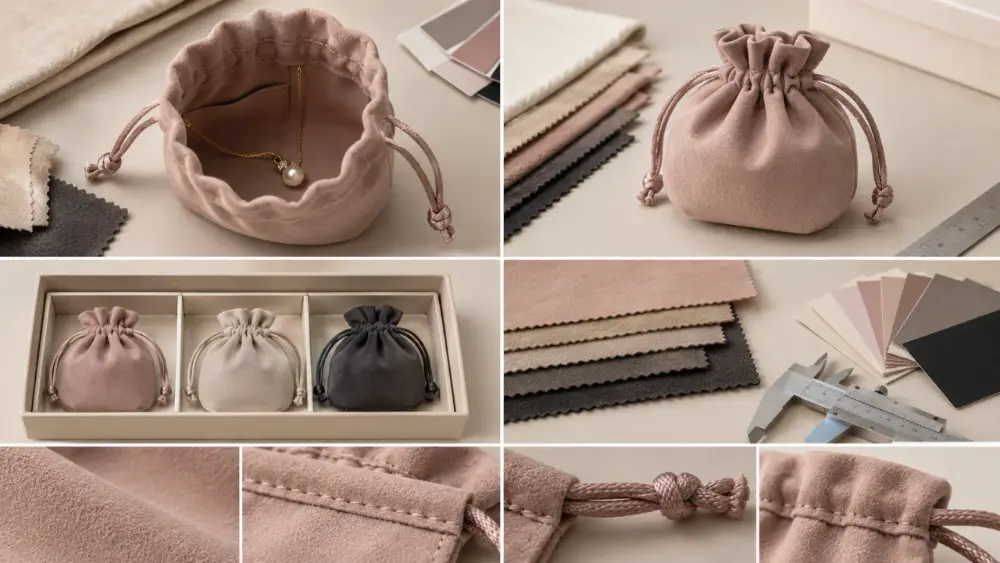
A custom pouch reorder can appear straightforward, yet the original order details may become hard to trace over time. Artwork may sit in an old email thread, the product placed inside the pouch may have changed, or different team members may remember the earlier pouch differently. Instead of sending a brief “same as before” request, gather the previous approval records and document the current requirements. That process gives the buyer and supplier one shared basis for the reorder discussion.
Quick Summary
- Start with the latest approved specification, artwork, packing instruction, and retained reference sample when available.
- Reconfirm fabric, construction, dimensions, colors, closure details, logo instructions, quantity, and packing requirements.
- Ask the supplier which artwork and color references it currently holds for the project.
- Put every change into one revised specification document rather than spreading updates across emails or chat messages.
- Agree on a suitable sample, proof, photo review, or pre-production check when the pouch specification changes.
- Request a current quotation based on the present specification and commercial assumptions.
Start With the Last Approved Order Record
First, locate the records connected to the order your team approved and received. Collect the purchase order, approved artwork, specification sheet, quotation, sample photos, packing instructions, and written approval messages. If you kept a physical pouch from the earlier run, label it with the project or order reference and store it with those records.
An invoice alone rarely provides a complete reorder instruction. It may show only a general pouch description, quantity, and commercial terms. The product details that shape the finished item often appear elsewhere: an artwork proof, a measurement drawing, a sample approval email, or a message about a drawstring, lining, label, or ribbon.
Treat a repeat inquiry with the same care as an initial sourcing request. This guide on information a jewelry pouch manufacturer needs for an accurate quote can help buyers collect the main inputs before contacting a supplier. If the pouch includes a logo, review the checklist for custom jewelry pouches with logo before requesting a quote to organize artwork, placement, and color instructions.
When contacting YJXPACK, send the approved reference materials together with a short list of changes. This gives both sides a practical starting point for identifying which details can follow the earlier approval and which details need a fresh decision.
Reconfirm Material, Construction, and Dimensions
A material name does not always describe every feature that matters to the finished pouch. Fabrics sold under the same general name can differ in surface appearance, color tone, thickness, texture, or hand feel. Cords, ribbons, labels, linings, inserts, and hardware also need their own instructions when they form part of the product.
Avoid relying on a historical product name as the full specification. State the details that affect the current use case. For example, a pouch for a necklace may need different internal space from a pouch for earrings. A pouch intended for retail display may also need different individual packing from one that ships with ecommerce orders.
Use a side-by-side comparison before submitting the reorder request.
| Specification area | Previous approved order | Current reorder instruction | Buyer decision needed |
|---|---|---|---|
| Main fabric | Record the material description and any retained swatch reference | Repeat the material or name a proposed alternative | Confirm the required appearance and hand feel |
| Pouch construction | Note drawstring, flap, zipper, envelope, or other structure | Repeat or revise the construction | Confirm opening and closure function |
| Finished dimensions | List approved width, height, gusset, and other measurements | Repeat or revise measurements | Confirm fit for the current product |
| Colors | List exterior, lining, cord, ribbon, and label colors | Use the same references or provide new ones | Confirm which color reference controls |
| Added components | List lining, tabs, metal parts, inserts, labels, or sleeves | Keep, remove, or add components | Confirm material and placement details |
If sustainability information affects your buying decision, request documentation that relates to the specific material offered. Do not infer material attributes from a fabric name alone. The Textile Exchange offers industry resources on textile materials and responsible sourcing topics that may help teams frame their internal questions.
Verify Artwork, Color References, and Decoration Method
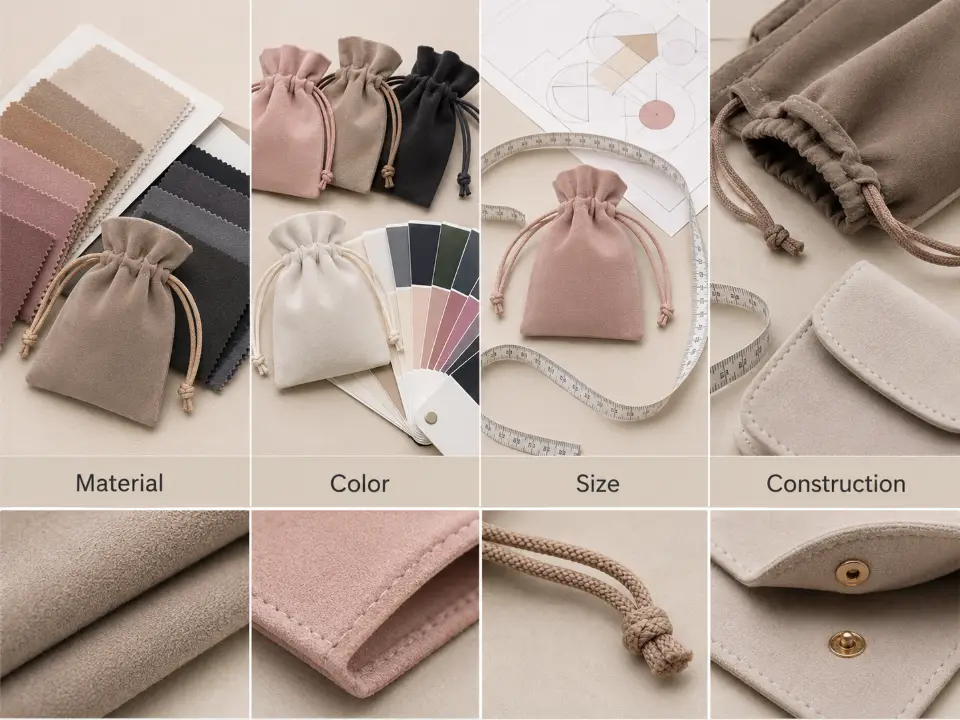
Artwork can drift during a reorder. Your team may have a newer logo version while the supplier still holds an older approved file. File names such as “final,” “final-new,” or “approved-2” do not provide enough control by themselves.
Send the current master artwork when available, preferably in a format suitable for the intended decoration process. Identify the file with a version date or internal brand reference. Then ask the supplier to confirm which file it plans to use. When the logo uses a defined color reference, include that reference in the specification sheet instead of leaving it only inside an image file.
Decoration method also deserves confirmation. Printing, foil application, embroidery, debossing, and other methods can produce different visual effects and may suit different materials. A change in decoration method counts as a specification change even when the logo artwork remains the same. The overview of custom jewelry pouch logo methods can support a method review before an updated quotation request.
Use the following table to make the approval request specific.
| Artwork checkpoint | What to provide or request | Why it matters |
|---|---|---|
| Master artwork file | Current artwork and version identifier | Reduces confusion between older and newer logo files |
| Logo position | Measurement or placement diagram from pouch edges or seams | Defines the intended logo location |
| Logo size | Width, height, or proportional size instruction | Avoids visual estimates alone |
| Color reference | Named brand color reference or approved visual reference | Gives both sides a documented comparison point |
| Decoration method | Confirmed method for the selected pouch material | Connects the logo instruction to the planned process |
| Approval record | Written buyer approval of a proof or sample, where agreed | Preserves the decision for future reorders |
A YJXPACK artwork discussion should separate a repeat logo from a revised logo. That distinction can affect the proofing discussion, sample decision, and quotation request.
Put Product, Packing, and Quantity Changes in One File
A reorder may include changes beyond the pouch itself. Your product dimensions may have changed. The retail team may need different individual packing. The warehouse may require a carton mark, barcode label, or a different inner-pack count. These operational details can affect how the order is prepared, packed, and checked.
Create one revised reorder specification instead of distributing changes across several messages. Mark each line as either “same as previous approval” or “changed for this reorder.” Add a revision date and name the person who can answer open questions. This document gives purchasing, product, logistics, and supplier contacts one working reference.
Include the requested quantity in the same document. A different quantity can influence pack counts, carton planning, and quotation assumptions. Mention a new packing preference or quantity adjustment early rather than waiting until freight discussions begin.
| Change category | Example of a clear instruction | Internal owner to involve |
|---|---|---|
| New pouch size | “Use the revised finished dimensions shown in the attached drawing.” | Product or merchandising team |
| New product use | “The pouch must fit the updated product set and insert.” | Product development team |
| Individual packing | “Pack each pouch according to the approved inner-packing instruction.” | Operations or fulfillment team |
| Carton marking | “Apply the buyer-approved carton mark format.” | Logistics team |
| Order quantity | “Quote based on the quantity shown in this revised specification.” | Purchasing team |
Choose an Appropriate Review Before Production Discussions Advance
Not every reorder needs the same review path. A recent order with complete records and no product changes may need only written reconfirmation or another check agreed by both parties. Material, color, artwork, dimensions, decoration method, construction, or packing changes usually create a stronger reason to review a sample, proof, photo, or other pre-production reference.
A sample review does more than repeat an approval step. It lets the buyer compare the revised item with the written requirements before the wider order proceeds. Check the pouch in its intended use. Place the actual product inside, test the opening and closure, review the logo position, and inspect the packing presentation when presentation matters to the brand.
For a structured process, consult the custom packaging samples step-by-step guide alongside your product-specific checklist. Store the final approval record with the updated specification so the next buyer can locate a clear reference.
Request a Current Quote and State Commercial Assumptions
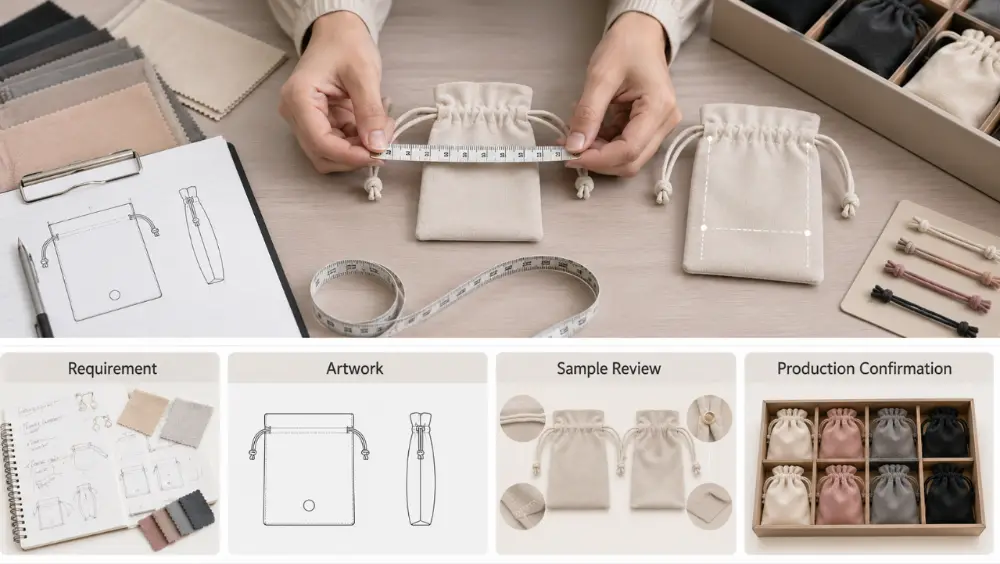
Request a quotation against the current specification and current quantity. A prior price can provide historical context, but it does not replace a current quote. Material selection, decoration, packing, order quantity, and shipping arrangements may differ from the earlier order.
Ask questions that connect each quotation item to a defined requirement. This approach helps your team compare the new quotation with the previous order and identify the source of any difference.
| Quotation topic | Question for the supplier |
|---|---|
| Material | “Is the quotation based on the material description and color reference in our revised specification?” |
| Quantity | “Does the quotation use the quantity shown in our purchase request?” |
| Logo work | “Does the quote reflect the confirmed decoration method, artwork size, and placement?” |
| Packing | “Which inner-packing and outer-carton requirements does the quotation include?” |
| Freight | “Please state the shipping basis and assumptions used for freight planning.” |
| Open items | “Which details still need buyer confirmation before we can finalize the order?” |
Before moving ahead, send YJXPACK the revised specification, approved artwork, requested quantity, packing instructions, and any sample feedback together. A complete request helps both sides identify open questions early and keeps the reorder discussion focused on the current requirement.
Frequently Asked Questions
Does every custom pouch reorder need a new sample?
No. The suitable review depends on the completeness and recency of the previous approval, plus any changes to material, color, logo, size, construction, decoration, or packing. Buyers and suppliers can agree on a suitable check for an unchanged reorder. Changes often justify a new sample or another pre-production review.
What records should I keep after approving a pouch order?
Keep the approved specification sheet, artwork file, color references, sample photos or physical reference, packing instructions, purchase order, quotation, and written approval record. Store them under one project or order reference so future team members can find the full history.
How should I describe “same as last time” to a supplier?
Reference the earlier order number or internal project code, attach the last approved specification, and list the details that remain unchanged. Add a separate section titled “changes for this reorder” so recipients can identify updates quickly.
Can a quantity change affect a pouch reorder?
Yes. A different quantity may affect packing plans, carton configuration, quotation assumptions, and production planning discussions. Include the requested quantity at the start of the inquiry and confirm it again before issuing a purchase order.
What should I approve before full production begins?
Approve the current specification, artwork version, logo method, dimensions, material and color references, packing instructions, quantity, quotation basis, and any sample or pre-production review that both parties agreed to use. Keep the approval in writing with the project records.
Share This Story, Choose Your Platform!