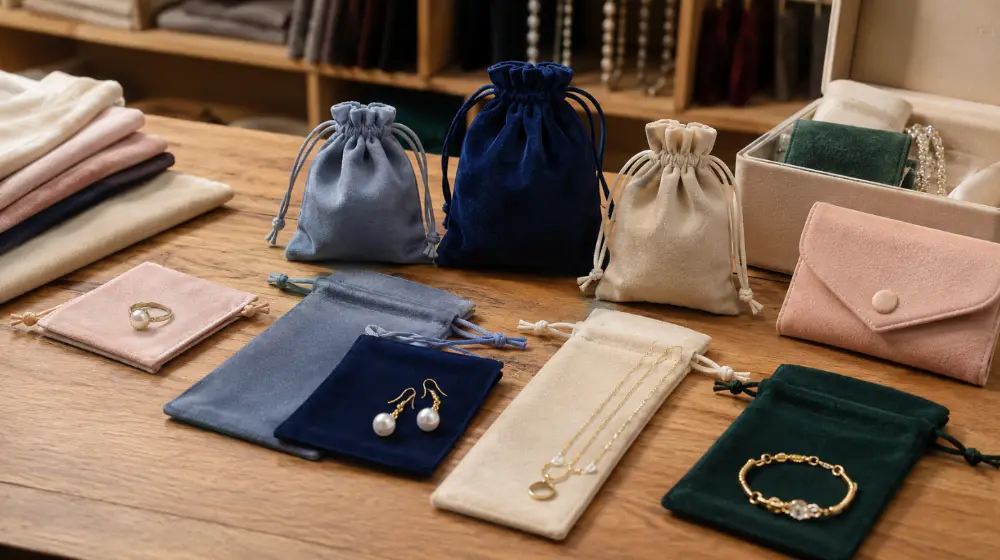
Custom jewelry pouches with a logo can help create a consistent presentation and storage experience, but a useful quotation starts with a clear product brief. If a buyer sends only a size and a material name, different suppliers may make different assumptions about the fabric, lining, logo process, packing, and finishing details. Those differences make quotations hard to compare. Before contacting YJXPACK or another pouch factory, define the points below so each supplier is pricing the same requirement.
Quick Summary
- Start with the jewelry item, the customer use case, and the pouch’s role in the order.
- Select the pouch style, closure, and interior layout before comparing material options.
- Specify the outer fabric, lining, and any protection-related requirement in writing.
- Provide finished dimensions, measurement points, and an acceptable size range.
- Match the logo method to the artwork, material, and intended visual result.
- List color references, cords, snaps, zippers, labels, and other components.
- State quantity by size or color, packing instructions, and destination requirements.
- Agree on samples, approval points, and inspection criteria before production begins.
1. Define the Jewelry Type and Intended Use
Start with the item that will go inside the pouch. A ring, pendant, bracelet, necklace, watch accessory, or earring set can need different space and handling. A pouch used for gift presentation may also have different priorities from one used only as an inner packing layer.
Describe the intended use in the RFQ. State whether the pouch will sit inside a rigid box, ship in a carton, appear at a retail counter, or accompany an online order. Also explain whether customers are expected to reuse it for storage. This information helps a supplier understand whether you need a flat pouch, room for a folded chain, a more structured format, or a closure that remains closed during normal handling.
A short product note can prevent avoidable assumptions. Include jewelry dimensions, its general shape, any sharp edges, and whether one pouch holds one item or a set. If your order covers several product lines, list the quantity for each pouch size rather than giving only one total quantity.
For a more detailed RFQ checklist, see what information a jewelry pouch manufacturer needs for an accurate quote. When you send an inquiry to YJXPACK, product photos and a simple drawing with measurements can make the requirement easier to review.
2. Choose the Pouch Style, Closure, and Interior Layout
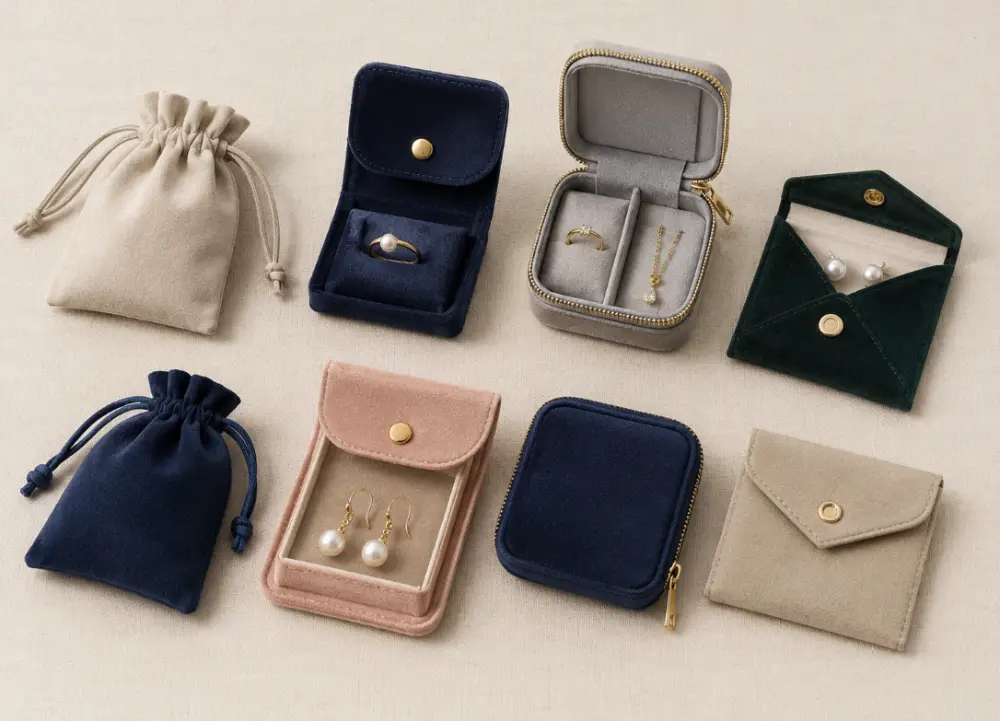
Pouch construction affects appearance, ease of use, and the work included in the product scope. Common formats include drawstring pouches, flap pouches, envelope styles, zipper pouches, and small bags with snaps or magnetic closures. Do not choose a closure only from a product image. Consider how the customer opens the pouch, whether jewelry may catch on the closure, and whether the pouch must fit inside another package.
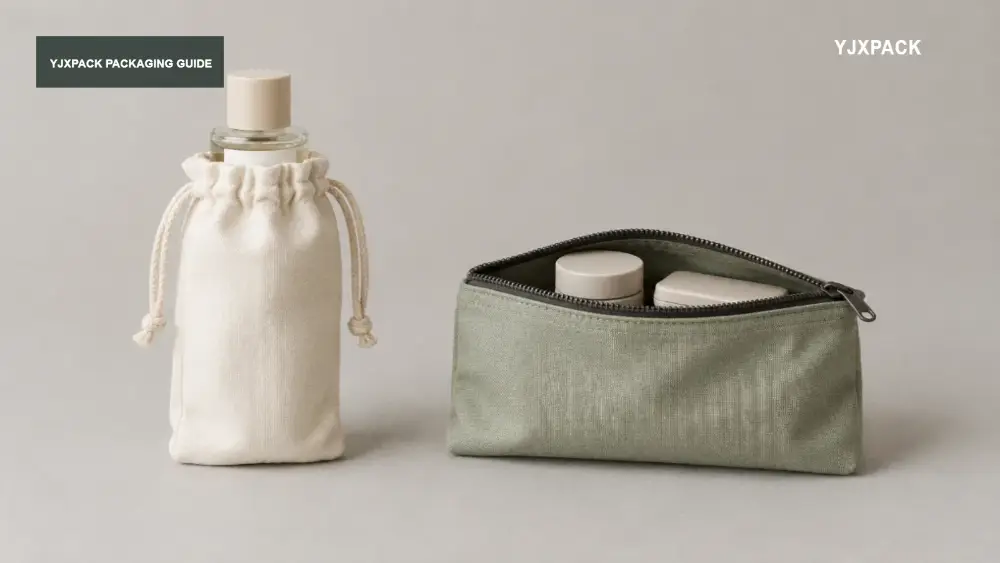
A drawstring design may suit a soft and flexible presentation. A flap can create a more defined opening. A zipper may help contain small loose pieces, while an envelope style can suit flat items. Review each option alongside the jewelry shape and the intended packing method.
Interior details deserve the same attention as the exterior. Your design may need a plain soft interior, a divider, a card pocket, a ring slot, a necklace tab, or no added structure. Describe every feature with a sketch, marked photo, or reference image. Terms such as “insert” and “lining” can mean different things to different suppliers.
For a comparison of two common styles, review drawstring vs. flap jewelry pouches: how to choose the right custom format for your brand.
3. Specify Material, Lining, and Protection Expectations
Material names alone do not create a complete specification. Terms such as velvet, microfiber, cotton, satin, and organza can refer to fabrics with different weights, textures, fiber content, backing, and finishes. Ask for material swatches or a sample when surface feel and color are important to your brand.
State the qualities that matter most for the project. You may prioritize a soft feel, a matte look, a visible weave, a smoother logo area, or low bulk for packing. If the pouch will hold plated jewelry, silver-colored items, or pieces with delicate surfaces, explain the concern without assuming that every lining provides a particular level of protection.
Some buyers ask for materials intended to support anti-tarnish storage. If this feature matters, ask the supplier to identify the specific material, its intended application, available care guidance, and any documentation it can provide for that material. Avoid customer-facing tarnish or protection claims unless you have support for the finished pouch and its intended use.
If fiber sourcing is part of your purchasing policy, request material information from the supplier instead of relying on broad labels. Textile Exchange offers resources that may help buyers understand fiber-related terminology and sourcing discussions. For a pouch-focused reference, see cotton bags for jewelry and gift packaging.
| Material Option | Questions to Ask Before Approval | Planning Consideration |
|---|---|---|
| Velvet-style fabric | What are the pile, backing, thickness, and available color options? | Consider it when a soft, plush-looking surface fits the presentation. |
| Microfiber-style fabric | What are the composition, surface finish, and logo compatibility? | Consider it when you want a smooth surface and a compact pouch profile. |
| Cotton fabric | What are the fiber content, fabric weight, and shrinkage handling approach? | Consider it when a natural-looking woven surface fits the brand direction. |
| Organza | How sheer is the selected fabric, and can jewelry edges catch on it? | Consider it for lightweight gift presentation when visibility is acceptable. |
| Satin-style fabric | What are the weave, thickness, and pull-resistance considerations of the selected fabric? | Consider it when a glossy surface supports the intended look. |
4. Set Finished Dimensions and Measurement Tolerance
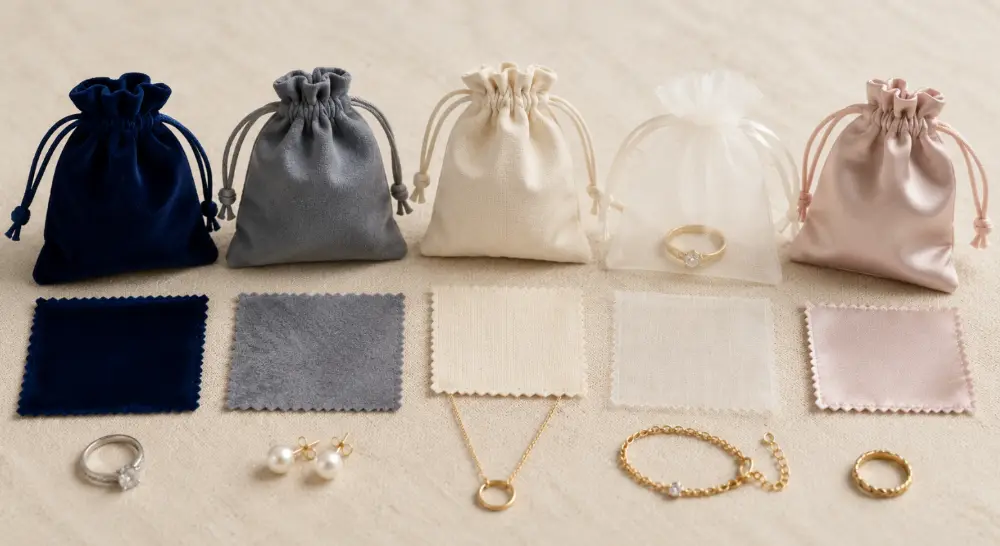
Measure the actual jewelry, not only an existing pouch or a product photo. Add room for the customer to insert and remove the item comfortably. For necklaces and bracelets, allow for the shape created when a chain is folded or arranged. For sets, measure the group of items together.
Your specification should identify the finished width and height, whether the pouch is measured flat, and any gusset or depth. Mark the position of a drawstring channel, flap, or zipper if that feature reduces usable interior space. A simple drawing with arrows and dimensions is often clearer than a long paragraph.
Fabric goods can vary slightly because cutting and sewing are involved. Instead of leaving this point open, state the tolerance your team can accept and identify the measurements that matter most. The pouch opening, logo placement, and usable interior space may be more important than an outside measurement alone.
| RFQ Measurement Field | What to State | Why It Helps |
|---|---|---|
| Finished width and height | Flat finished dimensions and unit of measure | Gives suppliers the same base size. |
| Usable interior area | Space available after seams, closure details, and channels | Reduces the risk that jewelry will not fit as intended. |
| Gusset or depth | Whether it is required and where it is measured | Clarifies space for thicker items or sets. |
| Logo position | Distance from an edge, center point, or seam | Helps review the layout before sampling. |
| Tolerance | Acceptable range for key measurements | Creates a clear inspection reference. |
5. Select a Logo Method and Supply Usable Artwork
The logo method should fit both the artwork and the selected fabric. Screen printing can suit simple artwork with clear solid areas. Embroidery adds thread texture but may not reproduce small lettering or fine detail clearly. Heat-transfer methods can be considered for certain artwork and material combinations. Foil or hot stamping may also be an option when the fabric and design are suitable.
Do not select a process from a product photo alone. Ask to review how your own artwork appears on the selected material. Fine lines, small type, gradients, metallic effects, and large areas of ink can change the result. Pouch color can also affect logo visibility.
Provide vector artwork when possible, along with brand color references, intended logo size, placement, and orientation. If you only have a raster image, tell the supplier its original file size and do not assume it will reproduce cleanly at every scale. Identify whether slight variation in color or texture is acceptable for your brand.
6. List Every Component and Color Decision
Small components can change a pouch specification in meaningful ways. Include drawstrings, ribbon, cord ends, snaps, magnets, zippers, labels, woven tags, hangtags, and decorative hardware in the RFQ. For each item, state the color, material preference, location, and whether it needs to match another element.
Use recognized color references when they are available, but remember that color can look different across materials and under different lighting. A paper chip, fabric sample, and screen image may not look identical. Base final approval on the agreed physical sample rather than a monitor view alone.
Packing is another important decision. State whether pouches should be individually packed, bundled by color or size, placed in protective bags, packed with barcode labels, or shipped without individual inner packing. If the destination market has buyer-supplied labeling or packaging requirements, provide them before the factory prepares a packing plan.
7. Make Quantity and Commercial Requirements Comparable
Quote comparisons work only when the quantities and scope match. Break down quantity by pouch size, color, material, logo version, and accessory combination. One total quantity can hide meaningful differences in the work needed for each variation.
Include the destination country or shipping point if you want a freight estimate. Where possible, ask suppliers to separate the pouch product scope from samples, packing, freight, duties, taxes, and other import-related costs. This approach makes it easier to compare quotations on the same basis. If you have a retail launch date, present it as a planning requirement rather than assuming a factory can meet it before it reviews the full specification.
A complete brief helps YJXPACK identify missing specification points early. Buyers should still compare the written scope, not only a headline amount. Check whether each quotation includes the same pouch construction, logo process, packing format, sample stage, inspection criteria, delivery terms, and stated exclusions.
8. Agree on Samples, Approval, and Inspection Criteria
Sampling is the point where a written concept becomes a physical reference. Before approving a sample, check size, construction, material feel, color, logo placement, closure function, and the fit of the actual jewelry inside the pouch. Photograph the approved sample and keep the file with the purchase order for later reference.
Set inspection criteria in clear and observable language. Instead of writing “no defects,” define what matters to your team: loose threads beyond an agreed limit, uneven logo placement, dimensions outside the agreed tolerance, closure problems, visible stains, missing components, or incorrect packing counts. The buyer and supplier can then review the same standards.
Finally, record who gives final approval and how changes will be confirmed. A revised artwork file, changed cord color, or different packing method should not exist only in an email thread. Add approved changes to the final specification or purchase order so the production reference remains clear.
FAQs
1. What should I send in a custom jewelry pouch RFQ?
Send product photos and dimensions, pouch style, finished size, material preference, lining requirement, logo artwork, logo location, color references, quantity by variation, packing instructions, destination, and any sampling or inspection requirements.
2. Should I choose the pouch size before selecting the closure?
Choose them together. The closure and seam construction can reduce usable interior space, so check the jewelry in a pouch layout that includes the intended closure.
3. Can I request an anti-tarnish jewelry pouch?
You can request a material intended for that purpose, but ask the supplier to identify the material, its limitations, care guidance, and any documentation available. Do not make customer-facing performance claims without suitable support.
4. Which logo file is most useful for pouch production?
A vector file is generally the most useful starting point because it can be scaled more easily. Also provide the intended logo size, placement, color reference, and any minimum-detail requirements.
5. How can I compare quotations from different pouch suppliers?
Use one written specification for every supplier. Compare material, dimensions, closure, logo method, components, packing, sample scope, inspection criteria, shipping terms, exclusions, and separately stated freight or import-related costs before comparing quoted amounts.
Share This Story, Choose Your Platform!