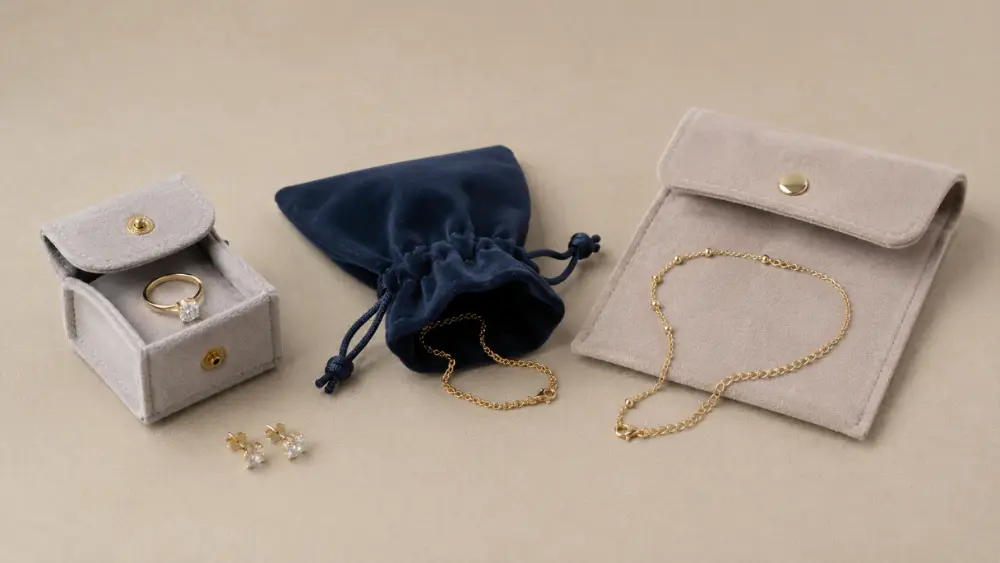
When you ask for a quote for custom jewelry pouches, the quality of the information you provide affects how useful the reply will be. Two suppliers may return very different prices because they are quoting different assumptions about fabric, size, closure, logo treatment, quantity, or packing. A clear request helps you compare like-for-like proposals and gives the manufacturer a better starting point for reviewing your project.
Quick Summary
- Begin with the jewelry item, its dimensions, and the role the pouch will play in your customer experience.
- Define the material, finished size, pouch structure, closure, lining, colors, and accessories as clearly as possible.
- Send logo artwork with the preferred method, placement, dimensions, and color requirements, but let the supplier confirm technical suitability.
- Include quantity, sample needs, packing instructions, and destination information in the original inquiry.
- Use one written specification sheet for every supplier so each quote covers the same pouch version.
Start With the Jewelry Item and Use Case
An accurate pouch quote starts with the item that will go inside it. A pouch for stud earrings has different space needs from a pouch for a necklace, bracelet, watch accessory, or coordinated jewelry set. State the jewelry category, approximate dimensions, and whether the pouch holds one item or several pieces.
If your range includes several product types, list each pouch size separately. Avoid broad descriptions such as small jewelry pouch when you can provide a width and height. You can also share a photo of the item beside a ruler or provide measurements in millimeters or inches.
Next, explain how the pouch will be used. For example, will it sit inside a rigid gift box, serve as a presentation pouch at a retail counter, or go inside an e-commerce shipment? This context helps the manufacturer understand whether your priority is a compact profile, easy opening, gift presentation, or bulk packing efficiency.
For category planning, the jewelry pouch packaging guide from YJXPACK can help buyers match pouch formats with jewelry presentation needs. The resource on sizing pouches by jewelry type is also useful when you need a starting point for rings, earrings, and necklaces.
Choose the Material, Lining, and Pouch Structure
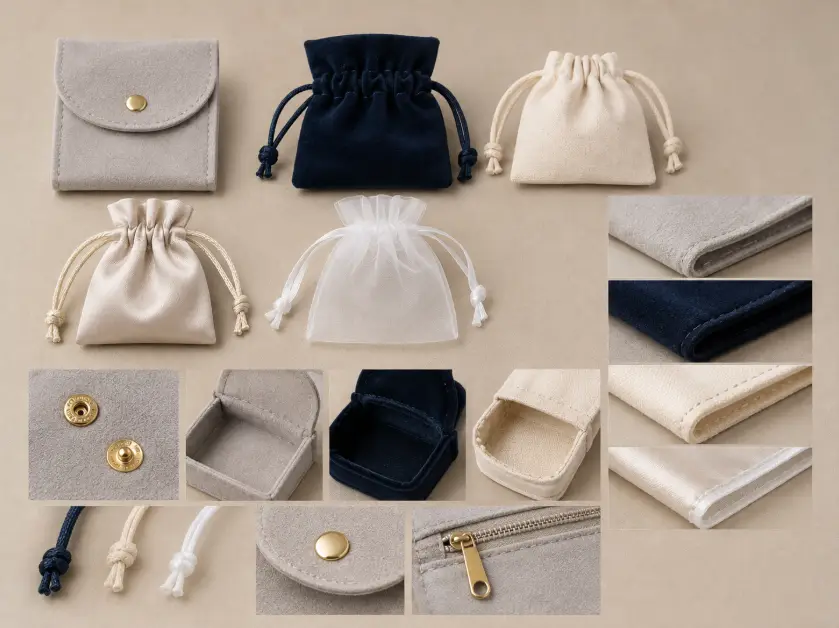
Material affects the pouch appearance, hand-feel, sewing approach, and logo options. YJXPACK develops custom fabric-pouch projects to customer specifications rather than offering only a fixed retail SKU catalogue. Depending on the design, relevant fabric options may include microfiber, velvet, cotton, organza, linen, jute, satin, and polyester. The final choice should match the jewelry item, intended appearance, closure format, and artwork requirements.
Microfiber may suit a smooth, contemporary presentation. Velvet can create a plush visual direction. Cotton may support a simple, natural-looking presentation, while organza can suit designs where visibility is part of the concept. Satin offers sheen, and linen or jute can provide a more textured look. Ask to review available material options before approving a final direction.
Lining should also appear in the quote request. State whether you need an unlined pouch, a lined pouch, or an inner material that requires review. Then identify the basic construction format:
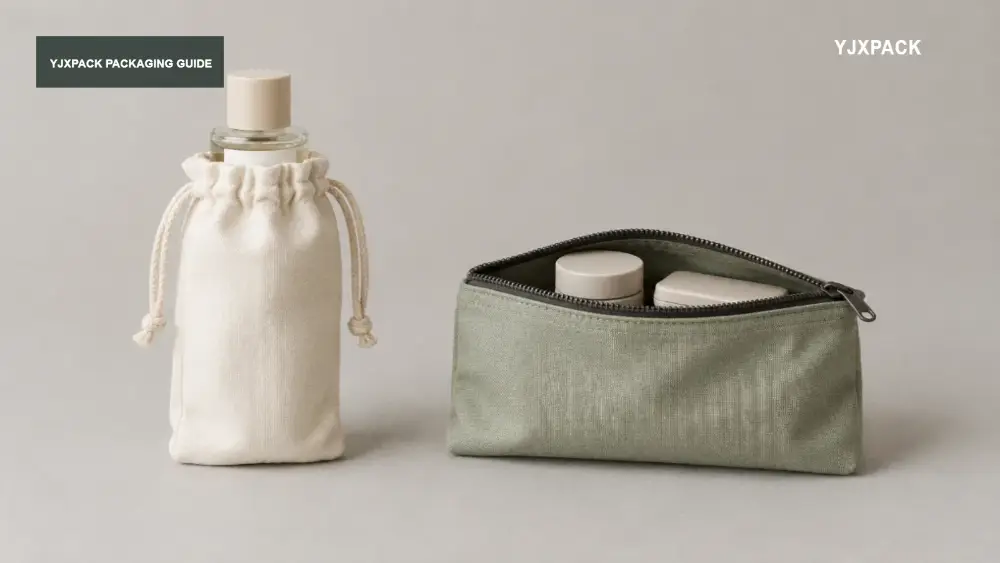
- Drawstring pouch
- Flap pouch with snap closure
- Envelope-style pouch
- Zipper pouch
- Another customer-specified format
Each structure involves different sewing steps and components. A flap pouch may require a defined flap depth, snap position, and snap color. A drawstring design needs cord material, cord color, channel size, and opening details. Add these points to the specification sheet instead of leaving them for a final revision.
Buyers comparing common jewelry pouch formats can review the microfiber versus velvet jewelry pouch comparison and the drawstring versus flap pouch comparison. These resources are planning references, not final approval for a specific fabric or logo combination.
Confirm Finished Size, Closure, and Accessories
Terms such as small, medium, and large are not enough for an accurate quote. Provide the finished pouch width and height, along with the unit of measurement. Clarify whether the dimensions refer to the outside flat size or usable internal space.
A reference sample can be helpful, especially when you want to match a general format. Include photos, measurements, and a short note explaining which details you want to retain or change. A photo alone may not show fabric weight, lining, seam placement, or closure construction.
Closure details deserve the same attention as size. For a drawstring pouch, specify the cord color and any preference for cord material. For a flap pouch, identify the snap color, approximate location, and preferred appearance if known. For a zipper pouch, note any zipper color or pull preference. The supplier can then review whether the requested closure works with the chosen material and dimensions.
List accessories individually. These may include ribbons, inner cards, hang tags, inserts, woven labels, metal labels, or branded cord ends. If an accessory appears in a reference image, do not assume it is included in the pouch quote. State whether you will supply it or ask the manufacturer to source it.
Select Logo Method, Artwork, Color, and Placement
A logo method should be reviewed with the fabric, artwork, logo size, and placement in mind. Available options may include silk screen, foil stamping, debossing or embossing, embroidery, silicone print, woven labels, metal labels, heat transfer, and heat-transfer film. Suitability needs confirmation for the specific material, artwork, and pouch area.
Send the clearest artwork file available. Vector artwork can be useful for printed or foil-logo discussions. Embroidery may require artwork review and digitizing. Include the intended logo width and height when possible, along with the exact placement. A centered front logo, flap logo, side-seam label, and interior card can require different production planning.
Color information should be equally specific. Provide a Pantone reference when one is available for the pouch, lining, logo, cord, or label. If you are working from a screen image only, state that clearly. The supplier may need to review available material colors or a sample before finalizing the direction.
The screen printing, heat transfer, and embroidery comparison for custom pouches can help your team prepare for artwork discussions. Final logo recommendations should follow a review of your own fabric, artwork detail, logo dimensions, and placement.
Quote Information Checklist
Put all key details into one request document. This approach gives each supplier the same information and makes it easier for your purchasing team to compare responses.
| Quote Input | What to Provide | Why It Matters |
|---|---|---|
| Jewelry item | Item type, approximate dimensions, and single item or set | Helps define pouch space and format |
| Pouch material | Preferred fabric and acceptable alternatives | Influences appearance, construction, and logo review |
| Lining | Unlined, lined, or preferred inner material | Clarifies the requested construction |
| Finished size | Width × height, units, and flat or usable measurement | Prevents different size assumptions |
| Closure | Drawstring, flap and snap, zipper, or another format | Affects sewing steps and components |
| Logo | Artwork, method preference, size, color, and placement | Allows technical review of the branding request |
| Quantity | Target quantity and possible repeat-order range | Supports more relevant quote planning |
| Packing | Bundling, inner bags, labels, cartons, or other instructions | Defines packing requirements |
| Destination | Delivery country or region, if relevant | Provides useful context for logistics discussion |
Compare Material and Construction Directions
Use the following table as a buyer planning tool. It does not mean every material, structure, and logo combination will work for every project. Confirm the final combination after the supplier reviews the full specification.
| Material Direction | Typical Visual Character | Construction Ideas to Discuss | Buyer Question to Ask |
|---|---|---|---|
| Microfiber | Smooth and modern | Drawstring or flap with snap | Is the requested logo size practical on this surface? |
| Velvet | Plush and classic | Flap with snap or drawstring | Does the selected pile and thickness suit the intended structure? |
| Cotton | Simple and natural-looking | Drawstring or label-led design | What fabric weight and weave are available for this size? |
| Organza | Sheer and decorative | Drawstring | Does a semi-transparent material suit the product presentation? |
| Satin | Smooth with sheen | Drawstring or flap format | How may the selected logo placement appear on this finish? |
| Linen or jute | Textured | Drawstring or label application | Can the artwork remain clear on the selected texture? |
| Polyester | Flexible appearance options | Drawstring, zipper, or another custom format | Which logo methods need review for this fabric finish? |
Compare Logo Options Before Approval
Do not select a logo treatment based on appearance alone. Ask the supplier to review the pouch material, artwork, intended logo dimensions, and logo location before you approve a production direction.
| Logo Method | Possible Visual Direction | Information Needed for Review | Key Consideration |
|---|---|---|---|
| Silk screen | Flat printed color | Artwork, ink color, size, and placement | Surface texture and fine details need review |
| Foil stamping | Metallic or matte foil effect | Artwork, foil color, size, and placement | Fabric and pressing area can influence the result |
| Debossing or embossing | Pressed or raised-looking texture | Artwork, dimensions, and material choice | The fabric structure needs assessment first |
| Embroidery | Stitched texture | Artwork, stitch area, and thread colors | Small details and surface area require review |
| Silicone print | Dimensional printed effect | Artwork, color, and placement | Confirm compatibility with the chosen fabric |
| Woven label | Sewn-in branded label | Label artwork, size, and seam location | Include the sewing position in the pouch drawing |
| Metal label | Attached metal branding element | Label shape, finish, and attachment plan | Confirm the attachment method and location |
| Heat transfer or heat-transfer film | Applied graphic or lettering | Artwork, color, size, and placement | Review fabric compatibility and artwork detail |
Include Quantity, Samples, Packing, and Timing
Quantity changes how a supplier reviews a custom project. Material purchasing, logo processing, assembly, and packing needs may differ between a small trial order and a larger repeat order. For custom projects, YJXPACK may work from an MOQ of 100 pieces, but the applicable minimum and final quote should be confirmed for the requested material, pouch type, logo method, and construction.
Ask about the sample process before approving bulk production. A sample can help you review finished size, material appearance, closure layout, logo placement, color direction, and overall presentation against the written brief. Once project details are confirmed, sampling may take about 1-3 days and bulk production may take about 5-7 days. These are planning references rather than unconditional commitments. Artwork questions, material availability, construction complexity, and approval timing can affect the actual schedule.
Packing belongs in the first inquiry as well. State whether pouches need individual packing, set bundling, inner bags, labels, or another instruction. Include the destination country or region when it is relevant to the discussion, so the supplier has the needed project context from the beginning.
Send a Clear Request for Quote
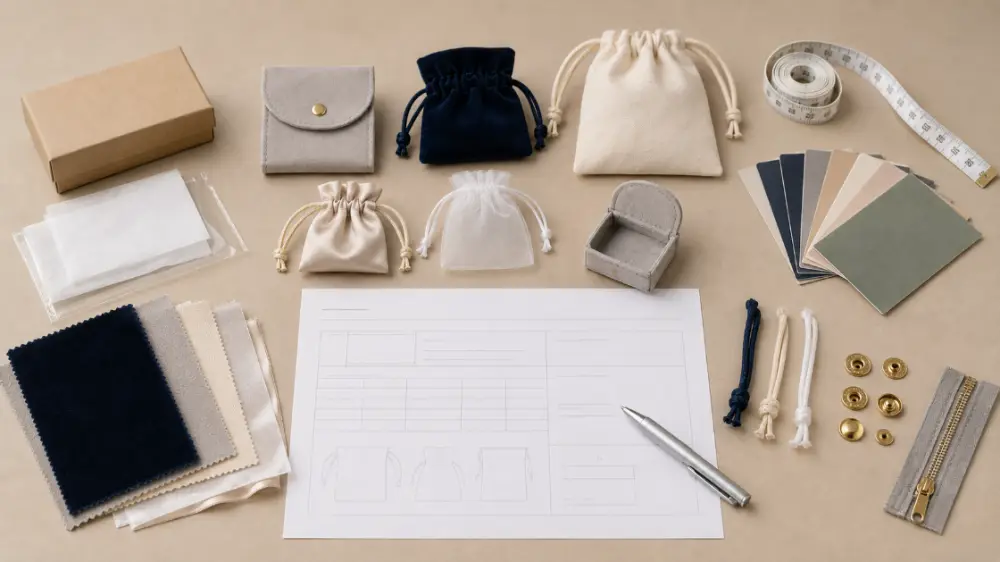
A strong request for quote is organized, complete, and easy to review. Attach reference images, but also provide the essential requirements in text or a table. This reduces the risk that a supplier interprets the image differently from your intended specification.
Before sending an inquiry to YJXPACK or another custom pouch manufacturer, check that you have included:
- Jewelry type and approximate item dimensions
- Preferred pouch material and acceptable alternatives
- Lining preference
- Finished pouch width and height, with units
- Pouch structure and closure type
- Logo artwork, color, size, method preference, and placement
- Required quantity
- Sample request and target approval date, if applicable
- Packing instructions
- Destination country or region, if relevant
After receiving a sample, compare it with the same written brief. Review the finished size, fabric appearance, stitching, closure operation, logo position, logo appearance, color direction, accessories, and packing instruction. If your brand plans to make material, environmental, or other product claims, make sure those statements are accurate and supported. The FTC business guidance is a useful reference for U.S. businesses reviewing advertising and product claims.
Frequently Asked Questions
What is the minimum information needed for a custom jewelry pouch quote?
Provide the jewelry type, pouch material preference, finished size, closure style, logo artwork and placement, and target quantity. Lining, accessories, packing instructions, and destination details can make the quote more accurate.
Why do custom jewelry pouch quotes vary between suppliers?
Suppliers may be pricing different assumptions. Material, size, lining, closure, logo process, accessories, quantity, and packing can all affect the project. A detailed written brief makes comparison more meaningful.
Can I choose a logo method before selecting the pouch fabric?
You can state a preferred method, but the supplier should confirm it after reviewing the fabric, artwork, logo size, and placement. Some artwork details or pouch locations may require a different approach.
Can I request a sample before placing a bulk order?
Yes. Sampling is a useful step for custom pouch projects. Confirm the sample scope, artwork status, material choice, cost, and timing with the supplier before proceeding.
What should I check when reviewing a jewelry pouch sample?
Check the finished dimensions, material appearance, lining, stitching, closure, logo size and position, color direction, accessories, and packing requirements against your approved specification sheet.
Share This Story, Choose Your Platform!