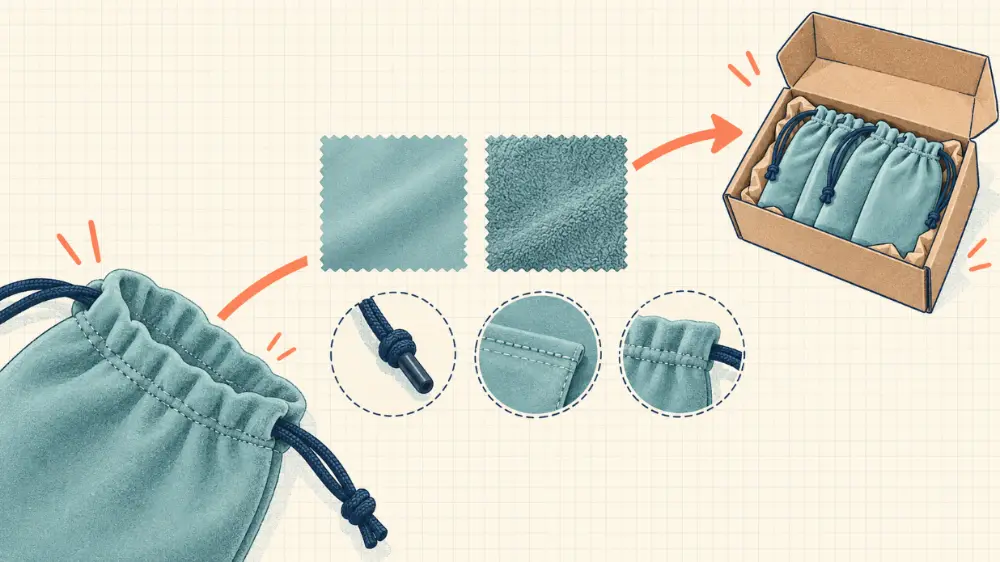
Brands use microfiber drawstring bags for jewelry, eyewear, electronics accessories, gift items, and retail packaging. They can provide a soft presentation and allow brands to add a logo or other identifying detail. However, “microfiber” is a broad material description. Fabric composition, weight, surface finish, lining, cord construction, and decoration method can all vary.
Quick Summary
- Microfiber drawstring bags can differ in fabric finish, thickness, lining, opacity, and surface feel, so buyers should not treat all microfiber pouches as the same item.
- Start with the product that will go inside the pouch. The supplier needs enough information to assess fit, construction, and closure needs.
- Screen printing, heat transfer, foil decoration, embroidery, heat pressing, and other logo options may be possible depending on the selected fabric and artwork. Confirm feasibility with the supplier and an approved sample.
- Cost, minimum order requirements, sampling arrangements, and production timing depend on the final specification.
- A written approval checklist helps buyers compare samples or bulk goods with the agreed artwork and specification.
A pouch that looks suitable in a product photo may not match the intended product, artwork, or packing process. This guide explains what to confirm before requesting a quotation, how construction and closure choices affect suitability, and how to create a clearer approval process with a supplier.
What to Confirm Before Sourcing Custom Microfiber Drawstring Bags
Before discussing price, prepare a specification that gives the supplier a clear basis for quotation. A request such as “soft pouch with logo” leaves important decisions open and can produce quotations for different materials or construction details.
Your initial buyer brief should cover:
- The item to be packed and its general shape, weight, and handling needs
- The pouch construction, such as flat, gusseted, single-layer, or lined
- The preferred closure approach, including one-cord, two-cord, ribbon, or another option
- The desired logo method, if known, or a request for suitable options to assess
- Available color reference materials and artwork files
- Packing and labeling requirements for shipment or retail handling
If you need help recording pouch measurements consistently, review how to measure a drawstring pouch. For category context, see what a microfiber bag is used for in jewelry, eyewear, and electronics. This drawstring cord guide can also help buyers identify cord details before sampling.
When requesting a quotation from YJXPACK or another supplier, provide the actual specification for the project. Confirm final construction, decoration method, and commercial terms against that specification. A complete brief reduces revisions and makes supplier comparisons more meaningful.
Microfiber Materials and Construction Options
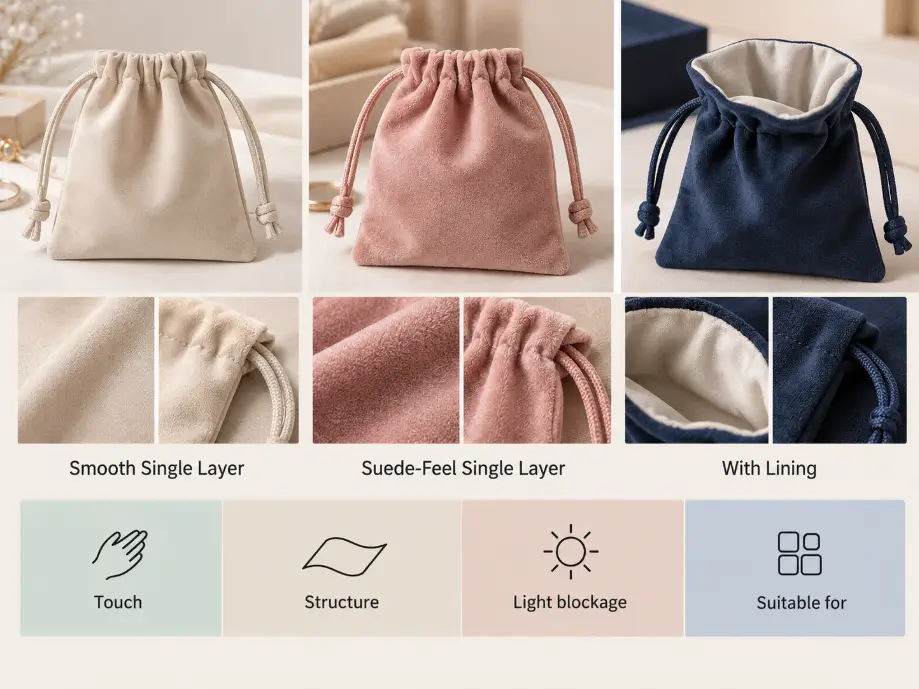
Microfiber commonly refers to a fine synthetic textile, often made with polyester or a polyester-based blend. The exact composition, weave or knit, backing, and finishing process may differ by material source. A smooth face, brushed finish, or suede-style appearance does not by itself define thickness, color consistency, print response, or abrasion behavior.
For fiber-labeling context, buyers can consult the U.S. Federal Trade Commission’s textile labeling guidance . When material feel or surface performance matters, request relevant material information and review a physical swatch or sample where available.
| Construction Option | Buyer Considerations | Common Packaging Uses |
|---|---|---|
| Smooth single-layer microfiber | Review seam visibility, opacity, and proposed print suitability | Small accessories, promotional items, gift packaging |
| Brushed or suede-style microfiber | Surface feel and shade can vary by source and finish | Jewelry, watches, premium presentation packaging |
| Lined microfiber pouch | Adds another layer and may change body, seam finish, and cost | Eyewear, accessories, structured presentation |
| Gusseted microfiber pouch | Provides added volume but requires product-fit review | Bulkier gift items or multi-piece sets |
Compare alternatives under the same viewing conditions. A velvet-like appearance does not mean two fabrics have the same thickness, construction, or suitability for the same logo process.
How Size and Drawstring Design Affect Product Suitability
Base pouch size on the actual packed product, not only on a catalog image or previous pouch project. A pouch may look proportionate when empty but be difficult to close once the item is inserted. Excess space can also affect presentation or allow the item to move during handling.
Provide the product or clear product measurements to the supplier. If the packed item has corners, protruding parts, multiple components, or protective wrapping, include that in the brief because these details can affect the pouch pattern and usable internal space.
Drawstring design also affects closure and use:
- A single drawstring gathers the opening toward one side and may suit certain lightweight pouch designs.
- A double drawstring gathers from both sides and can create a more centered closure, depending on construction.
- Review cord material, diameter, texture, knot style, and end treatment as part of the pouch design.
- Design the cord channel and seam arrangement with enough room for the selected cord to move as intended.
Confirm exact pouch dimensions, cord length, closure behavior, and fit through the agreed sampling process, preferably with the intended product or a representative product available for review.
Logo Printing and Artwork Decisions
Select logo decoration after reviewing the fabric surface and artwork together. A method that works on one microfiber material may not create the same appearance on another material with a different finish, color, backing, or texture.
Potential approaches may include screen printing, heat transfer, foil decoration, embroidery, or other methods offered by a supplier. Availability and appearance depend on the material and process. Do not assume that every microfiber fabric can accept every decoration method, especially for fine lines, small text, metallic effects, gradients, or large solid-color areas.
| Decoration Approach | Questions to Confirm Before Approval |
|---|---|
| Screen printing | Is the fabric surface suitable for the proposed ink system and artwork detail? |
| Heat transfer | Is the transfer method compatible with the selected finish? |
| Foil decoration | Can the selected fabric support the intended foil effect and coverage area? |
| Embroidery | Is the fabric construction suitable for stitching in the proposed location? |
| Heat pressing or textured effects | What result is feasible on the selected material? |
Terms such as “debossing,” “heat pressing,” and “foil stamping” should not be used interchangeably. They can involve different material and tooling conditions. Ask the supplier to identify the proposed process clearly and show how it appears on the selected fabric.
Provide editable artwork files where possible and include available color references. A digital proof can confirm layout and spelling, but it does not replace a physical sample when fabric feel, shade, texture, or decoration appearance is important.
Cost Factors, Minimum Order Requirements, Sampling, and Approval
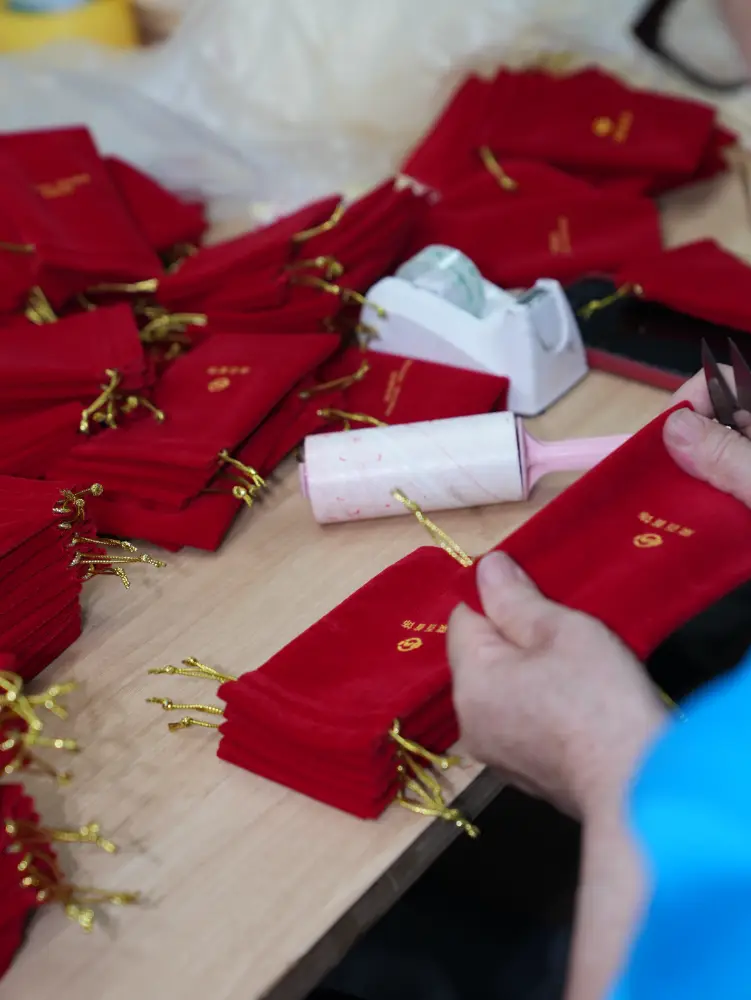
Fabric type, construction, lining, cord type, decoration method, packing requirements, and order quantity can all affect custom pouch pricing. Because these variables differ by project, online prices should not be treated as a quote for a specific order.
The selected material, color, logo process, and packing method can also influence minimum order requirements. Request current terms directly and ensure that each quotation describes the same specification you intend to approve.
A buyer can use the following process as a general framework:
- Submit a written brief covering product use, construction, artwork, color references, and packing needs.
- Ask the supplier to identify missing information, material options, technical limitations, and assumptions used for the quotation.
- Review artwork confirmation separately from any physical material or pouch sample.
- If a physical sample is needed, clarify what it represents and which details it can verify.
- Record requested changes in writing and confirm the final approved specification before authorizing bulk production.
Do not assume that a digital layout, material swatch, development sample, pre-production sample, and bulk-production reference are the same thing. Clarify which document or sample serves as the final production reference.
Quality Control Checks Before Production and Shipment
Build a quality-control checklist around the approved specification and sample. Identify what the team checks, how it checks it, who reviews it, and what outcome is acceptable. A visual review can identify obvious issues, but it does not replace a defined performance test where a specific claim matters.
| Checkpoint | What to Compare | Buyer Action if It Matters |
|---|---|---|
| Fabric and color | Approved material and color reference under agreed viewing conditions | Define the reference and acceptable variation before production |
| Pouch construction | Seams, lining, gussets, cord channel, and overall shape | Use the drawing or approved sample as the reference |
| Drawstring function | Cord routing, knots, end treatment, and opening movement | Specify intended use and inspection method |
| Logo appearance | Placement, artwork accuracy, registration, and visible surface effects | Approve artwork and a relevant physical sample where needed |
| Packing | Piece counts, protective packing, labels, and carton instructions | Provide written requirements before shipment preparation |
For print, foil, or other decoration, an informal handling observation may identify visible surface issues, but it does not establish formal adhesion, durability, or performance compliance. If a project requires a specific test method or acceptance standard, state that requirement in advance and ask what documentation or verification is available.
Keep one approved reference file that combines pouch construction, material description, artwork version, packing instructions, and inspection points. This makes it easier to compare quotations, samples, and delivered goods against the same agreed information.
Conclusion
Custom microfiber drawstring bags are easier to source when buyers define the product, material, construction, closure, logo process, and packing requirements clearly. Ask specific questions early, review relevant samples, and document final approvals in writing.
Whether you work with YJXPACK or another custom pouch supplier, avoid selecting a pouch only because it looks soft or premium in a photograph. Confirm the selected fabric, closure construction, proposed logo process, and final production reference before approving bulk production.
FAQ
1. What information should I send when requesting a quote for microfiber drawstring bags?
Send details about the item being packed, desired pouch construction, closure style, artwork, color reference materials, and packing needs. If some details are undecided, state that clearly and ask which options need confirmation before quotation.
2. Can every microfiber pouch use screen printing, foil, embroidery, or a pressed logo effect?
No. Decoration feasibility depends on the selected microfiber surface, fabric construction, pouch color, artwork detail, and supplier process. Ask the supplier to confirm the proposed method for the actual material and review a relevant sample if the logo finish is important.
3. Is a digital mockup enough to approve a custom pouch?
A digital mockup is useful for checking artwork layout, text, and approximate placement. It does not fully confirm fabric feel, color appearance, pouch construction, closure function, or the final appearance of a decoration method. Confirm which items require physical sample approval.
4. How should I check quality before bulk shipment?
Compare goods with the approved specification and reference sample. Check material appearance, construction, drawstring assembly, logo placement, and packing. If you require a particular performance test or acceptance standard, define it in writing before production rather than relying on a general visual inspection.
5. What affects the final price and minimum order requirement for a custom microfiber pouch?
Material selection, pouch construction, lining, cord details, decoration method, packing requirements, and order quantity can all affect commercial terms. Request current quote and minimum order information from the supplier for the confirmed specification.
Share This Story, Choose Your Platform!