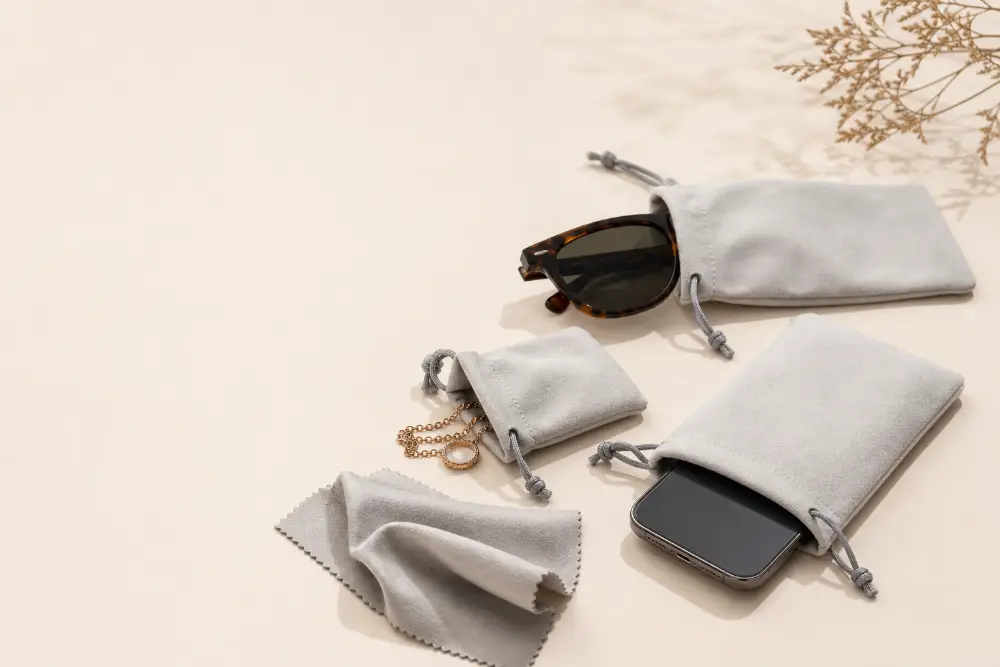
A microfiber bag, also called a microfiber pouch, is a soft fabric package made with very fine synthetic fibers. It is often considered for jewelry, eyewear, watches, camera accessories, earbuds, cables, and other small items with polished or easily marked surfaces. A pouch can support a clean product presentation and create a soft barrier between an item and nearby products during storage or transit. Still, the word *microfiber* alone does not define the final pouch. Fabric construction, thickness, closure, seams, logo method, and the item’s dimensions all matter.
Quick Summary
- Microfiber refers to very fine fibers, not one fixed pouch specification. Polyester and polyester-polyamide blends are common, but composition and construction vary.
- A clean, suitable pouch can serve as a soft contact layer for items such as jewelry, lenses, watches, and compact accessories. Dirt or abrasive particles can still mark surfaces.
- Buyers should choose the material and construction around the product, shipping journey, brand presentation, and any protection requirements.
- Screen printing, heat transfer, embroidery, and foil-style decoration may be considered, but the selected fabric and artwork need sample review.
- A useful inquiry includes product measurements, pouch dimensions, closure style, artwork, expected quantity, destination, and packaging or inspection requirements.
Start With the Product and Shipping Journey
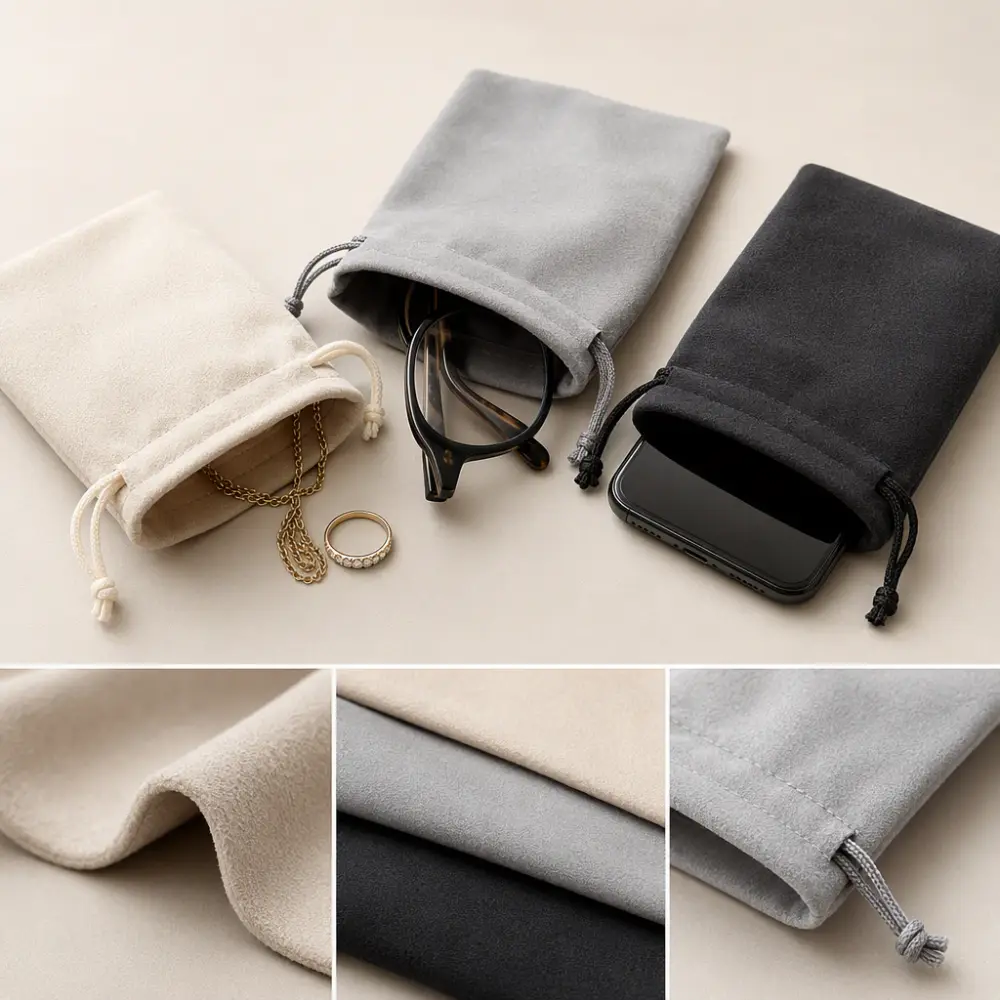
Begin by defining what the pouch needs to do. A pouch for a ring needs a different opening and shape from one for sunglasses. Earbuds may need room for a charging case, while a camera accessory may need a closure that helps keep dust out during storage.
Record the product’s length, width, depth, edges, moving parts, and included accessories. Then consider how it will move through the supply chain. Will it sit inside a rigid gift box? Will it travel in an e-commerce mailer? Will it be placed loose in a larger retail set? These details affect whether a single-layer pouch, lining, flap, drawstring, zipper, divider, or separate protective packaging is appropriate.
For a broader planning framework, review this jewelry pouch packaging guide. It can help buyers compare fit, presentation, branding, and product-contact needs before they request a sample.
The intended end use also matters. A pouch used once for gift presentation may have different requirements from one intended for daily storage, travel, or occasional cleaning. Define that use early so the supplier can discuss suitable material and construction options.
What Microfiber Means in Pouch Packaging
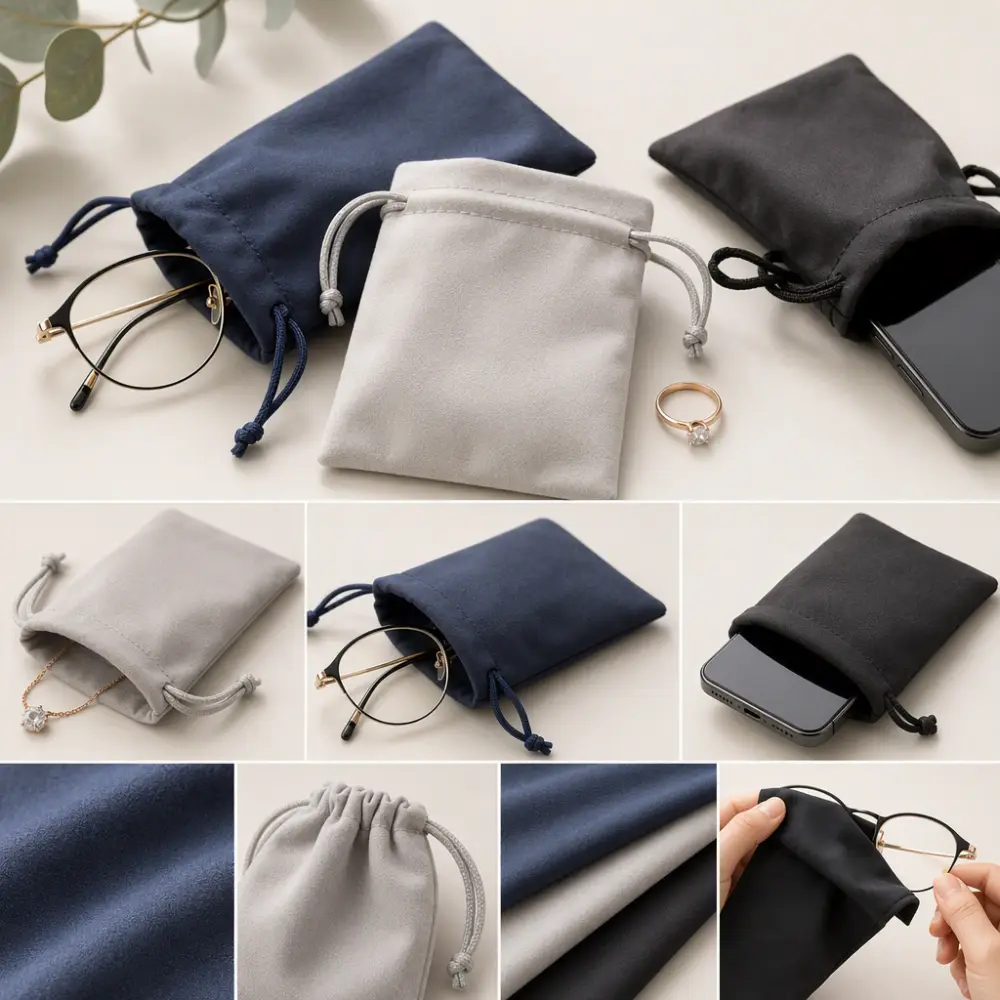
Microfiber describes fiber fineness rather than a single fabric grade. Suppliers may use different fiber blends, knitting or weaving methods, finishes, backing layers, thicknesses, and colors. Two pouches called microfiber can therefore feel and behave differently.
Many microfiber fabrics have a smooth, dense surface and may show less visible lint than some plush materials. This can make them a practical option for products that benefit from a soft layer, including polished metal, glass, coated lenses, and small electronic accessories. A soft pouch does not replace product-specific protection when an item needs impact resistance, moisture control, anti-static packaging, or protection from sharp components.
Cleanliness remains important. Dust, grit, loose metal particles, or damaged stitching can create abrasion regardless of the pouch fabric. For eyewear and lens-related items, buyers should define handling and packing expectations before the pouch reaches the product.
Material comparison should happen before a logo process is selected. This cotton, linen and velvet pouch material guide offers useful context when a buyer is comparing a smooth synthetic look with natural or plush alternatives. If a brief includes recycled-content or other textile claims, consult the guidance from Textile Exchange and ask for documents that apply to the specific offered material.
Microfiber Compared With Other Pouch Materials
Material selection affects both product contact and brand presentation. Velvet can create a plush look. Cotton and linen can provide a natural texture. Organza focuses more on visibility and decoration than surface protection. Microfiber often suits projects that need a smoother, more technical-looking pouch.
| Material | Typical Look and Feel | Buyer Checks | Common Uses |
|---|---|---|---|
| Microfiber | Smooth, soft, often matte | Confirm composition, thickness, surface cleanliness needs, and logo compatibility | Eyewear, jewelry, watches, small accessories |
| Velvet | Plush with a raised pile | Check pile direction, lint expectations, color appearance, and product placement | Gift-oriented jewelry and presentation packaging |
| Cotton or linen | Natural and textured | Review weave openness, print detail, color consistency, and shrinkage expectations where relevant | General retail pouches and natural-style packaging |
| Organza | Sheer and decorative | Confirm seam strength and recognize its limited cushioning and surface protection | Favors, gift sets, and display packaging |
A table cannot replace a physical review. Request swatches or samples in the intended color and construction. Also ask whether the proposed logo treatment changes the fabric feel, flexibility, or visible finish.
Choose a Closure and Construction That Match Use
A drawstring pouch offers a familiar opening and works with many jewelry and accessory formats. A flap can create a more structured presentation. A zipper may help contain loose items. Each choice changes how the user handles the pouch and how the product sits inside it.
Use the following questions when creating a specification:
- Does the product need quick access, a more contained closure, or both?
- Could a drawstring contact or rub against the product during transit?
- Is an inner pocket, divider, flap, or lining needed?
- Will the customer open and close the pouch frequently?
- Does the item need foam, a rigid box, anti-static packaging, or another protective component beyond soft fabric?
YJXPACK can use the product dimensions, preferred closure, and intended use as a starting point for a pouch specification discussion. The buyer should approve the actual sample before a bulk order, especially when fit, logo position, or contact with delicate surfaces matters.
Logo Methods: Questions to Ask Before Sampling
Choose a logo method based on the artwork, selected fabric, and intended appearance rather than a product photo alone. Fine lettering, large solid areas, metallic finishes, gradients, and multi-color artwork can reproduce differently on a soft synthetic surface.
| Logo Method | Typical Appearance | Questions to Ask | Often Considered For |
|---|---|---|---|
| Screen printing | Flat-color artwork | Will fine text remain readable? How many colors are needed? | Bold marks and simple artwork |
| Heat transfer | Detailed printed image | How will the decoration feel and flex on the pouch? | Detailed or multi-color designs |
| Embroidery | Raised stitched detail | Is the fabric stable enough? Is lettering large enough for stitching? | Larger wordmarks and textured branding |
| Foil or hot-stamp effect | Reflective or metallic look | Does the selected fabric accept the process? Will small details reproduce clearly? | Selected decorative treatments |
Buyers can compare common decoration considerations in this guide to silk screen, heat transfer and embroidery. A visual proof or physical sample is useful when logo scale, color matching, placement, or small lettering is important.
Size Planning for Jewelry, Eyewear, and Electronics
Start with finished product measurements, then allow enough room for insertion and removal. Do not select a pouch size from a product category name alone. A thick watch, a necklace with a large pendant, and oversized sunglasses may all need more room than an assumed standard size.
| Product Category | Starting Size Consideration | Useful Specification Notes |
|---|---|---|
| Rings and earrings | Small pouch with limited extra space | Check whether posts, clasps, or stones can catch on seams |
| Bracelets and necklaces | Wider or deeper pouch | Allow room to reduce tangling and accommodate a card or insert |
| Eyeglasses and sunglasses | Length based on the frame and any case | Check lens clearance, temple-arm fit, and opening width |
| Watches | Space for case diameter and strap | Consider a divider or extra layer when product contact is a concern |
| Earbuds and cables | Size based on the charging case and accessories | Confirm closure security and avoid pressure on connectors |
These are planning points, not fixed dimensions. YJXPACK should receive the actual product measurements, a dimensional drawing, or a product sample where practical before a buyer finalizes pouch dimensions.
Requesting a Clear Quote and Sample
A detailed request can reduce unnecessary revisions. Include finished pouch dimensions, fabric color, material description, closure type, logo artwork, logo position, expected quantity, packaging needs, and destination country. If color is important, clarify whether the reference is a physical sample, color standard, or digital file.
Do not assume that suppliers use the same fabric weight, seam allowance, drawstring material, packing method, or inspection approach. Ask what the quoted specification includes and which points require separate confirmation. Pricing, sample charges, minimum order quantities, shipping arrangements, and timing depend on the selected design and current conditions, so request those details in writing for the specific inquiry.
During sample review, check more than overall appearance. Review product fit, seam alignment, opening function, drawstring ends, logo readability, color appearance under normal lighting, loose threads, and residue. If the pouch will contact lenses or polished products, inspect the fabric surface for particles before testing it with the item.
Quality Checks to Discuss Before Bulk Approval
List inspection expectations in the purchase specification. Depending on the project, the buyer may ask to review pouch dimensions against agreed tolerances, stitching consistency, closure operation, logo location, color against an approved reference, quantity, and packing configuration.
The required checks depend on the product and destination market. A pouch used with a delicate lens may need more careful housekeeping expectations than one used only as an outer gift package. Electronics may need anti-static, impact-protection, or moisture-management measures that a soft microfiber pouch alone does not provide.
Rather than assume a particular quality system, ask for a written description of proposed inspection steps. Buyers developing their own supplier requirements can consult general quality-management information from ISO . YJXPACK can review the agreed specification, approved sample, and stated inspection points during order discussions.
Care and End-User Instructions
If the pouch will remain with the end customer, provide care guidance that matches the actual fabric and logo treatment. Some microfiber fabrics may tolerate gentle cleaning, while prints, foil, embroidery, coatings, trims, and some colors can change in appearance after washing. Confirm care guidance for the selected sample instead of relying on generic instructions.
Simple customer guidance can be useful: keep the pouch free from grit, avoid harsh chemicals, and do not use a visibly dirty pouch to wipe lenses or polished surfaces. Brands that need a longer insert can refer to this guide to cleaning and caring for jewelry pouches.
Frequently Asked Questions
Is microfiber the same as suede or velvet?
No. Microfiber refers to very fine fibers used in a fabric. Velvet has a raised pile. Natural suede is generally a leather material with a napped surface, while faux suede may be made from synthetic fibers. Material names alone do not confirm the same construction, feel, or use.
Can a microfiber pouch protect jewelry or lenses from scratches?
A clean, soft pouch can provide a useful barrier against contact with nearby items. It cannot prevent every type of damage, and dirt or abrasive particles on the pouch can still mark a surface. Test the selected material with the actual product before approval.
Are microfiber bags washable?
Care depends on the fiber blend, finish, color, trims, and logo method. Ask for care guidance for the approved pouch sample. Washing may affect some decorative processes or change the appearance of certain constructions.
Do microfiber pouches work for electronics packaging?
They can serve as a soft presentation or storage layer for small electronics and accessories. They may not provide the impact, moisture, or anti-static protection required for every electronic product, so those needs should be defined separately.
What information should I send YJXPACK for a custom microfiber pouch inquiry?
Send product dimensions, desired pouch dimensions, fabric preference, color, closure style, logo artwork, logo position, expected quantity, destination country, and any packaging or inspection requirements. A product sample or clear dimensional drawing can also help confirm fit.
Share This Story, Choose Your Platform!