Custom garment bags sit at the intersection of garment handling, brand presentation and logistics efficiency. An apparel brand sourcing these bags faces a specification chain where each decision—dimensions, hanging features, closure method, folding format, logo technique and sales-channel requirements—affects the next. Getting the sequence wrong can lead to samples that do not fit the garment, bags that do not work with retail fixtures, or a decoration result that is unsuitable for the intended handling.
This guide walks through the specification variables that shape a custom garment bag order, explains general selection logic for each variable and identifies which details must be confirmed with your factory against the final brief during quotation. Material availability, construction options, artwork limits, MOQ, sampling, pricing and documentation are all factory-dependent and should be treated as confirmation items rather than assumptions.
—
Garment Bag Use Cases: Display, Transport and Retail Packaging
A garment bag is not a single product category. The intended use determines nearly every specification downstream. Before discussing materials or closures, buyers should classify the primary function of the bag within their supply chain.
Display and showroom bags
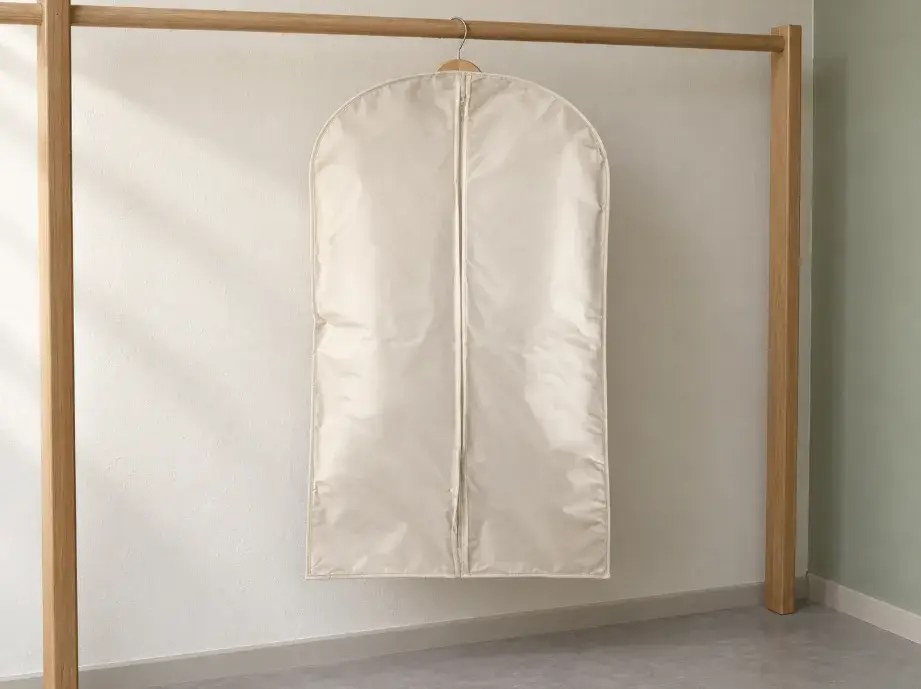
Showroom garment bags can provide a handling and presentation layer for samples between appointments and during trade-show transport. They typically cover the full length of the garment on a hanger. Key requirements include:
- A hanging hole or open top that accommodates standard garment hangers
- A transparent window or full-length zipper so buyers can view the garment without removing it
- Dust resistance rather than heavy impact protection
- Reusable construction—showroom bags may circulate for months
Transit and warehouse bags
These bags travel inside cartons between the factory, warehouse and distribution center. Within a suitable outer-carton, packing and storage system, they may help reduce garment exposure to dust and incidental contact during bulk shipment. Requirements differ from showroom bags:
- Lighter-weight material is often acceptable because the outer carton provides structural protection
- A sealed or folded closure keeps dust out without the cost of a zipper
- Hanging features may not be needed if garments ship folded in cartons
- High quantities per order, since every unit in a production run may need one
Retail and direct-to-consumer bags
When the garment bag reaches the end customer—inside a retail shopping bag, inside an e-commerce mailer, or as part of a gift set—it becomes part of the brand experience. Requirements shift again:
- The bag material, finish and logo must match brand guidelines
- Size should fit the garment snugly without excessive excess fabric
- Closure should be easy for the customer to open and reclose
- The bag may be designed for reuse as a storage cover at home (for example, for suits, coats or wedding dresses), subject to the garment and storage conditions
Many brands need more than one format. A single apparel line might use a lightweight non-woven transit bag for warehouse protection and a branded cotton or canvas bag as a retail packaging insert. Defining the use case first prevents over-specifying (and overpaying) for transit bags, and under-specifying for retail-facing bags.
—
Material, Construction and Protection Variables to Confirm
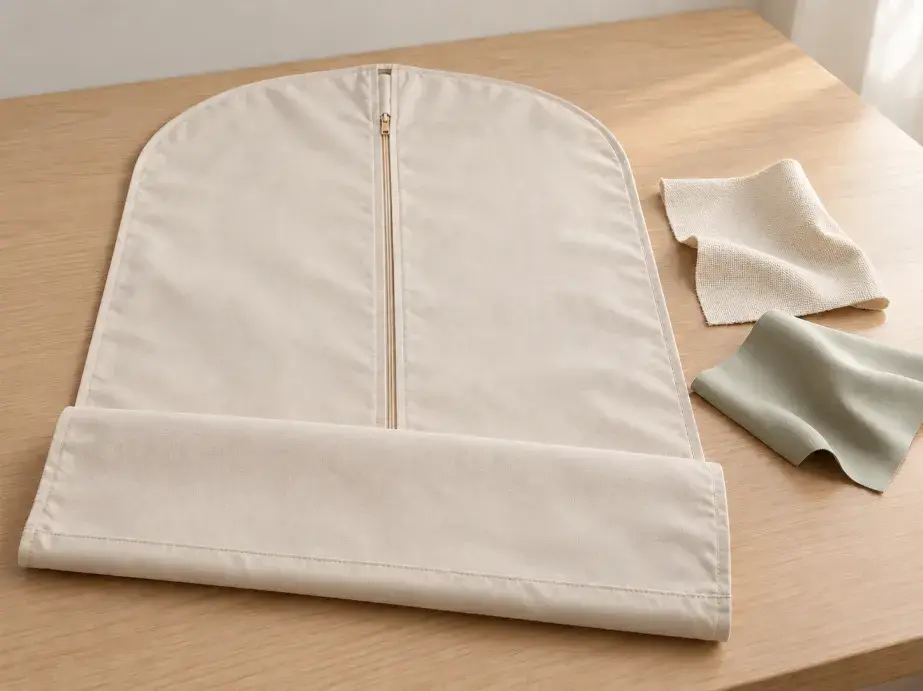
Material choice drives cost, hand feel, printability and the handling conditions the bag may suit. The table below is a directional comparison of common garment bag materials. Actual behavior depends on the exact fabric, coating or laminate, closure, outer packaging and storage conditions, so specific fabric weights, finishes and availability should be confirmed with your factory and sample.
| Material | Typical feel | Dust-handling direction | Moisture-exposure direction | Logo compatibility to assess | Common use case |
|---|---|---|---|---|---|
| Non-woven polypropylene (NWPP) | Light, slightly papery | Basic to moderate | Limited unless a confirmed laminate is used | Screen print or transfer may be assessed | Transit, warehouse |
| Cotton or cotton-canvas | Soft, natural | Basic to moderate | Limited | Screen print, embroidery or foil may be assessed | Retail, gift, storage |
| Polyester or nylon | Smooth, durable | Basic to moderate | Depends on weave and finish | Screen print, heat transfer or DTF may be assessed | Showroom, travel, retail |
| Film-based material | Smooth, film-like | Depends on closure and construction | Depends on material specification | Print feasibility to be confirmed | Travel, suit storage |
| Muslin | Light, natural weave | Limited to moderate | Limited | Screen print or stamp may be assessed | Lightweight retail, natural-material positioning |
Construction details that affect the final bag
Beyond the shell fabric, several construction variables change both the specification and the quote:
- Seam type and finish. Overlocked edges and bound seams create different edge appearances and may suit different fabric types. Confirm which seam finish your factory offers for each material and review it on a sample.
- Gusset or no gusset. A gusset (an expansion panel on the sides and bottom) adds depth so the bag can hold bulkier garments like winter coats or suits without compressing them.
- Lining. Most garment bags are unlined. However, some retail or luxury applications add a thin lining for a more finished interior. Lining adds cost and weight.
- Reinforcement. Hanging holes, zipper ends and handle attachments are stress points that may require a reinforcement approach. Agree the construction and any evaluation method on the approved sample.
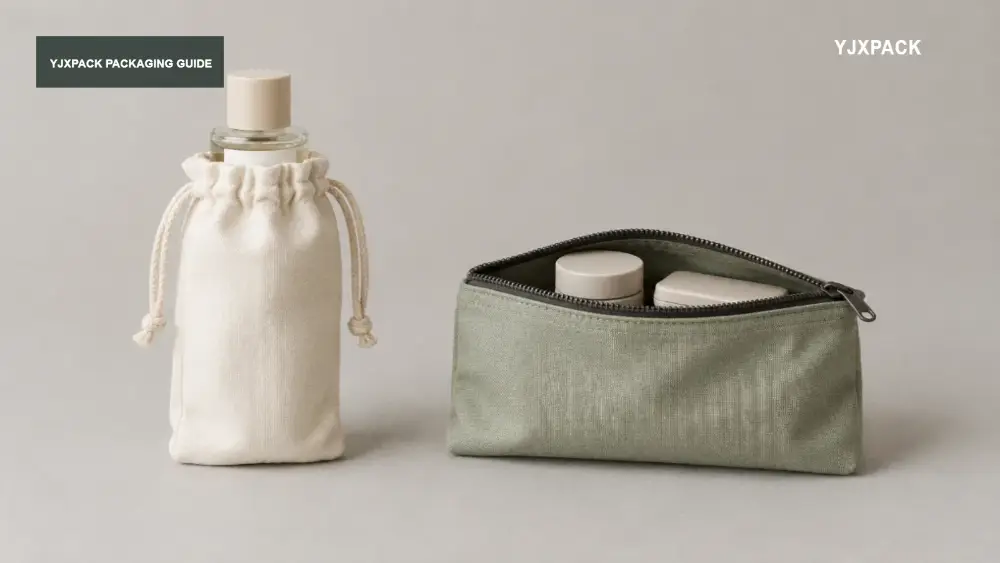
For brands exploring cotton or muslin options, the cotton fabric weight and pouch construction guide covers how fabric weight (measured in GSM—grams per square meter) influences durability and printability.
—
How Should Buyers Choose Dimensions, Hanging Features and Closures?
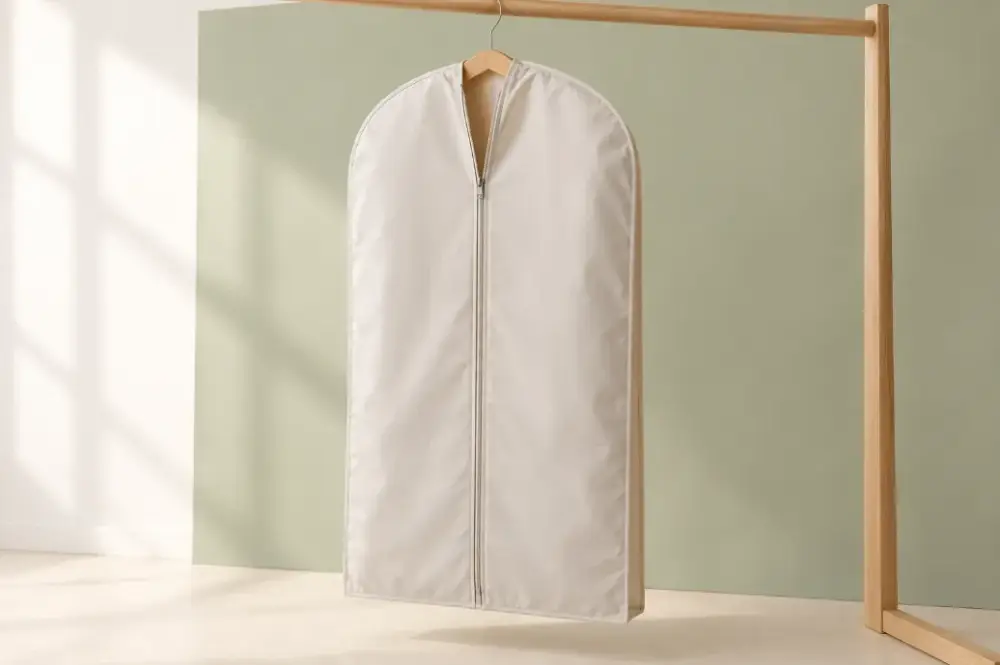
This is the specification cluster that causes the most sample revisions. Dimensions, hanging features and closures are interdependent—changing one often forces a change in another.
Dimensions
Garment bag sizing depends on the garment it protects. General logic:
- Measure the garment on a hanger. Record the width at the widest point (usually the shoulders or hips), the length from the top of the hanger hook to the garment hem, and the depth if the garment has volume (jackets, puffer coats).
- Add clearance. The bag should be wider and longer than the garment by enough margin that the garment slides in and out without bunching. The exact clearance depends on the fabric’s stiffness, closure type and whether the garment is folded or hung.
- Group garment types into size tiers. Rather than creating a unique bag size for every SKU, most brands define two to four standard sizes—for example, a shirt/blouse size, a dress size and a full-length coat size—and assign garments accordingly.
Do not assume that a factory stocks standard garment bag sizes. Confirm the factory’s available size range, minimum and maximum dimensions and whether custom sizes require a tooling or pattern charge.
Hanging features
Garment bags that stay on hangers need a way to accommodate the hanger hook. Common approaches:
- Open top. The bag has no top seam; the hanger hook simply extends above the bag. This is the simplest and cheapest option, common on lightweight transit bags.
- Hanging hole with reinforced eyelet. A small opening at the top center, often reinforced with a metal or plastic grommet, lets the hook pass through while keeping the top mostly closed.
- Full-top closure with a hook slot. Some bags close completely at the top with a flap or zipper, with a separate slot or slit for the hanger hook. This offers the best dust protection but adds construction complexity.
Whether a factory can produce hanging holes, reinforced eyelets or hook slots at the required dimensions and positions is a factory-confirmation item.
Closures
The closure determines how easily the garment goes in and out, how well the bag keeps dust out and how the bag looks when closed.
- Center-front full-length zipper. Allows the bag to open completely for easy garment insertion. Standard on suit bags and showroom covers. Zipper type (nylon coil, metal, invisible) and pull design affect both cost and appearance.
- Side zipper or partial zipper. Opens partway down one side. Less expensive than a full-length zipper but less convenient for wide garments.
- Drawstring bottom. Common on lightweight dust covers. The top is open for the hanger; the bottom cinches closed with a drawstring cord.
- Snap or button flap. A fabric flap folds over the opening and secures with snap buttons. Clean presentation for retail bags.
- Simple fold-over with no fastener. The most economical option for transit bags that will be discarded after unpacking.
Each closure type changes the sewing sequence, adds or removes hardware and affects the unit cost. Specify the closure type before requesting a quote so the factory can price accurately.
—
Folding, Packing and Shipment Considerations for Different Channels
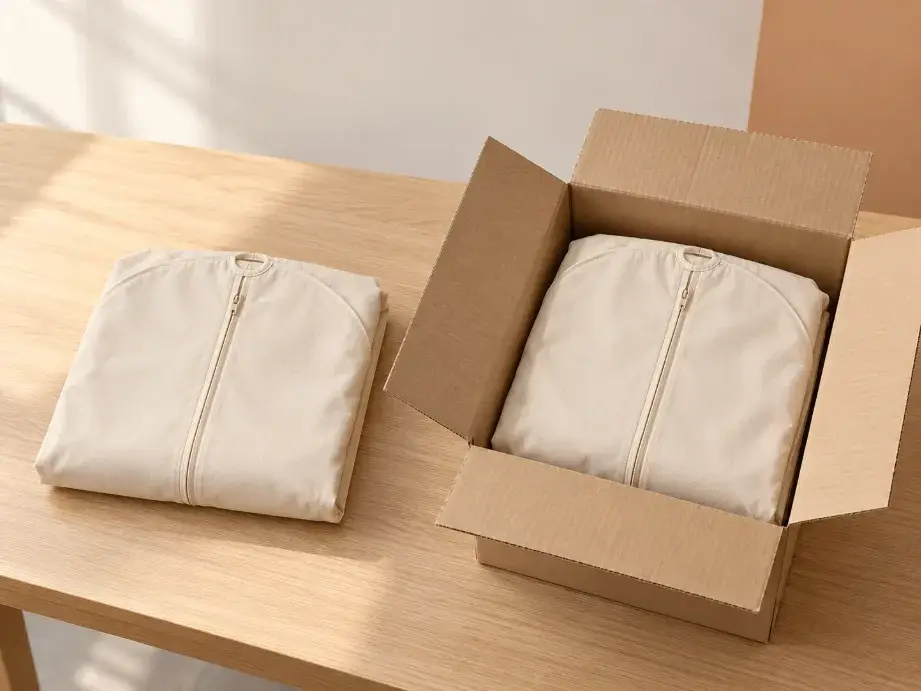
How garment bags are packed and shipped matters almost as much as how they are constructed. Folding method, carton design and handling can all affect whether the bag arrives in the condition intended for its channel.
Bags shipped flat inside garments’ cartons
When garment bags travel alongside or around the garments they protect—typical in factory-to-warehouse transit—they are usually folded and placed directly in the garment carton. Considerations:
- The bag should fold to a size that fits within the carton without adding excessive bulk.
- Lightweight non-woven or thin polyester bags fold more compactly than thick cotton-canvas bags.
- If the bag will be placed over the garment on a hanger inside a hanging carton, confirm that the bag dimensions match the carton’s hanging bar height.
Bags shipped separately in bulk
If bags are ordered separately from the garments—for example, when a brand sources garment bags from one supplier and garments from another—the bags ship in their own cartons. Key details to define:
- Folding method. Should bags be folded flat, rolled or individually poly-bagged? Each method affects carton volume and freight cost.
- Pieces per carton. Confirm with the factory how many bags fit per export carton at the specified folding method.
- Carton dimensions and gross weight. These determine freight cost. For large orders, request carton specifications in advance to estimate sea versus air freight costs.
Bags as part of an e-commerce unboxing
When the garment bag is the first thing a customer sees inside a mailer, presentation standards increase:
- Where presentation requires a cleaner appearance on arrival, compare folding, individual wrapping or tissue interleaving on a packed sample. These measures should be evaluated with the actual material and shipping method.
- If the bag is pre-packed around the garment at the fulfillment center, the bag’s opening and closure must be fast to operate at packing-station speed.
- Bag dimensions must fit inside the brand’s standard mailer or shipping box without excessive folding.
—
Logo Methods, Artwork Files and Brand Presentation Choices
A garment bag’s logo treatment communicates brand positioning. The right method depends on the bag material, logo complexity, color count and the brand’s visual standards.
Common logo methods for garment bags
- Screen printing. May suit flat, smooth surfaces and limited-color artwork. Setup and per-unit economics depend on artwork, colors, material and quantity, so review it against the actual specification.
- Heat transfer. Can reproduce full-color, photographic or gradient artwork. A printed transfer film is applied with heat and pressure; confirm the selected film, surface feel and finished sample on the chosen fabric.
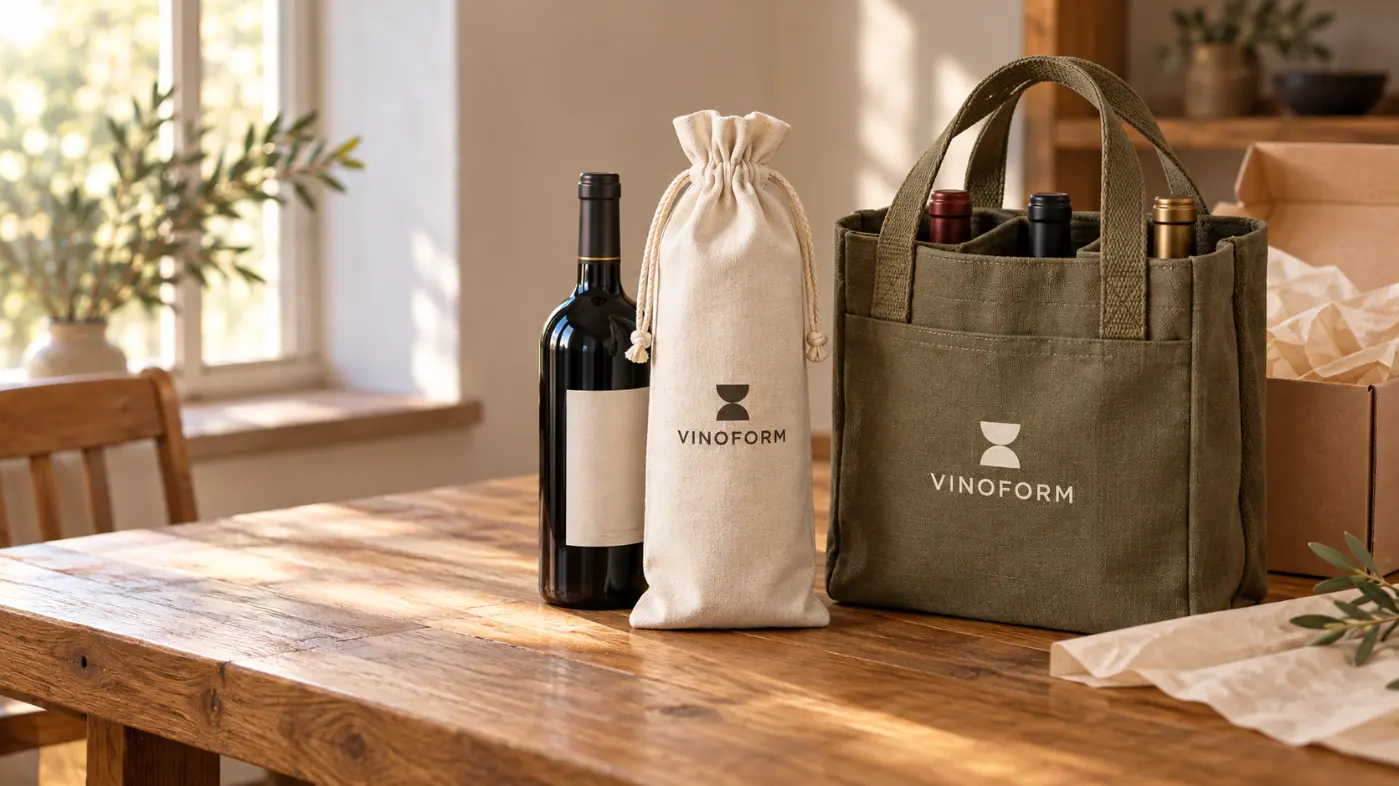
- Hot stamping (foil). Produces a metallic or matte foil impression. It may suit cotton, velvet or canvas bags, subject to surface and artwork testing. Solid shapes are generally easier to evaluate than very fine gradients.
- Embroidery. A thread-stitched logo creates a tactile surface. It adds production steps and is often considered for simpler artwork; confirm stitch density, reverse-side appearance and cost on a sample.
- DTF (direct-to-film) printing. Can reproduce full-color printed artwork on a range of fabrics. Confirm availability, appearance, adhesion and any required use-condition checks with your factory for the selected material.
- Woven or printed labels. A branded label sewn into the bag, typically at the top interior or near the closure. Can carry the brand logo, care instructions or a tagline.
For a detailed comparison of setup costs, unit costs and minimum quantities across logo methods, see the logo method cost comparison guide.
Artwork file requirements
Regardless of logo method, factories generally need:
- Vector files (AI, EPS or PDF with outlined fonts) are commonly requested for screen printing, hot stamping, embroidery and woven labels; confirm the supplier’s accepted format before sending artwork.
- High-resolution raster files (for example, PNG or TIFF with a transparent background at a resolution suitable for final output) may be requested for heat transfer and DTF; confirm the required file setup with the supplier.
- Pantone color references can help align ink, foil or thread discussions, but final color appearance should be approved against a physical swatch or decorated sample. The Pantone color matching guide explains how to communicate color specifications to avoid batch-to-batch variation.
Brand presentation decisions beyond the logo
- Logo position. Center-front is standard, but some brands place a small logo near the top, on the gusset or on the back panel for a subtle look.
- Logo size relative to bag size. A logo that looks proportional on a small pouch may look undersized on a full-length garment bag. Request a digital mockup or physical pre-production sample to verify visual balance.
- Secondary branding. Some brands add a tagline, website URL or care instruction below the logo. Confirm whether these require a second screen, a second foil strike or a separate label.
- Hang tag or ribbon. A branded hang tag tied to the hanger hook or a ribbon pull on the zipper adds a finishing detail. These are separate components with their own specifications and should be included in the initial brief.
—
What Should Be Confirmed Before Ordering Custom Garment Bags?
The following checklist summarizes the decisions a buyer should resolve before requesting a quotation. For each item, general selection logic is described above; the factory-specific answer depends on your supplier’s capabilities, material stock and production setup.
Buyer specification checklist
- Use case: Display / showroom, transit / warehouse, retail / DTC, or combination
- Garment types and measurements: List each garment category the bag must fit, with measured width, length and depth on hanger
- Bag dimensions: Proposed width, length and gusset depth (with clearance allowance), grouped into size tiers if applicable
- Material: Preferred fabric type and weight range (e.g., cotton canvas at a specific GSM range, or non-woven PP)
- Color: Fabric body color, specified by Pantone reference or physical swatch
- Hanging feature: Open top, reinforced hanging hole, hook slot or none
- Closure type: Full-length zipper, side zipper, drawstring, snap flap, fold-over or none
- Closure hardware details: Zipper material, pull style, snap finish, drawstring cord type
- Gusset: Required or not; if yes, target depth
- Logo method: Screen print, heat transfer, hot stamp, embroidery, DTF, woven label or combination
- Logo artwork: Vector or raster file, Pantone references, position and size on the bag
- Secondary branding: Tagline, URL, care label, hang tag, ribbon pull
- Lining: Required or not; if yes, material preference
- Packing method: Flat fold, rolled, individually poly-bagged, or pre-packed around garments
- Quantity: Target order quantity per size and per color
- Channel requirements: Any retailer packaging standards, labeling requirements or sustainability documentation the bags must meet
- Sample expectation: Pre-production sample with approved logo before bulk, or a blank material sample first
Items to confirm at quotation
The following are factory-dependent and should not be assumed from this guide:
- Available materials, weights and fabric colors in stock or available for dyeing
- Maximum and minimum bag dimensions the factory’s equipment can produce
- Whether hanging holes, eyelets or hook slots can be produced at the required position and size
- Available zipper types, snap hardware and drawstring cord options
- Logo method feasibility on the chosen material (ink adhesion, foil adhesion, embroidery stitch density limits)
- MOQ per size, per color, per logo variant
- Sample cost, sample lead time and bulk production lead time
- Unit pricing at the target quantity
- Applicable certifications or compliance documentation the factory can provide
- Carton specifications, gross weight and freight-ready packing details
—
Next Step
Prepare a specification sheet using the buyer checklist above. Include garment measurements, target bag dimensions, material and closure preferences, logo artwork files with Pantone references, order quantities and channel requirements. The more complete the brief, the more accurately suppliers can assess material options, construction feasibility, sampling scope and pricing.
—
Frequently Asked Questions
Can I use the same garment bag design for both transit and retail?
You can, but the requirements often conflict. Transit bags tend to prioritize simpler construction and volume handling, while retail bags place more emphasis on presentation. A heavier canvas bag with embroidery may suit a retail insert yet add material and decoration cost if used across every unit in a large transit program. Many brands compare separate specifications for each channel.
What is the most common closure for custom garment bags?
Full-length center-front zippers are often considered for suit bags and showroom covers. For lightweight dust covers and transit bags, an open top or drawstring bottom may be considered. The right closure depends on the garment type, how often the bag will be opened, the packing process and the target cost.
Do I need to send a physical garment sample to the factory?
A physical sample can help the supplier review fit, especially for garments with unusual proportions such as ball gowns or oversized coats. At minimum, provide accurate measurements of the garment on a hanger plus clear photos and the intended packing method. Whether those inputs are sufficient should be confirmed against the project rather than assumed from the garment category.
How do I choose between screen printing and hot stamping for the logo?
Screen printing is more cost-effective for multi-color logos at high quantities. Hot stamping creates a metallic or tonal foil finish that reads as premium on cotton, canvas and velvet but works only with solid artwork—no gradients or fine halftones. The screen printing versus heat transfer versus embroidery comparison covers the trade-offs in detail.
Can garment bags be made from recycled or certified sustainable materials?
Some factories offer RPET (recycled polyester), organic cotton, GRS-certified fabrics or other options. Availability, certification documentation and minimum order quantities for sustainable materials vary by factory and should be confirmed during quotation. For background on verifying sustainability claims, the eco-friendly pouch certification guide provides useful context.
—
Share This Story, Choose Your Platform!