Custom cotton pouches may appear simple, yet a reliable buying decision requires several specifications to work together. Fabric weight affects drape and structure. Finished dimensions affect loading and closure. Construction affects usable space, while artwork and decoration affect the final appearance. Buyers can reduce unclear quotations by defining the packed product, pouch structure, material, artwork, and review process before requesting prices.
Quick Summary
- Select fabric weight according to the packed product, desired structure, handling needs, and visual direction. GSM is useful, but it is not the only material detail that matters.
- Measure the product with any cap, box, wrap, or insert in place. Round or bulky products may need a gusset or boxed bottom.
- Match the decoration approach to the artwork, fabric surface, expected handling, and preferred feel.
- Request an MOQ for the complete specification. Material, size, color, construction, and decoration can all change the applicable requirement.
- Review a physical sample before bulk approval when fit, color, logo placement, or repeated handling matters.
- Use one written sourcing brief for every supplier comparison so quotations cover the same scope.
What Are Custom Cotton Pouches Used For?
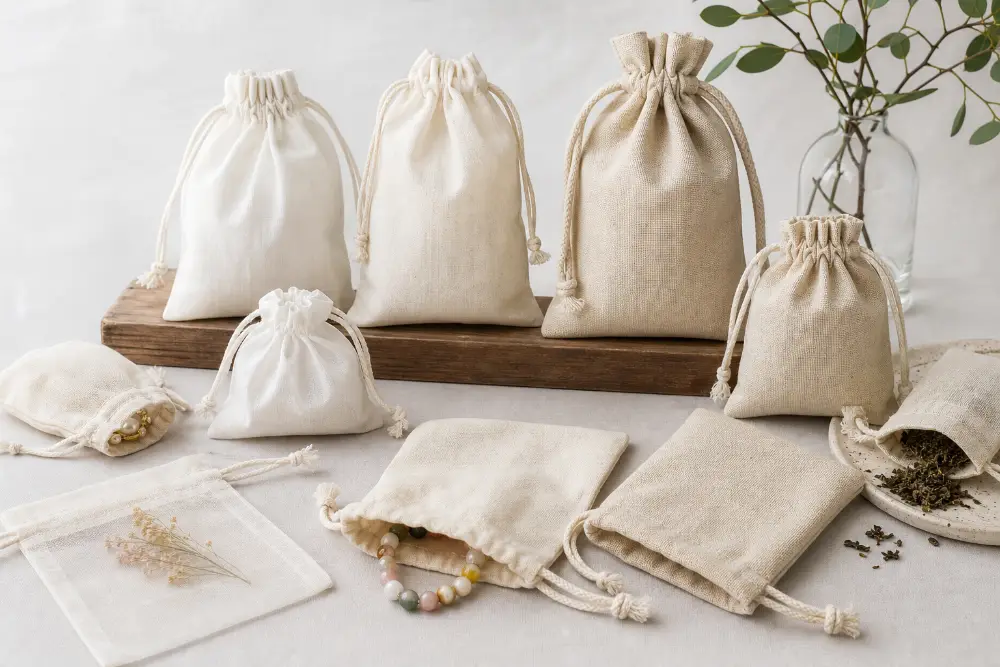
Custom cotton pouches are soft fabric packages that often use a drawstring closure. Flat pouches, zipper styles, envelope closures, and other constructions may also be possible depending on the project. Buyers commonly consider them for jewelry, accessories, cosmetics, soap, candles, gift sets, retail inserts, event favors, and product bundles.
The packed item should guide the format choice. A fabric pouch may work well for dry, non-sharp items where presentation and reuse are relevant. It may not be suitable as the only package for liquids, sharp-edged products, or items that need a sealed barrier. In those cases, an inner package or a different packaging format may be necessary.
Before asking for a quote, distinguish between structures that may look similar but work differently. This comparison of sachet bags and drawstring pouches can help clarify closure and use considerations. Material names also need care: buyers should review the differences between cotton, linen, and muslin instead of treating them as interchangeable terms.
Fabric Weight and Material: What GSM Means for a Pouch
GSM means grams per square meter. It describes fabric weight, but it does not fully define fabric performance or appearance. Two fabrics with similar GSM may feel different because weave, yarn, finishing, dyeing, and fabric construction also influence the result. Treat GSM as a starting point, then review a swatch or sample.
Lighter materials often have more drape and may suit lightweight items. Heavier materials can provide more body and a firmer visual shape. Neither direction is automatically better. A pouch that feels too soft may not present a bulky item neatly, while one that feels too rigid may be unnecessary for a small accessory.
| Approximate GSM Range | General Fabric Direction | Possible Uses | Questions for Buyers |
|---|---|---|---|
| 100–150 GSM | Light cotton or muslin-like fabric | Lightweight accessories, dry inserts, small favors | Is the fabric opaque enough? How do the seams look when filled? |
| 150–220 GSM | Mid-weight cotton | Jewelry, cosmetics, soap, small gifts | Does the fabric provide the intended balance of softness and body? |
| 220–320 GSM | Canvas or heavier cotton | Gift sets, accessories, products needing more shape | Does the drawstring channel still close and fold neatly? |
| Above 320 GSM | Heavy canvas-like fabric | Projects seeking a firmer package | Does the extra stiffness suit the item and packing process? |
These ranges are not fixed purchasing rules. Material naming and specifications vary, so ask the supplier for the specific fabric description, available color options, and sample material. Plain weave, muslin, canvas, and twill can differ in surface texture and structure even when their weights seem close.
If an organic, recycled, or other sustainability statement matters to your project, request documents that support the exact claim before using it in product marketing. The Global Organic Textile Standard provides information about its standard and certification system. Any claim for a finished pouch should align with the documents available for the relevant material and production scope.
Select the Right Size, Shape, and Construction
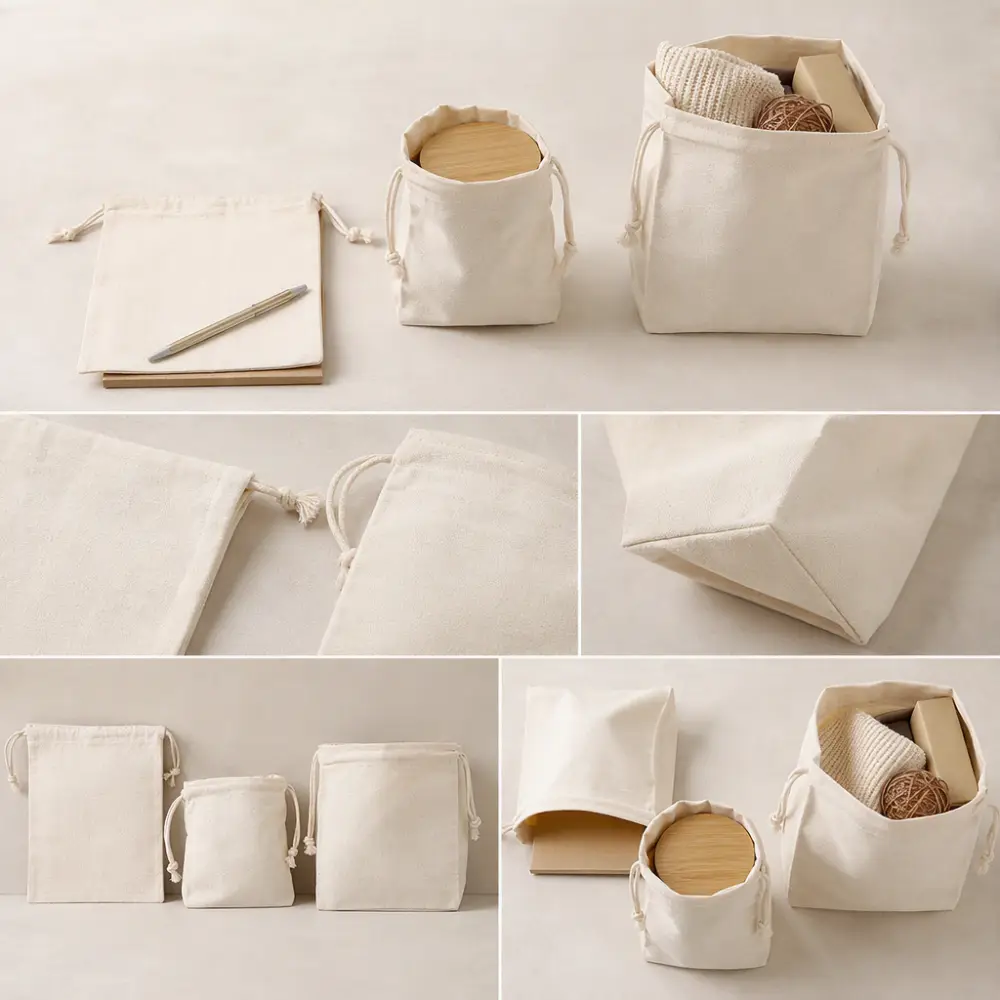
Start with the filled product rather than an empty product measurement. Include any inner box, lid, cap, protective wrap, card, or insert. A round jar may appear to fit a flat pouch based on width and height alone, yet still pull the seams or leave too little room to close the drawstring.
Allow enough room for loading and closure. Insufficient space can slow packing, strain seams, and prevent a neat closure. Excess room can make a small item shift around or reduce the intended presentation. The practical allowance depends on the product shape, pouch structure, and packing method.
| Pouch Construction | Common Product Fit | Main Benefit | Approval Question |
|---|---|---|---|
| Flat pouch | Cards, thin accessories, flat soap bars | Simple shape and compact storage | Does the product fit without pulling the side seams? |
| Side-gusset pouch | Rounded products and small product sets | Adds room at the sides | Does the gusset open enough for easy loading? |
| Boxed-bottom pouch | Taller, bulky, or multi-piece sets | Creates a more stable base when filled | Does the filled pouch stand as intended? |
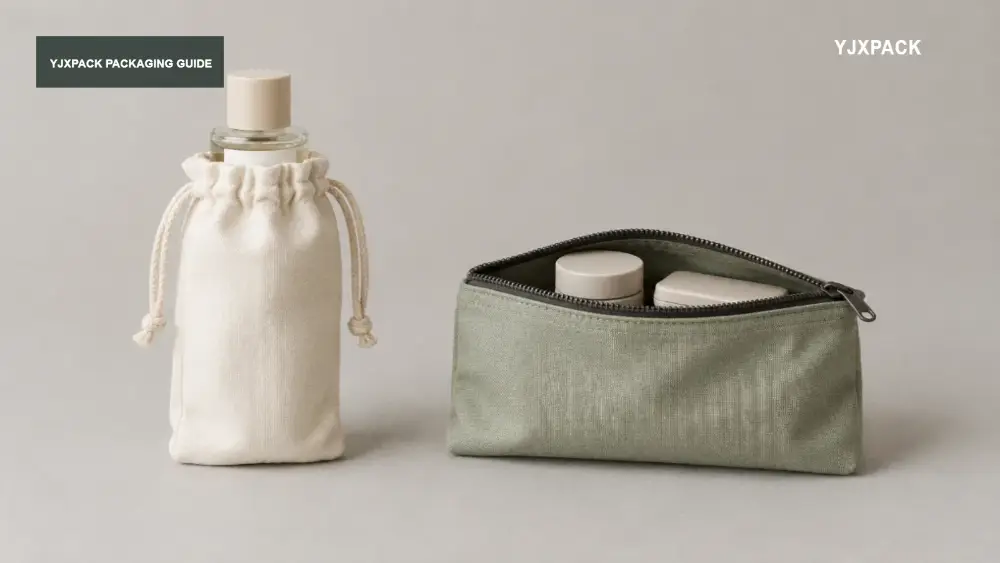
| Drawstring pouch without gusset | Jewelry and small accessories | Lightweight and simple closure | Is there enough top allowance to close the drawstring? |
Use the same measurement method in every quotation request. State whether width and height refer to finished outside dimensions, whether the drawstring channel is included, and whether gusset measurements are separate. This drawstring pouch measuring guide can help buyers prepare those details consistently.
With YJXPACK, product photos and filled-product dimensions can make an initial discussion more specific. Photos can clarify the likely construction, but they do not replace a filled sample.
Choose Colors, Logo Placement, and Decoration Method
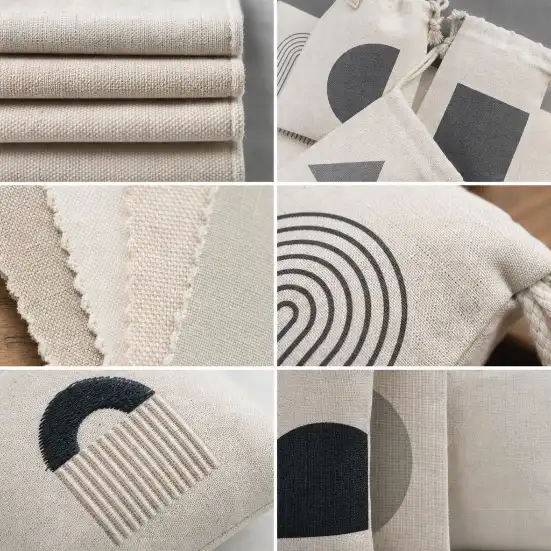
Cotton has a visible surface texture, so artwork can look different from the same design printed on coated paper or synthetic film. Fine lines, small text, large solid areas, and metallic details need careful review. Supply usable artwork files and confirm the final logo size and placement on the pouch layout.
Fabric color can vary between lots and under different lighting conditions. If a brand color matters, provide the reference used by your team and ask how the supplier will present the color for approval. A physical swatch or decorated sample is generally more useful for review than an on-screen image alone.
| Decoration Method | Often Considered For | Artwork Factors | What to Review on a Sample |
|---|---|---|---|
| Screen printing | Bold logos and limited-color graphics | Clear shapes and solid areas may be easier to assess | Edge definition, placement, and color appearance |
| Heat transfer | Detailed or multi-color artwork | Confirm the expected surface feel on the selected fabric | Flexibility, detail, and appearance after folding |
| Embroidery | Simple wordmarks or icons | Small text and intricate details may not translate clearly | Stitch density, thread color, and readability |
| Foil or hot stamping | Small decorative accents on appropriate surfaces | Fabric texture and artwork size require review | Coverage, visual consistency, and sample appearance |
No method suits every project. Fabric texture, logo dimensions, folding, handling, laundering expectations, and desired feel can all affect the choice. Define expected use conditions before sample review, and avoid making broad durability statements unless the relevant project materials and evaluation process support them.
What Changes the Cost of Custom Cotton Pouches?
A pouch quote can change when one specification changes. Compare quotations line by line rather than comparing only a total figure. Fabric weight, finished size, custom color, decoration colors, embroidery complexity, lining, gussets, drawstring material, labels, hardware, and individual packing may all affect scope.
A standard-size pouch with simple artwork may involve fewer variables than a custom-sized pouch with special fabric color, detailed decoration, and multiple components. That does not make either option right or wrong. The buyer’s task is to identify which details are essential for the packed product and which are preferences.
| Brief Item | What to State | Why It Matters |
|---|---|---|
| Product dimensions | Length, width, depth, and photos where available | Helps assess fit and likely construction |
| Pouch size | Finished width, height, and gusset where needed | Prevents different size assumptions |
| Fabric | Material description, target GSM, color, and finish | Affects structure, feel, and appearance |
| Decoration | Artwork file, desired location, colors, and method preference | Supports a comparable decoration scope |
| Components | Drawstring, lining, label, hardware, and packing needs | Reduces omitted features in the quote |
| Order context | Estimated quantity and destination | Gives the supplier context for applicable order terms |
MOQ, Sampling, and Quality Review
MOQ depends on a supplier’s processes and on the full project specification. Stock material and standard dimensions may have different requirements from custom-dyed material, unusual constructions, or multi-step decoration. Ask for the MOQ that applies to the exact version you intend to buy rather than relying on a general figure.
Sampling is a useful control point. A sample lets buyers assess fit, fabric feel, drawstring operation, stitching appearance, logo placement, and color under normal viewing conditions. If the pouch will be washed, folded repeatedly, or exposed to friction, describe that expected use and agree on the sample review approach.
Before bulk approval, ask these practical questions:
- Which approved artwork and sample version will production follow?
- Which size and placement tolerances are relevant to this pouch?
- What color reference will the supplier use during production?
- What checks will take place before packing?
- How will the buyer record approval or requested changes?
YJXPACK can use a sourcing brief containing these details, while buyers should retain their own approved artwork, measurements, color references, and sample notes in the purchase record. That record helps when a reorder or specification update is needed.
How to Write a Clear Custom Cotton Pouch Brief
A useful brief does not need to be long. It needs to remove avoidable uncertainty. Include the packed product, filled dimensions, preferred pouch construction, finished size, fabric preference, target color, drawstring details, artwork location, decoration preference, estimated order quantity, and destination market.
Mark each item as essential or preferred. For example, a buyer may identify a boxed bottom as essential because the product must stand, while a particular drawstring finish may be preferred rather than required. This distinction helps suppliers identify workable alternatives if one requested detail creates a limitation.
Attach product photos, artwork files, and reference images when available. Send the same written brief to each supplier if you are comparing options. It then becomes easier to identify whether quotation differences result from the same scope or from different assumptions about size, material, construction, or decoration.
When you contact YJXPACK or another pouch supplier, ask the supplier to identify unresolved points before quotation. A short clarification stage can be more useful than a fast quotation built on unstated assumptions.
Frequently Asked Questions
What GSM should I choose for custom cotton pouches?
Choose GSM based on the product’s weight, shape, desired structure, and intended presentation. Light fabric may suit small, lightweight items, while mid-weight or heavier material may suit products that need more body. Review a swatch or sample because weave and finishing also affect the result.
Should I use a flat pouch or a gusseted pouch?
Use a flat pouch for thin or relatively flat products. Consider a gusseted or boxed-bottom construction for round, bulky, tall, or multi-item products. Test the filled item in a sample to review loading, closure, and appearance.
Which decoration method may suit a detailed logo?
Detailed, multi-color artwork may lead buyers to consider heat transfer, while bold limited-color logos are often considered for screen printing. The final selection depends on the artwork, fabric texture, desired feel, expected use, and approved sample.
Is there a standard MOQ for custom cotton pouches?
No. MOQ can vary by material, pouch size, color requirement, construction, decoration method, and supplier process. Request the MOQ for your complete specification instead of relying on a general estimate.
What should I check on a custom pouch sample?
Check product fit, finished dimensions, fabric feel, stitching, drawstring function, color, logo position, artwork clarity, and the overall appearance when filled. Include any expected handling or care conditions in the sample review plan.
Share This Story, Choose Your Platform!