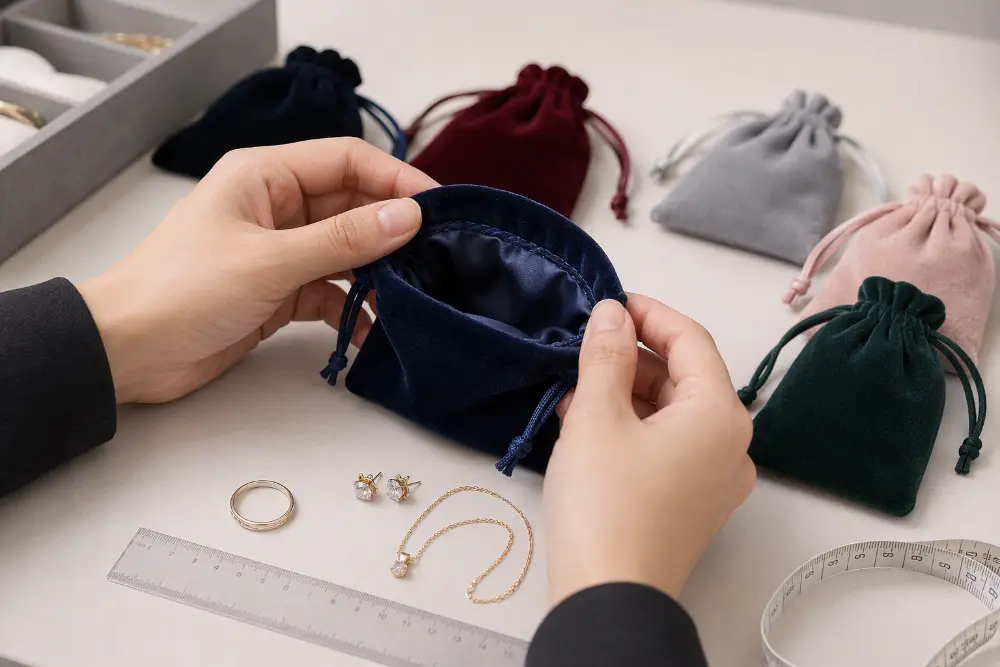
A custom velvet pouch can change how jewelry, beauty items, gifts, and promotional products feel when they reach the end customer. However, a pouch brief needs more than a color and a logo. Buyers should define the item inside the pouch, fabric construction, dimensions, closure, decoration, packing, and sample approval before comparing supplier quotes. A written specification gives every supplier the same starting point and reduces changes caused by assumptions.
Quick Summary
- Start with the product going inside the pouch. Its size, weight, surface finish, and edges should guide the pouch design.
- Specify velvet construction, color reference, lining, dimensions, and closure as separate requirements.
- Review logo options on the intended fabric because velvet pile can affect fine details and legibility.
- Approve a physical sample against a written checklist before moving forward with production.
- Request packing, labeling, inspection, sample, and commercial information in the same brief so quotes can be compared on a similar basis.
Define the Product, Protection, and Presentation Requirements
Begin with the item that will sit inside the pouch. Earrings, bracelets, fragrance bottles, boxed pendants, and small electronic accessories all create different space and handling needs. Record the item length, width, depth, weight, and any parts that could catch on the fabric. Mention sharp edges, rough metal surfaces, loose components, clasps, or moving parts in the inquiry.
Next, define the pouch role. It may support retail presentation, protect an item inside a gift box, organize products during wholesale packing, or provide reusable storage after purchase. Each use can call for different choices in structure, lining, closure, and trim. For example, a pouch placed inside a rigid box may need a different closure approach than one that travels loose in a mailer.
Prepare these points before requesting pricing. A useful inquiry normally includes the product type, intended pouch use, target quantity range, required dimensions, artwork status, and preferred packing format. Custom Jewelry Pouches With Logo: 8 Details to Confirm Before Requesting a Quote offers a practical checklist for the initial request. Buyers can also use What Information Does a Jewelry Pouch Manufacturer Need for an Accurate Quote? to organize the first supplier message.
Separate presentation goals from protection goals at this stage. A gift pouch may place more emphasis on drape, color, and a pleasing hand-feel. A pouch used during fulfillment may place more emphasis on fit, closure function, and packing efficiency. This distinction gives YJXPACK and other shortlisted suppliers a clearer basis for discussing material and construction options.
Specify Velvet Construction, Color, and Interior Details
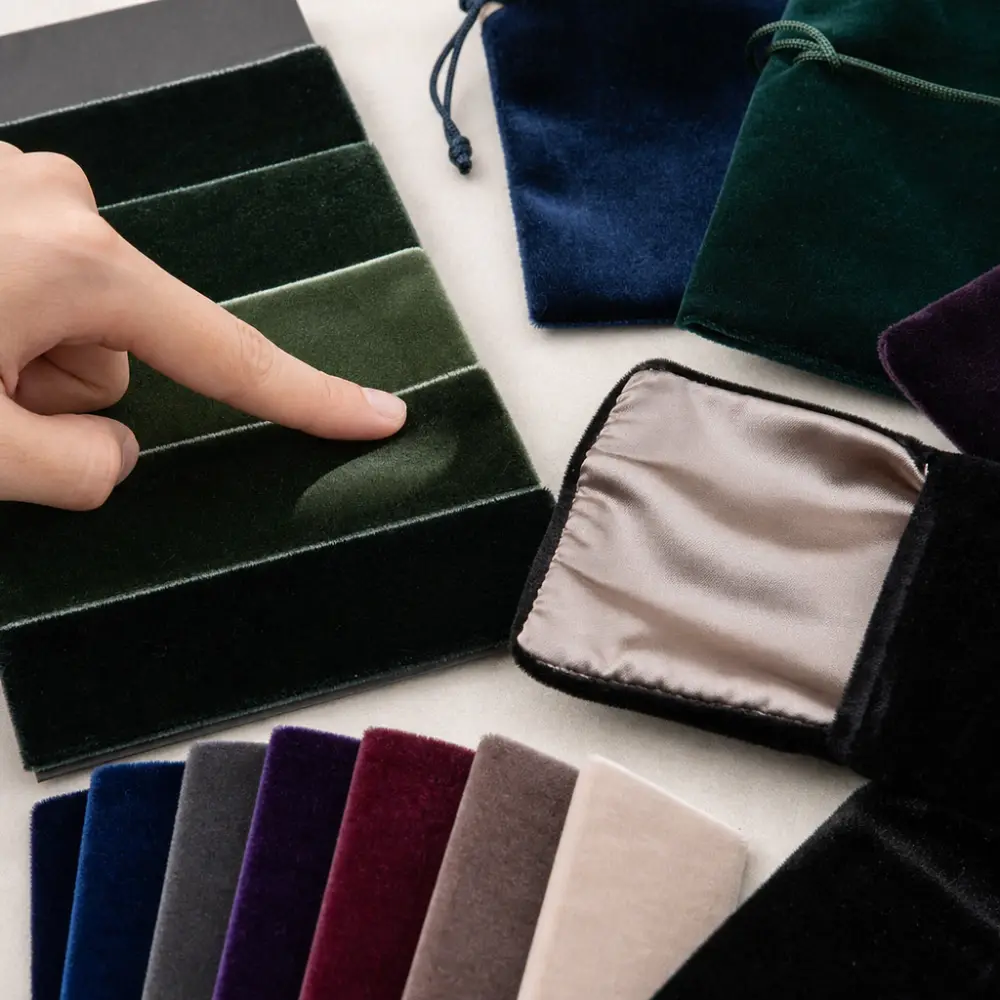
The term velvet does not identify one single fabric construction. Materials described as velvet can differ in pile length, pile density, backing, stretch, drape, and surface appearance. Some fabrics show directional shading when the pile moves, while others look denser and more even. Ask the supplier to describe the proposed fabric and request a swatch or sample made from the proposed material where possible.
Color needs its own approval method. A Pantone reference can communicate the intended shade, but pile direction, lighting, and the fabric base can change how a color appears. Screens do not reliably show every textile variation. State the color reference in writing, then approve a physical swatch or finished pouch sample under lighting that reflects your product photography, retail display, or receiving inspection conditions.
Lining should also appear as a separate line in the specification. A satin or other smooth lining may help some products slide in and out of the pouch. An unlined velvet interior can create a consistent fabric appearance and a different level of surface grip. The right choice depends on the product finish, intended experience, and sample review.
| Velvet Specification Area | Options to Discuss | Buyer Approval Point |
|---|---|---|
| Pile appearance | Shorter, denser, or plusher pile | Review surface direction, hand-feel, and the visibility of pile marks |
| Backing and drape | Softer drape or firmer structure | Confirm whether the pouch should hang softly or hold a more defined shape |
| Color reference | Pantone reference, physical swatch, or approved sample | State which physical reference controls approval if shades differ |
| Interior finish | Unlined velvet, satin lining, or another lining fabric | Test how the actual product enters, sits in, and comes out of the pouch |
For additional material context, velvet types used in jewelry packaging explains several fabric-related points that can affect a packaging brief.
Confirm Pouch Size, Shape, and Closure
Do not select pouch dimensions only from a small, medium, or large label. Measure the actual item and allow for the way warehouse staff or customers will insert and remove it. A pouch can look roomy when flat but feel tight once an item with depth, protective wrapping, or a clasp goes inside.
Ask the supplier how it measures the stated size. The dimension may refer to flat external size, usable internal space, or another measurement method. If your buying process uses dimensional tolerances, include them in the brief. If it does not, ask the supplier to explain its usual dimensional variation and document the agreed expectation in the purchase records.
Shape and closure should support the item’s real use. Drawstrings can work well with items that vary in shape and can create a soft pouch silhouette. A flap, snap, envelope style, or another closure may suit flatter goods or a more structured presentation. Test the selected closure with the actual product in the physical sample. Check that users can open it easily, close it consistently, and avoid catching the product.
Choose a Logo Method and Prepare Artwork
Velvet pile can affect logo sharpness. Fine lines, very small text, and detailed artwork may not read the same way on velvet as they do on smooth paper packaging. Potential decoration options may include foil, embossing, debossing, or screen printing, but the suitable method depends on the actual fabric, pouch color, artwork detail, and supplier process.
Use physical logo samples to make the final choice. A decoration result that suits one fabric color may look different on another. Review the logo at its intended finished size and placement instead of approving only a large digital artwork proof. When the design includes small lettering, assess legibility at normal viewing distance.
Supply vector artwork when available. Specify logo size, location, and any relevant print or foil color references. Clarify whether placement is measured from the pouch edge, centerline, drawstring channel, or another fixed point. Custom Jewelry Pouch Logo Methods: How to Choose Print, Foil or Debossing can help buyers frame that discussion with a supplier.
Build a Commercial Brief Around Cost Factors, Packing, and Compliance
A custom pouch quote can involve several variables. Fabric selection, lining, logo treatment, closure materials, special trims, individual packing, barcode labels, and carton requirements may all affect the quoted configuration. Rather than comparing only a unit figure, ask each supplier to state what the quote includes and which assumptions it uses.
Do not assume that one supplier’s sample policy, order minimum, packing method, or production schedule will match another supplier’s approach. Request those details directly and record them in writing. Send the same specification sheet to every shortlisted factory, including YJXPACK, so each response addresses the same pouch design and packing request.
| Commercial Item | Why It Matters | Question to Include in Your Brief |
|---|---|---|
| Fabric and lining | They affect material selection and finished feel | What fabric and lining are included in this quoted pouch specification? |
| Logo process | It can involve artwork, setup, and production considerations | Which logo method is proposed, and what artwork details are needed for approval? |
| Closure and trim | Cords, snaps, ribbons, and other parts affect use and appearance | What closure components are included, and can they be reviewed on the sample? |
| Individual and carton packing | Packing affects receiving, storage, and shipping planning | How will units, inner packs, and master cartons be packed? |
| Labels and marks | They can affect warehouse handling or retail requirements | What barcode, SKU, country-of-origin, or other marks must the buyer provide? |
Buyers selling textile packaging in the United States can review current information through the FTC business guidance . The requirements that apply can depend on the product, sales channel, and market. General guidance and supplier information do not replace the buyer’s own compliance review.
Approve a Prototype and Physical Sample Before Production
A digital rendering cannot show every relevant detail of a velvet pouch. Review a physical sample for color, pile appearance, touch, dimensions, stitching, closure operation, lining, logo placement, and logo finish. Use the actual product during the review whenever possible.
Compare the sample with a written checklist rather than memory. Record requested changes clearly. Request a revised sample if a material issue, sizing concern, or logo problem remains open. Avoid a broad instruction such as correct this in bulk. The approved sample and written specification should clearly show the result the supplier should follow.
How to Order Custom Jewelry Pouch Samples: A Step-by-Step Guide for Brands can help buyers organize a sample request and approval record. Keep photos, comments, approval dates, and final artwork with the purchase documentation. This record helps purchasing, design, receiving, and supplier teams refer to the same approved details.
Set a Practical Delivery Inspection Checklist
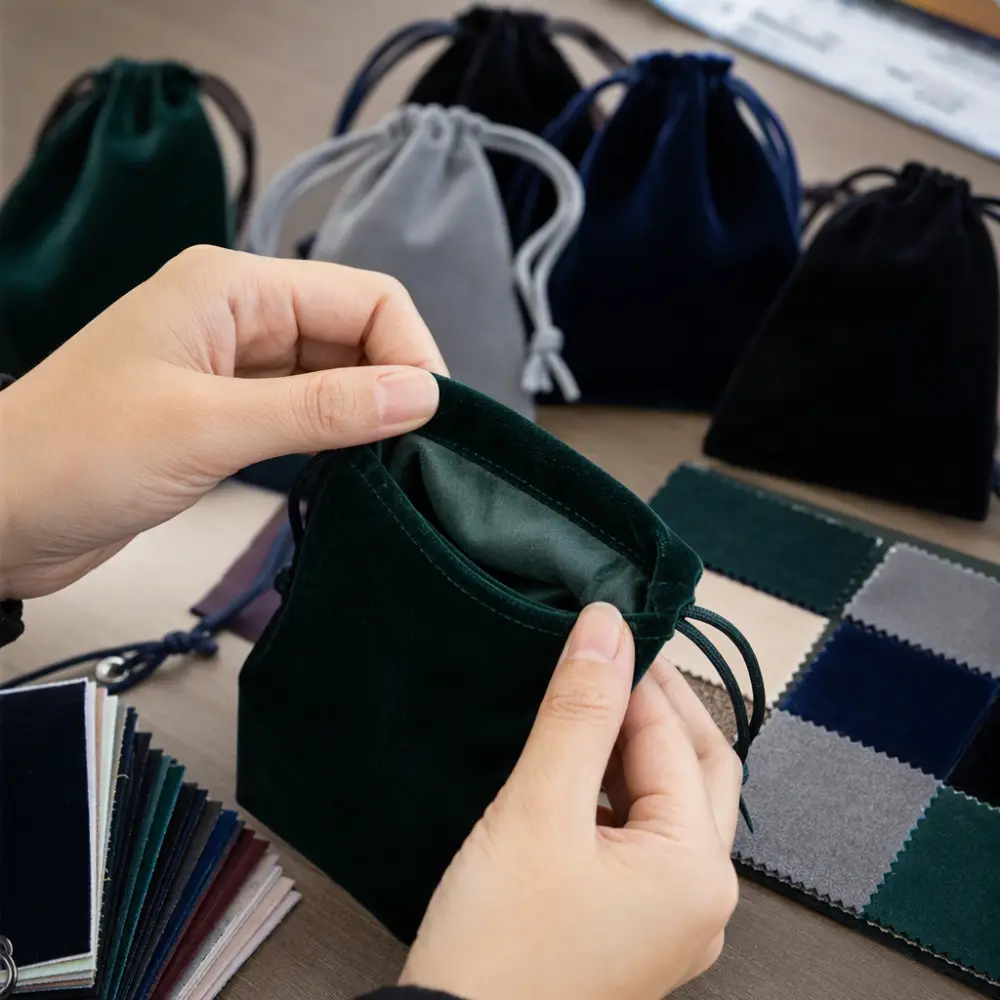
Sample approval establishes the target. Delivery inspection checks whether received goods align with that target. Build an inspection checklist around the details that matter most to the product and customer experience. For velvet pouches, the list may include dimensions, color against the approved reference, stitching, loose threads, closure function, lining condition, logo position, visible decoration defects, and packing.
Decide before shipment how your team will inspect the goods, who will perform the review, and how findings will be recorded. When using a third-party inspection provider, give that provider the same approved sample and specification sent to the supplier. Clear criteria reduce subjective disagreements and give both sides shared reference points.
Before placing an order, align the specification, approved sample notes, artwork, packing requirements, and commercial terms. This process helps YJXPACK and other suppliers respond to a defined request rather than to assumptions.
Frequently Asked Questions
What should I include in a custom velvet pouch quote request?
Include the product type and dimensions, pouch dimensions, intended use, velvet color reference, lining preference, closure style, logo artwork, preferred logo method if known, target quantity range, and packing requirements. If some points remain open, identify them as questions instead of leaving them unstated.
How can I choose a logo method for velvet?
Review the logo line thickness, text size, pouch color, and velvet pile before selecting a method. Request physical samples on the intended fabric and judge the logo at its actual finished size. Use the sample review to support the final decision.
Should I choose a lined or unlined velvet pouch?
Choose based on how the product needs to move inside the pouch and the appearance you want to create. A smooth lining may help some products slide in and out, while unlined velvet can create a more uniform material appearance. Test both options if this choice is important to the product experience.
What should I inspect on a physical sample?
Check dimensions with the actual product inside, color under relevant lighting, pile appearance, lining, closure operation, stitching, logo size, logo placement, and visible finish details. Record approval comments in writing and retain the approved sample as a reference.
Why do I need a delivery inspection checklist after sample approval?
An approved sample defines the expected result, while an inspection checklist helps your team assess delivered goods against that reference. It provides a shared list of criteria for reviewing dimensions, color, construction, closure function, logo finish, and packing.
Share This Story, Choose Your Platform!