You’re sourcing jewelry packaging for the first time. A supplier sends you a quote with five different bag styles — drawstring, envelope, flap, zipper, roll — and asks which one you want. You have no idea. So you pick the drawstring because it looks familiar, hit send, and move on.
In fact, most brand owners do exactly that. They pick a pouch style by instinct, never stop to compare the options, and later realize the style doesn’t match their product or their brand. A flap pouch on a ring looks wrong. A roll pouch for a single bracelet is overkill. Meanwhile, the right match feels invisible — the customer just loves the experience.
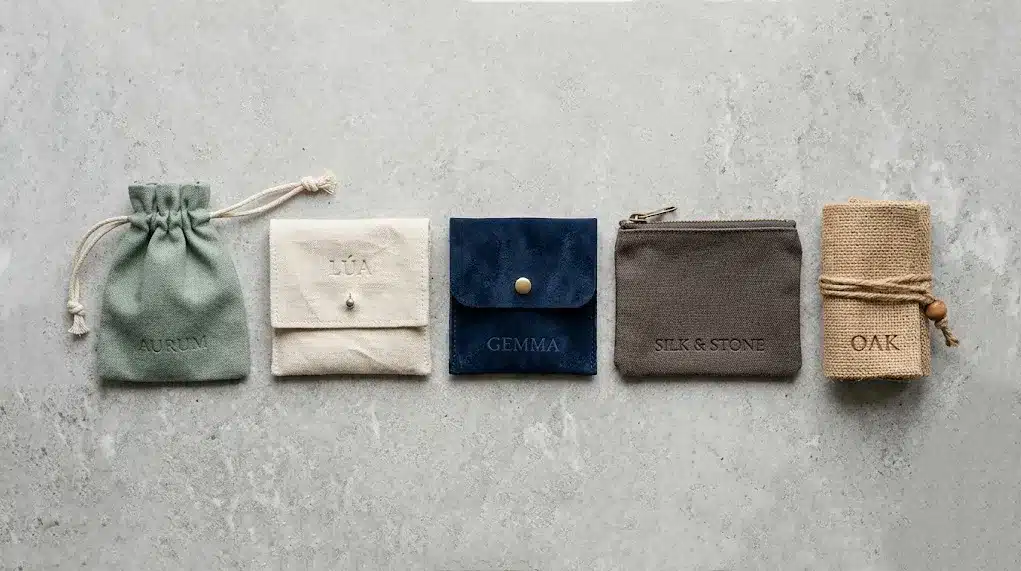
This article fixes that. In plain English, with no jargon, you’ll learn three things. First, what each of the five main jewelry pouch styles actually is. Second, which jewelry types and brand positions each style fits best. Third, how to pick the right one for your next order — without guessing.
By the end, you’ll know these types of jewelry pouches better than most buyers who’ve been sourcing for years.
1. Why Pouch Style Matters More Than You Think
Most buyers focus on material first — velvet, cotton, satin. Style comes second, almost as an afterthought. However, the style of a pouch actually shapes the customer experience more than the fabric does.
Think about it. The fabric is what your customer sees. The style is what your customer does — how they open it, how they hold it, how they store the piece inside. A smooth, satisfying opening moment signals quality. A clunky, awkward one signals the opposite. So a beautiful velvet pouch with the wrong closure style can still feel cheap.
Style also affects practical things. It changes how easy the bag is to fill on a production line. It changes whether the jewelry stays secure during shipping. Furthermore, it changes the unit cost by anywhere from $0.10 to $0.60 per piece depending on construction complexity.
In short, style is not a small decision. It sits right at the intersection of brand perception, product protection, and sourcing cost. Get it right once, and you won’t need to change it for years.
2. The 5 Main Jewelry Pouch Styles at a Glance
Before diving into each style, here’s a quick overview. This table gives you the big picture at a glance.
| Style | Closure | Brand feel | Best for |
|---|---|---|---|
| Drawstring | Pull cord | Casual to mid-luxury | Most jewelry types, gifting, e-commerce |
| Envelope | Fold-over flap, no closure | Modern, minimal | Flat pieces, earrings, retail display |
| Flap (snap or tie) | Button snap or ribbon tie | High-end, boutique | Fine jewelry, gift sets, premium brands |
| Zipper | Metal or nylon zip | Secure, practical | Travel, e-commerce shipping, multi-piece |
| Roll pouch | Roll-up, tie closure | Functional, artisan | Multi-piece sets, gift bundles, tool-like carry |
For a full look at all the custom jewelry bag options available, including materials and finishes, you can browse the full product range at YJXpack. Now let’s go deeper on each one.
3. Style 1: The Drawstring Pouch
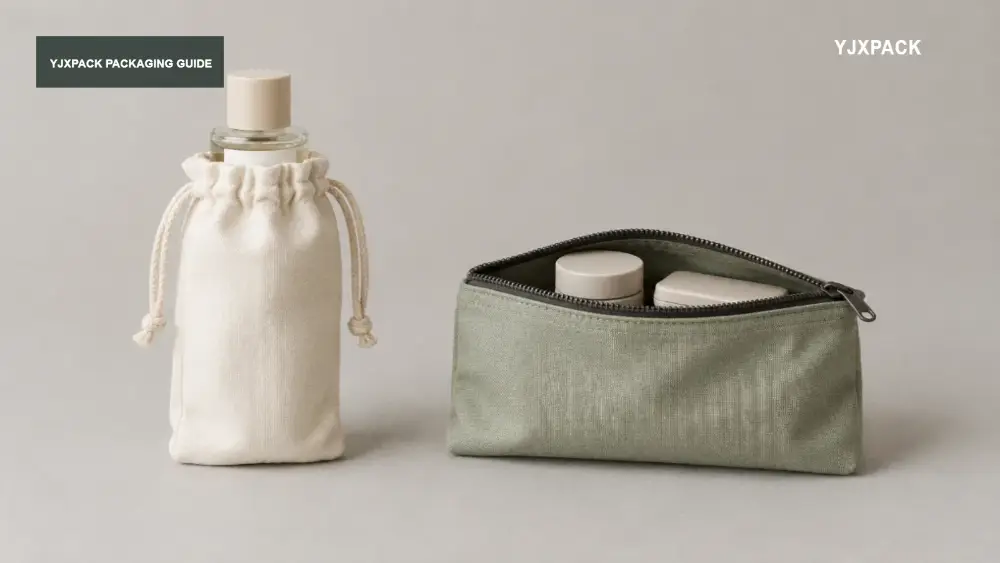
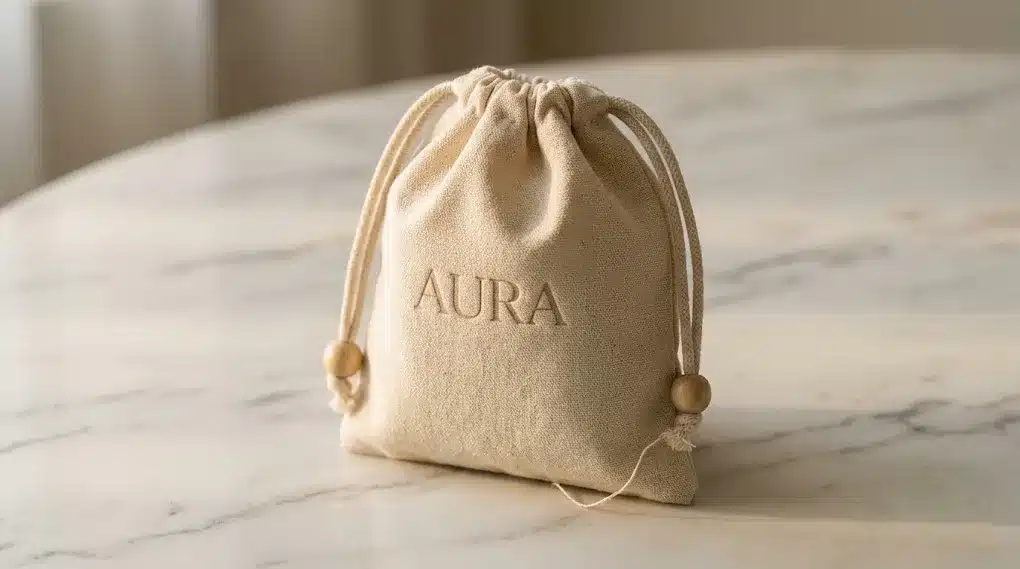
The drawstring pouch is the most common jewelry pouch style on the market — and for good reason. It’s simple, fast to open, and works with almost every jewelry type. Pull the cord, and the bag cinches shut. Loosen it, and the opening fans out flat. The whole action takes about two seconds and feels natural in any customer’s hands.
For a full breakdown of how drawstring pouches work, the closure types, and the cord options available, read our dedicated guide: What Is a Drawstring Pouch? Here, we’ll focus on where this style wins — and where it doesn’t.
Where it wins. The drawstring pouch handles a wide range of jewelry sizes. Small cord openings work for rings and pendants. Wider openings fit bangles and chunky necklaces. Plus, the soft fabric opening means no metal edge ever touches the piece during insertion. So scratch risk stays low.
It also wins on cost. Compared to zipper or flap styles, a drawstring pouch is simpler to cut and sew. That simplicity makes it the most affordable option in most materials — typically $0.35–$0.90 per unit at MOQ 100, depending on fabric and cord type.
Where it struggles. Drawstrings don’t seal. A hard shake or an upside-down bag lets the contents slide out. So for very small pieces — a single stud earring, for example — a drawstring isn’t the safest carry. Likewise, the look is familiar, almost expected. If your brand wants to stand out at first glance, a drawstring pouch may not create that “wow” moment.
Best fit: rings, pendants, small bracelets, necklaces, gift sets, e-commerce packaging, mid-range and sustainable brands.
4. Style 2: The Envelope Pouch
The envelope pouch takes a completely different approach. Instead of a cord, it uses a folded flap — just like a paper envelope — to close the opening. The flap folds down over the front of the bag and stays in place by gravity or a very light tuck. There’s no snap, no button, no tie. It’s a clean, deliberate design.
This style has become popular with modern jewelry brands that want their packaging to feel editorial — more like a premium mailer than a traditional pouch. The flat silhouette photographs well, sits neatly in a gift box, and looks polished on a retail shelf.
Where it wins. The envelope pouch is the most minimal of all five styles. No hardware, no cord, no extra components. That means fewer parts to fail, a consistent flat look, and usually a slightly lower per-unit cost than flap styles with hardware. It also works very well for flat jewelry — earrings, pendants on cards, small brooches.
Furthermore, the fold-over design makes it easy to insert a branded insert card right under the flap. Many luxury brands tuck a hand-written thank-you note there. That small detail turns the packaging into a full unboxing experience.
Where it struggles. Security is the main weakness. The flap holds by tension alone. So if the pouch tips, the jewelry can slide out. As a result, envelope pouches work better for display and gifting than for rough e-commerce shipping. They’re also best for flatter, lighter pieces. A thick bangle creates a lump under the flap and breaks the clean silhouette.
Best fit: flat earrings, pendant cards, small brooch sets, luxury retail packaging, gift boxes, editorial brand aesthetics.
5. Style 3: The Flap Pouch (Snap or Tie Closure)
The flap pouch looks similar to the envelope pouch at first glance. Both have a fold-over flap. However, the key difference is the closure. A flap pouch uses either a button snap, a magnetic snap, or a ribbon tie to actively hold the flap shut. That closure changes everything — the security, the feel, the price, and the brand signal.
A snap closure gives a satisfying click when it closes. A ribbon tie creates a softer, more artisan feel. Both options read as intentional and premium, which is why fine jewelry brands and boutique labels love this style.
Where it wins. The flap pouch is the most giftable style of the five. It looks generous. It feels like something worth keeping. Moreover, because the flap actively locks, the jewelry stays secure even in a handbag or a moving box. So it works for both display and real-world carry.
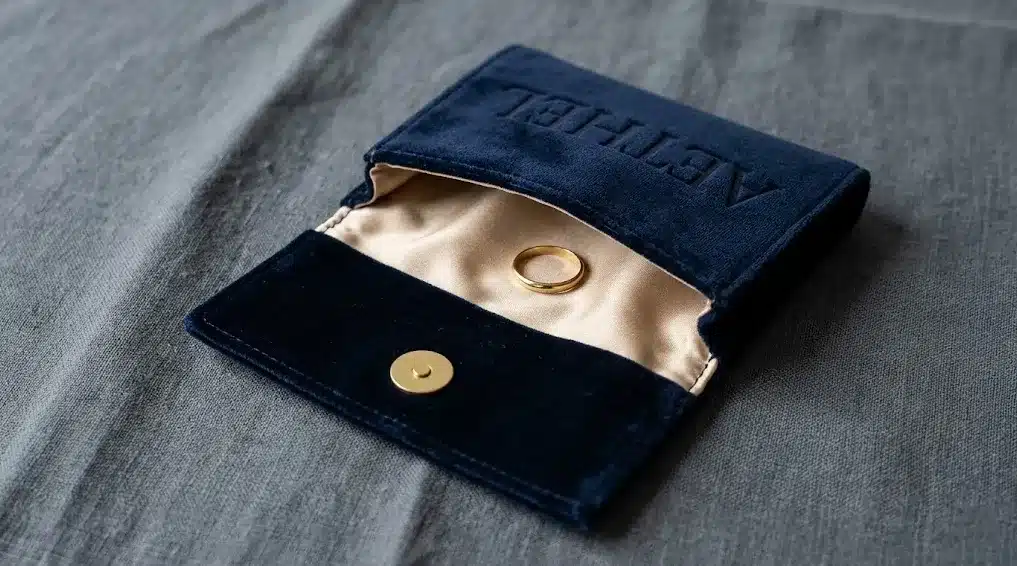
The design also gives the most surface area for logo placement. The full front of the flap is a clean canvas for debossing, hot stamping, or embroidery. Many brands use a large centered debossed wordmark on a velvet flap — that combination is a quiet-luxury staple in the current market.
For velvet flap pouches, the snap closure is especially popular because the snap hardware adds a subtle metal contrast against the soft pile fabric. The texture pairing alone elevates the perceived value.
Where it struggles. Cost is the main trade-off. The snap hardware, the extra stitching to attach it, and the added construction complexity push the price up compared to drawstring or envelope styles. Expect to pay $0.60–$1.40 per unit at MOQ 100 depending on closure type and material.
Also, snaps can wear out on low-quality hardware. So it’s worth asking your supplier for the snap grade and testing durability on a sample before placing a large order.
Best fit: fine jewelry, gift sets, boutique and luxury brands, brands that want a premium unboxing moment, velvet and suede materials.
6. Style 4: The Zipper Pouch
The zipper pouch is the most secure of the five styles. It uses a metal or nylon zip that runs across the top of the bag. Close it, and nothing gets out. That simple mechanical seal is its biggest strength — and also the thing that defines its brand personality.
Where it wins. Security is the main story here. A zipped pouch stays closed no matter how the package is handled during shipping. So for fragile pieces, high-value jewelry, or multi-piece sets where pieces could tangle, the zipper pouch offers real protection. It’s also the best style for travel-use packaging — something the customer keeps and uses on trips, not just for unboxing.
Furthermore, zipper pouches work well for e-commerce brands that ship in poly mailers. A loose drawstring or envelope pouch can open during transit. A zipped one won’t.
Where it struggles. The zipper introduces a hard element into an otherwise soft product. On very delicate pieces — thin gold chains, plated pendants — the zipper teeth can scratch if the piece gets caught. So insertion and removal need care.
Also, the zipper changes the aesthetic. It reads more utilitarian, less romantic, than the other styles. For brands with a luxury or artisan positioning, a zipper can feel slightly out of place. By contrast, for contemporary brands with a practical, functional image, it fits perfectly.
For more options in this category, explore custom zipper bags across different materials and sizes.
Best fit: travel jewelry cases, multi-piece sets, e-commerce shipping pouches, contemporary and outdoor-leaning brands, functional gift items.
7. Style 5: The Roll Pouch
The roll pouch is the most different of the five. Instead of a simple bag shape, it unfolds into a flat panel with multiple pockets or loops. You lay the jewelry into the slots, fold the panel closed, roll it up, and tie it shut. The result looks more like a tool roll than a traditional pouch.
Where it wins. The roll pouch solves a very specific problem: organizing multiple pieces in one package. If you’re selling a necklace-and-earring set, or a bundle of three rings, or a travel jewelry collection, the roll pouch lets each piece sit in its own compartment without tangling. That organizational function is impossible for the other four styles at a comparable price.
It also has a strong artisan and craft-brand aesthetic. The roll format references tool rolls, leather goods, and handcraft traditions. For brands in the natural, handmade, or heritage category, that signal can be very powerful.
Where it struggles. The roll pouch is overkill for a single piece. It’s larger, heavier, and more expensive than the other styles — typically $1.00–$2.50+ per unit at MOQ 100 depending on materials and number of pockets. So it only makes financial sense when the product warrants the format: multi-piece sets or high-ticket single items.
The rolling and tying process also adds about 15–20 seconds to the packing time per unit on a production line. For large orders, that adds up.
Best fit: gift sets, multi-piece collections, travel jewelry organizers, heritage and artisan brands, high-ticket single items.
8. Side-by-Side Comparison: All 5 Styles
Here’s the full comparison in one place. Use this table to narrow down your options quickly.
| Factor | Drawstring | Envelope | Flap (snap/tie) | Zipper | Roll |
|---|---|---|---|---|---|
| Security | Medium | Low | Medium–High | High | Medium |
| Brand feel | Casual–mid luxury | Modern, minimal | Premium, boutique | Practical, contemporary | Artisan, functional |
| Typical cost (MOQ 100) | $0.35–$0.90 | $0.40–$0.85 | $0.60–$1.40 | $0.55–$1.20 | $1.00–$2.50+ |
| Logo surface area | Front panel | Front + flap | Full flap (best) | Front panel | Outer panel |
| Best jewelry type | Most types | Flat pieces | Fine jewelry, gifts | Multi-piece, travel | Sets, collections |
| E-commerce shipping | Good | Fair | Good | Best | Fair |
| Production complexity | Low | Low | Medium | Medium | High |
9. How to Pick the Right Style for Your Brand
The table above tells you the facts. Now let’s translate those facts into a decision. Three questions narrow it down fast.
Question 1: What jewelry type are you packaging?
Start here. If your pieces are flat — stud earrings, pendant cards, thin brooches — the envelope pouch is a natural fit. If you’re shipping fine jewelry or gift sets that need to impress at unboxing, the flap pouch earns its higher price. For everyday rings, pendants, and necklaces, a drawstring handles almost everything. For multi-piece sets or travel use, consider the zipper or roll.
Question 2: Where does your brand sit on the price ladder?
A $25 sterling silver ring doesn’t need a $1.40 snap-closure velvet flap pouch. But a $200 fine gold necklace probably shouldn’t ship in a $0.40 cotton drawstring either. Match the packaging cost to the product price point. A rough rule: packaging should be about 3–8% of product retail price. So a $50 piece warrants a $1.50–$4.00 packaging budget — which gives you real options in the flap or zipper category.
Question 3: How will the customer receive and use the pouch?
If it goes in a poly mailer and travels across the country, security matters most — use a zipper or a snap flap. If it sits in a gift box and gets handed to someone at a boutique, display aesthetics matter more — use an envelope or flap. If it goes to a traveling customer who keeps the pouch for daily use, durability and functionality matter — use a drawstring or zipper.
For help choosing the right size alongside the right style, the Jewelry Pouch Size Guide walks through standard dimensions for every jewelry type. Style and size decisions go hand in hand — it’s worth checking both before you finalize a spec.
10. What We See at the Factory
At YJXpack, we produce all five styles across 20+ years of custom fabric bag manufacturing. So we see patterns that most buyers never notice.
The most common mistake? Brands choose the drawstring by default — not because it’s the best fit, but because it’s the most familiar. Then they get the bags back, try them with their products, and realize a flap pouch would have looked far better. By then the order is done.
The second most common mistake is over-investing in the wrong direction. A brand selling $18 fashion jewelry orders expensive velvet snap-flap pouches that cost more than 10% of product value. As a result, the margin disappears. Meanwhile, a simpler cotton drawstring at $0.50 would have looked just as good for that product tier.
So our advice is simple. Spend 10 minutes with the comparison table above. Answer the three questions. Then request samples in your top two styles — not one — before you commit. A proper side-by-side sample test takes 1–3 days and costs $15–$30. That’s the cheapest insurance you can buy before a 1,000-piece order.
We hold GOTS, GRS, OEKO-TEX, BSCI, and ISO 9001 certifications, and we start at MOQ 100 pieces across all five styles. If you want to compare two styles on the same fabric and material spec, we can run that as a single sampling order.
11. Conclusion
Let’s pull it together. The right jewelry pouch style isn’t the prettiest one in a supplier’s catalog. Rather, it’s the one that fits your jewelry type, your brand position, and how your customer actually uses the bag.
Fortunately, the decision is simple when you follow three steps. First, identify the jewelry type and the security level you need. Second, match the style to your product price point — don’t over-invest or under-invest. Third, always test two styles side by side in a sample order before committing.
Do those three things, and pouch style stops being a guess. Instead, it becomes one more way your packaging quietly tells customers that your brand pays attention.
12. FAQs
Q1: What is the most popular jewelry pouch style?
The drawstring pouch is the most widely used style across all jewelry categories. It works for most piece types, comes in every material, and has the lowest starting cost. However, popular doesn’t mean right for every brand — flap pouches are growing fast in the premium segment.
Q2: Which jewelry pouch style is best for shipping through the mail?
The zipper pouch is the safest option for e-commerce shipping, since the sealed closure keeps pieces inside even if the package is handled roughly. A snap-flap pouch is a close second. By contrast, envelope pouches are the weakest option for transit — the open flap can let pieces slip out.
Q3: What type of pouch works best for ring packaging?
Rings fit well in a drawstring pouch or a small flap pouch. The ideal size is around 7×8 cm or 8×9 cm — snug enough to hold the ring in place without scratching it. Avoid very large pouches for rings, as the piece will bounce around inside.
Q4: Is a flap pouch worth the higher cost?
Yes, for the right product. If your jewelry retails above $80–$100 per piece, a flap pouch typically adds perceived value that exceeds its cost. Specifically, customers who receive a snap-closure velvet flap pouch perceive the brand as more premium than an identical product in a drawstring bag.
Q5: Can I mix styles in one order?
Yes. Most factories, including YJXpack, allow mixed styles in the same order as long as each style meets the minimum MOQ — typically 100 pieces per style. So you could order 200 drawstring pouches for everyday pieces and 100 flap pouches for gift sets in the same production run.
Q6: What jewelry pouch style is best for a gift set with multiple pieces?
A roll pouch is the best option when pieces need to stay separated. It has individual pockets for each item, so a necklace and earring set won’t tangle. Alternatively, a large zipper pouch with an inner divider works well for sets of two or three pieces at a lower price point.
Q7: How do I get samples to compare styles before ordering?
Contact the factory directly and request a multi-style sample pack. At YJXpack, sampling costs $15–$30 for custom sizes or materials, and samples are ready in 1–3 days. Stock samples of common styles are free. Always compare at least two styles side by side before placing a bulk order.
Get a Quote — Custom Jewelry Pouches in Any Style
YJXpack — Yijiaxin (Shenzhen) Packaging Co., Ltd.
For 20+ years, we’ve made custom fabric jewelry pouches — drawstring, envelope, flap, zipper, and roll styles — for brand owners, traders, and e-commerce sellers across the US, Europe, and the Middle East. We hold GOTS, GRS, OEKO-TEX, BSCI, ISO 9001, and SABER certifications, and we serve over 8,000 brands worldwide.
Not sure which style is right? Request a free stock sample or a paid custom sample in two styles — we’ll ship them to your door so you can compare before committing.
Email: info@yjxpack.com
WhatsApp / WeChat: +86 18617112946
Website: www.yjxpack.com
Free stock samples available · Quote within 3 minutes · 3D mockup in 30 minutes · MOQ 100 pieces per style · GOTS / GRS / OEKO-TEX / BSCI / ISO 9001 certified
Share This Story, Choose Your Platform!