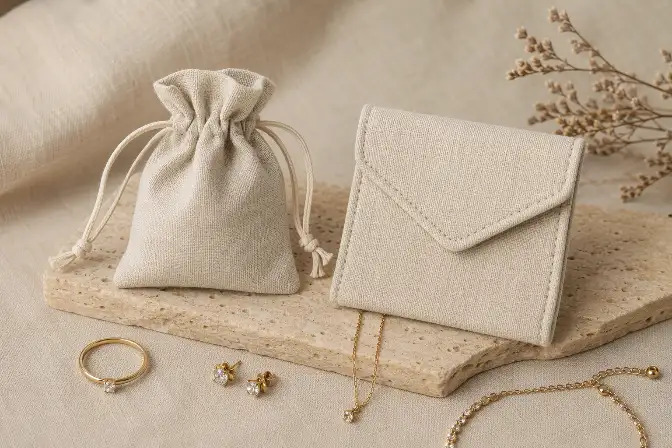
A jewelry pouch is often one of the first packaging items a customer handles after opening an order. It can shape the presentation of a ring, necklace, bracelet, watch, or small gift set before the jewelry itself is revealed. For B2B buyers sourcing custom fabric packaging, drawstring jewelry pouches and flap pouches are two common formats to compare. Each uses a different opening method, creates a different visual profile, and may fit different packing workflows. At YJXPACK, the useful starting point is not which pouch style looks better on its own. It is whether the pouch fits the jewelry, any insert or card, the outer packaging, and the intended customer experience.
Quick Summary
- Drawstring jewelry pouches have a soft, flexible form and a cord-based opening that can suit many small jewelry items.
- Flap pouches create a flatter folded presentation and may provide a broad visible area for a logo or design.
- The jewelry dimensions, internal movement, fabric surface, lining, insert, and outer shipping pack matter as much as the closure style.
- Review a physical sample with the actual jewelry, card, and outer box or mailer before approving a specification.
- Ask the supplier to confirm material options, decoration methods, closure construction, sampling terms, and order-specific conditions for the project.
Drawstring vs. Flap Jewelry Pouches: The Main Difference
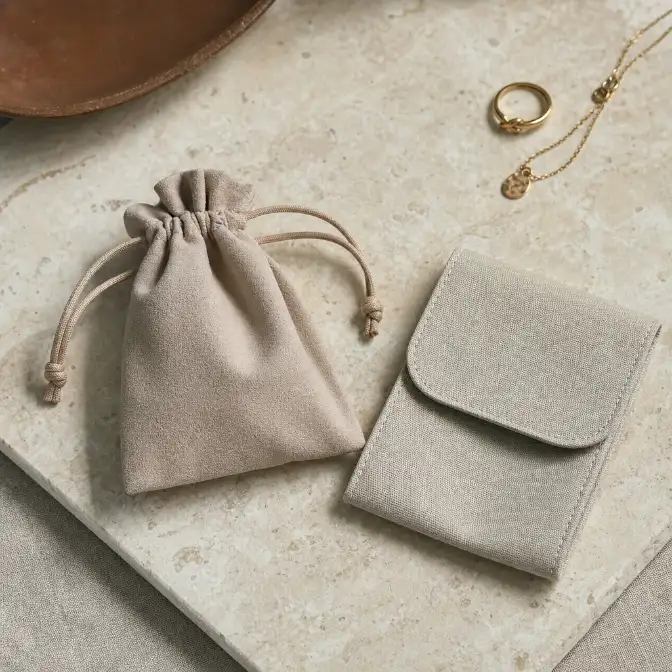
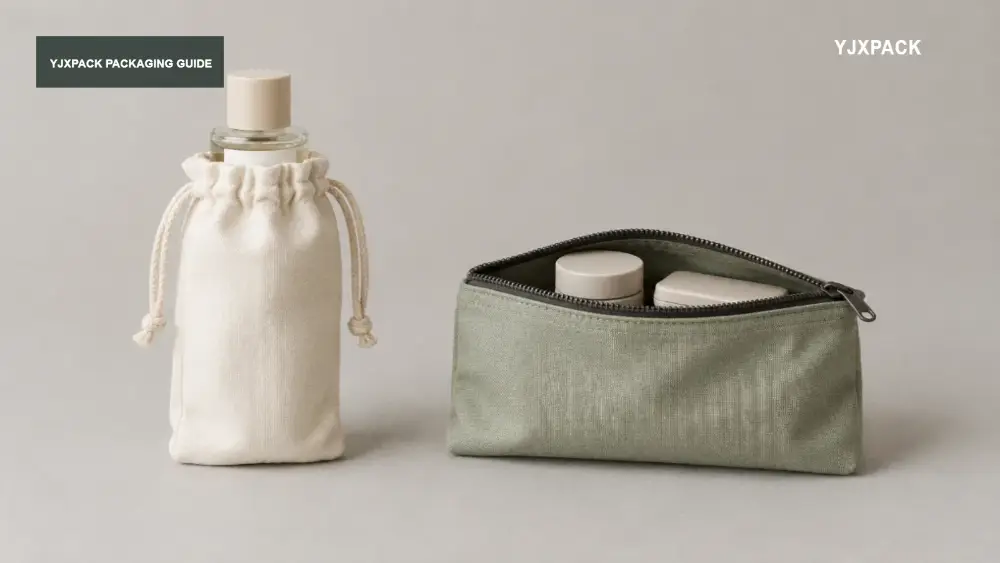
A drawstring pouch closes when cords pull the opening together. Its flexible pouch body can adapt to the shape of many small items. A flap pouch uses a fabric panel that folds over the opening. Some flap-pouch constructions may use a tuck-in flap or a closure component, but the exact construction should be confirmed for the selected project.
Neither style suits every jewelry line automatically. A drawstring design may work well for a compact item that customers will open and close often. A flap design may suit a brand that wants the pouch to lie flat in a box or show artwork on a broad front-facing panel. The final decision should account for the jewelry shape, any card or insert, and how the completed pack moves through fulfillment.
For a broader comparison of related pouch formats, see this comparison of drawstring, envelope, and flap pouch styles. Buyers comparing cords, fabrics, and use cases can also review this guide to drawstring pouch types and materials. Before choosing either format, check dimensions against a jewelry pouch size guide for rings, necklaces, and bracelets.
| Decision factor | Drawstring jewelry pouch | Flap pouch |
|---|---|---|
| Opening method | Pull cords open or close the pouch | Lift and fold back a fabric flap |
| Overall shape | Soft and flexible | Flatter and more structured in appearance |
| Logo placement | Usually on the front body, label, or tag | Often on the flap or front body |
| Packing consideration | Can compress when empty | May need care to keep the flap aligned and flat |
| Buyer question to ask | Will the cords close comfortably around the packed item? | Will the flap align properly with the item and insert inside? |
Match the Pouch to the Jewelry and Customer Experience
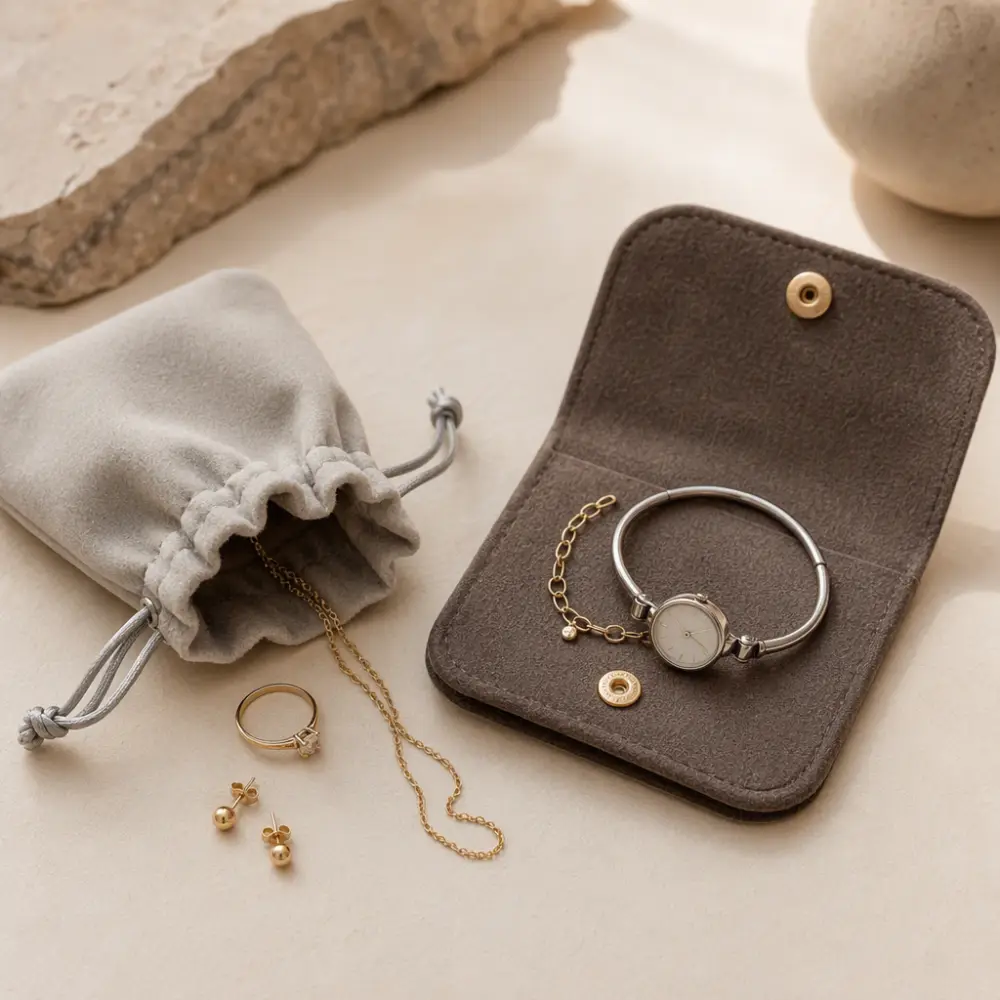
Start with the item rather than the pouch. Measure the jewelry at its widest point and consider thickness, clasp shape, stone setting, chain length, and any display card. A small ring, pair of earrings, charm, or pendant may fit in a compact drawstring pouch. Even a small item can move inside an oversized pouch, however. If movement is a concern, discuss a smaller size, a card, an insert, tissue, or another internal holding approach.
Bracelets, watches, layered necklaces, and multi-piece sets need a separate review. Their dimensions may make a flatter pouch more convenient, but a flap by itself does not prevent movement or tangling. Check whether the product needs a divider, jewelry card, sleeve, tissue layer, or separate outer box. For chains, consider both the packing method and how the customer will remove the item after opening the pouch.
Customer use also affects the choice. A soft drawstring pouch may be appropriate when customers are likely to reuse it for travel or storage. A flap pouch may support a neat gift presentation when it sits inside a rigid box. These are use-case considerations, not fixed rules. One jewelry collection may use different pouch formats for entry items, gift sets, retail display, and e-commerce orders.
For U.S. jewelry labeling and advertising information, buyers can consult the FTC Jewelry Guides . A packaging supplier should not make claims about jewelry materials, metals, gemstones, or product characteristics that the jewelry brand cannot support.
Materials, Lining, and Fit Affect the Packed Result
Closure style is only one part of a custom jewelry pouch decision. The pouch fabric, inner surface, seam placement, size, and outer shipping packaging all influence how an item sits during handling. Depending on the supplier and chosen construction, buyers may discuss fabrics such as velvet, microfiber, cotton, satin-like materials, or organza.
Fabric feel and surface texture should be reviewed with the actual jewelry rather than assumed from a digital image. Delicate finishes, plated items, stones, and fine chains may require closer review. A lining can change the inside feel and appearance of a pouch. Added padding can change pouch thickness and affect whether the finished pack fits inside an outer box. Review these details on a physical sample whenever possible.
Do not select a pouch only by its outside dimensions. A pouch that is too tight may place stress on cords, seams, or the flap area. A pouch that is too large may allow the jewelry to shift. The usable internal area can differ from the stated outer size because of seams, drawstring channels, gussets, folded flaps, and inserts.
| Jewelry or order situation | Points to evaluate before choosing | Possible direction to review |
|---|---|---|
| Small rings or earrings | Item movement, card size, cord opening, logo visibility | Compact drawstring pouch or small flap pouch |
| Fine necklace or chain | Tangle risk, internal card, chain placement, pouch depth | A pouch used with an insert or card that supports orderly placement |
| Bracelet or watch | Thickness, clasp shape, flat packing, outer-box dimensions | Flap pouch or larger drawstring pouch after sample review |
| Multi-piece gift set | Number of pieces, separation, presentation order, insert needs | Flap pouch with a planned insert, or separate pouches |
| E-commerce shipment | Mailer size, compression, handling, outer protective packaging | Choose after reviewing the full packed shipment |
Branding and Customization Considerations
Pouch format affects where a logo can appear and how the artwork is seen when the pouch is closed. Drawstring pouches often place a logo on the front body. Depending on the selected material and project requirements, branding discussions may also include labels, hangtags, or cord details. On a flap pouch, the flap can provide a visible artwork area when the pouch is folded closed.
Do not select a decoration approach from a digital mockup alone. Fine lines, small text, large solid areas, and multi-color artwork can look different across fabrics and decoration methods. Request an artwork review and, where appropriate, a sample showing the intended pouch material and logo treatment. Confirm logo orientation as well. Artwork that appears correct when a pouch lies flat may look upside down or become partly hidden when a customer holds the pouch by its opening.
When discussing a custom project with YJXPACK, provide the pouch style, target dimensions, fabric preference, color reference, logo file, decoration location, jewelry type, and intended outer packaging. These details turn a general pouch inquiry into a specification that can be reviewed more clearly.
A Practical Sampling Checklist for B2B Buyers
A sample review turns a packaging concept into a purchasing decision based on the actual product. Put the jewelry, card, insert, and outer box together instead of reviewing each component separately. Then consider the customer journey from packing through opening and possible reuse.
Use this checklist during the review:
1. Place the actual jewelry in the pouch rather than using a similarly sized object.
2. Open and close the pouch several times to review cord movement, flap alignment, and ease of handling.
3. Check whether the jewelry catches on seams, cords, closure components, labels, or inserts.
4. Review logo position, size, color appearance, and readability under normal lighting.
5. Put the filled pouch into the intended box, mailer, or gift bag to confirm the complete pack fits.
6. Decide whether the item needs tissue, a card, a divider, or a separate protective layer.
7. Record the approved size, material, color, logo placement, and construction details in writing before placing an order.
This review does not replace shipment testing or a brand’s internal quality process. It can, however, reveal practical fit issues before the order moves forward. It also keeps supplier discussions focused on observable details instead of broad descriptions that are difficult to evaluate.
Choosing Between Drawstring and Flap Pouches
Choose a drawstring pouch when a soft, flexible package and easy access fit the jewelry and customer use case. Choose a flap pouch when a flat folded presentation, structured appearance, or flap-based artwork area fits the product line better. In both cases, assess the pouch together with the jewelry, inserts, outer box, and shipping pack.
For custom fabric pouch sourcing, YJXPACK can help buyers organize the specification details that should be discussed, including pouch dimensions, fabric, lining, closure, logo placement, and intended packaging use. A careful sample review offers a stronger basis for choosing between drawstring and flap pouches than appearance alone.
FAQs
1. Is a drawstring pouch suitable for necklaces?
It can be suitable for some necklaces when the pouch size and internal presentation help keep the chain organized. For fine or long chains, review whether an insert, card, or another holding method is needed to reduce tangling during handling.
2. Does a flap pouch always provide more protection than a drawstring pouch?
No. The packed result depends on fabric, lining, fit, internal support, outer packaging, and shipping conditions. A flap can create a flatter format, but it does not by itself stop movement or prevent damage.
3. Which pouch has more room for a logo?
A flap may provide a larger uninterrupted artwork area, while a drawstring pouch commonly uses the front panel. The usable decoration area depends on pouch dimensions, seams, drawstring channels, fabric, and the selected decoration method.
4. What information should I send when requesting a custom pouch quote?
Share the pouch style, preferred dimensions, material, color, logo artwork, logo position, closure preference, jewelry type, intended use, and any outer packaging dimensions. If you have a physical item, card, or insert, include its measurements.
5. Should I approve a sample before placing a production order?
A sample can help confirm item fit, logo placement, material feel, closure operation, and compatibility with outer packaging. Review it with the actual jewelry and inserts whenever possible.
Share This Story, Choose Your Platform!