Linen pouches sit at an interesting point in fabric packaging: they look natural and premium, but “linen” itself covers a wide range of weights, blends and finishes. If you are sourcing custom pouches for jewelry, cosmetics, gifts or accessories, understanding what “linen” actually means for your order — and what to ask a supplier — will save you a round of failed samples. This guide walks through fabric specification, sizing, closures, branding and quality control so you can prepare a request for quote that a factory can answer accurately the first time.
Quick Summary
- Linen pouches suit brands that want a natural, textured look for gifts, cosmetics, jewelry or accessories, but weight and weave affect durability and print quality.
- Fabric weight, fiber blend and finish should be specified in the RFQ; never assume “linen” means one fixed material.
- Match pouch size to the actual product, not a rounded guess, and confirm closure type (drawstring, flap, zipper) based on how the item will be handled.
- Logo methods differ in how they perform on linen’s textured surface — request a sample before committing to a full order.
- Sampling and a documented quality control checklist can help protect you from surprises when the bulk order arrives.
Are Linen Pouches Suitable for Your Packaging Product?
Linen may have a natural slub texture, a slightly stiff hand feel and an open-looking weave, but the actual result depends on the fiber content, fabric weight, weave and finish. That combination can create an earthy and premium appearance, which is why gift brands, cosmetics companies and some jewelry sellers use it instead of smoother fabrics like satin or velvet. However, linen is not automatically the right choice for every product.
A heavy item with sharp edges, for example, may need a fabric with suitable abrasion resistance, while a lightweight cosmetic sample may only need enough structure to hold its shape on a shelf. Some linen fabrics feel sturdier than lightweight muslin, while others may feel softer or less structured depending on their construction. Linen may also feel less plush than velvet and less smooth than some cotton twills, but these comparisons vary by fabric specification. If your packaging needs a soft, cushioned feel against delicate jewelry, compare linen with other natural options before finalizing a spec. This guide from YJXPACK on how to compare cotton, linen and muslin performance is a useful starting point if you are still deciding between fabrics.
The table below gives a general starting point for matching product category to linen suitability. Treat it as a discussion tool with your supplier, not a final performance specification.
| Product Category | Linen Pouch Fit | Key Consideration |
|---|---|---|
| Jewelry (rings, small items) | Moderate | Consider a soft lining if the fabric feels coarse against metal or gemstones |
| Cosmetics and skincare | Good | Confirm how the selected fabric handles the moisture exposure expected during use and shipping |
| Gift and seasonal packaging | Strong | Texture and natural look may support a premium unboxing feel |
| Accessories (sunglasses, small tech) | Moderate | Structure and seam construction may matter more than surface texture |
| Bulk retail giveaways | Depends on budget and specification | Fabric weight can affect both appearance and per-unit cost |
If your product is fragile, delicate, or has sharp corners, ask your supplier — for example YJXPACK — whether a reinforced seam or a lining is worth adding to the spec before you move to sampling.
How to Specify Linen Fabric for a Custom Pouch
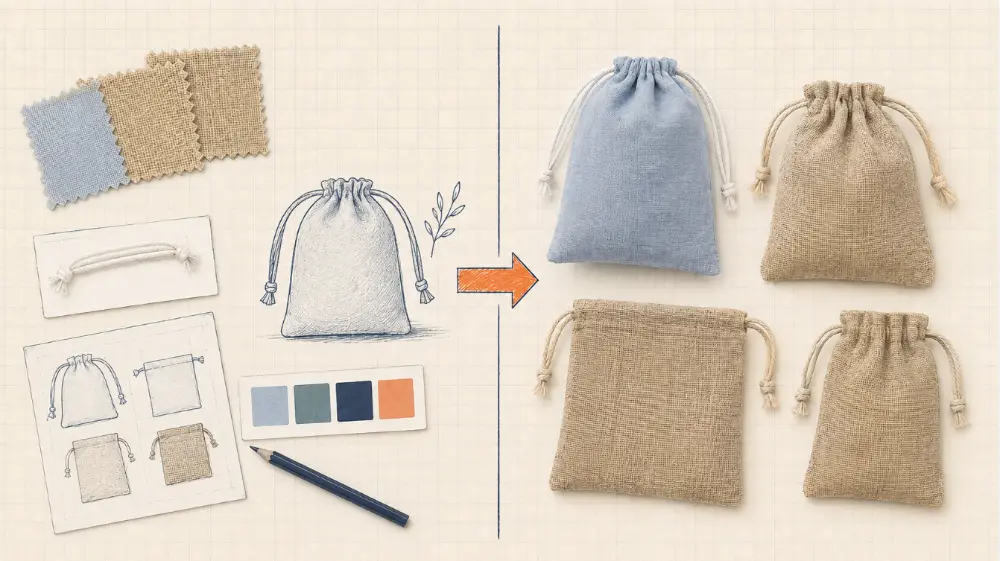
“Linen” is a fiber name, not a single product. Pure linen uses flax fiber, but many pouches described as “linen” in the packaging trade use linen-cotton blends or cotton fabrics with a linen-style weave or finish. None of these is inherently wrong, but each may behave differently during printing, embroidery and repeated handling.
When you write your RFQ, specify these details rather than leaving them open:
- Fiber content (100% linen, linen-cotton blend, or linen-look cotton)
- Fabric weight, typically described in GSM (grams per square meter)
- Weave type and visible texture (fine weave vs heavier slub weave)
- Color and dye method, including whether a specific color match is required
- Any lining requirement for the inside of the pouch
Do not assume a supplier can guess your intended weight or blend from the word “linen” alone. If sustainability claims matter to your brand — for instance, referencing organic or certified fiber sourcing — confirm the actual documentation with your supplier rather than repeating a general industry claim. Standards bodies such as Textile Exchange publish criteria that are worth reviewing before you make any fiber-sourcing statement to your own customers.
Choosing the Right Pouch Size and Closure
Pouch size should follow the product, not the other way around. Measure the actual item — including any inner packaging, tag or protective sleeve — and add clearance for closure movement. A ring pouch and a cosmetics sample pouch have almost nothing in common dimensionally, so avoid reusing a size template across unrelated product lines.
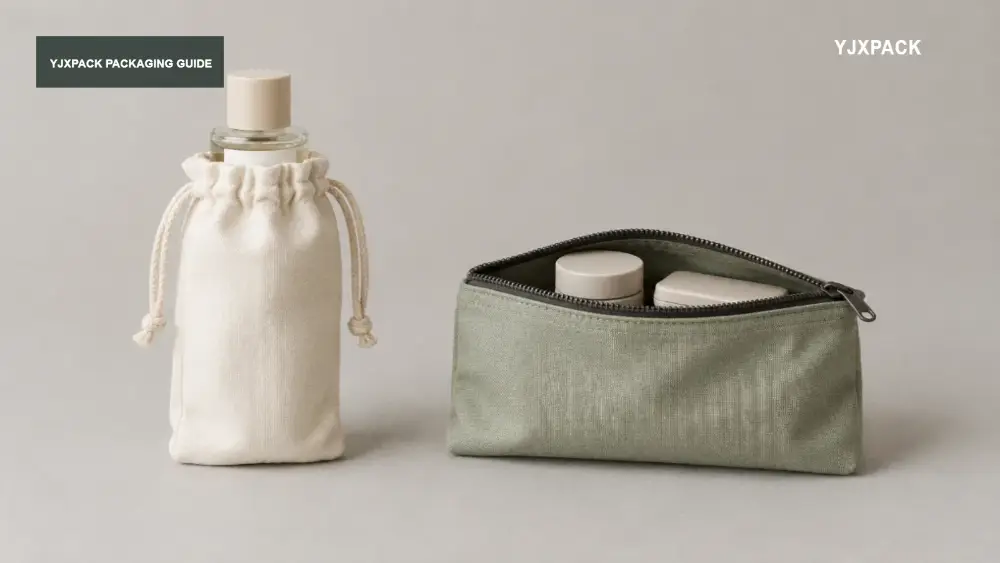
Closure choice affects both function and perceived quality. A drawstring closure often feels casual and gift-appropriate; a flap with a snap or magnetic closure can feel more structured, closer to a small box; a zipper may suit pouches intended for repeated reuse, such as accessory or travel pouches. Ask yourself: will the customer open this pouch once and keep the product, or will they reuse the pouch itself? That question often helps settle the closure decision.
| Closure Type | Typical Use | Buyer Consideration |
|---|---|---|
| Drawstring | Gifts, jewelry, small accessories | Confirm cord material and length before approving the sample |
| Flap with snap or magnet | Cosmetics, structured gift sets | Adds a more finished, retail-ready appearance |
| Zipper | Reusable pouches, travel or tech accessories | Check zipper pull quality and stitching around the track |
| Open top (no closure) | Bulk giveaways, low-cost packaging | May reduce cost but offers no product security |
Linen Pouch Branding and Logo Customization Options
Linen’s texture is part of its appeal, but that same texture can change how logos and prints look compared with a smooth fabric such as satin. A fine screen print may look slightly softer on an open or uneven weave. Embroidery may work well on some linen-like fabrics because the stitching interacts with the fabric structure, but the result depends on fabric weight, backing, stitch density and artwork. Debossing, which presses a recessed design into a surface, and heat transfer methods also require a suitability check because not every linen or linen-style fabric accepts them consistently.
Treat logo choice as a decision tied to your specific fabric weight, surface, finish and design detail level. A fine, thin-line logo may lose definition on a heavier slub-weave fabric, while a bold, simple mark may be easier to reproduce. Ask the supplier to test the selected method on the actual fabric and confirm the result through a physical sample before approving production. This comparison of screen printing, heat transfer and embroidery for custom pouches breaks down cost, durability and appearance trade-offs in more detail.
Color matching is another area buyers underestimate. If your brand uses a specific color reference, communicate it clearly and ask the supplier how closely the selected dye lot — the production batch of dyed fabric — can match it on the chosen natural-fiber material. Exact matches may be harder to repeat on some linen fabrics than on synthetic fabrics. Request a physical swatch or pre-production sample before approving color and logo together; a screen image cannot show the actual fabric texture and color in hand.
Cost Factors, MOQ Questions and Sampling Decisions
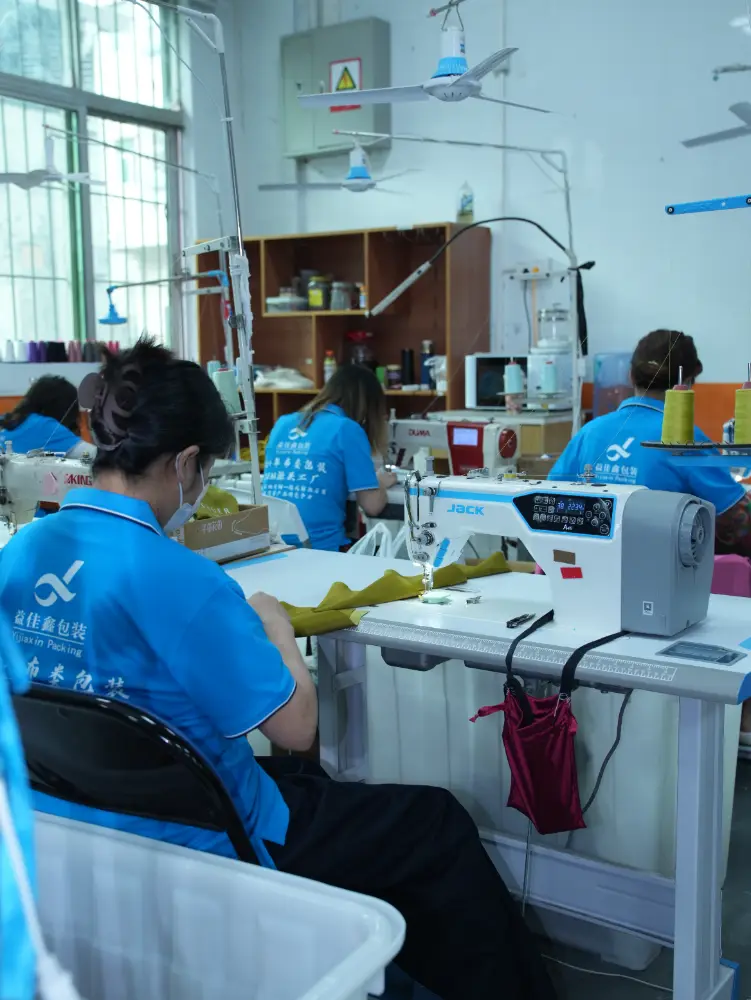
Several factors may influence linen pouch pricing, and no reliable figure can come from a general description without a specific spec sheet. Fabric weight and fiber content can affect cost, along with pouch size, closure hardware, lining, logo method, sourcing conditions and order composition. A simple screen-printed drawstring pouch may price differently from a lined flap pouch with embroidery and custom hardware, but the actual difference depends on the supplier and confirmed specifications.
Minimum order quantity (MOQ) questions come up early in almost every RFQ conversation. Rather than asking only “what’s your MOQ,” ask how the minimum may change with fabric weight, print complexity, color count, setup needs and order combination. If your brand is early-stage or testing a new SKU, ask specifically about small-batch or sample-run options instead of assuming that one standard minimum applies. This overview of how MOQ works for custom packaging explains variables suppliers may consider when quoting minimums.
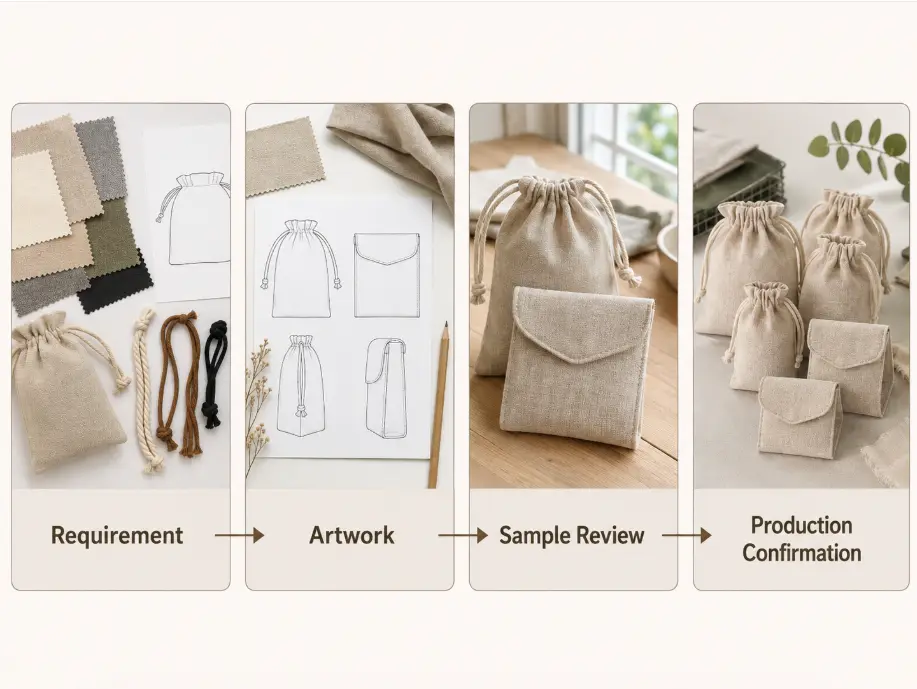
A pre-production sample can help you check fabric hand feel, stitching quality, logo placement and closure function before committing to a bulk run. The best confirmation process depends on the supplier, product risk and project requirements, so agree in advance on what the sample should demonstrate and how your team will record approval. If you want a visual reference before requesting a physical sample, ask whether the supplier can provide a digital mockup or other digital visualization, subject to the supplier’s confirmed service scope. Do not treat a digital image as a substitute for checking the actual fabric and finished construction.
Quality Control and RFQ Checklist for Linen Pouches
A clear RFQ can prevent many quality disputes before they start. Vague requests lead to vague quotes, and vague quotes can lead to samples that miss the mark. Before you contact any factory — including YJXPACK — prepare a checklist covering these points:
- Fabric type, weight (GSM) and fiber content, confirmed in writing
- Exact pouch dimensions based on the actual product, not an estimate
- Closure type, hardware details and cord specifications if applicable
- Logo method, placement, size range and color requirements
- Lining requirement, if any, and lining fabric type
- Target order quantity and whether a small-batch trial run is needed
- Sample approval process and what “approved” means for your team
On the quality control side, ask your supplier which inspection points the team checks before shipment — seam construction, print adhesion, color consistency and closure function are common checkpoints worth confirming rather than assuming. Also ask how the supplier records acceptable variation for fabric texture, color and logo placement.
If your brand makes any fiber content or “natural material” claims in marketing copy, review general labeling guidance rather than assuming a supplier’s material description automatically meets the requirements for your market. The FTC’s business guidance on marketing claims is a reasonable starting reference for U.S.-facing brands, while EU and UK sellers should check their own regional labeling requirements separately.
Frequently Asked Questions
Is linen a good material for jewelry pouches specifically?
It can work well for gift-style jewelry packaging, though some linen fabrics feel coarser than satin or velvet. If the jewelry is delicate or prone to scratching, ask about an interior lining and confirm the result with a fabric swatch or sample rather than assuming raw linen alone is sufficient.
How is linen different from cotton for custom pouches?
Linen may have a more visible, textured weave and a stiffer hand feel than some cotton fabrics, while cotton often feels smoother and may support fine printing more easily. Actual performance depends heavily on the specific weight, blend, weave and finish, so ask your supplier for swatches before deciding.
What closure works best for a linen gift pouch?
Drawstring closures are common for gift-style linen pouches because they feel casual and are simple to open. Flap closures with a snap or magnet may suit brands that want a more structured, retail-style presentation. The best choice depends on the product, handling requirements and confirmed pouch specification.
Do I need a sample before placing a bulk linen pouch order?
A pre-production sample can help confirm fabric feel, logo quality and closure function before a full production run. Whether you need a physical sample, a digital review or another approval method depends on the supplier’s process and the risks of your project; agree on the confirmation steps before placing the order.
How do I confirm pricing without guessing at specifications?
Prepare a detailed RFQ covering fabric weight, dimensions, closure, logo method and quantity range, then ask your supplier to quote based on that specification rather than a general description of “a linen pouch.”
Share This Story, Choose Your Platform!