A jewelry pouch influences the presentation of a ring, necklace, bracelet, or accessory before the customer handles the item itself. Microfiber and velvet can both support custom jewelry packaging, yet they create different surface effects, opening experiences, and logo considerations. The right direction depends on the jewelry dimensions, pouch construction, intended presentation, artwork, and the exact fabric specification approved for production.
Quick Summary
- Velvet can suit a plush, classic, or gift-focused jewelry presentation, while microfiber can suit a smoother and more contemporary direction.
- “Microfiber” and “velvet” are broad material categories, not fixed pouch specifications. Confirm the selected finish, thickness, color, lining, and construction for each project.
- Choose pouch dimensions and closure around the real jewelry item, not around a generic pouch size.
- Logo results depend on the fabric surface, logo detail, placement, and decoration method.
- Review a physical sample and a written specification before approving a bulk custom pouch order.
Start With the Jewelry and Customer Experience
Material matters, but it should not be the first decision in isolation. Begin with the product that will go inside the pouch. A pouch for stud earrings has different size and presentation needs from one for a pendant necklace, a bracelet, or a jewelry set. The way a customer opens, removes, stores, and reuses the pouch should also guide the specification.
Velvet may align with a formal gift set, bridal collection, or traditional jewelry presentation. Microfiber may align with a clean visual identity, a compact e-commerce order, or a more understated packaging system. Neither direction is automatically right for every jewelry category. The material should work with the item, brand style, pouch format, and logo plan.
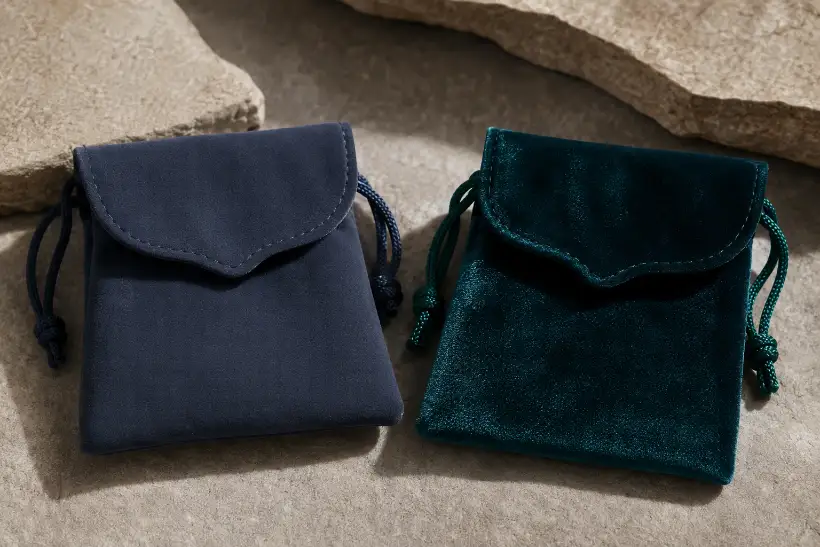
Pouch construction should be discussed at the same time as fabric. A drawstring pouch creates a different experience from a flap-and-snap pouch. Buyers can review drawstring versus flap jewelry pouch formats when deciding how the pouch should open and close.
For a material-focused reference, this guide explains what velvet is and the types used in luxury jewelry packaging. It is also useful to compare drawstring, envelope, and flap pouch styles before treating material as the only purchasing decision.
At YJXPACK, recommendations are developed to customer requirements for material, size, pouch type, closure, logo method, color, lining, and accessories. This custom approach helps buyers compare complete pouch specifications rather than comparing two fabric names alone.
How Microfiber and Velvet Differ
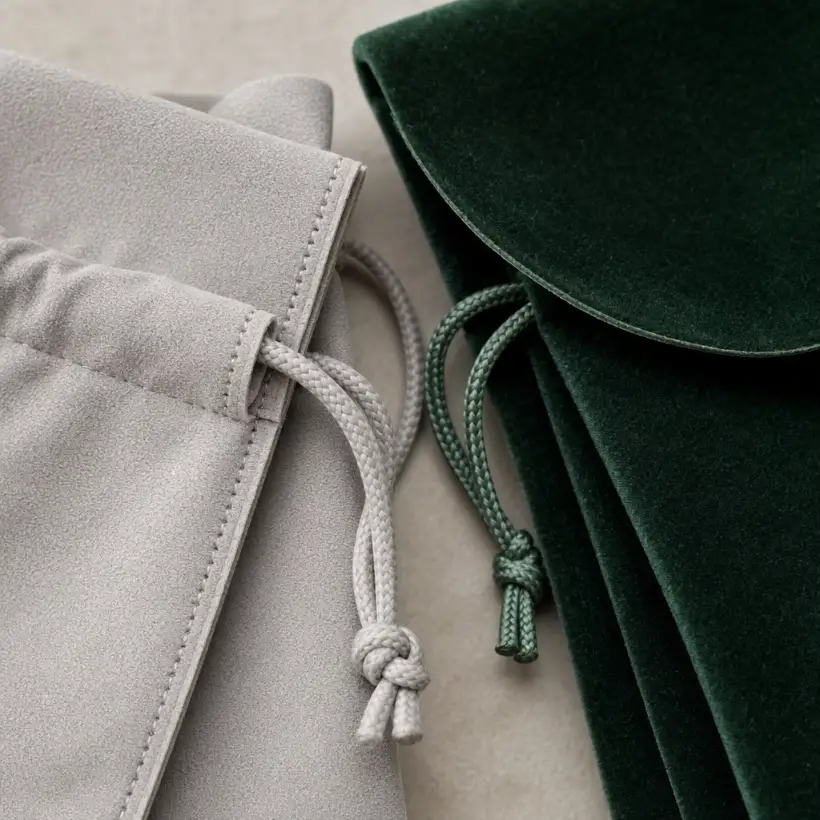
Microfiber generally refers to fabric made from very fine fibers. Depending on the selected specification, it may have a smooth, brushed, suede-like, or tighter surface appearance. Velvet is a pile fabric with raised fibers on the face. Its pile can affect how the pouch catches light, feels in hand, and displays small logo details.
These descriptions are useful starting points, but they do not replace sampling. One velvet specification may differ from another in pile density, backing, color depth, and surface direction. Likewise, microfiber options can differ in thickness, softness, backing, and finish. Ask for the exact material direction or a sample that matches the quoted pouch design.
| Buying Factor | Microfiber Pouch Direction | Velvet Pouch Direction |
|---|---|---|
| Typical visual impression | Smooth, clean, restrained, or contemporary | Plush, classic, formal, or gift-focused |
| Surface character | May be flat, brushed, or suede-like depending on specification | Raised pile that can show changes in light and direction |
| Logo planning | Surface finish should be checked with the chosen decoration process | Pile height and density should be checked, especially for fine artwork |
| Presentation use | Compact jewelry packaging, accessories, or modern brand systems | Gift sets, bridal presentation, and traditional jewelry styling |
| Key point to confirm | Finish, thickness, backing, and logo sample | Pile appearance, density, direction, and logo sample |
Match the Pouch Format to the Jewelry Item
Measure the actual item before selecting pouch dimensions. A small pouch can make a compact jewelry item feel considered and neatly presented. However, a pouch that is too tight may make loading, closing, or customer use less convenient. An oversized pouch can also make a small item appear visually lost inside the packaging.
Next, select an opening style that supports the intended use. Drawstring formats can be considered for small jewelry pieces, gifts, and flexible packaging needs. Flap-and-snap formats can create a more structured presentation. Other closure concepts may be discussed when appropriate, but feasibility should be confirmed against the selected fabric, dimensions, construction, and accessories.
Lining is another specification decision. Some projects may use a matching fabric direction, while others may request satin or another agreed lining material. The lining color, attachment method, and how it works with the outer pouch should be confirmed before production approval.
| Pouch Element | Details to Discuss | What to Confirm Before Sampling |
|---|---|---|
| Pouch construction | Drawstring, flap-and-snap, envelope, or another requested format | Opening method, finished shape, and intended jewelry item |
| Finished size | Compact ring size through larger set sizes | Actual item dimensions and desired visual fit |
| Lining | Matching fabric, satin, or another agreed material | Color, feel, attachment, and design compatibility |
| Pull detail | Ribbon, cotton cord, satin cord, or another agreed option | Thickness, color, knot style, and finishing details |
| Accessories | Woven label, metal label, hang tag, insert, or agreed hardware | Placement, artwork, dimensions, and construction fit |
Plan the Logo Around the Actual Fabric Surface
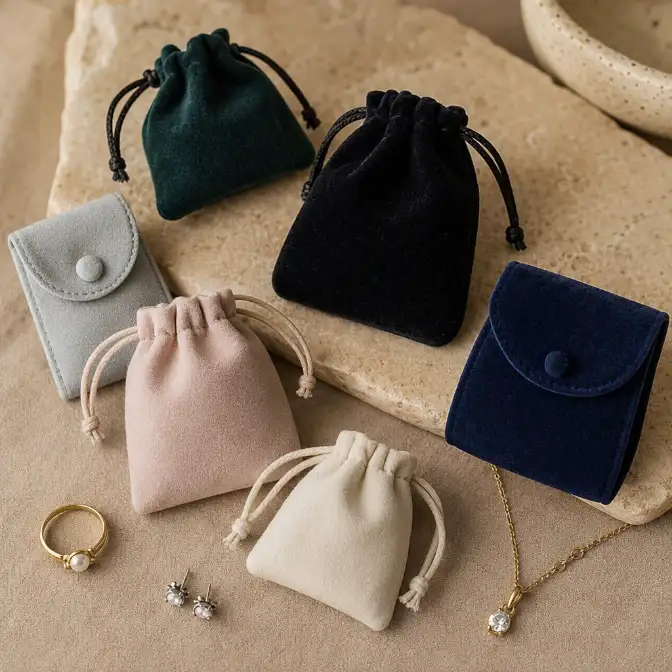
A logo method should be decided as part of the pouch specification, not as a final decorative step. Silk screen, foil stamping, debossing or embossing, embroidery, silicone print, woven labels, metal labels, heat transfer, and heat-transfer film may be considered for custom fabric pouches. The suitable method must be confirmed for the selected material, artwork, logo placement, and pouch construction.
Simple artwork may allow more decoration options than a logo with very small text, thin lines, or tightly spaced details. Velvet pile can affect the appearance of fine artwork. A microfiber surface may also respond differently depending on its finish and the selected process. A physical sample is the practical way to review the logo at its final size.
Review color as a complete system rather than as an outer pouch choice alone. Consider the outer fabric, lining, cord or pull detail, label, and logo contrast together. Jewelry color and product photography can also influence the final choice, especially when the collection includes gold-tone, silver-tone, pearl, or colored-stone pieces.
For U.S.-facing brands that plan to make textile-content or other customer-facing labeling statements, the Federal Trade Commission provides guidance on textile labeling requirements . Any final statement should be checked against applicable requirements and the confirmed material specification.
Compare Like-for-Like Specifications Before Requesting Quotes
A custom pouch quotation can change when fabric, finished size, lining, closure, logo method, color count, or accessories change. For that reason, asking only whether microfiber or velvet costs less may not provide a useful sourcing comparison. Request comparable quotations using the same dimensions, construction, artwork, and packaging details.
A clear request for quotation should include:
- Jewelry type and actual dimensions
- Preferred pouch shape and closure direction
- Material direction: microfiber or velvet, plus any preferred surface finish
- Outer color and lining color requirements
- Logo file, logo size, placement, and preferred decoration direction
- Accessories such as cords, labels, inserts, or agreed hardware
- Target quantity and whether a sample is required
YJXPACK may accept projects from an MOQ of 100 pieces when applicable, although the final MOQ should be confirmed for the approved design. Sampling may take about 1-3 days, and bulk production may take about 5-7 days after details are confirmed. These are working references, not unconditional commitments, so buyers should reconfirm timing for each custom project.
Use Samples to Review What Buyers Actually See
A physical sample allows a team to review more than color. Check whether the pouch fits the jewelry as intended, whether the closure works smoothly for the chosen format, whether the lining matches the approved direction, and whether the logo remains clear at the final size.
For velvet, inspect the pile appearance across the pouch face and around the logo area. For microfiber, inspect the selected surface finish and the appearance of the decoration under normal lighting. For either material, review seams, lining attachment where applicable, closure placement, pull details, label position, and the relationship between the pouch and the actual jewelry item.
The custom packaging sample guide provides a useful process for moving from an early idea to a production-ready specification. Keep the approved artwork, material direction, dimensions, colors, and sample notes together so the final production discussion is based on the same requirements.
A Practical Microfiber vs. Velvet Decision Framework

Choose microfiber when the packaging direction calls for a smoother surface, a clean visual style, or a compact pouch format. Choose velvet when the brand wants pile texture and a more formal, classic, or gift-oriented presentation. Then validate the exact choice with samples rather than relying on generic material descriptions.
A reliable buying sequence is straightforward: define the jewelry item first, select the pouch construction second, and approve material, color, lining, accessories, and logo treatment together. This approach helps reduce the chance of approving a pouch that looks suitable on its own but does not fit the jewelry or the wider packaging presentation.
When ready to compare a custom microfiber or velvet jewelry pouch, send YJXPACK the item dimensions, material direction, closure preference, artwork, colors, lining requirements, accessories, and target quantity. Use the details to start a tailored Get a Quote request.
Frequently Asked Questions
Is velvet or microfiber better for jewelry pouches?
Neither material is universally better. Velvet may suit a plush, formal, or gift-focused presentation, while microfiber may suit a smoother and more modern direction. The appropriate choice depends on the jewelry item, pouch construction, brand style, and approved sample.
Can small pouches be made for rings or earrings?
Small pouch formats can be specified for rings, stud earrings, and other compact jewelry items. Share the actual product dimensions so the pouch can be planned for an appropriate fit and opening experience.
Which logo method works best on velvet?
The suitable method depends on the velvet pile, artwork detail, logo size, placement, and pouch construction. Printing, foil-related processes, embroidery, labels, and other methods should be evaluated against the actual selected material and confirmed through sampling.
Do microfiber and velvet pouches need lining?
Not every pouch requires lining. The decision depends on the requested presentation, construction, material combination, and project specification. Confirm the lining material, color, and attachment method as part of the complete pouch design.
What information should I send for a custom pouch quote?
Send the jewelry dimensions, requested pouch size and closure, preferred material direction, colors, lining request, logo artwork and placement, accessory requirements, target quantity, and sample request. A physical sample is recommended before bulk approval.
Share This Story, Choose Your Platform!