Promotional packaging decisions often begin while buyers are still defining the product to be packed, the desired brand presentation, and the distribution channel. This can make supplier quotations, samples, and material options difficult to compare. This guide helps buyers prepare a clearer specification for custom polyester drawstring bags before requesting a quote or sample.
Quick Summary

- Start with the intended use, packaged item, and desired customer experience before selecting fabric or construction details.
- Confirm fabric construction, drawcord, seams, dimensions, logo method, and packaging requirements with the supplier.
- Printing compatibility depends on the fabric, artwork, colour, coating, equipment, ink system, and agreed quality standard.
- Ask the supplier which proof, sample, and inspection options it offers for the project.
- Confirm MOQ, pricing, production timing, documentation, and shipment arrangements for each enquiry.
—
Define the Promotional Use Before Choosing Polyester Drawstring Bags
The intended use shapes the specification. A bag for event distribution can need different handling, presentation, and durability features from one used for retail gift packaging, membership programmes, or product bundles.
Before contacting a supplier, clarify these practical questions:
- What goes inside? The packaged product affects the required opening, usable interior space, and fabric construction.
- How will the recipient use the bag? Repeat-use applications can need different seam, cord-channel, or reinforcement details than short-term promotional use.
- Where does the bag fit in the customer experience? Event giveaways, retail packaging, and premium gifting can call for different visual finishes and packaging formats.
Once these points are clear, buyers can distinguish between a standard drawstring pouch and a more structured bag format. The project brief determines the appropriate material. Polyester is one option to compare with cotton, satin, non-woven, or other fabrics when texture, presentation, or material claims matter.
—
Confirm Materials, Construction and Functional Requirements
Fabric Weight and Denier
Denier describes yarn linear density in polyester fabrics, but it does not define the finished fabric on its own. Weave, coating, finish, thickness, and gram-per-square-metre weight can affect a bag’s feel, appearance, and performance.
The table below is a buyer discussion guide, not a fixed YJXPACK specification or a universal material-selection rule. Confirm the actual fabric construction, weight, finish, colour availability, and suitability for the intended use with the supplier.
| Fabric Category | General Buyer Consideration | Possible Use Context | What to Confirm |
|---|---|---|---|
| Lightweight polyester | Can create a softer or less structured feel | Event inserts or lightweight gift packaging | Fabric weight, seam construction, and expected handling |
| Medium-weight polyester | Can provide more body than lighter constructions | General promotional or retail packaging | Actual construction, print compatibility, and cord-channel finish |
| Heavier polyester construction | Can create a firmer feel | Applications carrying heavier contents | Product fit, seam reinforcement, and shipping implications |
| Recycled polyester option | Recycled-content claims need documentation | Projects with recycled-material objectives | Material declaration and order-specific supporting documents |
If recycled material is part of the brief, define the exact claim before quoting or approving artwork. Recycled polyester can use different source materials and recycled-content levels across supply chains. Ask what documents support the proposed material and order. Buyers making environmental marketing claims should also review applicable guidance, such as the U.S. Federal Trade Commission’s Green Guides . For a sourcing checklist, see RPET bags for custom packaging.
Lining and Construction Details
A drawstring bag can be unlined or lined, depending on the required finish and use. Ask the supplier to identify the proposed structure and available alternatives rather than assuming a default construction.
Confirm these items in writing:
- Seam type and seam allowance
- Cord-channel construction
- Cord exit-point treatment or reinforcement, if required
- Flat base or gusseted construction
- Lining, interlining, coating, or other finishing requirements
A *bar tack* is a concentrated stitch reinforcement, often placed at stress points. Its suitability depends on the bag construction and intended use.
—
Choose Sizes, Drawcords and Closure Details

Getting Dimensions Right
Suppliers commonly state bag dimensions as width by height when the bag lies flat. The usable interior space and opening can change when the drawcord closes, so buyers should check the proposed size against the actual packaged product.
For guidance on common pouch measurements, see this size guide for drawstring pouches. Use a product sample, mock-up, or another agreed fit-check approach to confirm that the opening and internal space suit the intended contents.
Drawcord Options
The drawcord affects function and appearance. Materials, colours, diameters, finishes, and attachment methods vary by supplier and project.
Common drawcord categories may include:
- Round polyester cord for a conventional synthetic-cord appearance
- Flat ribbon cord when a wider visual detail is desired
- Cotton cord when a natural-fibre look is part of the brief
- Elastic cord for selected closure applications
Confirm the cord material, colour reference, thickness, length, knotting method, and tip finish. An *aglet* is the finished tip of a cord. Do not assume that a supplier offers a particular aglet material, custom colour match, or finish without confirmation.
—
Select the Right Logo and Artwork Method
How to Match the Method to the Fabric
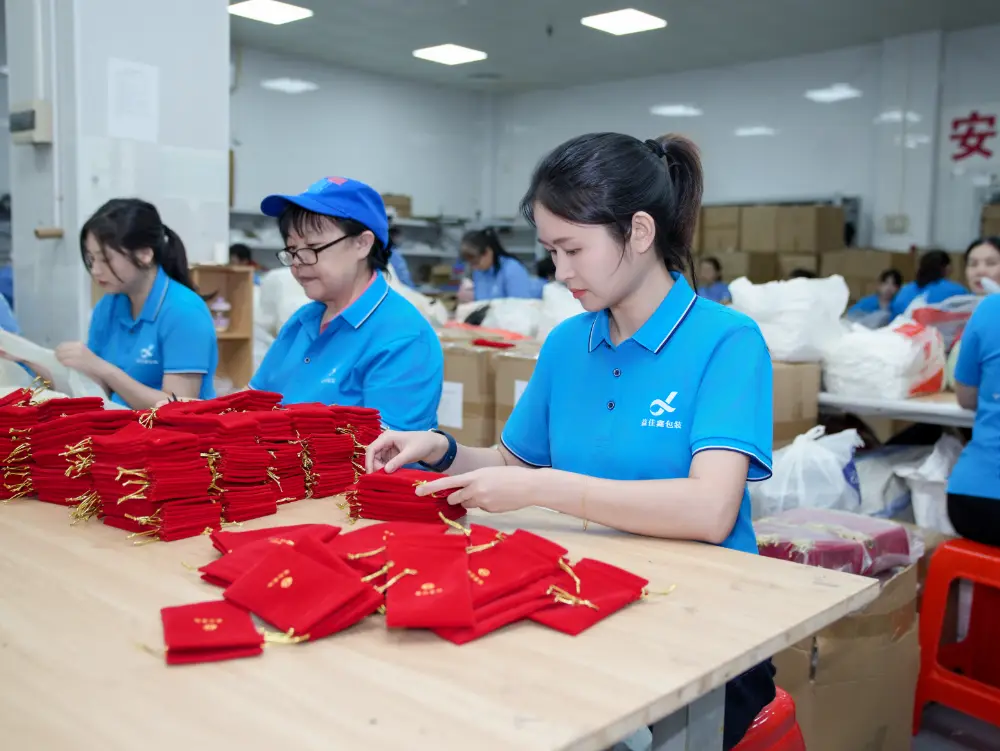
Choose a logo method based on the artwork, fabric, fabric colour, surface finish, intended handling, and supplier capability. A method that suits one polyester fabric may not suit another. Ask for the supplier’s recommendation and identify the proof or sample option available before production approval.
| Logo Method | Potential Use | Buyer Benefit | Points to Confirm |
|---|---|---|---|
| Screen printing | Simple artwork on suitable fabric panels | Can suit bold spot-colour designs | Ink system, colour count, coverage, adhesion, and artwork limits |
| Heat transfer | Artwork requiring more colour detail | May support detailed graphics | Transfer type, heat settings, hand feel, and suitability for the fabric |
| Sublimation | Selected polyester-based constructions | May suit all-over or detailed artwork | Fabric composition, base colour, coating, artwork outcome, and sample approval |
| Embroidery | Designs where a stitched finish is desired | Creates a textured logo treatment | Fabric support, stitch detail, logo size, and backing requirements |
| DTF or similar transfer methods | Selected graphics and fabric combinations | May offer another artwork route | Available method, transfer feel, adhesion, and agreed evaluation approach |
Avoid durability, washability, colourfastness, or permanence claims unless an agreed test method and project-specific results support them. Confirm the final logo method against the actual specification and sample process.
Artwork Preparation Checklist
Before submitting artwork, confirm these items with the supplier:
- Preferred artwork file format and whether fonts need outlining
- Colour references and the process used to evaluate colour
- Proposed logo placement and print area
- Minimum line weight and text size for the selected method
- Available digital proof, print proof, strike-off, or physical-sample options
A *strike-off* is a sample print or fabric trial that buyers use to review the proposed appearance. Agree its format and availability with the supplier.
—
Understand Cost Factors, MOQ and Sampling Decisions
What Drives Unit Cost
Custom bag quotations depend on the complete specification, not one variable alone. Compare quotations after each supplier has priced the same requirements.
Typical quote inputs include:
- Fabric type, construction, finish, and colour
- Bag dimensions and pattern complexity
- Logo artwork and decoration method
- Cord, closure, lining, reinforcement, and other components
- Packaging, labelling, and shipping requirements
- Quantity, sample requirements, and requested delivery arrangement
MOQ, unit price, sample charges, and timing vary by project and supplier. Ask suppliers to show each item clearly in the quotation instead of assuming that it is included or credited elsewhere.
MOQ and Sampling
A sample process can include a digital artwork proof, material swatch, prototype, print trial, or physical pre-production sample, depending on the supplier and project. Confirm what the supplier can provide, what each sample represents, and what approvals the project requires before production begins.
A physical sample can help buyers review fit, fabric feel, cord treatment, construction, and logo appearance. Confirm in writing how the sample relates to final production, including the materials, colours, and processes it represents.
—
Set Quality-Control Checkpoints Before Production
Plan quality-control checkpoints with the supplier before production. The timing and scope can vary by product, order arrangement, inspection provider, and shipping method.
Pre-Production Approval
Use an approved specification sheet to review:
- Dimensions and construction details
- Fabric and colour reference
- Logo artwork, placement, and method
- Cord and closure details
- Packaging and labelling requirements
If colour tolerance matters, define how the parties will evaluate it. They may use visual comparison to an approved reference or another agreed method.
During-Production Inspection
Buyers and suppliers can arrange an in-process inspection when the project needs one. Define the inspection point, sample approach, acceptance criteria, reporting format, and responsibility for corrective action before production begins.
Social-compliance programmes and quality-control systems address different subjects. Do not use a social audit framework to judge a factory’s production-control process. Ask each prospective supplier to explain the controls it proposes for the specific project.
Pre-Shipment Inspection
Before shipment, buyers may wish to check the following against the approved specification and purchase order:
- Product count and carton count
- Sampled measurements and visible workmanship
- Logo appearance and placement
- Packaging and labelling
- Carton condition and shipment documentation
The right inspection approach depends on whether goods move by courier, air, consolidated freight, or another shipping arrangement. Keep approved references and project records available for comparison during inspection.
—
Match Polyester Drawstring Bags to Promotional Applications
The table below provides discussion prompts rather than fixed material recommendations. Confirm the final specification through supplier discussions and samples where available.
| Promotional Context | Specification Focus | Logo Discussion | Buyer Priority |
|---|---|---|---|
| Trade show distribution | Simple construction and practical packing | Artwork clarity on the proposed fabric | Presentation and budget alignment |
| Sports or activity event | Product fit and construction details | Method suitable for expected handling | Functional requirements |
| Retail gift packaging | Fabric feel, colour, and closure appearance | Brand presentation on the selected material | Customer experience |
| Corporate merchandise | Repeatability of materials and branding details | Consistent artwork specification | Brand consistency |
| Recycled-material campaign | Support for documented material claims | Compatibility of decoration with proposed fabric | Documentation and claim review |
For premium gift-channel projects, buyers may compare polyester with satin, cotton, linen, or other constructions. The required appearance, tactile experience, material claim, and complete commercial specification determine the appropriate choice. Confirm available material and construction options for each enquiry.
—
Frequently Asked Questions
What is the standard fabric weight for custom polyester drawstring bags?
No single fabric weight suits every project. Denier, gram-per-square-metre weight, weave, finish, and bag construction can all affect the result. Share the intended use and packaged product with the supplier, then confirm the proposed material specification before approving a sample or quotation.
Can polyester drawstring bags be made from recycled material?
Recycled polyester may be available for some projects, but buyers need to confirm the material source, recycled-content claim, and supporting documents. Before using an environmental claim, review the relevant supplier documentation and order-specific records.
What logo methods work on dark-coloured polyester?
The suitable method depends on the fabric, fabric finish, artwork, ink or transfer system, and desired appearance. Screen printing, transfer methods, and embroidery may suit some cases, but buyers should request a supplier recommendation and confirm the result through the available proof or sample process.
How do I specify the drawstring cord to match my brand colour?
Provide a colour reference or physical swatch where possible, then ask whether stock or custom cord options are available. Confirm the final cord material, colour, thickness, length, tip finish, and attachment method on the specification sheet. Do not assume an exact colour match until the supplier confirms the proposed option.
What should a buyer-side specification sheet include before requesting a quote?
A complete specification sheet should include:
- Finished bag dimensions and intended contents
- Fabric type, construction, finish, and colour reference
- Cord material, colour, thickness, and tip finish
- Logo artwork, placement, colour references, and preferred decoration method
- Seam, channel, gusset, lining, and reinforcement requirements
- Packaging, labelling, shipping, quantity, and requested delivery requirements
A clear specification gives buyers a stronger basis for comparing quotations and discussing sample options with suppliers.
Share This Story, Choose Your Platform!