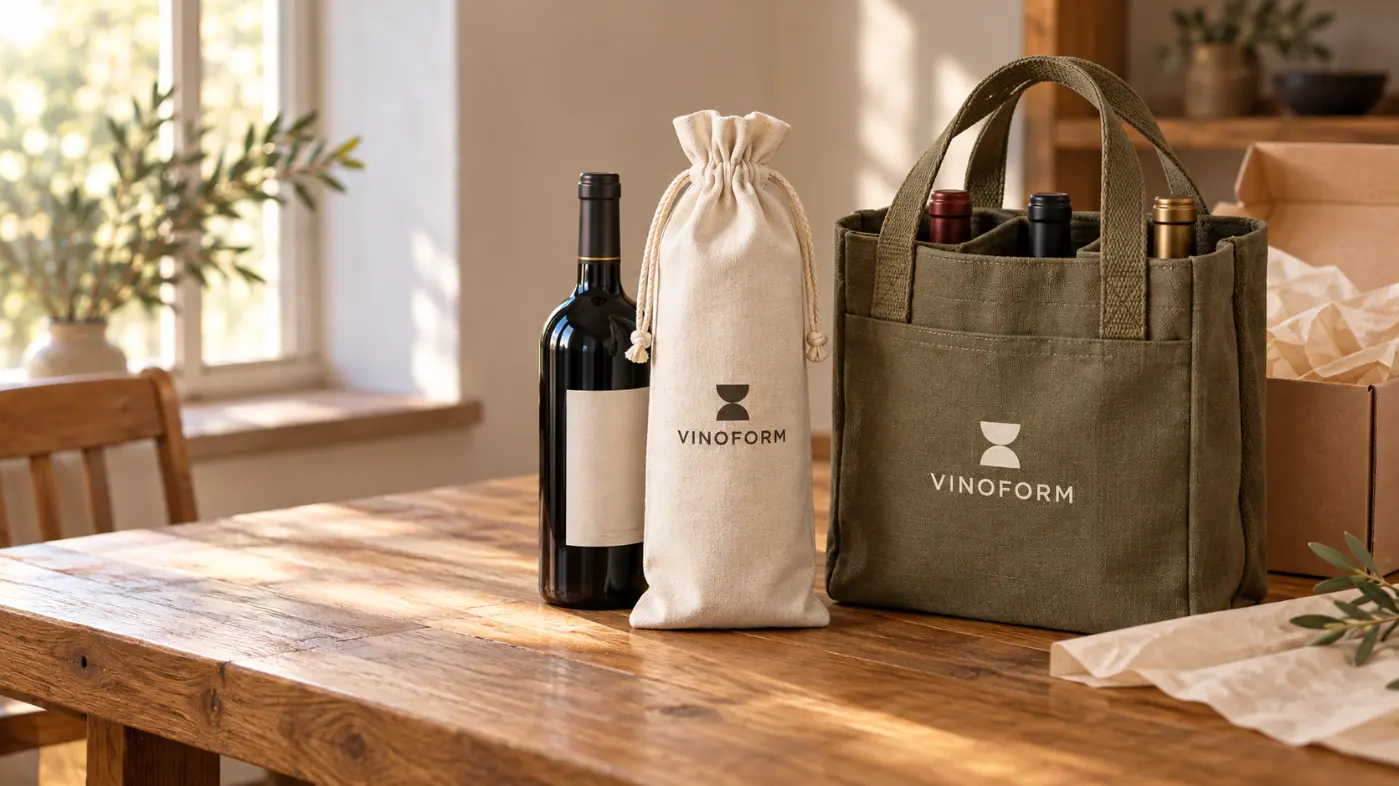
Walk through any trade show, beach event, or retail launch. You’ll see thousands of branded tote bags. Cotton. Canvas. Drawstring pouches. Each one carrying a logo printed in vivid color.
Most of those logos came from one process — screen printing. And when you’re screen printing fabric bags at scale, the decisions you make about ink, color count, and setup will shape both your unit cost and your brand image for years.
Here’s the problem. Most online guides about screen printing focus on t-shirts. They skip the questions that matter for B2B fabric bag orders. Plastisol vs water-based ink. How multi-color logos really price out. Which fabrics actually take ink cleanly.
This article fixes that. In plain English, you’ll learn three things. First, what screen printing really is and how the process works. Second, the real ink and color decisions that drive cost. Third, which fabrics work best and a quick decision test for your next order.
By the end, you’ll be ready to brief any supplier with confidence.
1. Screen Printing Fabric Bags — The 1-Minute Quick Answer
Let’s start with the simple version.
Screen printing fabric is the process of pressing ink through a fine mesh stencil onto your bag. Each color gets its own screen. As a result, more colors mean more setup — but per-piece printing is still fast and cheap once setup is done.
Naturally, the right approach depends on your bag material, color count, and quantity. Here’s the fast-look table.
| Aspect | Detail |
|---|---|
| Process | Ink pushed through mesh screen onto fabric |
| Best fabrics | Cotton, canvas, polyester blends |
| Color options | 1-6 spot colors (per design) |
| Cost per piece (1,000 pcs) | $0.15 – $0.50 |
| Setup time | 1 – 3 days |
| Best for | Promotional totes, event bags, retail packaging |
| Durability | Long-lasting with quality ink |
That’s the fast version. Now let’s break it down properly.
2. What Is Screen Printing? (Silk Screen Explained)
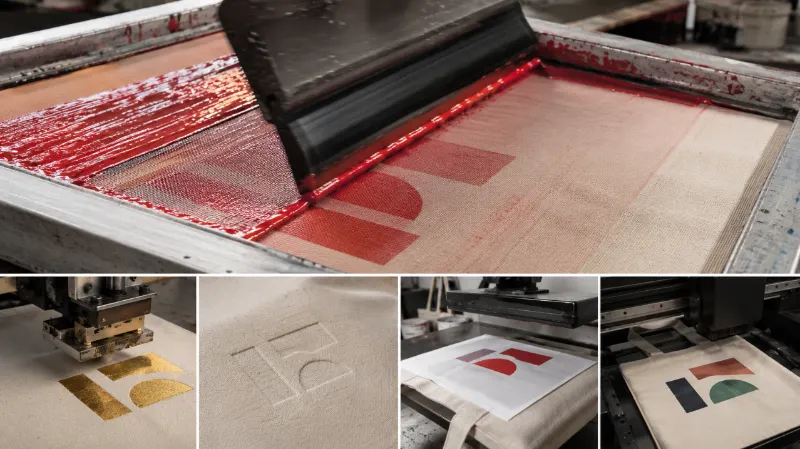
Screen printing — sometimes called silk screen printing — is one of the oldest decoration methods in textile manufacturing. The technique goes back centuries to Chinese stencil printing. Today, it’s the dominant method for printing on cotton bags, canvas totes, and drawstring pouches.
Here’s what makes it different. Instead of foil or thread, screen printing uses liquid ink. The ink is pushed through a tightly stretched mesh screen using a rubber squeegee. So only the areas of the screen that aren’t blocked allow ink through. As a result, you get a sharp, crisp logo on the fabric.
The “silk” name comes from history. Originally, early screens were made from silk fabric stretched over wooden frames. Today most factories use polyester or nylon mesh — stronger, cheaper, and longer-lasting. But many buyers still call a silk screen pouch by its old name.
Three industries dominate screen printing today. First, apparel — t-shirts, hoodies, sportswear. Second, promotional products — branded bags, totes, posters. Third, packaging — especially fabric-based packaging like cotton dust bags, drawstring sachets, and gift pouches.
For B2B fabric bag brands, screen printing is usually the default. It’s cheaper than embroidery at scale. It’s more durable than heat transfer. And it handles bold, simple logos beautifully — which is exactly what most brand logos are.
3. The Screen Printing Fabric Process — Step by Step
Let’s break down the screen print process so you know exactly what your supplier is doing.
Step 1: Artwork prep. Your logo gets converted into separate color layers. Each color needs its own screen. So a 3-color logo means 3 separate screens — and 3 setup fees.
Step 2: Screen creation. A polyester mesh is coated with photo-sensitive emulsion. Then your artwork is exposed onto the mesh using UV light. The exposed areas harden. The unexposed areas wash away, leaving open mesh where ink will pass.
Step 3: Ink mixing. The ink color gets matched to your Pantone code. Plastisol or water-based base — that decision shapes the entire feel of your final bag (more on that in the next section).
Step 4: Test print. Before any production runs, a sample is printed and approved. So always insist on seeing a physical proof — not just a digital mockup.
Step 5: Production printing. Next, the fabric bag is placed on a flat printing table or rotary press. The screen is positioned. Ink is poured at the top. The squeegee then pulls the ink across the screen at consistent pressure and speed.
Step 6: Curing. The wet ink is dried — usually with heat. Plastisol cures around 320°F (160°C). Water-based ink needs both heat and ventilation. As a result, curing is where many cheap factories cut corners — and where many “peeling logo” complaints start.
Step 7: Quality check. Every piece is inspected for ink coverage, edge sharpness, and color accuracy. Naturally, factories with strict QC reject 2-5% of prints — and those rejected pieces show up later as customer returns if QC was sloppy.
So the screen print process is precise and repeatable. But each step depends on the one before. Shortcuts at any stage show up in the final product.
4. Plastisol vs Water-Based Ink — The Big Decision
This is where B2B fabric bag buyers get confused most. So let’s clear it up.
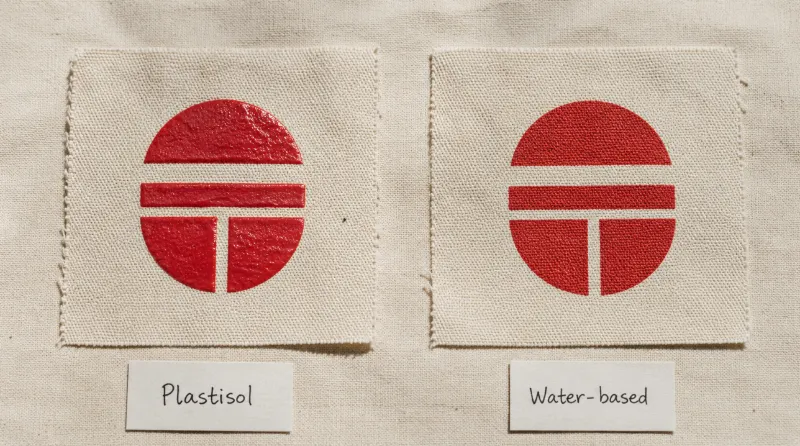
Generally, the plastisol vs water-based ink decision affects everything — the hand-feel, the durability, the look, and the environmental story you tell customers.
| Property | Plastisol Ink | Water-Based Ink |
|---|---|---|
| Composition | PVC plastic base | Water + pigment + binder |
| Hand-feel | Slightly raised, plastic feel | Soft, soaks into fabric |
| Vibrancy | Very bright, opaque | Softer, slightly muted |
| Light fabric coverage | Excellent | Excellent |
| Dark fabric coverage | Excellent | Needs discharge or underbase |
| Durability | 30-50 wash cycles | 40-60 wash cycles |
| Eco profile | Contains PVC, less eco | Eco-friendly, biodegradable |
| Cost | Lower (around $0.10-0.30/pc) | Higher (around $0.18-0.45/pc) |
| Certifications | Some phthalate-free options | OEKO-TEX, GOTS compatible |
Three things to know about this decision.
First, plastisol is the workhorse. Generally, about 70% of promotional bag printing still uses plastisol because it’s cheap, vibrant, and forgiving. Naturally, mass-market brands default to it.
Second, water-based ink is winning for premium brands. Modern water-based inks soak into the fabric, so the logo feels like part of the bag — not stuck on top. For luxury totes, organic cotton bags, and eco-conscious brands, water-based is now the clear pick.
Third, regulatory pressure is shifting the market. European buyers increasingly require OEKO-TEX certified inks for skin-contact products. So if you’re exporting to EU markets, ask your supplier specifically for water-based or OEKO-TEX plastisol.
One more practical tip. The “plasticky” hand-feel of cheap plastisol is what makes customers say a bag “feels cheap.” So if you’re paying for a premium bag, also pay for the better ink.
5. Multi-Color Screen Printing — How Cost Scales
This is the section that surprises most first-time buyers. So let’s break the math.
Each color in your logo needs its own screen. Plus, each screen has setup cost. And each screen also adds a press cycle. As a result, multi-color screen printing isn’t a simple multiplication — it’s a step function.
| Color Count | Setup Fee (one-time) | Print Cost / piece (1,000 pcs) |
|---|---|---|
| 1 color | $50 – $80 | $0.15 – $0.25 |
| 2 colors | $100 – $160 | $0.22 – $0.38 |
| 3 colors | $150 – $240 | $0.30 – $0.50 |
| 4 colors | $200 – $320 | $0.38 – $0.65 |
| 5+ colors | $250+ | $0.48+ |
Two key insights here.
First, setup cost dominates small orders. At 100 pieces, a 4-color print can mean the setup fee adds $2-3 per piece. Plus the per-piece print cost. So small-batch multi-color is expensive — by design.
Second, the right strategy depends on quantity. For under 300 pieces with 3+ colors, heat transfer or DTF (digital film transfer) often beats screen printing on cost. By contrast, for over 1,000 pieces, screen printing wins almost every time — even with 4-5 colors.
One more tip. Some logos that look like 4 colors can be reproduced with 2 colors using clever halftones. So always ask your supplier if your design can be simplified — it can save you 30-50% on setup alone.
6. Best Fabric Bags For Screen Printing
Fabric choice shapes the final result more than buyers realize. So pick carefully.
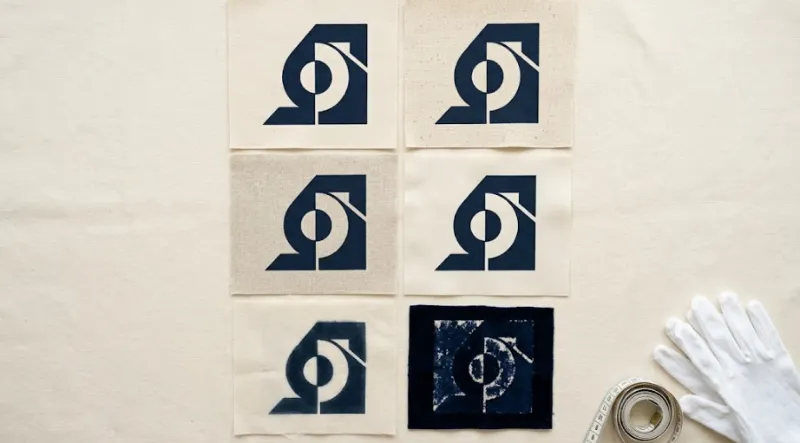
| Fabric | Screen Printing Result | Notes |
|---|---|---|
| Natural cotton | ✅ Excellent | Default for promo totes; great ink absorption |
| Cotton canvas | ✅ Excellent | Best for heavy-use totes; vibrant color |
| Polyester blend | ✅ Good | Needs plastisol or special water-based |
| Linen | ✅ Good | Natural texture shows through ink |
| Muslin (light cotton) | ⚠️ Fair | Ink can bleed; use lower viscosity |
| Velvet | ❌ Poor | Pile interferes with ink coverage |
| Satin | ❌ Poor | Slick surface; ink slides off |
| Organza | ❌ Poor | Too sheer; ink shows through to other side |
Two patterns emerge.
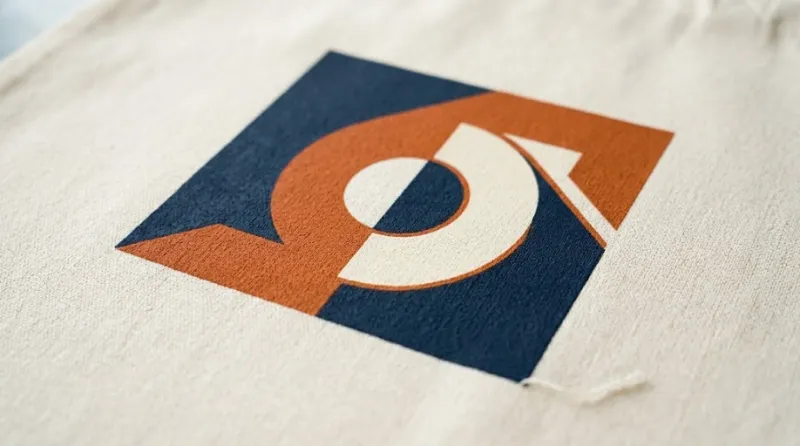
First, natural fibers win. Specifically, cotton, canvas, and linen all absorb ink into the fiber. As a result, the print becomes part of the bag — not stuck on top. That’s why cotton tote bags are the #1 choice for screen printed promotional bags.
Second, slick or sheer fabrics lose. Satin, velvet, and organza all reject standard screen printing. So if you want these materials, switch to heat transfer or hot stamping instead.
For brands ordering custom retail packaging, we recommend cotton canvas for daily-use totes and dense cotton drill for premium retail bags. Both screen print beautifully and survive years of customer use. We also produce canvas handbags with screen-printed logos as a popular B2B option.
7. Screen Printing Fabric Cost by MOQ
Cost is where decisions get real. So here’s the honest breakdown.
| Order Quantity | 1-Color Print | 2-Color Print | 3-Color Print |
|---|---|---|---|
| 100 pcs | $0.80 – $1.50 | $1.40 – $2.50 | $2.00 – $3.50 |
| 500 pcs | $0.30 – $0.60 | $0.50 – $0.95 | $0.75 – $1.40 |
| 1,000 pcs | $0.15 – $0.40 | $0.25 – $0.60 | $0.40 – $0.85 |
| 5,000 pcs | $0.10 – $0.25 | $0.18 – $0.38 | $0.28 – $0.55 |
Three things drive screen printing cost.
First, color count. As shown in section 5, each color adds setup and per-piece cost. So always start the discussion with how many colors you actually need.
Second, ink type. Plastisol runs cheaper. Water-based runs 20-30% higher but feels better and certifies easier.
Third, fabric quality and order quantity. Dense canvas costs more to print on than light cotton because it requires more ink and slower press cycles. Naturally, larger orders amortize setup over more pieces, so unit cost drops fast.
One quick tip. Always ask your supplier for the screen setup fee separately. Reputable factories list it openly — usually $50-100 per color. By contrast, hidden setup makes quotes hard to compare apples-to-apples.
8. Screen Printing vs Heat Transfer vs Embroidery
Screen printing isn’t your only choice. So here’s a quick comparison.
| Method | Best For | Avoid When |
|---|---|---|
| Screen Printing | Bold 1-3 color logos at high volume | Complex multi-color or small runs |
| Heat Transfer / DTF | Photo-realistic, small runs, complex art | High-volume orders, rough fabrics |
| Embroidery | Premium feel, ultra-durable, luxury | Fine detail, photo logos, tight budget |
| Hot Stamping | Metallic foil logos, luxury bags | Rough textures, large logos |
Two clear rules.
First, at high volume with simple logos, screen printing wins on cost. By contrast, at low volume with photo logos, heat transfer wins.
Second, the choice isn’t always either-or. Many premium brands combine methods — screen print on the body, embroidered patch on the strap. So talk to your supplier about combination decoration for a richer brand effect.
For luxury packaging, screen printing isn’t always the right call. Consider hot stamping on fabric if your bag is meant for premium retail. And see our range of custom jewelry pouches for examples of where each method shines.
9. 5 Common Mistakes Brands Make With Screen Printing
After hundreds of orders, the same five mistakes keep coming up. So avoid these.
Mistake 1: Picking plastisol on premium bags. A $30 luxury cotton tote with a plasticky logo feels mismatched. So upgrade to water-based ink — the price difference is small but the brand impact is big.
Mistake 2: Approving 4+ color logos without questioning. Most logos that look like 4 colors can be simplified to 2 with halftones. Ask your supplier — you’ll likely save 30-50% on setup.
Mistake 3: Skipping the cure check. Improperly cured ink peels within months. So insist on cure-tested samples — supplier should show wash-resistance test results.
Mistake 4: Wrong fabric, wrong ink. Polyester blends often need special inks. Slick satin can’t take screen printing at all. So always confirm fabric-ink compatibility before quoting. We covered why printed logos peel in detail — most issues trace back to this mismatch.
Mistake 5: Approving on screen, not in hand. Photos lie about ink hand-feel, color accuracy, and edge sharpness. So always pay the $15-30 sample fee. It’s the single cheapest insurance you’ll buy.
Screen printing fabric becomes much smoother when these five mistakes are avoided.
10. Conclusion — Screen Printing Fabric Decision Test
Skip the long analysis. Instead, use this 60-second test.
Ask yourself four quick questions:
1. Is the bag cotton, canvas, or linen? → Screen printing fits.
2. Is your logo 1-3 spot colors? → Screen printing is the cost winner.
3. Is your order over 500 pieces? → Screen printing pulls ahead.
4. Is the brand promotional, mid-tier retail, or eco-focused? → Screen printing is the standard.
If three answers point to yes, screen printing fabric is your method. If not, consider heat transfer, hot stamping, or embroidery instead.
That’s it. Sixty seconds. Real answer.
11. FAQs
Q1: What’s the difference between screen printing and silk screen printing?
There’s no real difference. “Silk screen” is the older name from when screens were made of silk fabric. Today, most factories use polyester or nylon mesh. So a silk screen pouch is just an older way of describing a modern screen-printed bag. The terms are fully interchangeable.
Q2: How long does screen printed ink last on a fabric bag?
Quality screen printing lasts 30-60 wash cycles before noticeable fading. Plastisol typically lasts 30-50 washes. Water-based with proper curing can reach 40-60 washes. Naturally, careful washing (cold water, inside-out) extends the life significantly.
Q3: Can you screen print photos or gradients?
Not well. Screen printing handles solid colors and simple gradients (via halftones) excellently. By contrast, photo-realistic prints with smooth gradients are better suited to DTF or sublimation printing. So if your logo has photo elements, ask about combination methods.
Q4: What’s the minimum order quantity for screen printing?
Most factories accept 100 pieces as MOQ, including ours. However, screen setup costs are fixed — so 100 pieces means setup dominates the per-piece price. As a result, 500 pieces is usually the sweet spot for cost-efficient screen printing.
Q5: Is screen printing safe for skin contact?
Yes, when the ink is right. Water-based inks and OEKO-TEX certified plastisol are skin-safe. By contrast, cheap plastisol may contain phthalates. So always ask your supplier for ink certifications — reputable factories share them openly.
Q6: Can you screen print on both sides of a bag?
Yes, but it doubles your setup cost. Each side requires its own screen alignment and press cycle. So if budget matters, prioritize the front-facing side. Two-sided printing is best reserved for premium retail bags where visibility matters from every angle.
Q7: What’s the lead time for screen printed orders?
Standard production runs 5-7 days for 1,000 pieces after sample approval. Sample preparation takes 1-3 days. So total lead time is usually 7-12 days from PO to shipping. Rush orders can compress to 4-6 days at a 15-25% surcharge.
Get a Quote — Custom Screen Printed Fabric Bags
YJXpack — Yijiaxin (Shenzhen) Packaging Co., Ltd.
For 20+ years, we’ve made custom screen printed bags — cotton totes, canvas pouches, drawstring sachets, jewelry packaging, and more — for brand owners, traders, and e-commerce sellers across the US, Europe, and the Middle East. We hold GOTS, GRS, OEKO-TEX, BSCI, ISO 9001, and SABER certifications, and we serve over 8,000 brands worldwide.
Want to feel the ink quality yourself? Request a free sample with your logo screen printed in your chosen ink — plastisol or water-based — on the exact fabric you’re considering. Touch it, wash it, compare it. Decide with confidence.
Email: info@yjxpack.com
WhatsApp / WeChat: +86 18617112946
Website: www.yjxpack.com
Free screen-printed sample shipped to your door · Quote within 3 minutes · 3D mockup in 30 minutes · MOQ 100 pieces · GOTS / GRS / OEKO-TEX / BSCI / ISO 9001 certified
Share This Story, Choose Your Platform!