A cotton dust bag can support product storage, retail presentation and the unboxing experience. For footwear, handbag, accessory and lifestyle brands, choosing cotton instead of another soft-packaging format changes the sourcing specification as well as the customer-facing presentation.
The core buyer decisions are tactile: hand feel, air permeability, dye and print compatibility, and whether the fabric and construction suit the item inside. Each variable affects fabric weight, weave structure, closure type and branding method. Defining the specification before quotation helps keep sampling focused on the right decision.
This guide explains the selection logic for cotton dust bags used in retail packaging. Availability of specific cotton grades, construction options, artwork methods, MOQ, sampling, pricing and documentation should be confirmed against your final brief during quotation.
—
What to Decide Before Requesting a Quote
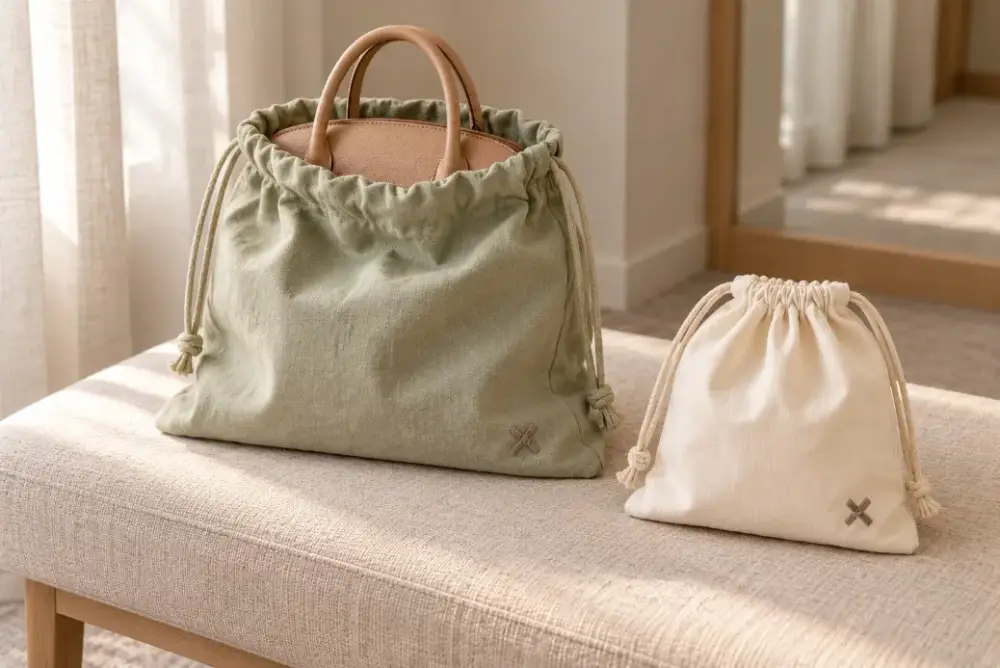
Before choosing fabric weight or logo placement, clarify what the dust bag actually needs to do. Retail dust bags serve a narrower purpose than promotional tote bags or general drawstring pouches. They sit between the product and the outer box. Their job is to:
- Reduce direct dust exposure and surface-to-surface contact during the intended handling flow
- Present the brand when the buyer opens the box
- Remain usable for storage after purchase, extending the brand impression
These three functions create a hierarchy of requirements. The product and handling flow inform fabric and construction selection. Presentation informs the surface finish, colour and logo method. Intended reuse informs what needs confirming for closures, seams and fabric hand.
Start your brief by listing the products the dust bag will hold. A leather handbag, a pair of suede shoes, a cashmere scarf and a ceramic vase each create different demands on abrasion resistance, breathability and static behaviour. The product dictates the bag—not the other way round.
—
Material, Construction and Protection Needs
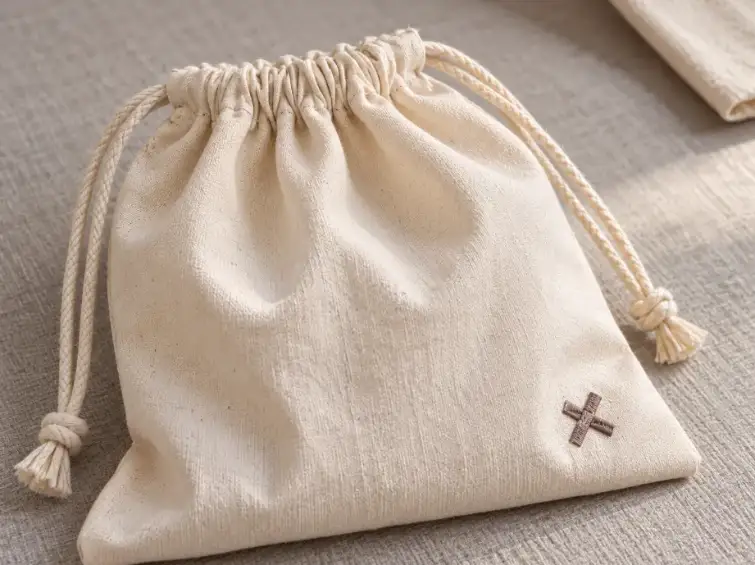
Cotton Fibre Types
Not all cotton performs the same way in a dust bag. Fibre, yarn, weave density and finishing can affect hand feel, print surface and the bag’s contact characteristics. Here are the general categories buyers encounter:
- Carded cotton: May have a less uniform surface than other cotton directions. Assess its hand feel, print result and cost against the required bag appearance.
- Combed cotton: Usually has a more uniform yarn appearance. Confirm the surface result and logo definition on the selected fabric sample rather than assuming suitability from the fibre description alone.
- Cotton with organic-content claims: The claim and its scope require traceable documentation. Do not treat a fibre name or supplier statement as proof of organic status.
- Brushed or napped cotton: Has a raised surface finish. It can be considered for a softer tactile direction, but confirm its contact effect on the actual product through sampling.
Weave Structure
The weave changes the fabric’s density, drape and breathability:
- Plain weave: Can range from light, open constructions to more substantial canvas-like constructions. The yarn, density and finishing determine the final result.
- Twill weave: Creates a diagonal surface rib and can give a more structured visual direction. Compare its drape, surface contact and print result on the proposed sample.
- Sateen weave: Can create a smoother visual surface. Confirm availability, logo result and care expectations with the supplier for the selected construction.
Fabric Weight
Fabric weight is measured in grams per square metre (GSM). It affects opacity, drape, sewing behaviour, logo result and perceived value, but it is only one part of the specification. Select a target weight or range after considering the product, weave, finish, closure and required hand feel.
| Weight direction | General character | Buyer check |
|---|---|---|
| Lighter cotton | More drape and lower material bulk | Check opacity, logo registration and whether the bag feels appropriate around the product. |
| Mid-weight cotton | Often balances handling and structure | Check the actual fabric surface, closure channel and presentation on a sample. |
| Heavier cotton | Can create a more structured feel | Check carton impact, seam construction, closure operation and whether the fabric is excessive for the product. |
A heavier fabric is not automatically better. Match the final fabric to the product, packaging flow and desired presentation, then approve it on a physical sample.
Breathability and Moisture Behaviour
Cotton can offer a fabric-based storage and presentation format, but a dust bag is not a moisture-control system. If storage humidity, transit duration or carton conditions matter for the product, document the required packaging approach and validate it with the product owner and supplier.
Cotton alone should not be presented as tarnish protection or long-term humidity protection. For sensitive metals, finishes or hardware, define the actual risk and any required material, lining, treatment or test evidence before quotation.
—
How Do Dye and Colour Choices Affect the Specification?
Colour is not just a branding decision. It may affect the sourcing route, sample plan and any documentation the buyer requires.
Piece Dyeing vs. Fabric Dyeing
- Yarn-dyed or piece-dyed fabric: The coloration route is selected before bag cutting and sewing. Confirm the achievable colour, lot consistency expectations, minimum yardage and approval process for the specific fabric.
- Finished-bag coloration: Where a supplier proposes colouring after construction, confirm the process, surface result, seam appearance and colour consistency on samples rather than treating it as interchangeable with dyed fabric.
Natural and Unbleached Cotton
Many brands now prefer the natural, undyed look of raw cotton. Unbleached cotton has a warm, off-white to cream tone with visible flecks of seed material. Bleached cotton is bright white. Both accept printing well, but the background colour affects ink appearance—especially for lighter print colours.
If your brand specifies Pantone colours for the bag fabric, confirm at quotation whether those colours are achievable on the chosen cotton weight and weave, and what the minimum run for that dye lot would be.
Colour Fastness
Colour fastness describes how a dyed fabric responds to relevant exposure such as rubbing, light or washing. When a dark bag may contact a light-coloured product, discuss the risk of colour transfer in the brief and agree the applicable test method, threshold and sample-review process. Do not assume that a generic test grade is sufficient for every product and use case.
—
Size, Closure and Presentation Choices
Sizing Logic
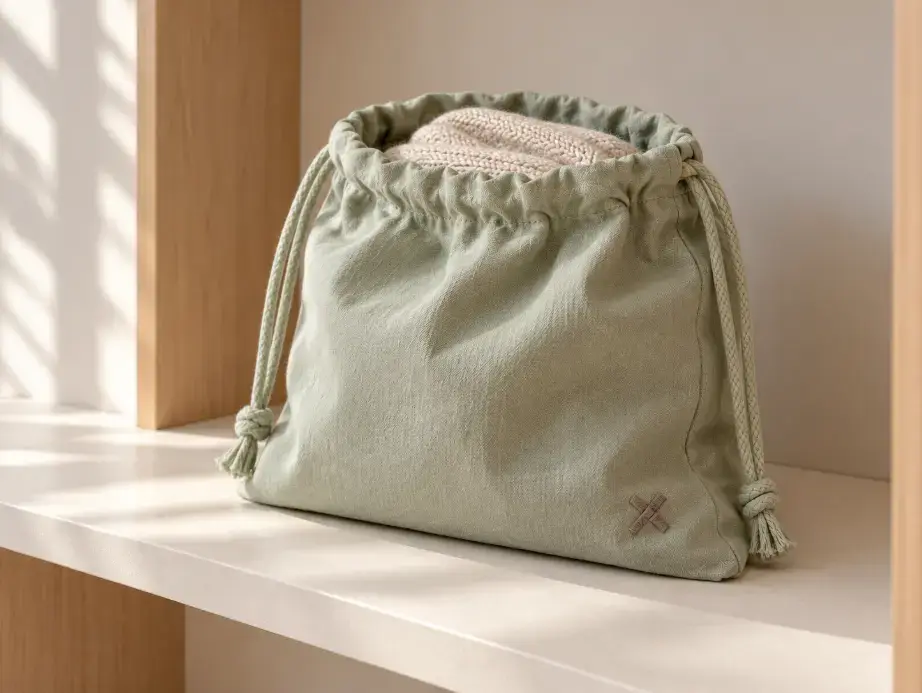
Dust bags should be large enough to enclose the product without compressing it, but not so large that the product shifts excessively. Start with the loaded product width, height and depth, then approve the room required for insertion and closure on a physical sample. For irregular shapes—a handbag with a structured flap, for example—the bag must accommodate the widest point without forcing the construction.
Provide the factory with the actual product dimensions, not just a target bag size. The factory can then calculate the pattern, seam allowances and closure placement. If you have multiple product sizes (e.g., three handbag formats), each may need a separate dust bag size. Confirm whether those sizes can share a single production run or require separate setups.
For related sizing guidance on drawstring formats, see How to Measure a Drawstring Pouch: Size Guide for Brands.
Closure Types
The closure determines how the bag looks when closed, how easily the customer opens and re-closes it, and how the logo interacts with the opening. Common options for cotton dust bags:
- Single drawstring: One cord threaded through a top channel. Confirm the gathered appearance, cord path and closure operation on sample.
- Double drawstring: Two cords exit from opposite sides of the channel. Confirm whether the resulting closure and added components suit the project.
- Ribbon tie: A ribbon closure can create a gift-oriented presentation. Ribbon material, width, colour and end finish become part of the specification.
- Flap closure: A fabric flap may use a buyer-selected closure detail where available. Confirm construction, handling and cost impact with the supplier.
- Open envelope: A sleeve or envelope without fastening can suit a minimal presentation where the intended handling flow does not require a closed top.
Each closure type changes the pattern, sewing steps and the number of components. Decide which closure suits your unboxing sequence before requesting pricing.
Cord and Drawstring Details
If you choose a drawstring closure, the cord itself is a specification item. Potential options include, subject to availability and sample approval:
- Cotton cord: Matches the bag material, natural look
- Waxed cotton cord: Smoother pull, slightly glossy surface
- Satin ribbon: Contrasting texture, works for premium positioning
- Leather or faux leather cord: Strong visual accent, higher cost
- Grosgrain ribbon: Flat, ribbed texture, clean tied appearance
Cord diameter, colour, end finish (knot, metal aglet, heat seal) and length all need to be specified. For an in-depth look at cord and aglet options, see The Drawstring Cord Guide.
—
Logo and Customization Options
Available Branding Methods
Cotton may support several logo application methods. Each interacts differently with the fabric surface, artwork and construction; confirm the selected method on the actual production material:
- Screen printing: Ink is applied through a mesh screen. It can suit flat artwork; confirm line definition and coverage on the selected surface.
- Hot stamping (foil): A heated die applies metallic or pigmented foil. Confirm adhesion, surface uniformity and artwork detail on a strike-off.
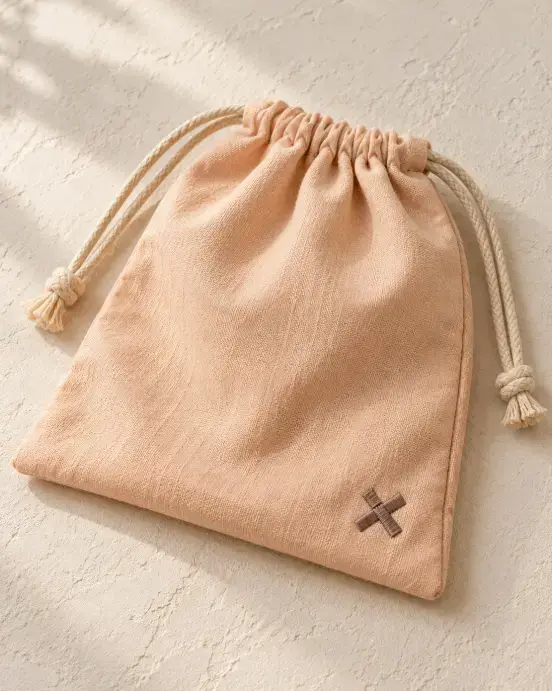
- Embroidery: Thread is stitched into the fabric. Confirm stitch density, distortion and backing requirements on the finished bag sample.
- Heat transfer: A printed transfer is heat-pressed onto the fabric. Confirm artwork result, hand feel and adhesion using the proposed production fabric.
- Debossing or embossing: Pressure creates a recessed or raised impression. Confirm whether the chosen fabric and construction hold a legible result on sample.
- Woven label: A separate label is sewn onto the bag, either inside or on the exterior. Allows very fine detail in the label weave. The label material, fold type and sewing position are additional specification items.
For a comparative overview of logo methods, costs and setup considerations, see Screen Printing vs Heat Transfer vs Embroidery.
Print Placement and Area
Where the logo sits on the dust bag matters as much as the method. Common placements include:
- Centre front face
- Lower right corner
- Flap exterior (for flap-closure formats)
- Inside bottom (subtle branding visible only when the product is removed)
- All-over repeat pattern
All-over printing can change the production route and may require printed fabric before cutting. It can affect yardage, registration and waste. State this requirement at the quotation stage rather than adding it after sizing is confirmed.
Artwork Requirements
Provide the highest-quality artwork file available; vector formats such as AI or EPS are often preferred. Supply agreed colour references and any required clear-space or placement rules. Confirm the final artwork result on the proposed fabric rather than relying only on screen colour.
For detailed guidance on colour matching across fabric types, see Pantone Color Matching for Custom Pouches.
—
What Should You Include in Your RFQ?
A complete RFQ reduces back-and-forth and produces more accurate pricing. Prepare the following before contacting the factory:
- Product description: What the dust bag will hold, including dimensions and weight
- Bag dimensions (if known): Width × height, or product dimensions with a note requesting size recommendations
- Fabric preference: Cotton type, weight range, colour, finish (bleached, unbleached, brushed, etc.)
- Closure type: Drawstring, flap, ribbon, open sleeve or other
- Cord or closure detail: Material, colour, end finish
- Logo method and artwork: Vector file, Pantone colours, placement description
- Quantity per size and colour: Exact breakdown by variant
- Quality requirements: Any project-specific colour-transfer, shrinkage, seam or handling criteria, with the required test method where applicable
- Documentation needs: Any organic, recycled-content, chemical, certification or market documentation required by your project
- Destination and shipping: Target delivery country, preferred shipping terms
If you are comparing cotton against other fabric options, your brief should note this so the factory can quote alternatives alongside. For a broader fabric comparison, see Cotton vs Linen vs Velvet Pouches.
—
Sample Review and Quality Checks
What to Evaluate on a Pre-Production Sample
A sample is not just a visual check. For cotton dust bags, evaluate the following on every sample:
- Hand feel: Rub the fabric between your fingers. Is it consistent with your brand positioning? Too rough, too stiff, too limp?
- Fabric weight: Compare the sample with the agreed material specification and confirm any required measurement method with the supplier.
- Colour accuracy: Compare under agreed controlled lighting and in the intended retail context. The same colour reference can appear different across materials and finishes.
- Logo quality: Check the agreed appearance requirements for adhesion, stitch density, ink coverage and placement. Perform any agreed rub or handling check rather than relying on an informal test alone.
- Seam finish: Are seams clean, straight and free of loose threads? Are French seams or overlocked edges used? This affects durability and interior appearance.
- Closure function: Pull the drawstring through several open-close cycles. Does the cord slide smoothly? Does the channel bunch unevenly?
- Size fit: Insert the actual product. Does it sit without being compressed? Is there excessive empty space?
- Odour or chemical requirements: If these matter for the product or market, state the applicable material, test or documentation requirement in the brief.
What to Confirm Before Approving Production
After the sample is reviewed, confirm these items in writing:
- Approved sample reference number or photo
- Any changes requested (and whether a revised sample is needed)
- Final order quantity and size breakdown
- Packaging of the dust bags themselves (folded, rolled, individually poly-wrapped or bulk-packed)
- Shipping marks and carton labelling requirements
—
Sample-Confirmation Checklist
Use this checklist to track specification items from brief through approval:
- [ ] Product dimensions and weight provided to factory
- [ ] Cotton type, weight and colour specified
- [ ] Weave structure confirmed (plain, twill, sateen, brushed)
- [ ] Bleached, unbleached or dyed—confirmed
- [ ] Closure type selected and cord/ribbon details specified
- [ ] Logo method chosen and vector artwork submitted
- [ ] Pantone references supplied for fabric and logo colours
- [ ] Rubbing fastness and shrinkage requirements stated
- [ ] Certification requirements listed (if applicable)
- [ ] Pre-production sample received and evaluated
- [ ] Hand feel, colour, logo, seam and fit approved on sample
- [ ] Drawstring or closure tested for smooth operation
- [ ] Final quantity, size breakdown and packing method confirmed
- [ ] Shipping terms and destination agreed
—
Next Step
Prepare your product list, target dimensions and brand artwork. Then contact YJXPACK with a structured brief covering the items in the checklist above. A complete brief gives the supplier the information needed to assess quotation and sampling requirements.
Frequently Asked Questions
What cotton weight works best for handbag dust bags?
There is no single best cotton weight for every handbag. Start with the product’s surface sensitivity, loaded dimensions, retail presentation and desired hand feel, then compare suitable cotton samples with the intended closure and logo method.
Can cotton dust bags be printed with a full-colour logo?
Full-colour artwork may be possible through selected transfer processes, while screen printing may suit simpler solid-colour artwork. Fabric texture affects the final result. Request a strike-off or finished sample on the actual fabric before approving production.
Are cotton dust bags suitable for long-term product storage?
Cotton is not a moisture-control or anti-tarnish solution. If storage conditions or metal finishes are sensitive, define the actual protection requirement and discuss suitable materials, treatments or evidence with the supplier during quotation.
How does organic cotton differ from standard cotton in a dust bag?
The practical difference for a buyer is the documented claim and its scope, not a visual assumption about the fibre. If your brand makes organic-content claims, request traceable documentation and confirm the certification scope and chain-of-custody requirements at quotation stage.
Can the same dust bag design be used for shoes and handbags?
Technically yes, but sizing almost always differs. A shoe dust bag is typically a narrower rectangle or a pair of bags (one per shoe). A handbag dust bag is wider and taller. Even if the fabric, colour and logo are identical, the pattern and size require separate specifications. Confirm whether the factory can produce multiple sizes in a single production run.
—
Share This Story, Choose Your Platform!