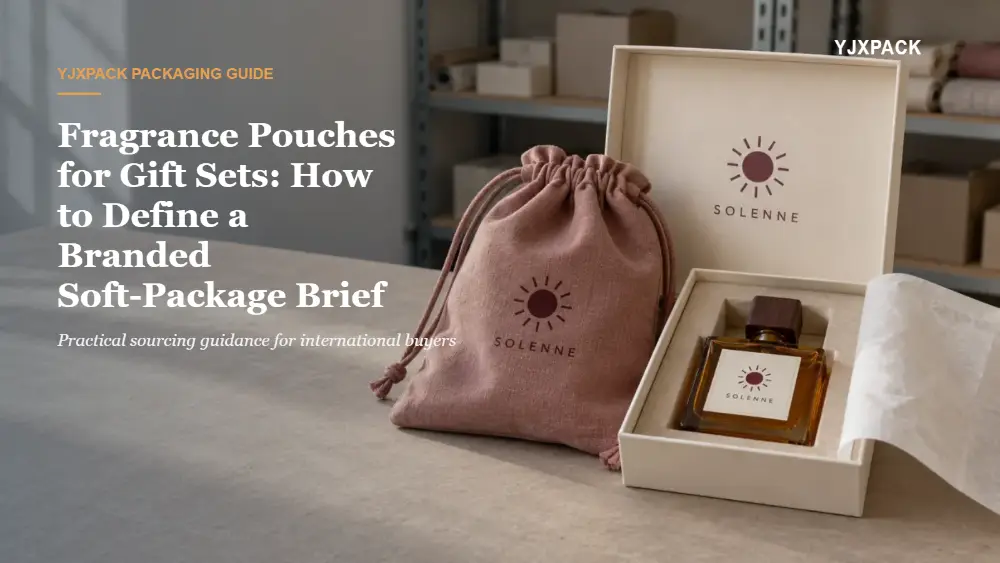
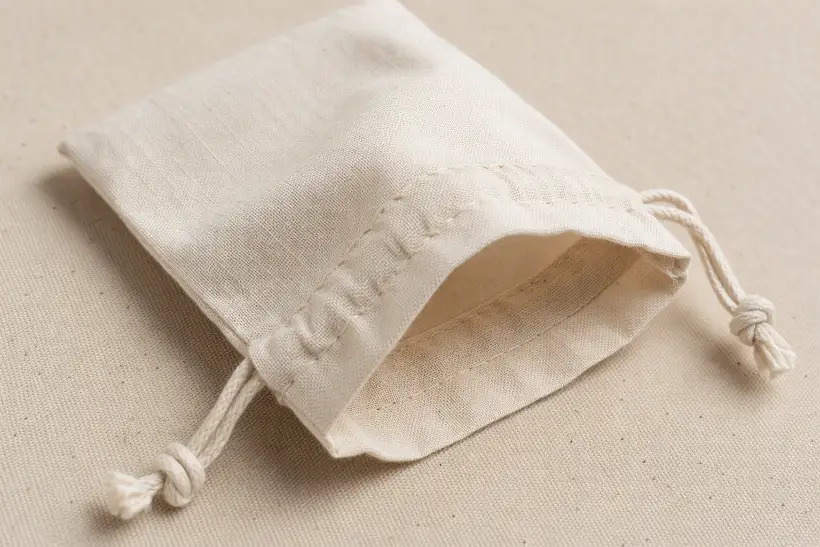
A ring box may support one moment of unboxing, while a fabric pouch can remain useful for storage, travel, or gifting. That difference makes cotton bags worth evaluating for jewelry, gifts, cosmetics, accessories, and other small products. Still, “cotton” does not describe one fixed pouch. Fabric weight, weave, size, closure, lining, color, accessories, and logo method all affect the final result. Buyers should compare those details with the item inside and the brand’s packaging goals before requesting a quotation.
Quick Summary
- Cotton pouches should be specified by fabric construction, size, closure, color, lining, accessories, and decoration requirements rather than by material name alone.
- Start with the actual product measurements, including any card, insert, box, or protective layer that will go inside the pouch.
- Drawstrings, flaps, snaps, magnets, zippers, and flat openings create different presentation and access experiences; final suitability needs confirmation.
- Silk screen printing, foil stamping, embroidery, woven labels, metal labels, heat transfer, and other logo methods depend on the selected material, artwork, and placement.
- Environmental wording such as organic or recycled requires documents that support the claim for the specific finished product.
- A sample can help a buyer assess fit, color, stitching, closure operation, and logo appearance before bulk production.
Why Cotton Pouches Can Work for Jewelry and Gifts
Packaging shapes a customer’s first physical interaction with a product. A branded pouch can create a defined presentation for a small item without using the same structure as a rigid box. It may also give the customer a place to keep an item after opening. That potential reuse can be relevant to a packaging strategy, but it should not be presented as a guaranteed environmental outcome without reviewing material and use information.
Cotton often has a matte, familiar appearance that may fit everyday jewelry, handmade goods, wellness gifts, accessories, and selected cosmetic packaging. It can support several decoration approaches, but the right choice depends on the weave and the artwork. A smoother surface may suit one print method, while a textured construction may require another method, a larger mark, or simpler artwork.
Buyers can review cotton packaging options for jewelry, cosmetics and gift brands when building an initial brief. For a material comparison, cotton, linen, and muslin differences can help clarify visual and texture directions. These references are starting points, not substitutes for reviewing a final sample.
A cotton pouch is not automatically suitable for every item. Sharp edges, heavier products, moisture exposure, heat, or frequent opening may call for a different fabric, lining, closure, or an additional packaging layer. Jewelry buyers should test the actual product with its card, insert, or box. Cosmetic brands should also review the container shape and possible contact with oils, powders, or other product residue rather than assuming untreated cotton has a particular care or barrier feature.
Compare Fabric and Construction Directions
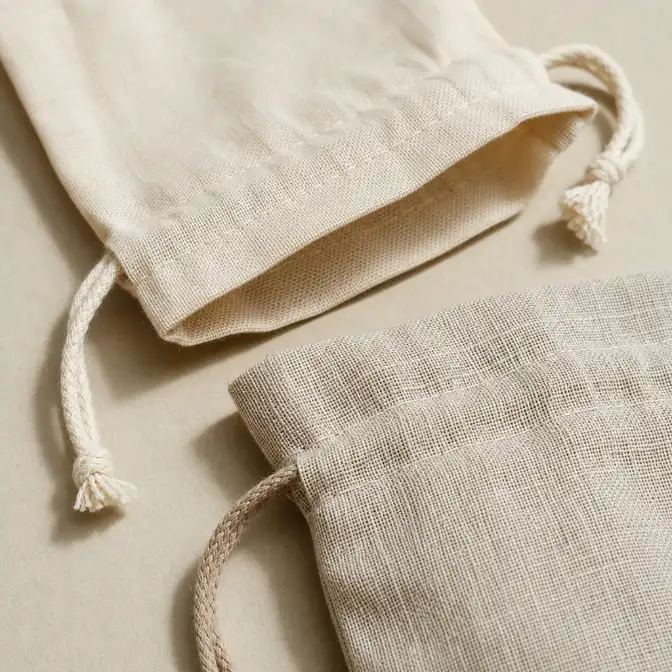
The phrase “cotton bag” can cover very different finished constructions. A lighter cotton may create more drape, while a tighter or heavier construction may feel more structured. Linen is a separate plant fiber that some buyers compare with cotton when seeking a natural-looking packaging direction. The correct route depends on the requested appearance, product dimensions, logo, and closure.
| Fabric or construction direction | Typical visual direction | Possible packaging use | Buyer checks |
|---|---|---|---|
| Plain cotton | Matte and familiar; softness varies by construction | Small gifts, accessories, favors, and selected jewelry items | Confirm fabric weight, weave, color, and seam construction |
| More structured cotton construction | Firmer appearance than a very light fabric | Gift sets or products that need a more defined pouch shape | Review dimensions, depth, stitching, and logo legibility |
| Linen direction | Textured and naturally irregular appearance | Artisanal gifts and selected lifestyle packaging | Confirm material composition, color variation, and sewing details |
| Cotton pouch with lining | Outer fabric remains visible while the inside feel changes | Jewelry or products that need a defined interior surface | Confirm lining material, seam finish, and product compatibility |
| Alternative fabric route | May be more suitable for a specific look or product need | Requests involving velvet, microfiber, satin, organza, jute, or polyester | Confirm whether the selected material suits the intended pouch, logo, and closure |
The table describes possible directions, not universal results. Material, size, pouch type, closure, color, lining, and logo treatment should be reviewed together. Buyers who need a more detailed sourcing brief can use custom cotton pouch fabric, size, printing, and MOQ options to organize their requirements before asking for a quote.
If a brand plans to use terms such as “organic” or “recycled” on packaging or marketing pages, the buyer should request the supporting documents before approving that language. The Global Organic Textile Standard provides an authoritative reference for organic-textile terminology, but a general standard reference does not prove that a particular pouch qualifies for a specific claim.
Select Size, Fabric Weight, and Closure from the Product
GSM means grams per square meter. It helps compare fabric weight, but it does not define every part of a finished pouch. Weave, finishing, lining, seam allowance, and pouch construction also affect the feel and structure. A higher GSM may produce a firmer hand-feel, while a lighter fabric may provide more flexibility. Neither option is automatically better.
Begin with the actual item. Measure its length, width, height, thickness, and weight. Include any jewelry card, insert, box, protective layer, or multiple-piece set that will sit inside the pouch. Next, decide how much room a customer needs to place and remove the item comfortably. Too much empty space can make a small product look lost, while too little room can make the pouch awkward to use.
Common opening directions include:
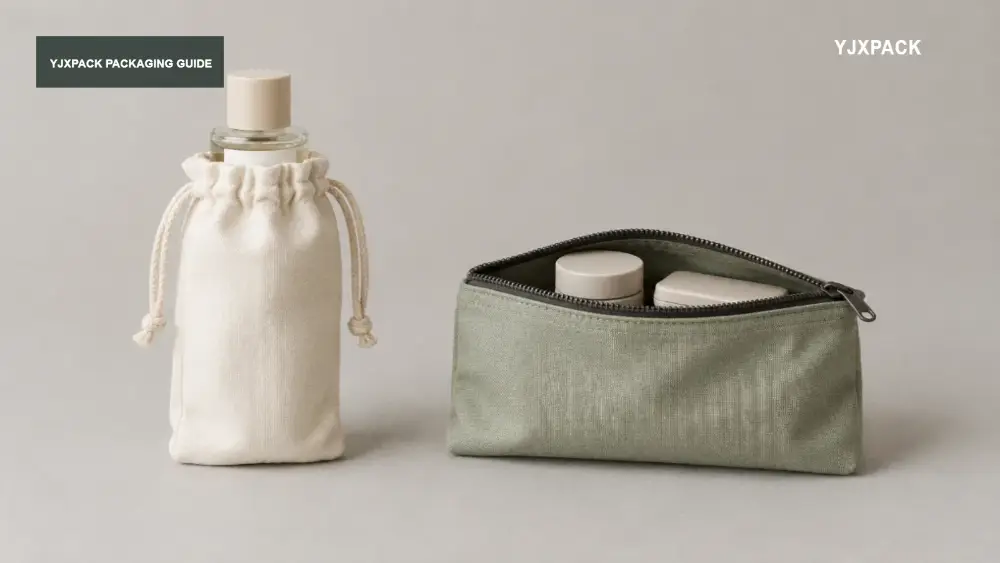
- Drawstring pouch: A flexible option for quick access, favors, and many small gift items.
- Flap pouch with snap: A more defined opening that may suit jewelry sets and presentation-focused packaging.
- Flap pouch with magnetic closure: May create a neat opening experience when the chosen material and hardware are confirmed.
- Zipper pouch: Can suit requests for a fully closed compartment, subject to fabric and zipper construction review.
- Flat pouch: A simple, space-efficient route, although the buyer should confirm whether the contents need extra depth or a gusset.
Each closure changes the product experience and production details. For example, a cord length that works on a small sample may need adjustment for a larger pouch. Likewise, hardware placement may affect the usable internal dimensions. Provide the product measurements and preferred opening style together so feasibility can be reviewed as one specification.
Plan Color, Lining, and Accessories Together
Color affects how the pouch supports the brand. Natural-looking cotton can create a restrained direction, while dyed fabric may support a stronger brand palette. Buyers should compare a physical swatch with an approved color reference where color consistency matters. Fabric absorption, weave, lighting, and finishing can change how a color appears on screen and in person.
A lining can change the pouch’s hand-feel, structure, and interior appearance. When requesting a lining, identify the intended product-contact surface, desired look, and any care language the brand plans to use. Do not describe a lining as anti-tarnish, scratch-proof, moisture-proof, or protective unless appropriate evidence supports that claim for the specific construction.
Accessories may include cords, ribbons, snaps, magnets, zippers, beads, labels, hangtags, inserts, and metal components. Every accessory adds a design decision and can affect the final dimensions or production process. Hardware color should also be considered alongside the logo treatment and wider packaging system.
Match the Logo Method to the Material and Artwork
A logo method that works on one fabric may not create the same result on another. Cotton, microfiber, velvet, satin, organza, linen, jute, and polyester have different surfaces and construction characteristics. Confirm the decoration method after the fabric, pouch type, artwork, and placement are fixed.
| Logo method | Possible use direction | Artwork considerations | Buyer checks |
|---|---|---|---|
| Silk screen printing | Selected flatter fabric surfaces and bold designs | Often considered for simple shapes and limited colors | Confirm ink appearance, registration, and fine-detail limits |
| Foil stamping | Selected surfaces that accept heat and pressure | Can create a metallic visual direction | Confirm material suitability, foil color, and placement |
| Embroidery | Fabrics with enough body for stitching | Usually clearer with simple shapes and readable text | Check thread color, stitch density, and small-letter clarity |
| Heat transfer or heat-transfer film | Selected compatible fabrics and multi-color artwork | May suit detailed graphics when feasible | Review edge quality and appearance on the actual material |
| Woven label | Pouches that can accept a sewn label | Suitable for compact brand marks or text | Confirm label size, fold type, sewing position, and edge finish |
| Metal label | Projects that suit a hardware accent | Can add a distinct tactile detail | Confirm attachment method, weight, and contact with the product |
| Debossing or embossing | Materials with a suitable surface and body | Best assessed on the selected material | Request a sample to review depth and clarity |
For a decoration comparison, review embroidery, silk screen, and heat-transfer options for pouches. Final artwork should state the intended logo size, colors, file format, position, and any minimum text size. Samples are particularly useful for thin lines, small marks, gradients, metallic effects, and textured fabrics.
Applications for Jewelry, Beauty, Gifts, and Accessories
Jewelry brands may use a cotton pouch as the primary presentation layer or as an additional storage layer inside another package. Rings, earrings, pendants, bracelets, and sets have different clearance needs. A pouch for a boxed jewelry set may require more depth than one for a single pendant.
Gift brands may consider pouches for favors, seasonal bundles, event merchandise, or small premium items. Cosmetic and beauty sellers should assess the product shape, closure needs, and possible contact with the product container. Accessory and wig brands may require larger dimensions, stronger construction, or a different fabric route instead of a small jewelry-style pouch. One pouch format should not be treated as a universal solution.
Buyer Specification Checklist
Before requesting a quotation, prepare the details below. A complete brief gives the manufacturer a stronger basis for reviewing feasibility.
| Specification area | Information to provide | Why it matters |
|---|---|---|
| Product | Item name, quantity per pouch, measurements, and weight | Helps determine size, depth, and construction |
| Material | Preferred fabric, color, and fabric-weight direction | Establishes the appearance and hand-feel direction |
| Pouch type | Flat, drawstring, flap, snap, magnetic, zipper, or other | Defines opening and sewing structure |
| Logo | Artwork, colors, dimensions, placement, and preferred method | Allows logo feasibility to be reviewed |
| Interior | Unlined or lined, plus any lining preference | Changes hand-feel and construction |
| Accessories | Cord, ribbon, hardware, label, insert, or hangtag | Helps prevent missing components in the quote |
| Packaging | Folding, bundling, individual packing, or carton notes | Clarifies finished delivery requirements |
| Claim language | Organic, recycled, or other environmental wording | Identifies documents needed before publication |
YJXPACK is a Shenzhen custom fabric-pouch OEM manufacturer established in 2010 and positioned as having 20+ years of fabric-packaging OEM experience. It is not a fixed-SKU retail catalogue. A specification-based request can cover material, size, pouch type or closure, logo method, color, lining, and accessories. Relevant material routes may include cotton, microfiber, velvet, organza, linen, jute, satin, or polyester when suitable for the request.
For qualifying projects, YJXPACK can review an MOQ of 100 pieces, sampling in 1–3 days, and bulk production in 5–7 days after details are confirmed. These operating details must be confirmed for the specific order and are not unconditional promises. Material, artwork, placement, and construction also need review before a logo method is approved.
Final Takeaway
Cotton pouches can support a considered jewelry, gift, beauty, or accessory presentation, but the material name alone does not define the finished result. Start with the product measurements. Then select fabric weight, pouch construction, closure, lining, color, accessories, and logo method. Request samples and supporting documents before publishing environmental claims.
Ready to discuss a custom fabric pouch? Get a Quote with your product size, material preference, pouch type, artwork, quantity, and target application. YJXPACK can review the requested combination and confirm which options may suit the project.
FAQs
1. Are cotton pouches suitable for all jewelry products?
No. Suitability depends on the jewelry’s size, shape, edges, weight, and desired presentation. Test the actual jewelry with the selected pouch, lining, closure, and any card, box, or insert before approving production.
2. What cotton GSM should I choose?
There is no single correct GSM. A lighter fabric may create a softer, more flexible pouch, while a heavier fabric may feel more structured. The appropriate range depends on the product, pouch dimensions, construction, logo method, and desired hand-feel. Request guidance based on the full specification and review a sample where needed.
3. Can I print my logo on a cotton bag?
Often, a logo can be added, but the method requires confirmation. Silk screen printing, foil stamping, embroidery, heat transfer, woven labels, metal labels, debossing, and embossing have different material and artwork requirements. The fabric surface, logo size, detail, colors, and placement should be reviewed together.
4. Can I describe a cotton pouch as organic or recycled?
Only when the specific claim is supported by appropriate documentation and the wording is accurate for the finished product. Cotton alone does not prove an organic or recycled claim. Request relevant fiber-content or certification documents before using environmental language on packaging or marketing materials.
5. What information should I include when requesting a quote?
Provide product dimensions, quantity, preferred fabric, fabric-weight or hand-feel direction, pouch type, closure, color reference, logo artwork, logo method, placement, lining, accessories, packing requirements, and any claim language. A product photo or drawing can also help clarify the intended construction.
Share This Story, Choose Your Platform!