A jewelry pouch does more than hold a product. Its texture, color, logo finish, and construction influence the customer’s first impression while also affecting packing, storage, photography, and sourcing decisions. Microfiber and velvet can both work for custom jewelry pouch packaging, but they create different visual effects and require different sample checks. At YJXPACK, the best starting point is not deciding which fabric is universally better. Start by defining the jewelry type, sales channel, logo detail, pouch structure, and sample approval criteria.
Quick Summary
- Choose velvet when you want a plush surface, visible pile, and a classic gift or luxury presentation.
- Choose microfiber when you prefer a smoother or lightly brushed surface with a more even visual appearance.
- Fabric names alone do not define performance. Fiber content, weight, pile, backing, lining, closure, and packing method all affect the finished pouch.
- Small logo details often need closer review on pile fabrics than on flatter fabric surfaces.
- Compare physical samples with the actual jewelry inside before approving production.
- Request quotes for the same size, closure, lining, logo method, color, and packing requirements in both materials.
Start With the Jewelry, Not the Fabric Name
Before choosing microfiber or velvet, define what the pouch needs to hold and how the customer will receive it. A pouch for a single ring has different size and closure needs than a pouch for a chain, bracelet, watch, or multi-piece gift set. A loose pouch may allow jewelry to move during handling. An overly tight pouch can slow packing and make the opening experience less convenient.
Start with the jewelry’s dimensions, including any clasp, stone setting, or chain length that changes the required internal space. This jewelry pouch size guide for rings, necklaces, and bracelets can help procurement teams create an initial size brief. For drawstring designs, the drawstring pouch measuring guide is useful when you need to specify usable internal space rather than only outside dimensions.
Next, identify the pouch’s main role:
- A retail presentation pouch
- A protective inner pouch placed inside a rigid box
- A reusable travel or storage pouch
- An e-commerce fulfillment pouch
- A gift-set component for several items
Each use changes the buying priorities. A retail presentation pouch may place greater emphasis on texture, color, and logo appearance. An e-commerce pouch may need more attention to packing shape, closure consistency, and its appearance after carton handling. A reusable storage pouch may require a closer discussion of lining, seam placement, and the jewelry’s surface finish.
For broader research, see what a microfiber bag is and how it is used for jewelry, eyewear, and electronics. Use that information to frame your material discussion, then make the final choice from approved fabric swatches and pouch samples.
Material, Texture, and Visual Character
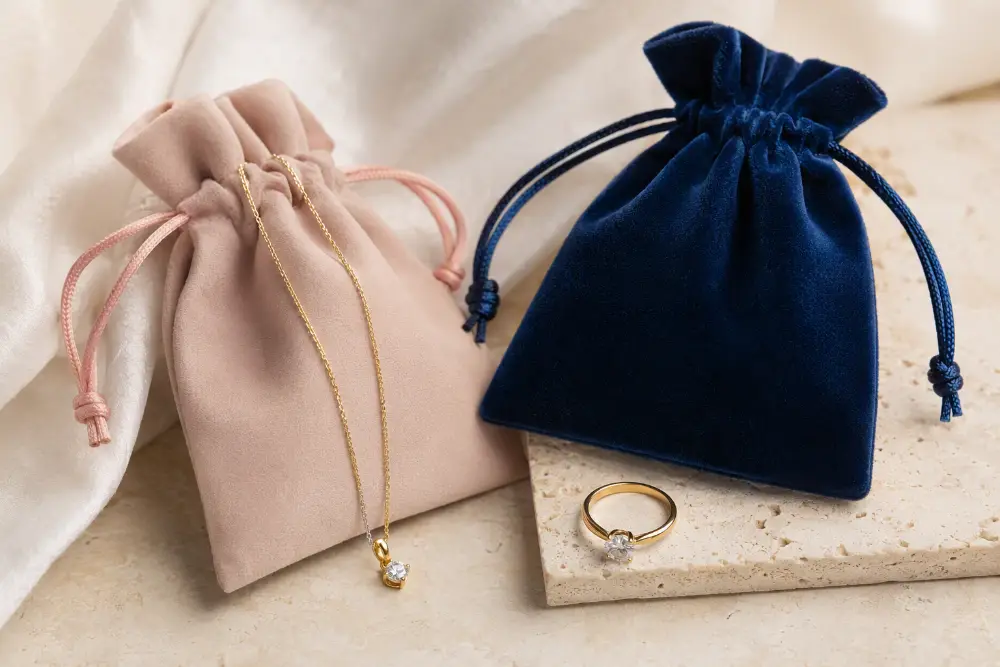
Velvet has a raised pile that changes direction when touched. The pile catches light, so the same pouch color may look lighter or darker as the pouch moves or as the lighting changes. This visual movement can create a rich appearance for jewelry gifts, bridal collections, and brands seeking a more traditional luxury look.
However, the word “velvet” does not identify one fixed construction. Different velvet fabrics may vary in fiber blend, pile height, pile density, backing, softness, weight, and finish. These differences can affect the pouch’s hand feel, drape, color appearance, and logo result. Ask for the actual fabric specification or physical swatch rather than approving a material by name alone.
Microfiber pouch fabrics often have a finer, tighter, or lightly brushed surface than velvet. Many options create a smooth or suede-like feel and may show less directional color variation than pile fabrics. This appearance can suit clean, minimal, or modern jewelry branding. Still, microfiber also varies widely. Some fabrics feel dense and soft, while others may feel thinner, firmer, or more matte.
Neither material automatically offers the same level of protection for every jewelry item. A pouch’s ability to help limit surface contact depends on fabric cleanliness, surface texture, seam placement, fit, lining, closure, and how much the item moves during storage or shipping. Ask for samples with your own plated, polished, stone-set, or chain jewelry inside. Review the items after normal packing and handling instead of relying only on a fabric description.
| Decision Factor | Microfiber Jewelry Pouch | Velvet Jewelry Pouch | What Buyers Should Confirm |
|---|---|---|---|
| Surface appearance | Often smooth or lightly brushed | Raised pile with directional light reflection | Approved swatch under retail and photography lighting |
| Brand mood | Often clean, modern, and understated | Often plush, classic, and gift-oriented | Fit with the collection and customer experience |
| Color appearance | May appear more even across the surface | May show shade changes as pile direction shifts | Color approval from actual production fabric |
| Response to compression | Depends on thickness, construction, and packing | Pile may show pressure direction or marks after packing | Sample condition after packing and handling |
| Fine logo detail | A flatter surface may make fine details easier to inspect | Pile may soften the visual edges of very small details | Sample with final artwork and intended logo size |
| Construction options | Suitable for simple or lined pouch designs | Often chosen for plush outer presentation | Need for lining, insert, flap, or drawstring |
Jewelry Protection, Lining, and Pouch Construction

Outer fabric is only one part of pouch performance. The inside surface, seam placement, closure style, and pouch fit deserve equal attention. A rough seam, loose fiber, or excess empty space may matter more to a delicate item than the material name on the quote.
For jewelry with polished metal, plating, delicate stones, or fine chains, ask the supplier to show the interior construction clearly. Request photos or physical samples that show:
1. The inner fabric or lining material
2. Whether seams sit inside the jewelry storage area
3. How the drawstring channel is finished
4. Whether loose fibers or debris are visible
5. How the jewelry fits after the pouch closes
A microfiber lining may suit some velvet pouch designs, but it is not an automatic answer. Check the lining’s hand feel, seam placement, color behavior, and compatibility with your specific jewelry. Likewise, a single-layer microfiber pouch may suit some products, while others may need a lined or more structured format.
Buyers who need formal terminology can consult the ISO standards catalogue . The catalogue can help users identify potentially relevant standards, but it does not replace a clear supplier specification, product-specific evaluation, or sample approval.
Logo Methods and Color Approval
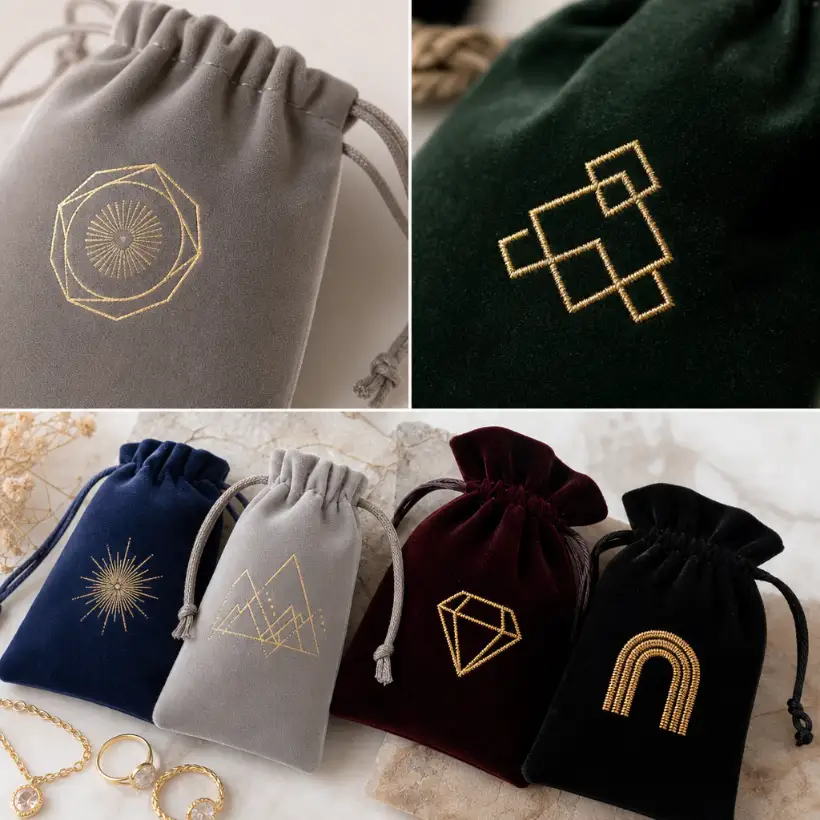
Choose the logo method based on the artwork and the selected fabric surface. Screen printing, foil stamping, heat transfer, and embroidery can create different results. The most suitable option depends on line thickness, logo size, color, fabric texture, and the visual effect your brand wants.
A flatter microfiber surface can make small printed details easier to inspect. Velvet’s pile can add visual softness around fine artwork, especially when the design includes thin lines or small serif text. This does not mean velvet cannot carry detailed branding. It means buyers should review the artwork, foil, pile direction, and pressing conditions on a real sample.
The guide to hot stamping foil logos on fabric pouches provides useful context when foil is part of the packaging brief. For any logo method, provide vector artwork when available and approve the logo on the actual pouch fabric color rather than only on paper or a digital mockup.
| Logo and Color Check | Why It Matters | Buyer Action |
|---|---|---|
| Minimum line thickness | Fine lines may lose visual clarity on textured surfaces | Ask for artwork review before sampling |
| Logo placement | Misalignment is highly visible on small pouches | Define placement from seams, edges, or pouch center |
| Foil color | Metallic finishes may look different on dark and light fabrics | Compare foil samples on the final fabric color |
| Embroidery density | Dense stitching can change the drape of soft fabric | Request an embroidery sample at final logo size |
| Pile direction on velvet | Direction changes the apparent shade and logo background | Set an approval reference for fabric orientation |
| Color consistency | Fabric appearance may vary between swatches and finished pouches | Approve a physical swatch or retained color reference |
Cost Comparison Without Guesswork
Do not assume microfiber always costs less or velvet always costs more. Material cost can change with fabric weight, composition, pile density, pouch dimensions, lining, drawstring type, logo method, packing requirements, and order quantity. A simple single-layer pouch can differ substantially from a lined pouch with foil, custom cord, and individual packing.
Prepare one consistent request for quotation and ask for both material options. Include the same dimensions, closure, lining requirement, logo artwork, color, packing preference, and quantity. Then compare each supplier response line by line instead of comparing only a final unit price.
A clear quote request can ask:
- What is the outer fabric specification for each option?
- Is the pouch single-layer or lined?
- What closure and cord materials are included?
- Which logo method is proposed, and what artwork limits apply?
- How will the pouches be packed to limit unwanted creasing or pile pressure?
- Which sample approval points should be confirmed before production?
YJXPACK can review a buyer brief more effectively when it includes jewelry dimensions, pouch use, logo artwork, target color, and reference photos. These details help reduce ambiguity before sampling and quotation.
A Practical Sampling Checklist
Physical samples provide information that product descriptions cannot. Review each sample in conditions that reflect the actual sales channel. An e-commerce brand should inspect the pouch after carton packing and normal handling. A jewelry boutique should inspect it under store lighting and beside the display box.
Use this checklist when comparing microfiber and velvet samples:
- Put the actual jewelry piece inside, close the pouch, and check the fit.
- Inspect the logo from normal viewing distance and at close range.
- Review color under daylight, indoor retail lighting, and photography lighting when relevant.
- Look for visible marks after folding, stacking, or brief compression.
- Check interior seams, drawstring ends, loose fibers, and closure operation.
- Confirm that the approved sample identifies the fabric, color, logo method, and construction details.
- Retain an approved sample or signed specification for later production discussions.
A side-by-side review turns a subjective material debate into a decision based on your own product and brand presentation. Give YJXPACK the same evaluation criteria for both samples so your team can compare like with like.
Frequently Asked Questions
Is microfiber or velvet better for jewelry pouches?
Neither material is better in every situation. Velvet often suits brands seeking a plush, traditional presentation, while microfiber often suits brands seeking a smoother and more even-looking surface. Choose based on the jewelry, logo, pouch construction, and approved sample.
Does velvet always need a lining?
No. Whether a velvet pouch needs a lining depends on the jewelry, the selected velvet construction, the desired interior finish, and the presentation goal. Review the interior surface and seam placement with the actual product before deciding.
Can small logos work on velvet pouches?
They can, but very fine lines and small text need careful sample review because pile texture may soften visual edges. Simpler artwork or another logo method may suit some velvet fabrics better.
Which pouch material is easier to color match?
Microfiber may appear more visually even because it often has a flatter surface. Velvet can show lighter and darker areas as the pile changes direction. In both cases, approve a physical fabric swatch under lighting relevant to your brand.
What should I compare when requesting microfiber and velvet samples?
Compare the same pouch size, closure, lining, logo size, fabric color, and packing method. Then inspect fit, surface appearance, logo clarity, seams, closure operation, and pouch condition after normal handling or packing.
Share This Story, Choose Your Platform!