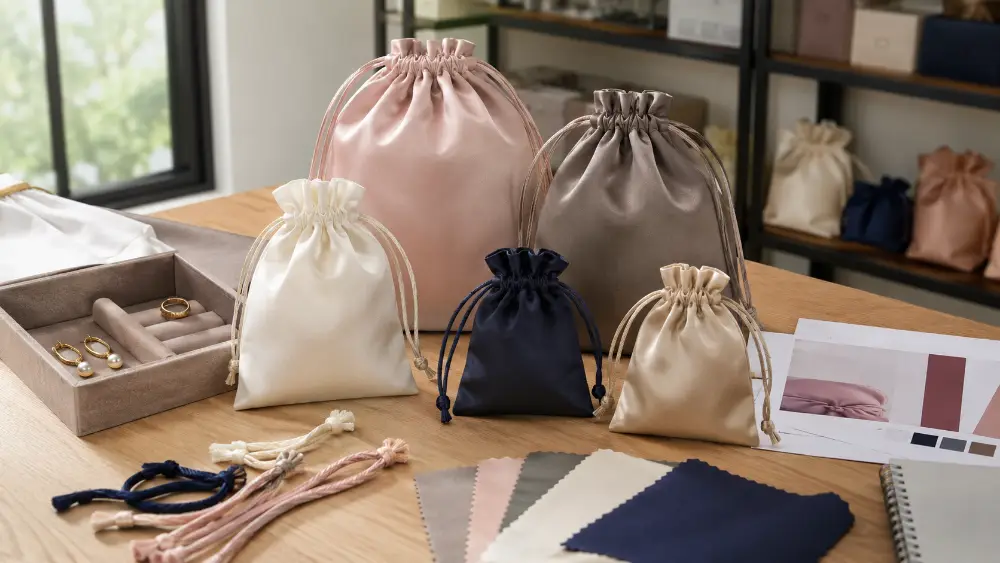
Satin jewelry pouches occupy a specific and well-defined place in custom packaging. Their smooth, lustrous surface catches light and creates a polished presentation that differs from matte fabrics such as cotton or linen. Satin can be considered alongside velvet and rigid boxes when buyers are comparing appearance, protection needs, and supplier quotations. Yet satin is not the right answer for every project. The material has real strengths and limitations, and understanding both helps buyers make a more informed sourcing decision. This guide walks through the key factors — jewelry type, material grade, size, closure, logo method, quote structure, sampling, and supplier questions — so you can decide whether custom satin jewelry pouches belong in your next packaging order.
Quick Summary
- Satin pouches can suit lightweight jewelry, gift sets, and promotional giveaways where a smooth, shiny surface supports the intended presentation.
- Polyester satin is commonly used for custom pouches; silk satin may also be available, subject to supplier specifications and material verification.
- Drawstring and envelope closures are both standard options; the right choice depends on the jewelry type and how the customer will open the package.
- Logo methods — screen print, hot stamp, and embroidery — each behave differently on satin, so the selected method should be tested on the chosen fabric.
- Sampling before bulk production is important: satin color, sheen, and logo placement can look different on a physical sample than on a screen.
When Satin Jewelry Pouches Are a Good Fit
The first question to ask is whether satin’s visual character matches your brand positioning. Satin can read as elegant and celebratory. It may suit brands seeking a gift-ready feel, such as Valentine’s Day jewelry, wedding favor accessories, or promotional pieces handed out at events. The fabric’s sheen can also be considered when planning product photography and unboxing presentation for e-commerce.
Satin may also be relevant when package weight and bulk are part of the shipping plan. A flat satin drawstring pouch typically takes up less space than a rigid box. Rigid boxes add material and volume, which may affect shipping calculations, including carrier charges based on package dimensions and weight. For promotional campaigns shipping large quantities, compare the packed dimensions and logistics options for each packaging format before deciding.
Where satin is a weaker fit: heavy or sharp jewelry that can snag the fabric, products that need firm structural support during transit, and brand identities built around a matte or rustic aesthetic. If your brand leans toward raw cotton or natural linen, a custom cotton pouch may communicate that story more directly than satin.
Match Satin Pouches to Jewelry, Gift and Promotional Use Cases

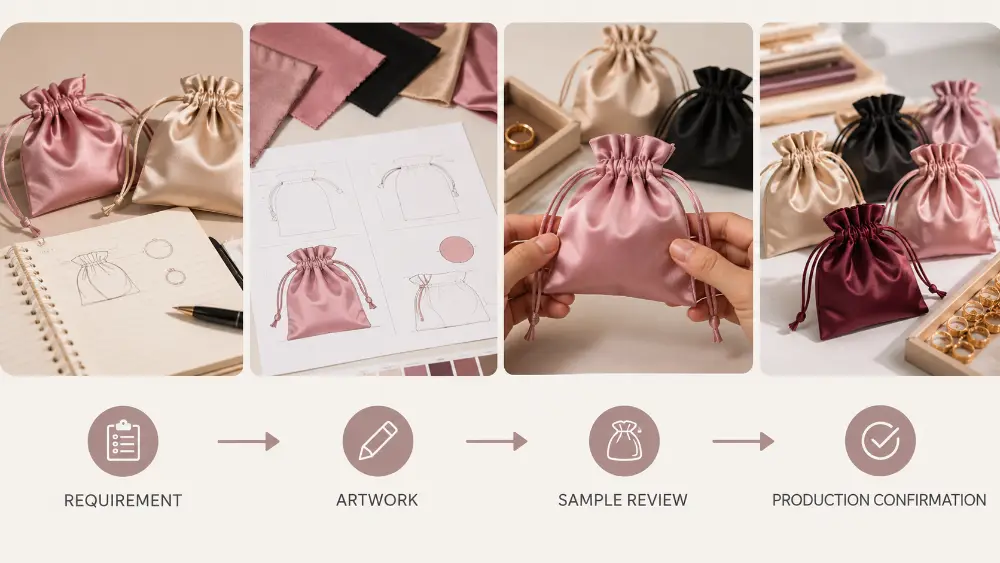
Not every jewelry type belongs in a satin pouch. The table below maps common product categories to satin’s suitability, so you can make a quick first-pass decision before going further.
| Product Type | Satin Suitability | Key Consideration |
|---|---|---|
| Stud earrings | High | Small size fits standard pouches; no sharp edges |
| Pendant necklaces | High | Lightweight; chain sits flat inside pouch |
| Bangles and cuffs | Medium | Rigid edges can stress seams over time |
| Rings (single) | High | Compact; pairs well with small drawstring format |
| Charm bracelets | Medium | Multiple links can snag on satin weave |
| Statement necklaces | Low | Weight and bulk can distort pouch shape |
| Gift sets (mixed items) | Medium–High | Depends on total weight and item sharpness |
| Promotional giveaways | High | Evaluate fabric weight, logo visibility, and the project quote |
| Hair accessories | High | Satin can complement hair-adjacent products |
For promotional satin bags specifically, the priorities may differ from those of long-term jewelry storage. Brand visibility, pouch weight, logo placement, and the level of protection required should be defined in the project brief. YJXPACK works with buyers on jewelry, gift, and promotional pouch projects and can discuss which construction details are relevant to the stated use case.
Gift packaging is another setting where satin may be considered. A satin pouch with a ribbon drawstring or an envelope flap can create a more deliberate presentation than an unbranded inner wrap. Whether that format is appropriate should be based on the product, target market research, and the overall packaging concept.
Choose the Material, Size, Closure and Color
Material Grade
Many custom satin jewelry pouches use polyester satin. The fabric weight — measured in grams per square meter (GSM) — affects how the pouch drapes, how it holds its shape, and how a logo method performs on the surface. A heavier satin may feel more substantial in the hand, while a lighter option may drape differently when empty. Review fabric swatches and supplier specifications before selecting a weight.
Silk satin may be available from specialist suppliers, but material availability, care requirements, and quotations should be confirmed for each project. Unless silk packaging is a stated brand requirement, buyers can compare polyester and silk samples based on the desired appearance, handling, and supplier quote. For a broader comparison of fabric options, the jewelry pouch materials guide covers the full range of materials in detail.
Size
Size is one of the most consequential decisions in the specification process, and it is also one of the most commonly underestimated. A pouch that is too large can make the jewelry look lost; one that is too small can stress the seams and frustrate the customer. Measure the actual jewelry — including any packaging inserts, tissue, or cards that will go inside — before specifying dimensions.
Standard size ranges for common jewelry types:
| Jewelry Type | Typical Pouch Width | Typical Pouch Height |
|---|---|---|
| Ring (single) | 6–8 cm | 7–9 cm |
| Stud earrings | 7–9 cm | 8–10 cm |
| Pendant necklace | 9–12 cm | 11–14 cm |
| Bangle / cuff | 10–13 cm | 11–14 cm |
| Gift set (mixed) | 12–16 cm | 14–18 cm |
These are starting points, not fixed standards. Always confirm dimensions against a physical sample. The complete jewelry pouch size guide provides more granular guidance by jewelry category.
Closure
Drawstring closures are a common format for satin jewelry pouches. They are easy to open, reusable, and allow the pouch to expand slightly to accommodate different item sizes. The cord material — satin ribbon, polyester cord, or organza ribbon — affects the appearance and the closure’s performance. A satin ribbon drawstring on a satin pouch creates a coordinated look, while a plain polyester cord creates a different visual result.
Envelope and flap closures are an alternative. They suit brands that want a more structured, gift-box-like presentation. The flap can carry a logo stamp or a wax seal, adding a tactile element that drawstrings do not provide. Flap pouches use a different construction from drawstring pouches, so buyers should request a supplier quote and sample for the chosen format.
Color
Satin is available in a broad range of colors. Deep jewel tones — navy, burgundy, forest green, and black — create a different presentation from pastel or metallic options. Pastels may be considered for bridal and baby-adjacent gifting. Metallic satin can be used for promotional pieces, but its reflective surface may require testing with the selected logo method.
Color matching to a Pantone reference may be available, but it requires clear communication with the factory. Satin’s sheen means the same color can appear different under different lighting conditions, so evaluate color on a physical swatch rather than relying only on a digital proof.
Select Logo and Decoration Methods
Logo method is an important specification decision. Satin’s smooth, slippery surface behaves differently from velvet or cotton, and not every decoration method will produce the same result.
Screen printing can be used on satin, but ink selection should be reviewed with the supplier. Some inks may perform differently when the pouch fabric flexes during use. Request a physical sample to assess print edges, coverage, and adhesion on the selected satin.
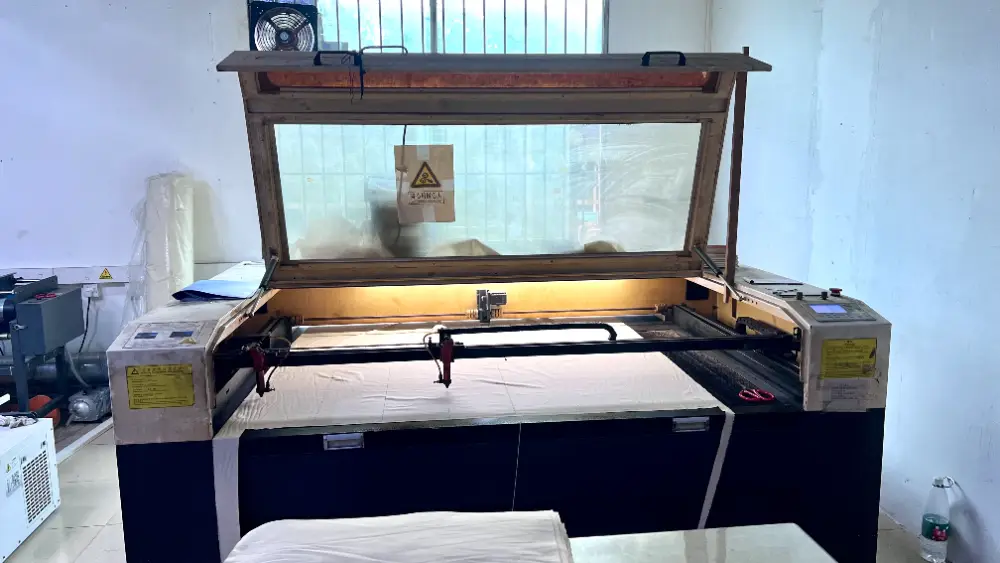
Hot stamping (foil) is an option for satin. Metallic or matte foil can create a high-contrast logo on the smooth surface. Gold and silver foil on dark satin are common visual combinations, but the final result depends on the foil, fabric, artwork, and production settings. For a detailed breakdown of foil versus other methods, the jewelry pouch logo methods guide covers the decision in full.
Embroidery is possible on satin but should be sampled carefully. Needle perforations can cause puckering or fabric runs, particularly on lighter-weight satin. If embroidery is important to your brand identity, test it on the specific fabric weight you plan to use before committing to bulk production.
Debossing is generally not suitable for satin because the fabric does not hold a compressed impression in the same way as velvet or suede.
Evaluate Quote Factors Without Relying on Exact Prices
The quoted cost for custom satin jewelry pouches depends on several variables that interact with each other. Understanding those variables helps buyers compare supplier quotations and identify what is included in each offer.
Fabric weight and quality affect the base material portion of a quote. A heavier satin uses more material than a lighter option, while the actual price difference should be confirmed with the supplier.
Logo method can add setup and per-unit charges. Hot stamping may require a die, meaning a tooling component. Screen printing may require a screen for each color. Embroidery may require artwork to be converted into a machine-readable embroidery file. Ask suppliers to show these items separately in their quotation where possible.
Order quantity can affect the quoted unit price because fabric purchasing, labor, and setup are allocated differently at different volume levels. Discuss quantity expectations with a supplier early in the conversation, rather than only after samples are approved, so the quotation reflects the expected order scale.
Packaging and shipping also contribute to the total delivered cost: the product price plus packaging, freight, duties or taxes where applicable, and other delivery-related charges. Satin pouches are generally lightweight and compressible, but actual freight charges depend on packed carton dimensions, shipment weight, shipping method, destination, and the logistics provider’s terms. Compare sea, air, courier, or other available options based on the actual shipment plan.
YJXPACK can provide pricing information once the full specification — fabric weight, size, closure, logo method, and quantity — is confirmed. Submitting a complete brief upfront supports a quote that is more closely aligned with the project requirements. The packaging brief template is a useful starting point for structuring that information.
Plan Sampling and Quality-Control Checks
Sampling is important for custom satin jewelry pouches. The difference between a digital mockup and a physical sample can be especially noticeable with satin because sheen, color depth, and logo placement may look different in person.
A sampling process may include a pre-production sample to confirm fabric weight, color, size, and construction before logo work is applied. A separate logo sample can then confirm the decoration method, placement, and alignment on the actual fabric. Confirm the supplier’s sampling stages and approval requirements before bulk production begins.
Quality checks during bulk production can cover fabric weight consistency, seam strength, drawstring or closure function, color consistency across the batch, and logo placement and adhesion. The quality-control checklist for custom jewelry pouches provides a structured framework for this process.
For buyers sourcing from China without the ability to visit the factory, third-party inspection services can conduct checks during production and before shipment. This may be useful for first orders with a new supplier, depending on the buyer’s inspection plan.
Ask Suppliers the Right Sourcing Questions
The questions you ask a supplier before placing an order can help clarify production capabilities, sample requirements, and commercial terms. A supplier should be able to explain relevant technical details and provide supporting samples or documentation where appropriate.
Useful questions to ask any satin pouch supplier:
- What GSM range do you carry for polyester satin, and can you send swatches of each?
- What logo methods do you support on satin, and can you show samples of each on this specific fabric?
- How do you handle color matching — do you work from Pantone references, and what tolerance do you use?
- What is your standard sampling process, and how many rounds of revision are included?
- How do you handle production defects — what is your acceptable defect rate, and what is the remedy process?
- Can you provide references or order history for similar satin pouch projects?
A supplier that answers these questions specifically and supports key details with physical samples can make it easier to evaluate sourcing risk. YJXPACK encourages buyers to ask these questions and to confirm samples and production requirements before placing a bulk order.
For buyers managing reorders, satin color batches may vary between production runs. Keeping a reference sample from the approved bulk order — and sharing it with the factory at the time of reorder — can support more consistent color review across seasons.
Ready to specify your custom satin jewelry pouches? Get a Quote from YJXPACK with your fabric weight, size, closure, logo method, and quantity, and receive a response based on your actual project requirements.
—
Frequently Asked Questions
Are satin jewelry pouches suitable for shipping jewelry by mail?
Satin pouches provide light protection against scratches and dust but are not designed to absorb impact. For mail orders, place the satin pouch inside a padded mailer or a rigid outer box. The pouch handles the presentation layer; the outer packaging handles the transit protection.
What is the difference between polyester satin and silk satin for jewelry pouches?
Polyester satin and silk satin differ in fiber content, handling, sheen, care requirements, availability, and supplier quotation. Silk satin may have a softer hand feel and a different sheen, while polyester satin is commonly used for custom pouch projects. Request material swatches and confirm the supplier’s material specification before making a selection.
Can satin pouches be produced in custom Pantone colors?
Many factories that produce custom satin jewelry pouches can work from Pantone references, but availability and matching procedures should be confirmed with the supplier. Evaluate color on a physical dyed swatch rather than only a digital proof, because satin’s reflective surface can appear different under different lighting conditions. Include a color-swatch approval step before bulk production.
What logo methods work best on satin fabric?
The appropriate logo method depends on the fabric weight, artwork, logo size, color contrast, and intended appearance. Hot stamping, screen printing, and embroidery can each be considered, but each should be tested on the selected satin. Debossing is generally not recommended for satin.
How many pieces do I need to order to get custom satin pouches with a logo?
Minimum order quantities vary by supplier and by the complexity of the customization. Logo methods with tooling requirements, such as hot stamping with a die, may involve different order requirements or setup charges. Discuss your target quantity with a supplier early in the process, before samples are ordered, to understand the available options for your project.
Share This Story, Choose Your Platform!